
industry · DevMeme field guide
Enterprise Software Engineering Memes, Explained
The system you are actually building
Enterprise software is usually part application, part integration network, and part organizational process. It may serve external customers, internal teams, regulated workflows, industrial equipment, or a portfolio of older and newer systems. The engineering job is to change that system while preserving the behavior, evidence, support, and coordination the organization depends on.
Constraints that create the joke
- Legacy modernization: compatibility, support, data, integrations, staffing, and rollback make replacement more than a code rewrite.
- Governance and evidence: security, privacy, legal, audit, and internal controls can require review and traceability across delivery.
- Shadow IT: spreadsheets and local tools become hidden systems when formal platforms do not meet a real workflow quickly enough.
- Vendor and procurement boundaries: licensing, proprietary hardware, support contracts, and acquisition history constrain technical choices.
- Planning and stakeholder alignment: many valid local requirements can combine into an incoherent product or an unmanageable queue.
- Technical debt: deferred work becomes load-bearing, increasing the risk and cost of apparently small changes.
Three role lenses
- Application and platform development: understand dependencies, preserve behavior, expose intermediate migration states, and keep ownership clear.
- Operations and support: maintain observability, compatibility, recovery, change controls, and support paths across a mixed estate.
- Security, architecture, and governance: set proportionate boundaries, require useful evidence, and make decisions that account for business value and technical risk.
Vocabulary and tag map
- Enterprise for the broad organizational and system context.
- Technical debt for deferred work and fragile change.
- Vendor lock-in for licensing, proprietary boundaries, and switching cost.
- Legacy systems for long-lived runtimes and integrations.
- Project management for planning, intake, and stakeholder coordination.
Four explained examples to start with
- Enterprise companies fear new technology frames caution as change risk around an entrenched core, not simple dislike of novelty.
- Excel is not a database shows when a useful local tool has acquired system-level responsibilities.
- The legacy microservices clown show explains why distributed deployment does not create sound domain boundaries by itself.
- Technical debt versus release pressure turns refactoring into a business-continuity and delivery-risk decision.
Modernization without theater
New vocabulary, a cloud mandate, or a microservices diagram does not prove that a system is easier to change. A useful modernization effort names the constraint it is reducing, the behavior it must preserve, the migration state it will pass through, and the evidence that would justify continuing.
This page describes common engineering constraints. It does not claim that DevMeme has enterprise customers or that one architecture, process, or vendor choice produces a guaranteed business outcome.
Curated memes
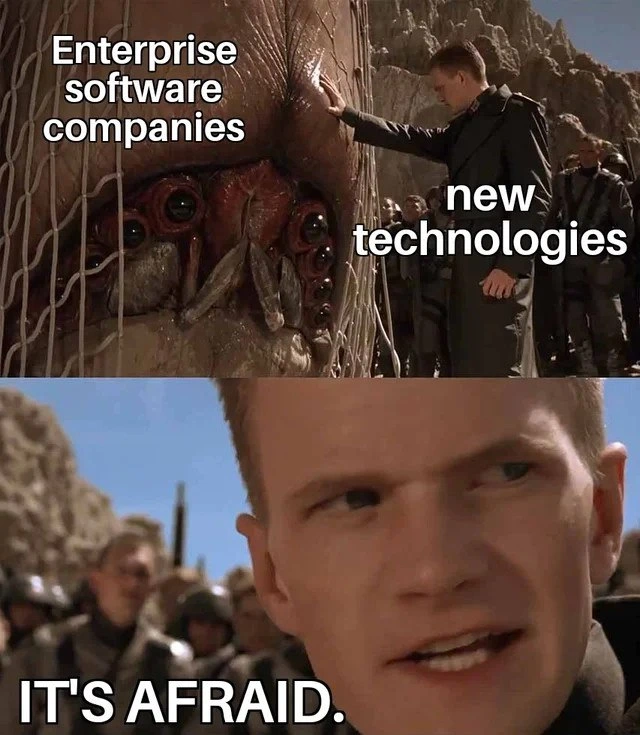
The cautious touch captures legitimate change risk around entrenched systems, not mere resistance to novelty.
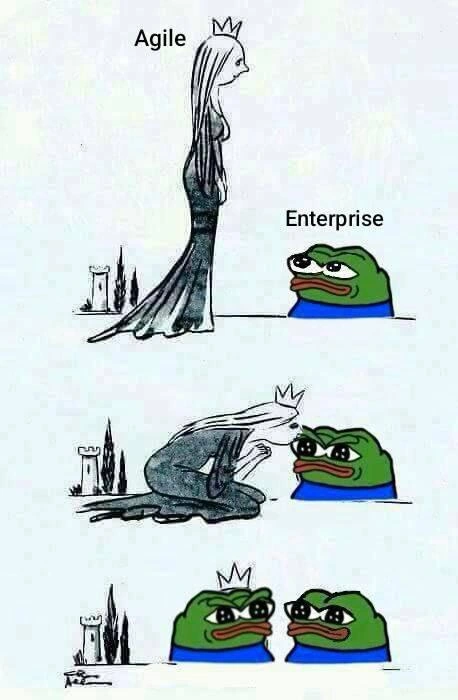
The frog reversal shows process theater: adopting agile vocabulary while preserving slow approval structures.
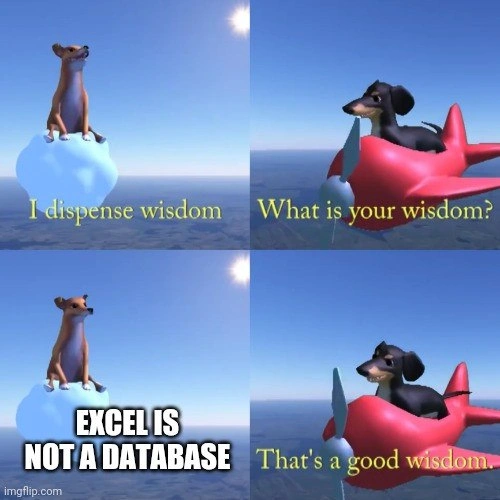
Spreadsheets become fragile pseudo-systems when critical workflows need concurrency, validation, lineage, and access control.
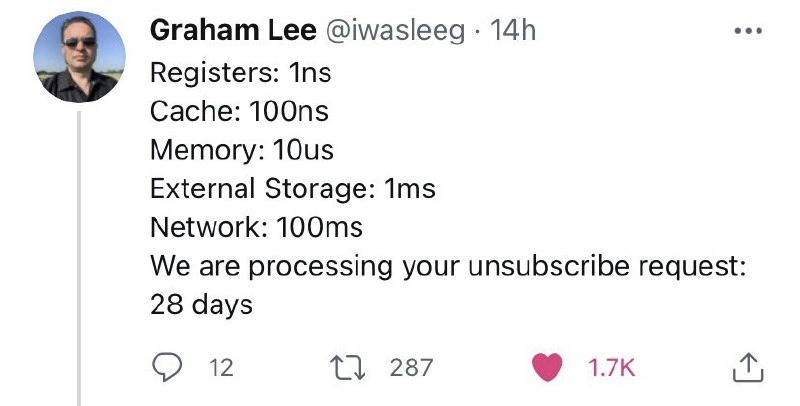
Nanoseconds-to-28-days reframes enterprise latency: organizational queues can dominate system performance.
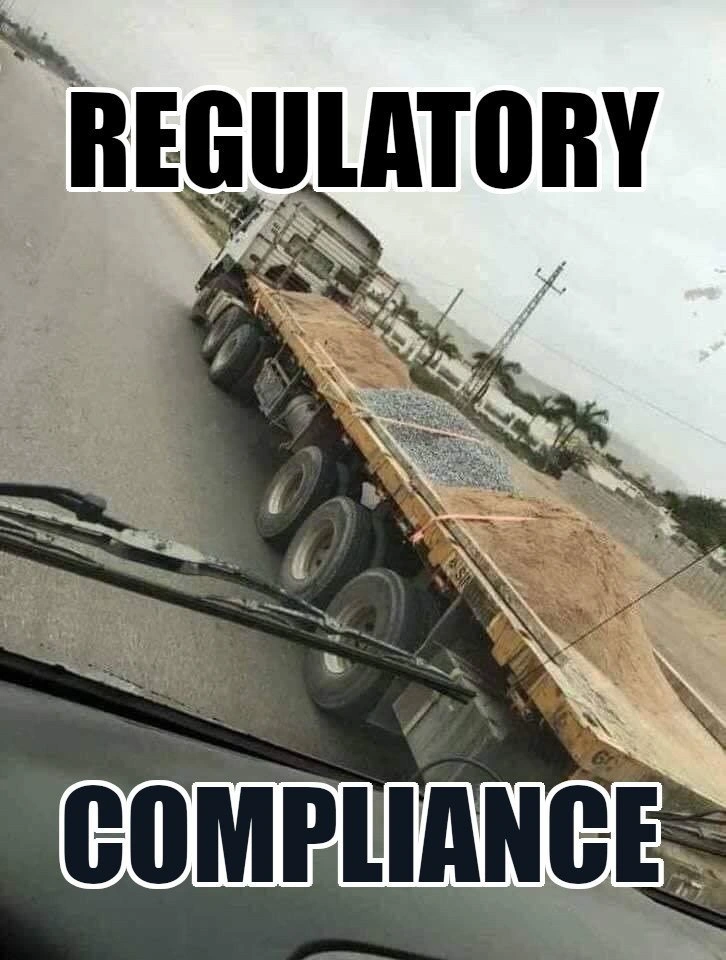
The overloaded truck acknowledges that audit and legal constraints shape architecture, delivery, and evidence.
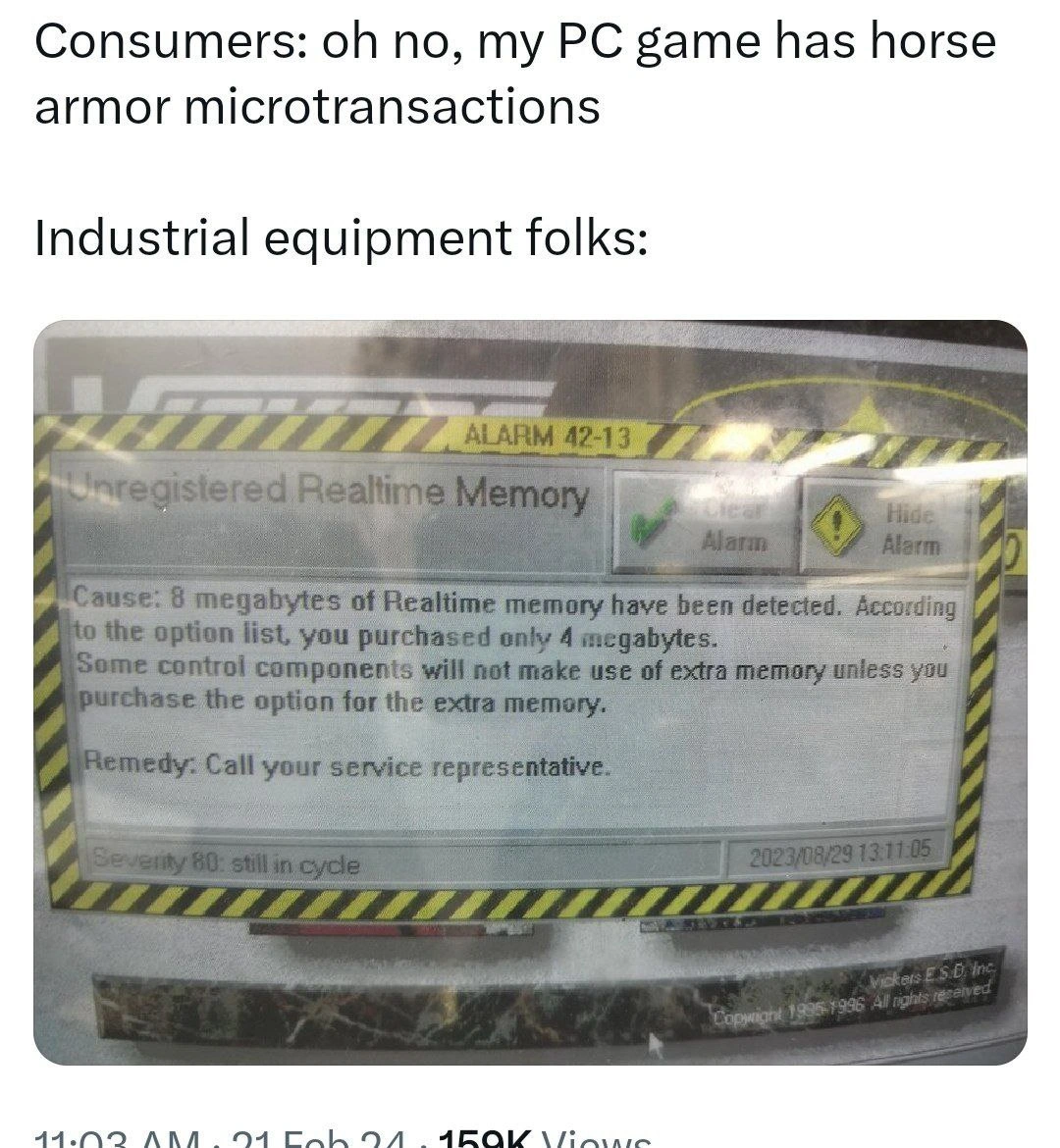
Licensed-but-physically-present memory is a sharp example of vendor lock-in in long-lived industrial estates.
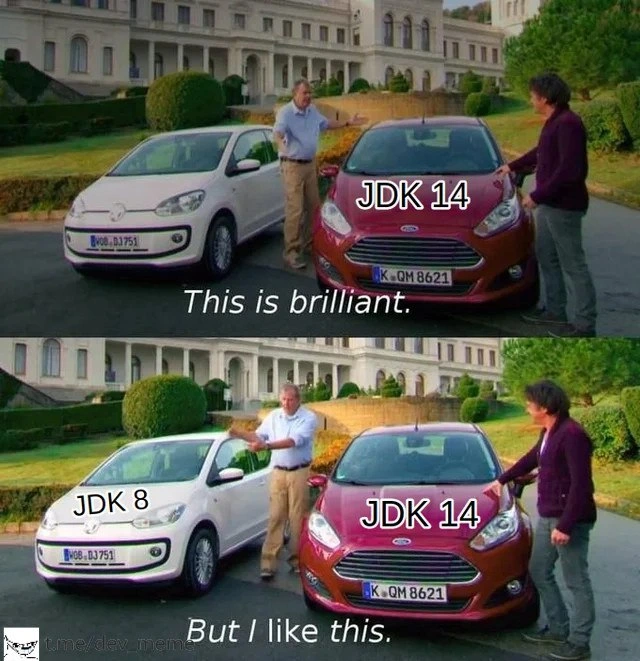
Preference for an old runtime may reflect compatibility and support contracts; modernization needs inventory, testing, and a migration case.
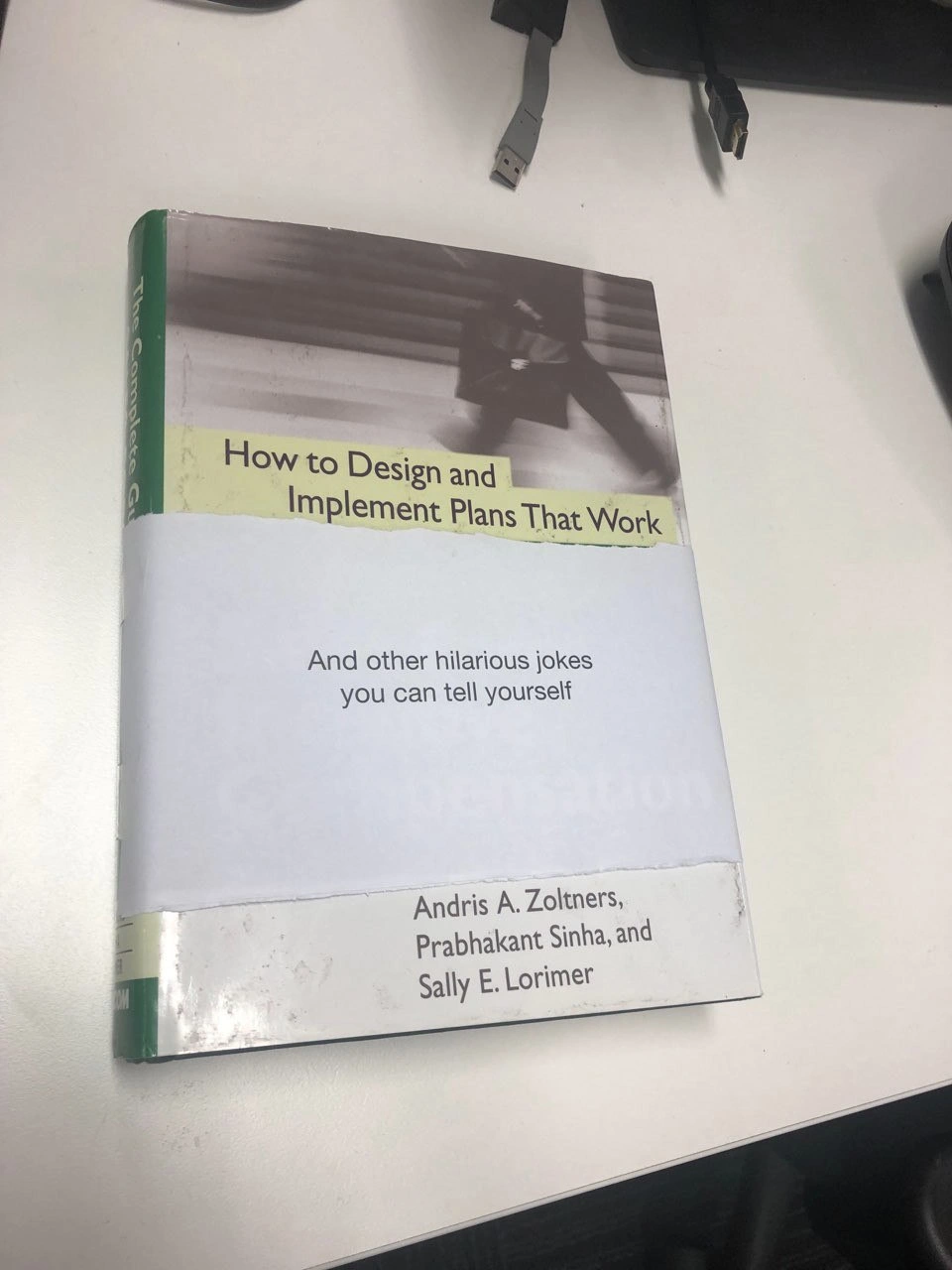
Plans are useful as coordination hypotheses, not guarantees against discovery and change.

Implementing every request literally can satisfy a checklist while destroying product coherence.
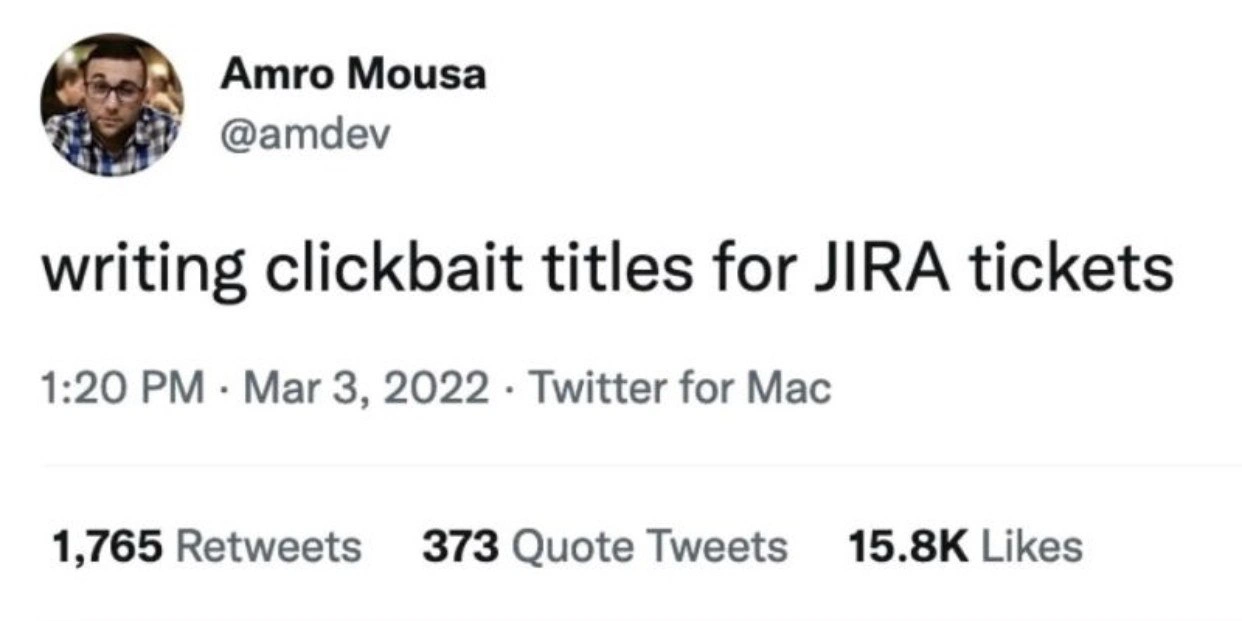
A ticket needing clickbait to be seen points to overloaded backlogs and weak prioritization signals.
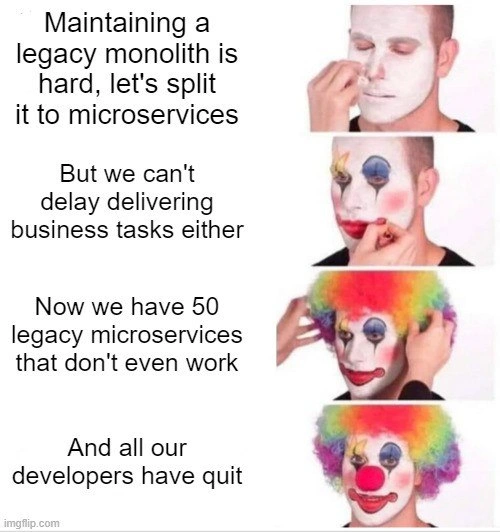
Splitting without time, ownership, observability, or domain boundaries distributes the legacy instead of removing it.
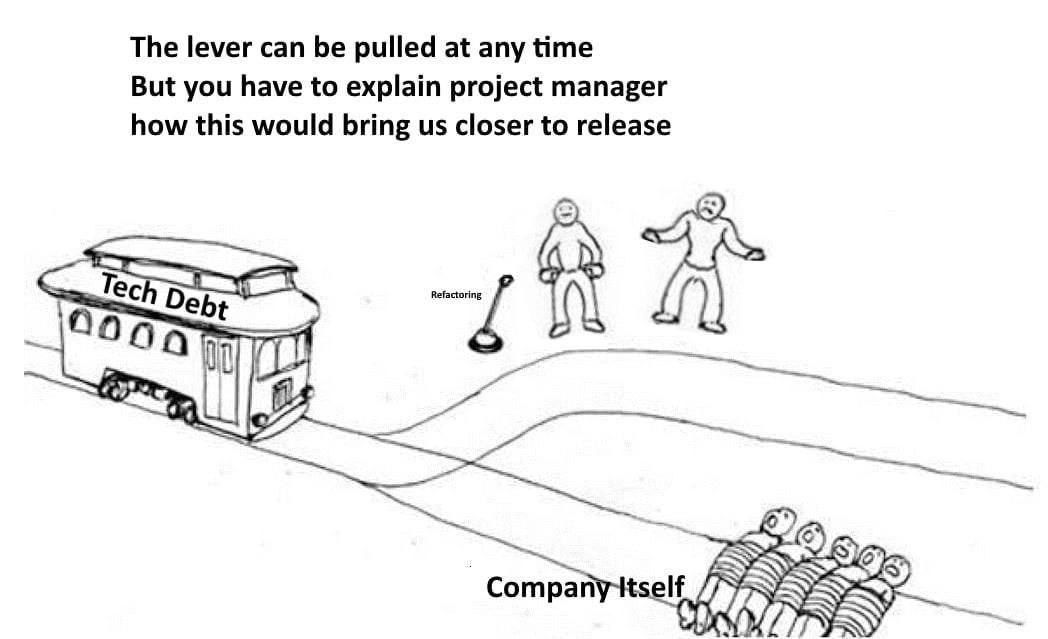
The unused lever captures the hard enterprise job: connect refactoring to release risk, lead time, and business continuity.
Browse the underlying catalog
Related resources
- Programming Memes for Junior DevelopersCurated programming memes for junior developers about onboarding, code review, Git, debugging, learning, and safe production work.
- Programming Memes for DevOps EngineersCurated DevOps memes about CI/CD, releases, on-call work, observability, containers, production recovery, and invisible reliability labor.
- Cloud Infrastructure Engineering Memes, ExplainedCloud infrastructure memes explained through provisioning, networking, distributed state, cost, migration, regional failure, and recovery.
Sources
- NIST SP 800-218: Secure Software Development Framework primary · checked 2026-07-16
- NIST Cybersecurity Framework 2.0 primary · checked 2026-07-16
- Oracle Java SE Support Roadmap official-product · checked 2026-07-16
- Microsoft Cloud Adoption Framework: Prepare for modernization official-product · checked 2026-07-16
Real reader questions
- Why do enterprise teams keep older software runtimes?
- Compatibility, vendor support, integration contracts, operational knowledge, testing cost, and change risk can outweigh the immediate value of an upgrade. An older runtime still needs a deliberate support and security decision; age alone does not explain whether staying or migrating is safer.
- Why is Excel called shadow IT in enterprise memes?
- A spreadsheet can become an unofficial application when it carries critical rules or data without the concurrency, validation, access control, lineage, backups, and ownership expected from a shared system. The problem is the hidden dependency, not the existence of spreadsheets.
- Does splitting a legacy monolith into microservices remove technical debt?
- Not automatically. If boundaries, ownership, data contracts, observability, deployment, and operating capacity remain unclear, the same coupling moves onto the network and becomes harder to trace. Modernization must improve a specific constraint rather than imitate an architecture label.
- Why do enterprise software projects feel slow even when the code is fast?
- The critical path may include funding, procurement, legal review, security review, change approval, stakeholder alignment, migration sequencing, and support readiness. Organizational queues can dominate elapsed time even when individual technical operations complete quickly.
- How should teams explain technical-debt work to stakeholders?
- Connect the debt to observable consequences: change failure risk, lead time, incident recovery, support effort, security exposure, vendor constraints, or blocked product work. A named consequence and bounded intervention are more useful than treating all old code as one undifferentiated cleanup request.