
persona · DevMeme field guide
Programming Memes for DevOps Engineers
Exact fit
Use this guide if your work sits between a merged change and a healthy service: build and deployment automation, release controls, monitoring, incident response, rollback, and the runbooks that make recovery repeatable.
You’re in the right place if…
- A pipeline works, but every modification feels like touching a muddy hose repaired with tape.
- Your most important design question is whether a failure will be detected and reversed safely.
- Successful work is often invisible because the expected result is that nothing surprising happens.
Work situations this collection covers
- Maintaining inherited CI/CD with hidden manual steps.
- Scheduling releases around observation time and recovery coverage.
- Correlating signals during a widespread production outage.
- Limiting the blast radius of emergency database or infrastructure work.
- Deciding which alerts require immediate human action.
- Turning container failures, post-deploy checks, and rollback into repeatable operations.
Four explained examples to start with
- A muddy hose in the woods as CI/CD captures delivery that works today but resists safe change.
- Major outages through network graphs starts incident triage with scope and shared dependencies.
- A Docker container literally on fire turns a crash into a process, resource, configuration, log, and dependency checklist.
- The unseen labor of DevOps names the controls, automation, observability, and recovery work hidden behind a quiet day.
Operations, not a cloud synonym
DevOps work can involve cloud platforms, but the two subjects are not interchangeable. Cloud infrastructure asks how compute, storage, networking, identity, regions, provider abstractions, and distributed state are designed. This collection asks how a change moves through a controlled path and how people know whether the resulting system is healthy.
That difference keeps the jokes useful. A Kubernetes networking tangle belongs in the cloud-infrastructure guide when the problem is architecture and reachability. A pager, failed rollout, noisy alert, or forgotten post-deployment step belongs here when the problem is operating change.
Curated memes
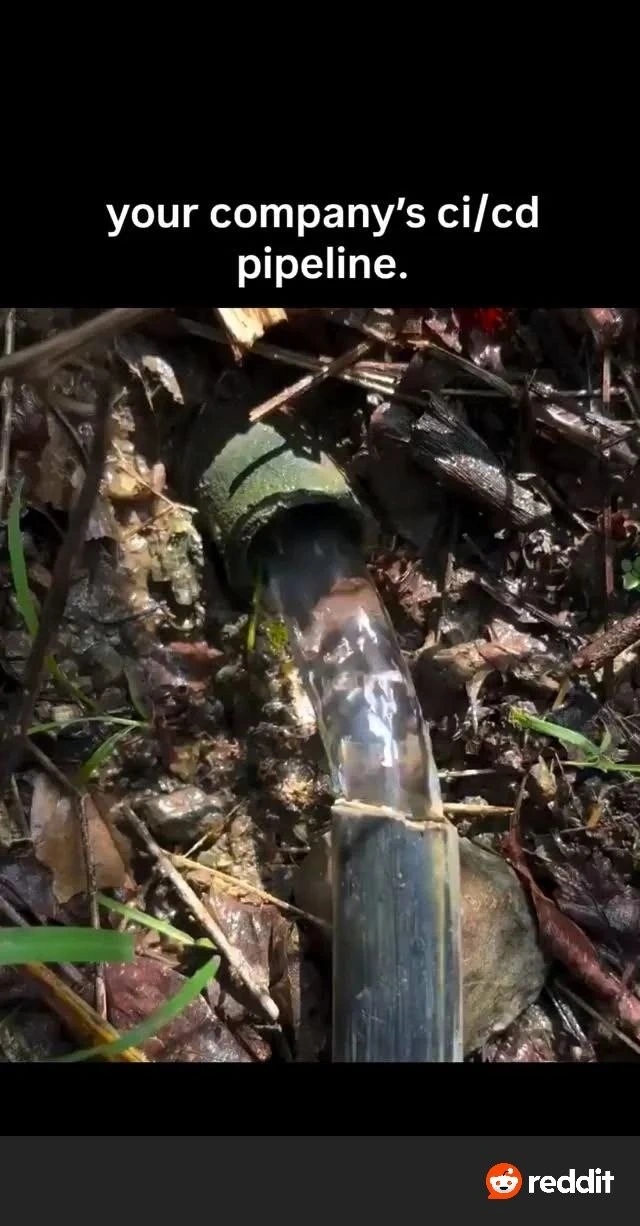
The improvised pipe captures a pipeline that still delivers while every taped joint raises maintenance and change risk.
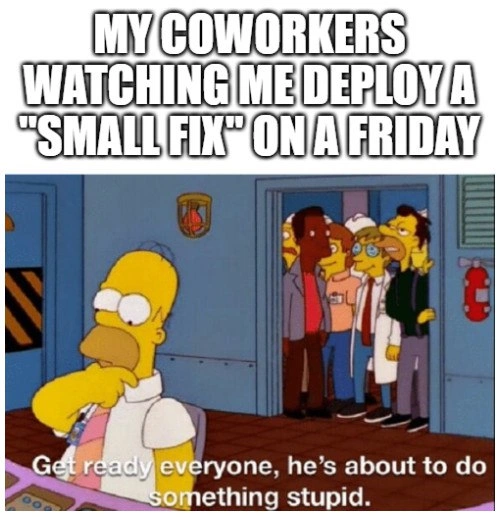
The risk is not Friday itself; it is changing a system when staffing, observation time, and rollback support are about to shrink.
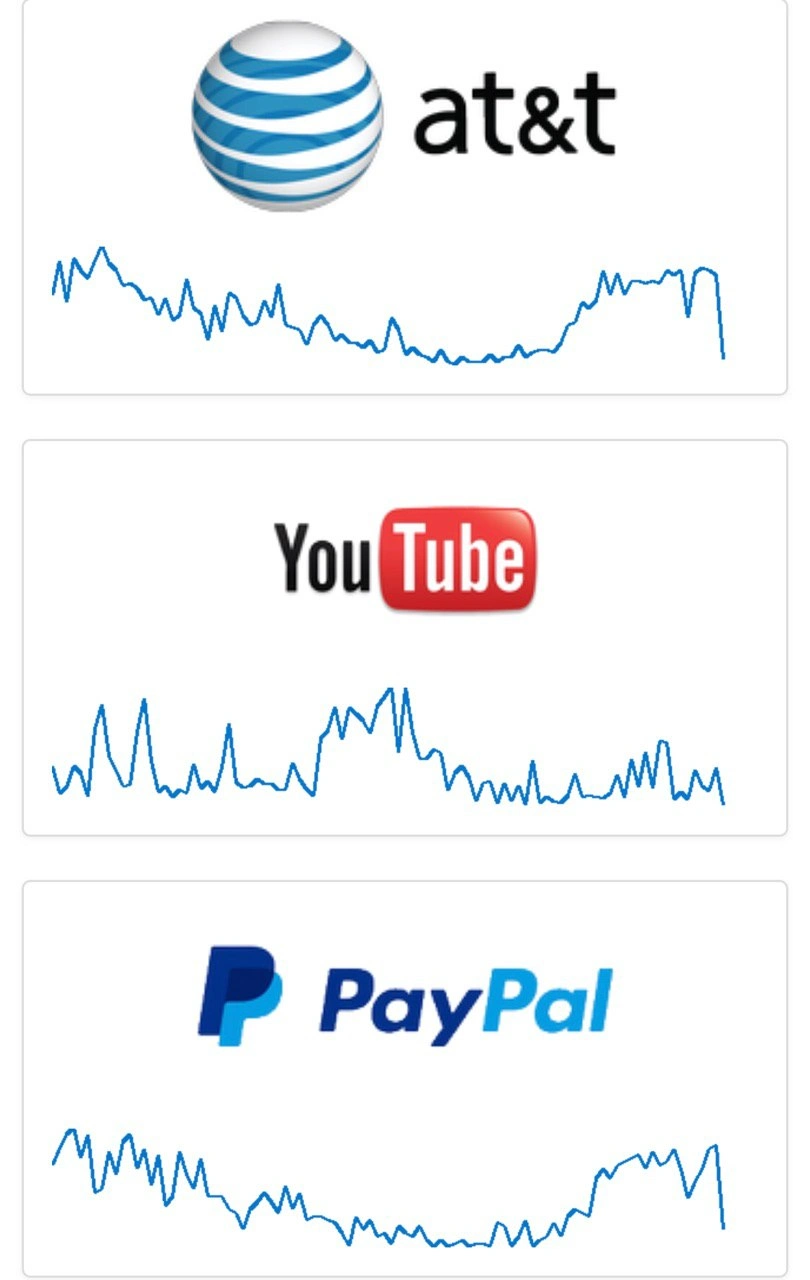
Multiple external graphs falling together show why incident triage starts with scope and dependency correlation, not one host.
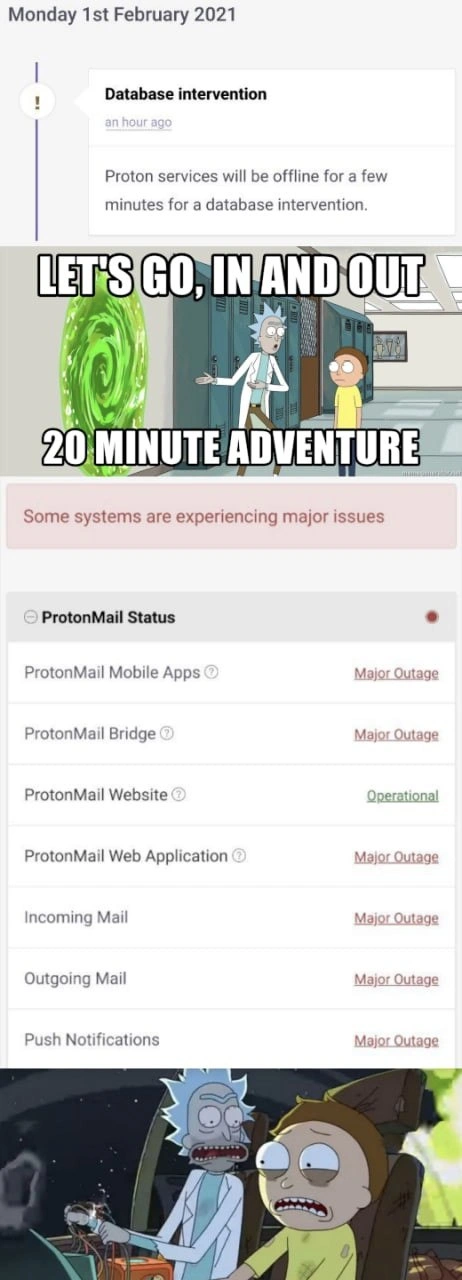
The ‘few minutes’ intervention becoming a major outage is the change-management case for blast-radius limits, observation, and rollback.
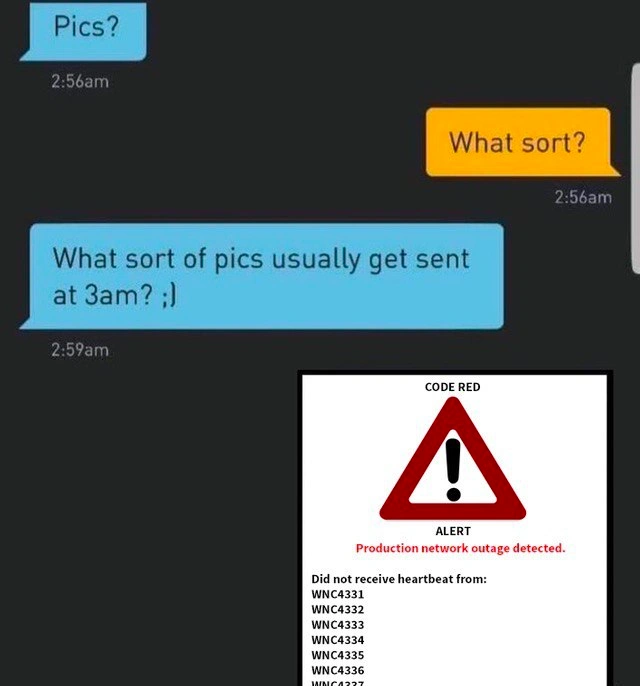
The bait-and-switch makes the human cost of 24/7 alerting visible, including sleep disruption and the need for actionable pages.
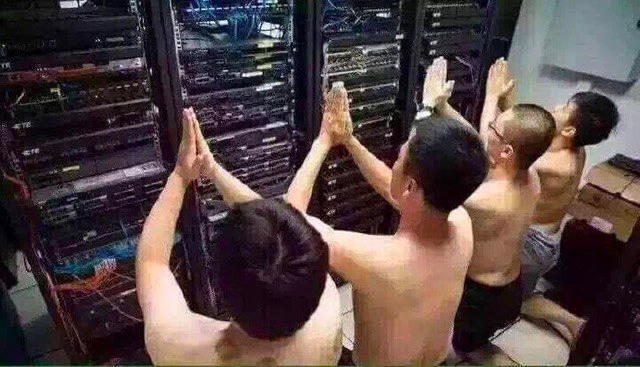
Prayer in front of racks is the absurd endpoint of missing visibility and recovery confidence; operations should not depend on ritual.
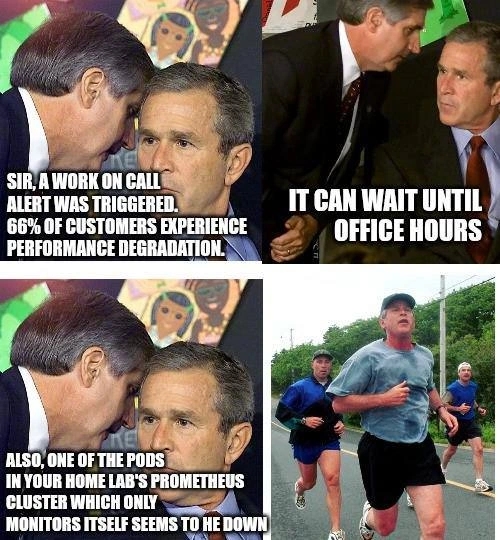
The joke prompts the real alert question: what must wake a human now?
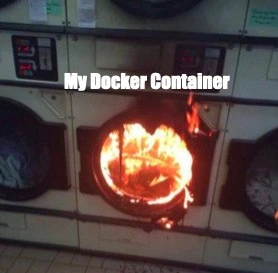
A literal burning container turns an abstract exit into a triage checklist: process, logs, resources, configuration, and dependency health.
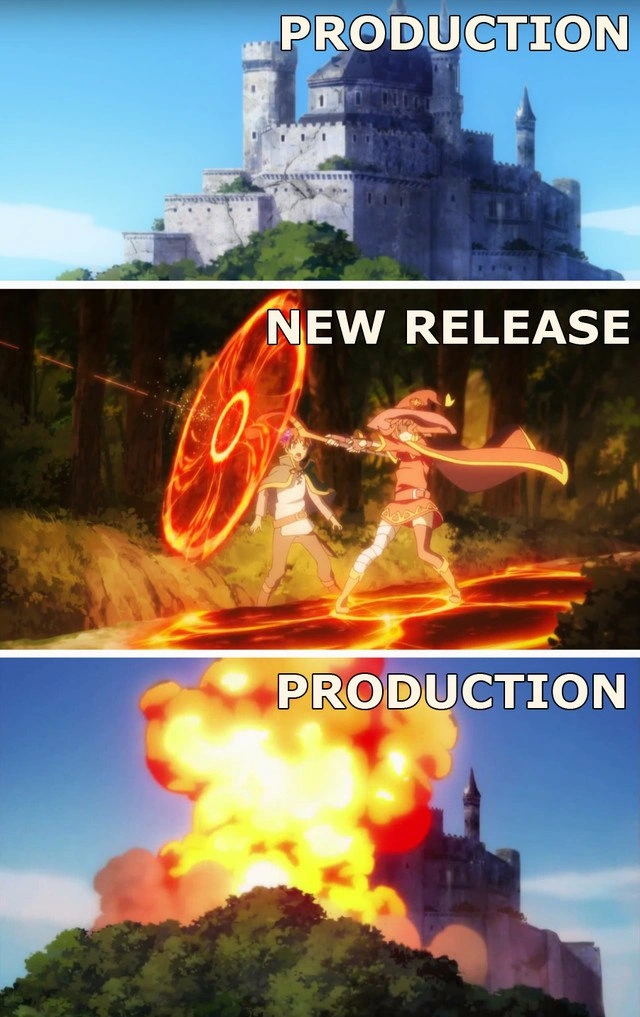
The release-as-explosion frames deployment around blast radius, progressive rollout, health signals, and reversibility.
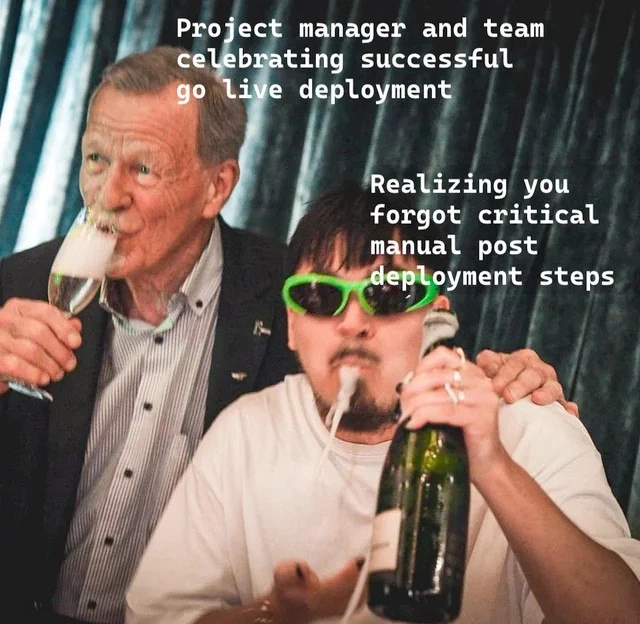
The premature toast shows why manual post-deployment steps belong in an executable runbook or automation, not one person’s memory.
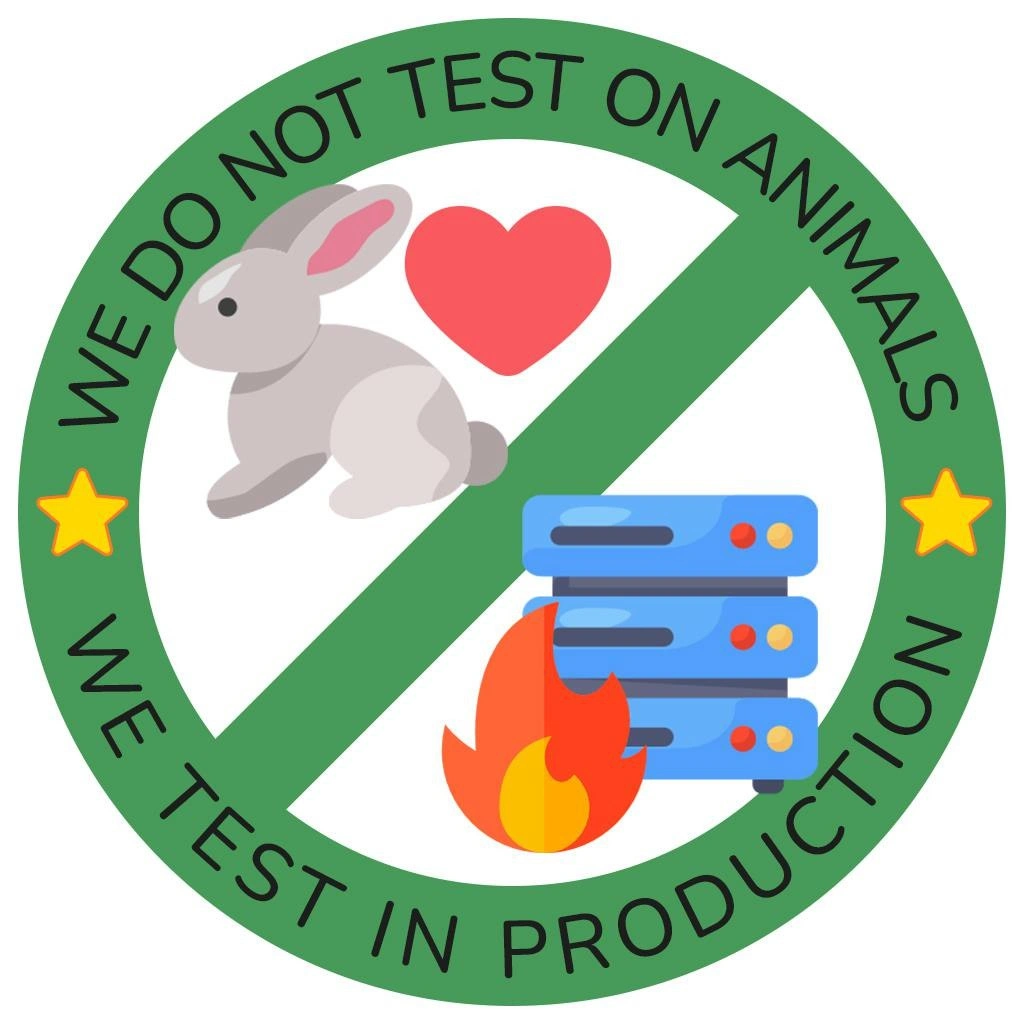
The parody distinguishes learning from live traffic from using production as the first test environment.
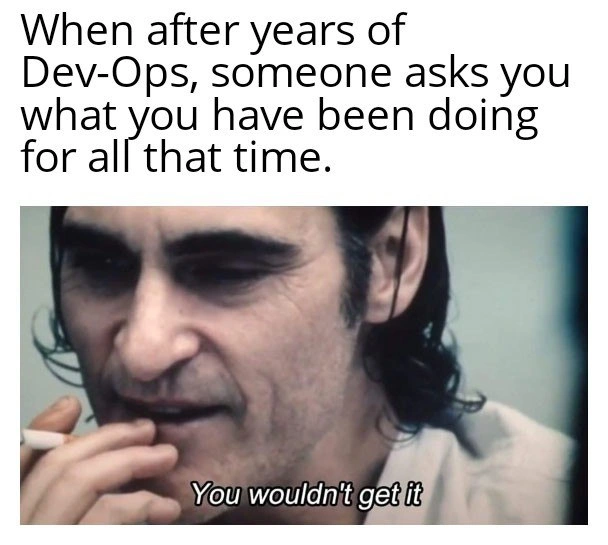
Reliability work disappears when successful; the page can name the pipelines, controls, observability, and recovery work hidden behind ‘nothing happened.’
Browse the underlying catalog
Related resources
- Programming Memes for Junior DevelopersCurated programming memes for junior developers about onboarding, code review, Git, debugging, learning, and safe production work.
- Cloud Infrastructure Engineering Memes, ExplainedCloud infrastructure memes explained through provisioning, networking, distributed state, cost, migration, regional failure, and recovery.
- Enterprise Software Engineering Memes, ExplainedEnterprise software memes explained through legacy modernization, governance, shadow IT, vendor lock-in, planning, and technical debt.
Sources
- Google SRE Book: Release Engineering primary · checked 2026-07-16
- Google SRE Book: Monitoring Distributed Systems primary · checked 2026-07-16
- DORA capability: Continuous Delivery primary · checked 2026-07-16
- Kubernetes documentation: Logging Architecture official-product · checked 2026-07-16
Real reader questions
- What should wake an on-call engineer immediately?
- A page should correspond to urgent, actionable user or system impact under the team's service objectives. Informational, duplicate, or unactionable signals belong in dashboards, tickets, or later review rather than repeatedly interrupting a human.
- Why is a working CI/CD pipeline still technical debt?
- A pipeline can deliver changes while remaining fragile, poorly understood, or dependent on manual steps. The debt appears when each change risks breaking an undocumented joint, recovery is uncertain, or only one person knows how the path works.
- Is testing in production always wrong?
- Production validation is necessary because no lower environment reproduces every real condition. The unsafe pattern is making live traffic the first meaningful test. Good delivery combines pre-release checks with bounded rollout, health signals, rapid rollback, and deliberate production verification.
- How is this DevOps collection different from cloud infrastructure memes?
- This page owns delivery and operations situations: pipelines, releases, paging, incident response, observability, and recovery. The cloud-infrastructure guide owns architectural constraints such as provider abstractions, networking, distributed state, regional design, migration, and cost.