Project Planning Books vs. Software Development Reality
Why is this ProjectManagement meme funny?
Level 1: Plans vs Reality
Imagine you plan a big birthday party for your friend. You write down exactly what will happen: at 2:00 PM everyone will play a game, at 2:30 PM you’ll serve cake, and by 3:00 PM you’ll open presents. Sounds perfect, right? 🎉 But now the real day comes. One friend shows up late, so you can’t start the game on time. Then the cake delivery is delayed by an hour. 🍰 Uh-oh! It starts raining just when you planned to have an outdoor activity. 🌧️ Before you know it, the schedule you so carefully wrote out is completely thrown off. You end up serving the cake first at 3:30 PM, playing games later, and everything happens in a jumbled order. In the end, you’re all laughing because nothing went according to plan. Your perfect party plan turned out to be more like a funny story you tell afterward. That’s exactly what this meme is saying: making a plan is easy, but life (or in the case of the meme, a software project) often has other ideas. And when things don’t happen the way we planned, it can be so absurd that it’s actually funny! 😅
Level 2: Best Laid Plans
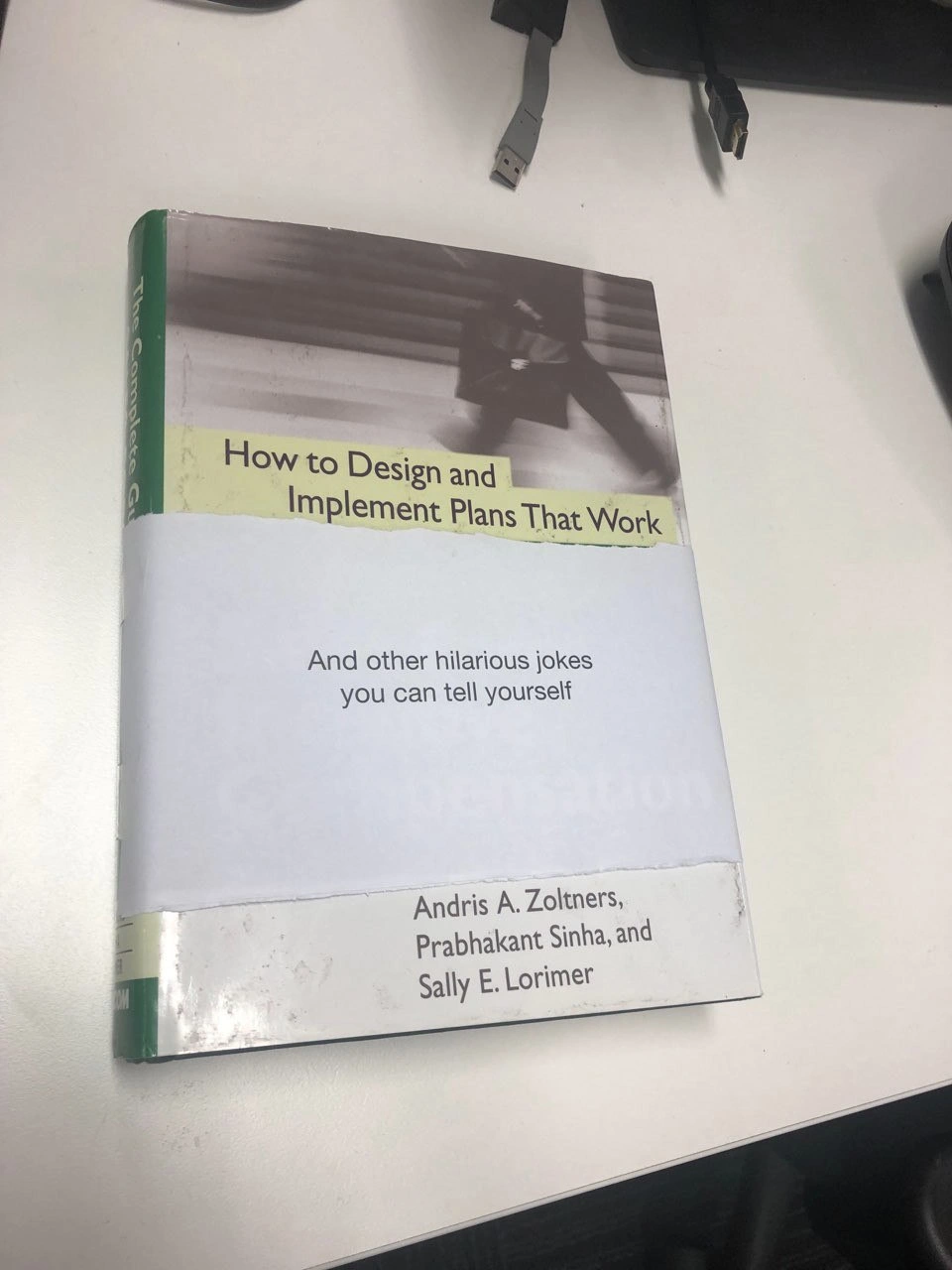
This meme is all about project planning and how things often don’t go as planned in software teams. The image shows what looks like a serious business book on an office desk, but its title has been changed to a joke. It says, “How to Design and Implement Plans That Work,” followed by the line “And other hilarious jokes you can tell yourself.” In plain terms, it’s comparing a project plan to a joke book. The humor targets anyone who has seen a software project’s careful schedule fall apart. Let’s unpack some terms and why this scenario is so familiar in tech:
Project Plan: In software development (and any project, really), a project plan is a detailed outline of how and when you’ll deliver a product or feature. It usually includes a timeline with milestones or deadlines, responsibilities for team members, and a list of tasks or requirements. For example, a simple plan might say: “By week 2, finish the login feature. By week 4, complete user profile and settings. Launch by end of Q1.” Plans are meant to keep everyone on track and set expectations with bosses or clients. The joke here is that making a plan is easy, but implementing a plan that works out exactly right is very hard. The second line of the fake title (“and other hilarious jokes...”) implies that believing your plan will work perfectly is wishful thinking.
**Agile Methodology (Agile): Agile is a popular approach to software development that emphasizes flexibility and frequent adaptation. In Agile, teams work in short cycles (usually 1-2 week iterations) called sprints. At the start of each sprint, the team does sprint planning – they decide which tasks or user stories to complete in that period. The idea behind Agile is that instead of making one big plan for a whole year (like in older Waterfall methods), you plan a little at a time, adjust often, and continuously integrate feedback. Agile was created precisely because big upfront plans (Waterfall-style) often failed when requirements changed or initial assumptions were wrong. However, even with Agile, things can go wrong. Some companies still try to lock down scope and deadlines even in short sprints, which can lead to the same old problems, just in smaller time boxes. The meme speaks to this: even “plans that work” in Agile can be elusive if people treat those plans as unchangeable promises.
Scope Creep: This is a classic term in project management. Scope means the defined set of features or tasks the project is supposed to deliver. Creep refers to how that set of tasks tends to grow over time — often without formal approval. For instance, you start a project with a scope of 5 features, but then a stakeholder (like a client or a manager) keeps adding “just one more thing.” Before you know it, those 5 features have crept into 8 or 10 features. Scope creep is notorious for derailing project plans because the original timeline usually doesn’t account for those extra tasks. In the meme, experienced folks laugh because they expect scope creep to happen, even if the official plan pretends it won’t. It’s one big reason plans fail.
Shifting Requirements: This phrase means the goals or needs of the project keep changing. For example, maybe you were building a website and initially the requirement was “user can sign up with email.” Halfway through, someone decides “Actually, users should be able to sign up with phone number and Google account too.” That’s a change in requirements. It might be due to new market trends, stakeholder whims, or discoveries during development. Shifting requirements wreak havoc on plans because you might have to redo or add work you didn’t plan for. In an Agile setting, changing requirements are expected (you adapt each sprint), but if changes are too frequent or done poorly, the team can’t finish anything as originally scheduled.
Deadlines & Deadline Pressure: A deadline is a due date by which something must be finished. In software projects, deadlines might be set by business needs (e.g., “We must release this feature before Black Friday” or “Client paid for delivery by December 1”). Deadline pressure is the stress everyone feels as the due date looms, especially if the work is behind schedule. The meme hints that initial deadlines often end up being unrealistic. Why unrealistic? Because when the plan was made, people were optimistic or maybe not fully aware of how complex the tasks were. As the project progresses and obstacles emerge, you realize there’s no way to hit the original date without miracles or overtime. This is a familiar scenario for software developers — you think you had plenty of time, but suddenly you’re two weeks from the deadline with a mountain of work left. It can be panic-inducing, and it certainly makes the original “plan” look naïve in hindsight.
Misaligned Expectations: This means what different people expect doesn’t match up. In a project context, it often refers to the difference between what management or clients expect (based on the plan or promises) and what the team can actually deliver. For example, a client might expect a perfectly polished product on the release date because that’s what the plan said originally. Meanwhile, developers know they had to cut features or that there are still bugs, because things turned out harder than predicted. Those expectations are misaligned — one side expects A, the other can only provide B. This is actually the source of a lot of tension in projects. The meme’s joke title implies that managers who expect everything to go exactly as planned are kidding themselves, hence “a joke you can tell yourself.” In reality, experienced teams know to manage expectations: for instance, by communicating early when things change, or by under-promising initially. But even with good communication, plans often lead to some expectation mismatches because plans seldom 100% = reality.
Put simply, the meme is highlighting the gap between planning and execution. The top line of the book (“Plans That Work”) represents the ideal scenario every project manager dreams of — a plan that is effective and comes true. The follow-up line (“hilarious jokes”) represents the reality that things almost never go perfectly according to plan. This contrast is funny to people in tech because it’s so relatable. It’s a form of ProjectManagementHumor that rings true whether you’ve worked on a small app or a huge enterprise system.
Picture a junior developer’s first real software project: they come in with a detailed plan (maybe given by their manager). They think, “Alright, if I just follow these steps, we’ll be done on time.” But then a key library they were using breaks with the latest update, or a teammate falls sick, or the client suddenly asks for a different color scheme and two extra features. Suddenly the neat timeline is out the window. It can be bewildering for a newcomer. You might feel like you did something wrong because the plan isn’t working out. But as you gain experience, you realize this happens on almost every project. Plans are guesses — educated guesses, hopefully — but still guesses. Things change, people underestimate tasks, and external events interfere.
That’s why veteran developers sometimes half-jokingly advise: “Take your initial time estimate and double it.” They know about the planning fallacy (people tend to underestimate how long tasks will take) from real experience. For a junior engineer, it might be surprising how even careful plans need constant revision. Agile processes are supposed to help with that: you re-plan every sprint, you have daily check-ins (the daily stand-up meetings) to surface issues, and you adjust. But even with good process, you might still end a sprint laughing at how off-target the original sprint goal was. It’s not that planning is useless — it’s necessary to have some direction. The key lesson (and the humor) is that plans must be flexible. If you treat the plan like unchangeable law, you’re in for a bad time (and the universe will enjoy a good laugh at your expense).
The image uses a book cover meme format, which is clever. Typically, business books have very confident titles like “How to Win at X” or “The Complete Guide to Y.” Here it says, “How to design and implement plans that work,” as if it’s going to teach you a foolproof method. The joke is that the subtitle undercuts that completely: basically saying “ha, as if that’s even possible.” The listed authors make it look legit, which adds to the humor because it feels like even these experts are in on the joke. It’s the kind of fake book you’d give someone in tech as a gag gift — maybe to a project manager who always makes optimistic plans that inevitably crumble. They’d groan and say, “Very funny, guys.”
In summary, as a junior developer or someone new to project management, the takeaway from this meme is: Plans are important, but don’t be surprised when they change. Software projects are complex and full of uncertainties. Learning to adapt when things inevitably go off-plan is a crucial skill. And sometimes, when a project’s carefully plotted path goes completely haywire, all you can do is laugh (and then adjust the plan). That’s the heart of the humor here. Everyone who has been through it laughs at this meme because they’ve essentially lived the joke. It’s a friendly reminder that you’re not alone — this happens to everyone in tech sooner or later.
Level 3: Daily Stand-Up Comedy
At first glance, this looks like a serious hardcover business guide titled “How to Design and Implement Plans That Work.” But the homemade dust jacket exposes the punchline: “And other hilarious jokes you can tell yourself.” 😏 In the world of software development, seasoned engineers and project managers recognize this dark humor immediately. The meme is essentially filing project planning under the comedy section. Why? Because after enough failed sprints, blown deadlines, and last-minute scope changes, you learn that a “plan that works” is almost mythical. The contrast between the official-sounding authors on the cover and the snarky subtitle is pure EngineeringHumor: it mimics a real project management book but adds the cynical truth that reliable plans are as rare as unicorns (and we all know how many unicorns we’ve seen in production).
This image nails an inside joke about ProjectManagement in tech: the idea that you can perfectly design and implement a plan without hiccups is absurd. Every experienced developer has watched a meticulously crafted project plan disintegrate by week two. The phrase “and other hilarious jokes you can tell yourself” speaks to that shared trauma. It’s like saying, “Sure, we’ll finish all features by the deadline with zero bugs — and pigs will fly, too.” 😅 UnrealisticDeadlines and MisalignedExpectations are so common that we cope by laughing at them. The dust-jacket’s mock title suggests that believing a plan will go exactly as laid out is on par with telling yourself a fairy tale. In tech, we have a grim adage: “No plan survives first contact with reality.” This meme formats that truth as if it were the title of a satirical self-help book. It resonates because everyone in software has lived out a version of this joke: the Agile sprint that derailed, the feature roadmap that turned into a wild goose chase, the “simple update” that led to an all-nighter.
Let’s talk AgileHumor. Agile methodology was supposed to save us from rigid long-term plans. We trade big upfront plans for iterative sprints and daily stand-ups, adjusting as we go. In theory, that means we embrace change and avoid the classic “doomed waterfall plan” scenario. In practice, many organizations still demand fixed scope and deadlines even in Agile. They’ll hold sprint planning meetings where teams commit to a set of tasks, as if nothing will change for two weeks. Cue laughter. 😅 Inevitably, scope creep slithers in: a stakeholder pops up mid-sprint saying, “Actually, can we also squeeze in this one tiny feature?” (It’s never tiny). Or QA finds a critical bug that wasn’t in the plan. Suddenly half the team is firefighting an outage or implementing an “urgent” new request. Meanwhile, the official plan remains unchanged on paper, creating a surreal disconnect. The developers on the ground know the sprint has gone off the rails, but the project plan sitting in Confluence or on a Gantt chart might as well be science fiction at this point. The meme winks at this common farce— that confident plan might as well be a joke book.
Consider the elements on the desk: two loose USB cables lying next to the book. It’s a subtle visual metaphor for loose ends in a project. Even if you plan everything, there are always stray tasks and unforeseen integration issues (the “dangling cables”) that clutter the neatly scheduled timeline. That hardcover itself is likely a genuine management or sales operations book by Andris A. Zoltners, Prabhakant Sinha, and Sally E. Lorimer, repurposed with a custom jacket. The meme creator literally covered reality with a joke, just as we often cover our project reality with optimistic plans. It’s telling us that behind every polished project plan or official guidebook, there’s often chaos—hidden like messy cables shoved to the side.
ScopeCreep and shifting priorities are the villains engineers know too well. A senior dev reading that subtitle “other hilarious jokes” might flash back to projects where the requirements vs reality gap was comical. Imagine a project kickoff where management promises RequirementsVsReality will stay aligned: “We’ve nailed down requirements, no changes this time!” Fast forward a month, and half the requirements have changed or grown. The plan predicted 5 features; reality delivered 3 features and 2 half-finished stubs. The DeadlinePressure mounts, and some manager is still asking “Why aren’t we on track?” as if the original plan was ordained by fate. It’s misaligned expectations at its finest. The meme’s humor is a safe way to say what every developer has muttered under their breath during a status meeting: “That plan was doomed from day one.” 🙃
We even have classic literature in software about this. Ever heard of Fred Brooks’ The Mythical Man-Month? Even back in 1975, Brooks explained why adding more people to a late project just makes it later. Yet decades later, you still find VPs who think doubling the team in crunch time will miraculously fulfill the original plan. There’s also Hofstadter’s Law, which wryly states: “It always takes longer than you expect, even when you take into account Hofstadter’s Law.” In other words, even if you know things will go wrong and pad your estimates... things still go wrong! 📈 This meme embodies that exact sentiment: believing you can fully tame a complex software project with a neat plan is almost cute in its optimism. It’s like a running gag in engineering circles.
On projects that turn into dumpster fires, developers often joke that we should have written the plan in pencil (or erasable whiteboard) because it’s constantly being revised. That’s why the book’s title hits home — the idea of a definitive guide to “plans that work” belongs in satire. Experienced folks might say the only plan that works is “be prepared for things to NOT work.” Everything else is wishful thinking. We’ve all sat through Sprint Planning meetings that felt more like fantasy football drafts — lots of confident picks, but when the “game” plays out, you realize half your star features are benched by reality. By the time the Retrospective meeting comes, the team is laughing (perhaps a tad bitterly) at how far off the burndown chart went.
To illustrate the difference between the rosy plan and the gritty reality, consider a typical project scenario:
if (projectPlan.success === true) {
// probably never runs
celebrateRelease();
} else {
console.error("Plan failed. Adjusting and hoping for the best...");
}
In the code above, the if block is a unicorn 🦄 – it rarely executes because RealityException always gets thrown somewhere along the way. More often than not, we jump straight to the else branch, logging an error and scrambling to adjust the plan (usually while muttering unprintable things under our breath). That comment // probably never runs is exactly the grim chuckle this meme elicits: a project finishing exactly as planned? Ha, good one.
Real-life war stories drive this meme’s point home. Perhaps a team planned a new app feature to be delivered in a month. The plan looked solid: tasks broken down, responsibilities assigned, a clear timeline. But then “just one more thing” got added (hello, scope creep), an integration task took twice as long because of an unexpected API limitation, and a key developer caught the flu during crunch time. The deadline remained fixed (because upper management had already promised it to a client), so guess what? Massive crunch weekend, features descoped last-minute, and a lot of TechHumor in the form of bitter jokes flying around the office Slack channel. The original plan document becomes a punchline — “According to the plan we were supposed to be done today. LOL!” This is why the meme strikes a chord: it’s funny because it’s true.
Let’s break down the irony in a table — the contrast between what a polished project plan claims and what actually unfolds:
| The Project Plan | The Reality |
|---|---|
| “We have clearly defined requirements.” | Requirements change every week. 💼➡️🔄 |
| “No surprise tasks will appear.” | Critical production bug interrupts the sprint. 🔥🐛 |
| “We’ll deliver all features by the deadline.” | Only half the features are ready by deadline, plus overtime crunch. 📆🙅♂️ |
| “Our timeline is realistic and won’t slip.” | Timeline was wishful thinking; everything takes longer than hoped. ⏳😅 |
Each pair above is effectively a setup and punchline. The planning_vs_execution gap is obvious. We plan for a smooth ride, but execution is a bumpy reality-check. Notice how every “confident” statement in the plan ends up laughably overturned. This parallel structure is exactly what the meme’s fake book title is doing: stating a fantasy (“Plans That Work”) and immediately subverting it (“hilarious jokes”). It’s a structured joke format, familiar to any stand-up comic: set ’em up, then knock ’em down. And in our industry, we’ve lived through that setup/fail cycle so often that it’s cathartic to laugh at it.
From an organizational perspective, this meme also pokes at management. Management_PMs often push for detailed plans and Deadlines to feel in control of a project. But the on-the-ground reality for engineers is that those plans become outdated fast. The humor here is slightly sardonic: it suggests that those thick project plan binders and strategy books on a manager’s shelf might as well be filled with jokes for all the good they do. When a senior engineer sees a new glossy “project plan methodology” book handed out in a meeting, they might recall this meme and chuckle internally, thinking, “Sure, we can plan all we want, but wait till the first deployment.” It’s a gentle way of mocking the disconnect between Management theory and software practice.
Ultimately, the meme uses TechHumor to convey a hard-earned truth: planning is important, but expecting the plan to actually work out exactly as written is naive. The laughter is a coping mechanism. Every developer who’s been through a death march project or an Agile transformation gone wrong has a scar or two. Sharing a meme like this in your team’s chat is a way of saying, “We’ve all been there.” It builds camaraderie through shared pain and irony. That hardcover book on the desk might promise secrets to project success, but the taped-on caption tells the real story: even the best-laid plans often belong in the fiction aisle. And if we didn’t laugh about it, we might just cry. 😅
Description
This is a photograph of a physical book lying on a white desk. The book's original title is 'How to Design and Implement Plans That Work'. However, someone has humorously altered the cover by taping a white piece of paper over the subtitle. The new, sarcastic subtitle reads, 'And other hilarious jokes you can tell yourself'. Below this addition, the original authors' names are visible: Andris A. Zoltners, Prabhakant Sinha, and Sally E. Lorimer. This meme is a cynical commentary on the futility of rigid, predictive planning in the face of complex, real-world projects, especially in software development. For experienced engineers, it's a nod to the universal truth that no project plan survives first contact with changing requirements, unforeseen technical debt, and stakeholder feedback. It perfectly captures the sentiment behind agile methodologies, which prioritize adaptation over following a set plan, and resonates with anyone who has seen a meticulously crafted Gantt chart fall apart by week two
Comments
7Comment deleted
The first chapter is on estimating timelines. The second chapter is on explaining why your estimates were wrong. The rest of the book is blank for you to write your apologies
Found “How to Design and Implement Plans That Work.” I shelved it between “Predictable Sprint Velocity During Quarterly Reorgs” and “Microservices That Never Cascade-Fail” - right in our speculative-fiction section
After 20 years in tech, I've learned that 'plans that work' is like 'bug-free code' - technically possible in a universe where requirements don't change, stakeholders agree, and the laws of thermodynamics don't apply to technical debt accumulation
This book perfectly captures the senior engineer's journey: you start believing in comprehensive planning frameworks, then after a few years of watching meticulously crafted roadmaps crumble at first contact with production, you realize the real skill isn't making plans that work - it's making plans flexible enough to survive the inevitable chaos of stakeholder whims, shifting priorities, and that one legacy system nobody documented. The yellow highlight on 'Plans That Work' is chef's kiss - because we all know the only plan that truly works is 'deploy on Friday and pray.'
Enterprise roadmaps are PowerPoint eventual consistency - perfect in slides, instantly divergent in production
The ultimate design pattern: Observer, for watching plans fail in production while pretending they compiled fine
How to design plans that work? Treat them like distributed systems: assume partial failure, cap blast radius, make rollbacks idempotent, and write the postmortem before kickoff