
persona · DevMeme field guide
Programming Memes for Non-Programmers
Exact fit
Use this guide when a programming joke is clearly about work, but the vocabulary or context is unfamiliar. It translates the joke’s premise while preserving the real distinction between writing software, supporting users, repairing hardware, and operating systems.
You’re in the right place if…
- A developer meme appears in a group chat and everyone else understands it before you do.
- You work with a software team and want the human meaning behind its recurring jokes.
- A friend or relative writes software, and you want a better answer than “they fix computers.”
Work situations this collection covers
- Explaining what computers and programmers actually work with.
- Describing a software job to children, relatives, or nontechnical coworkers.
- Being asked to repair a printer because “you work with computers.”
- Turning an informal request into exact, testable instructions.
- Watching a real user ignore the interface’s intended happy path.
- Receiving feedback that changes what “working” means for a finished feature.
Four explained examples to start with
- Computers are just rocks we tricked into thinking begins with matter, electricity, and abstraction instead of code syntax.
- A programmer follows grocery instructions literally shows why hidden assumptions become software defects.
- Users always find another interface turns a product-design lesson into one instantly readable image.
- The first dissatisfied user marks the point where a private project must satisfy someone else’s needs.
The useful boundary
Programmers do not automatically know every device, network, account, or operating system. Some can diagnose a broad range of problems; others specialize deeply in one layer. The family-tech-support jokes land because outsiders often see one computer profession where practitioners see many different jobs.
The same boundary applies to jargon. “Bug,” “model,” and “terminal” are not secret passwords. They are ordinary words reused for specific concepts. Once the second meaning is visible, the joke usually becomes much simpler.
Curated memes
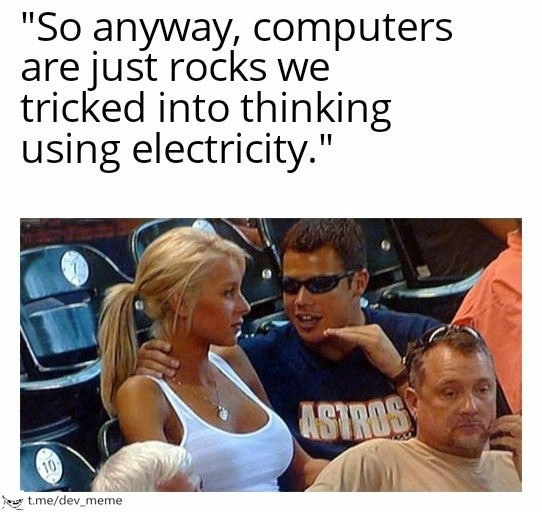
A wonderfully plain-language reduction of computing to matter, electricity, and layers of logic; it gives a non-programmer a safe starting point without pretending the layers are simple.
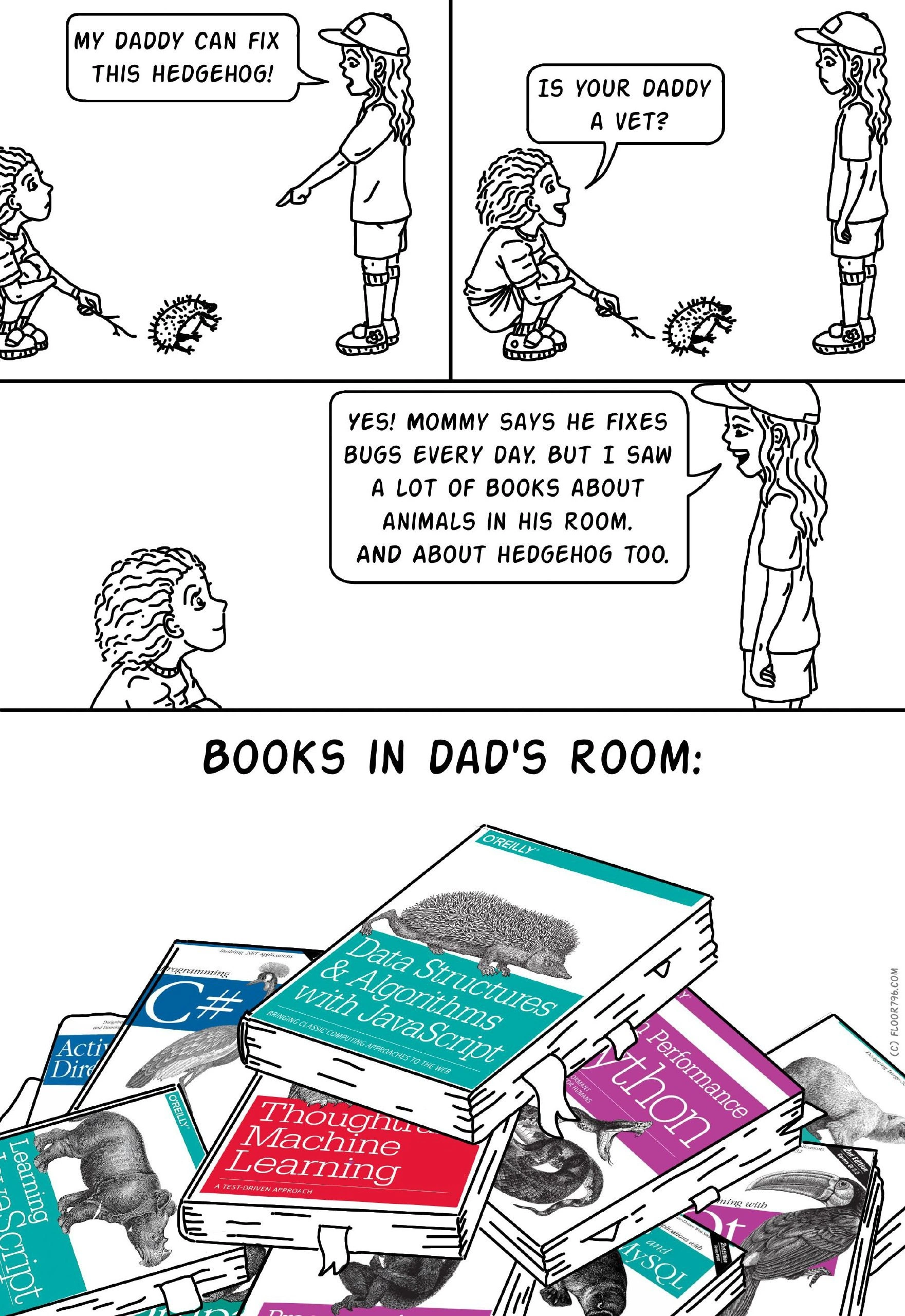
‘Bug’ sounds ordinary until programming gives it a second meaning; the animal-book reveal makes developer vocabulary legible to anyone.
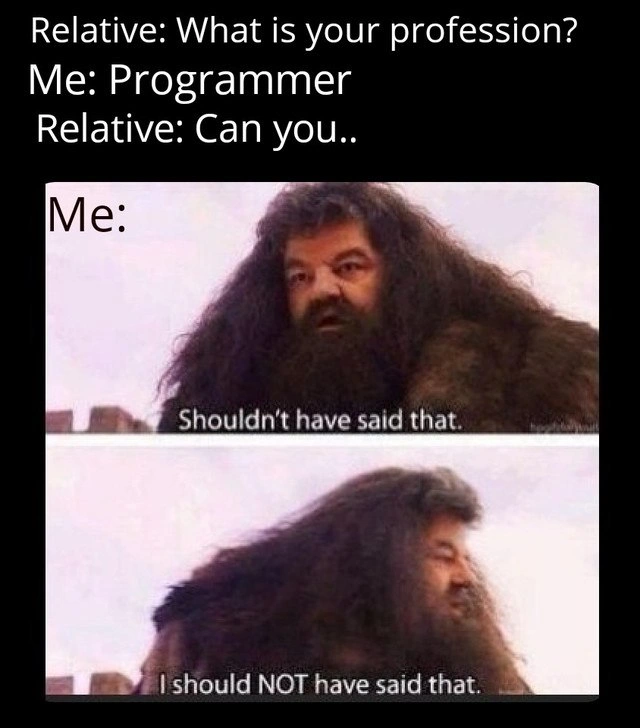
It separates writing software from general IT support while recognizing why relatives reasonably collapse every computer skill into one job.
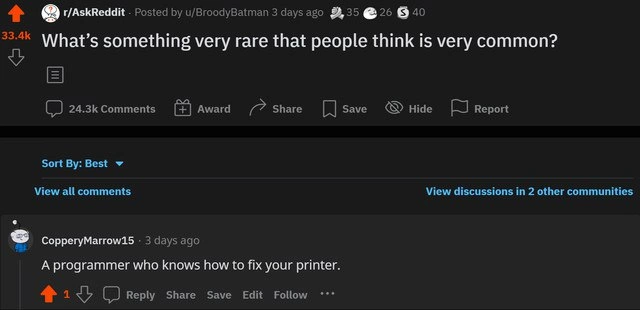
The cleanest visual reminder that software development and desktop support overlap less than outsiders expect.
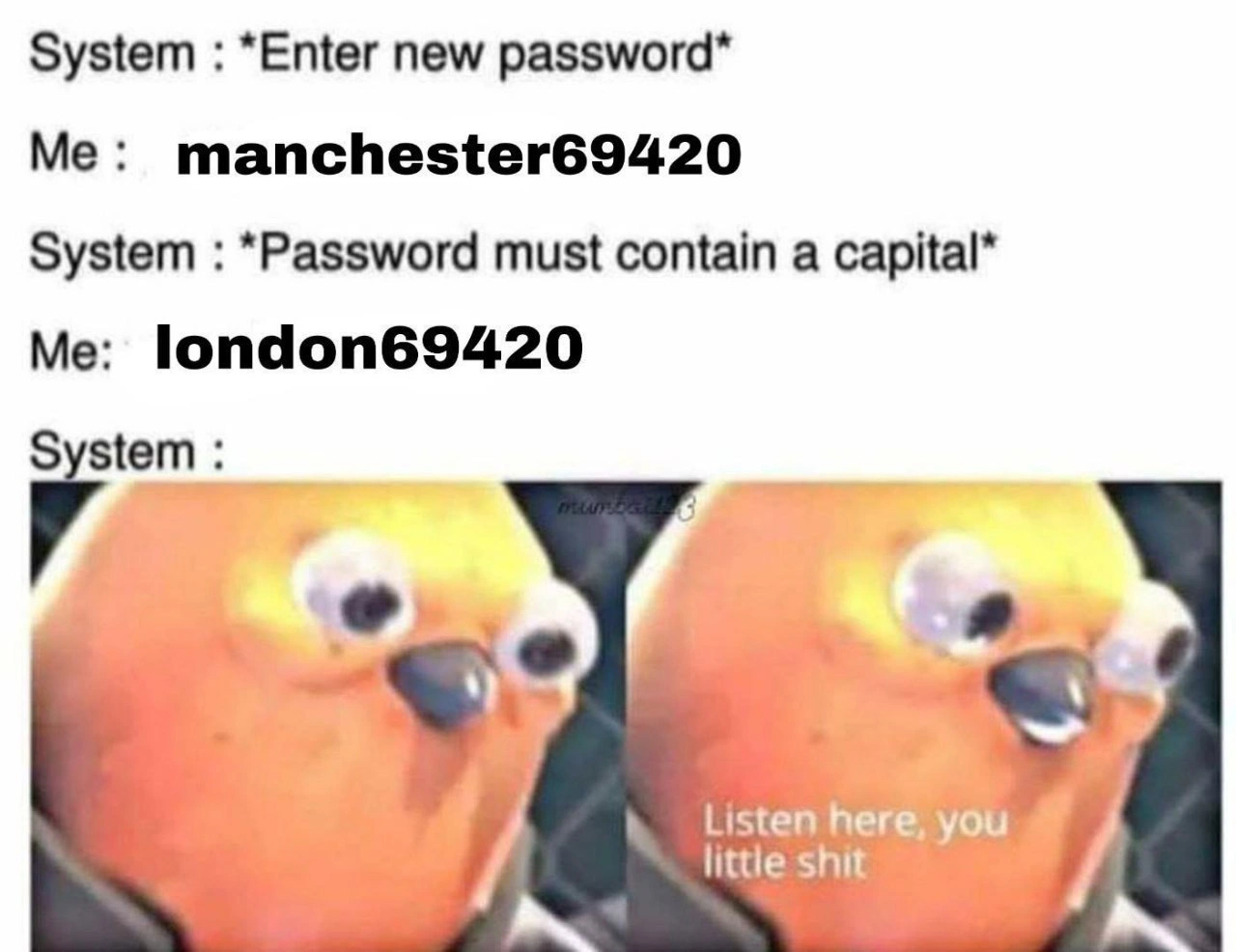
A password rule becomes a language joke, showing how interface copy can be technically correct yet ambiguously understood.
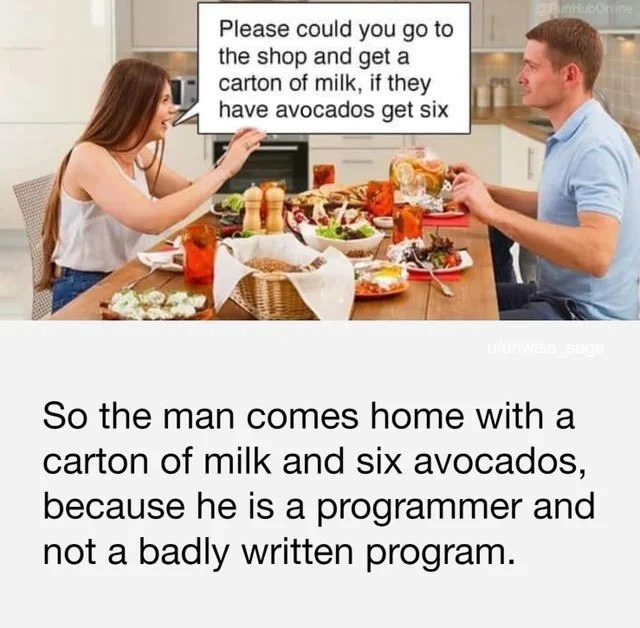
The grocery request exposes hidden assumptions in everyday language—the same ambiguity requirements turn into bugs.
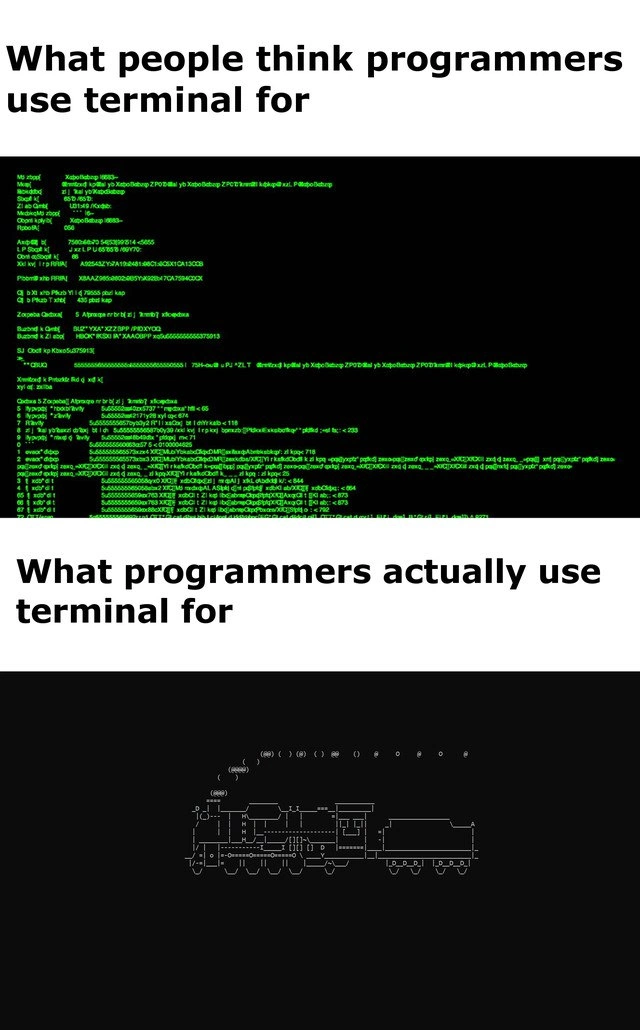
It replaces the Hollywood-hacker terminal with the actual mix of practical commands, mistakes, and playful tools developers use.

The misused mask makes the core UX lesson immediate: real people do not stay inside a designer’s imagined happy path.
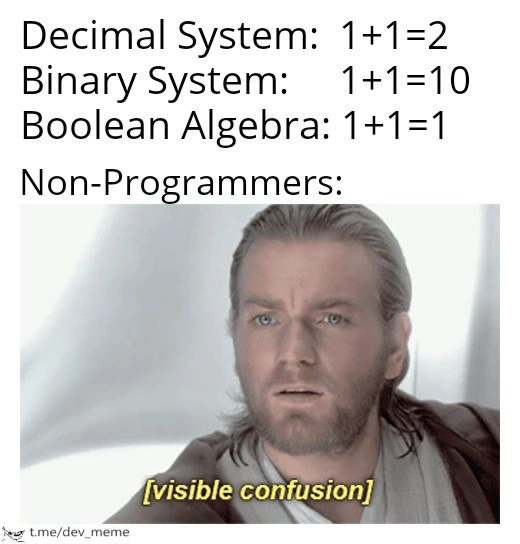
One familiar equation changes with binary and Boolean context, making ‘computers use different rules’ concrete without requiring code.
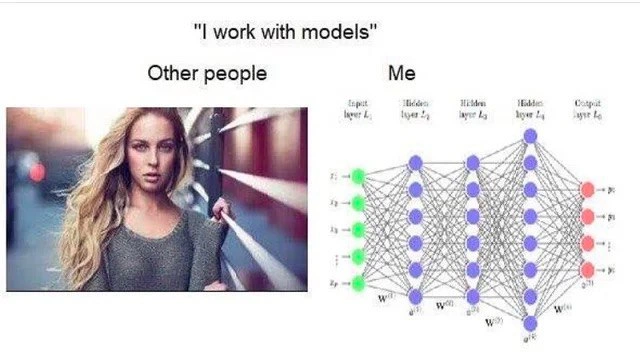
The double meaning of ‘model’ neatly demonstrates why technical jobs can sound entirely different outside their field.
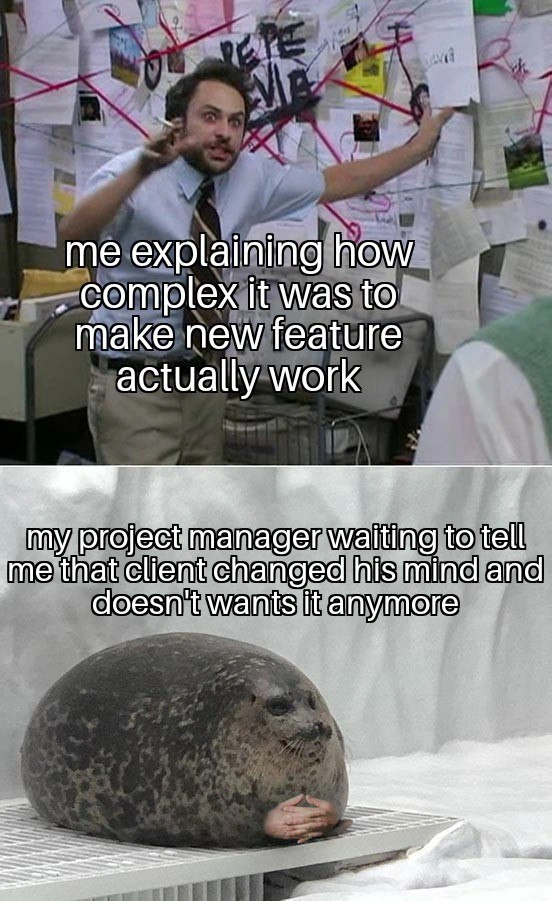
The conspiracy board versus calm seal shows that implementation effort can be real even when a stakeholder reverses the requirement in one sentence.
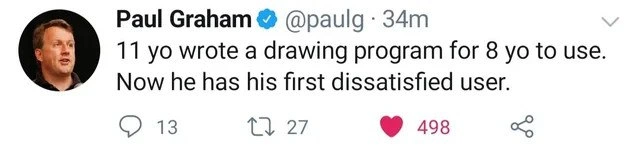
The child-sized story captures the instant a private project becomes a product: another person’s needs now define whether it works.
Browse the underlying catalog
Related resources
- Programming Memes for Junior DevelopersCurated programming memes for junior developers about onboarding, code review, Git, debugging, learning, and safe production work.
- Fintech Software Engineering Memes, ExplainedFintech engineering memes explained through payments, security, numeric correctness, legacy systems, trading, and compliance constraints.
- Enterprise Software Engineering Memes, ExplainedEnterprise software memes explained through legacy modernization, governance, shadow IT, vendor lock-in, planning, and technical debt.
Sources
- GOV.UK Service Manual: learning about users and their needs primary · checked 2026-07-16
- FDA glossary: computer system software development terminology primary · checked 2026-07-16
Real reader questions
- Do I need to know how to code to understand these programming memes?
- No. The collection starts with recognizable situations—ambiguous instructions, confusing password rules, user feedback, family tech support, and technical words with ordinary meanings. Each selected meme includes a plain-language annotation, and most link to a fuller explanation.
- Are programmers expected to fix every computer problem?
- No. Software development, desktop support, networking, device repair, and printer troubleshooting are different specialties. A developer may know enough to help, but the job title does not imply expertise with every device or account problem.
- Why do programming memes give ordinary words different meanings?
- Software reuses words such as bug, model, terminal, and condition for precise technical ideas. The joke often comes from switching between the everyday and technical meaning without warning.
- Which memes help explain software work to family or coworkers?
- Start with the family tech-support, literal-instructions, first-user-feedback, and feature-whiplash examples. Together they show that software work includes translation, tradeoffs, testing, and responding to people—not only typing code.
- Where should I browse after I recognize a specific topic?
- Use the category links for broad subjects and the tag links for narrower concepts. If you remember a phrase, tool, object, or work situation, try one of the searches on this page.