
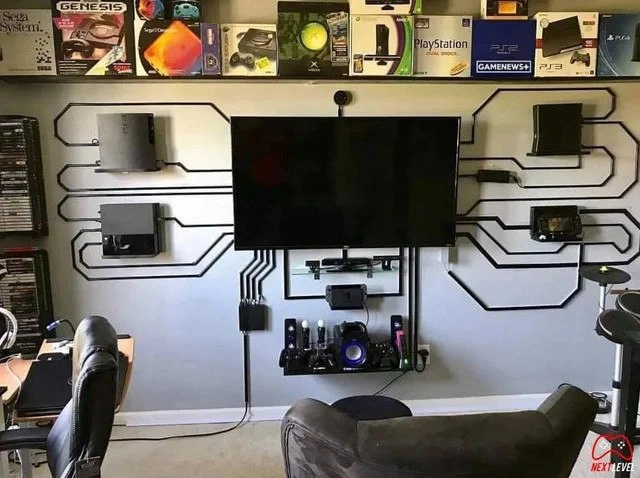
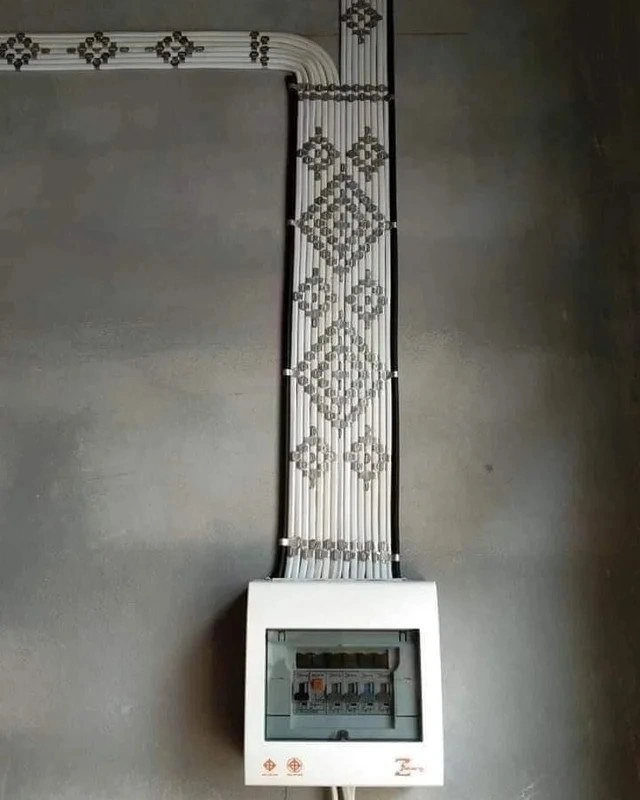
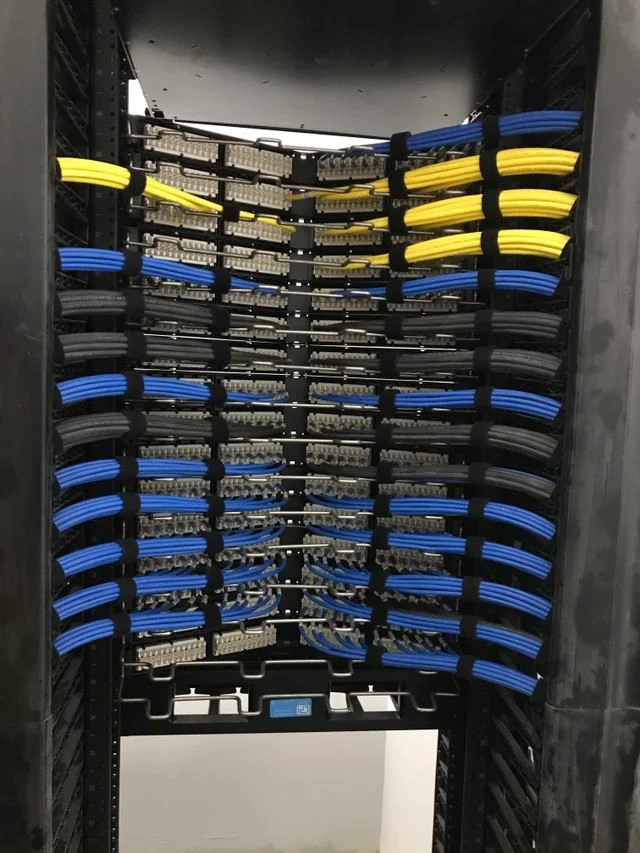
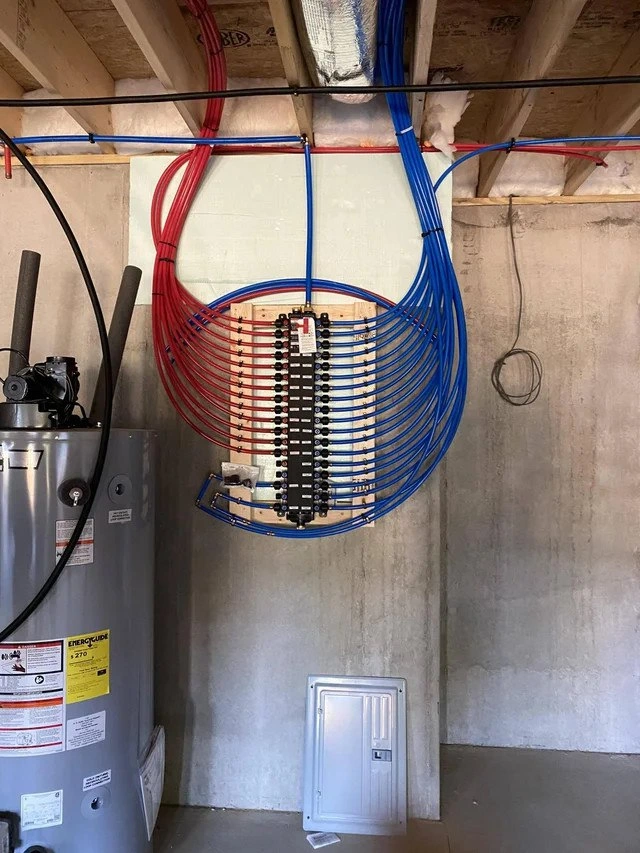
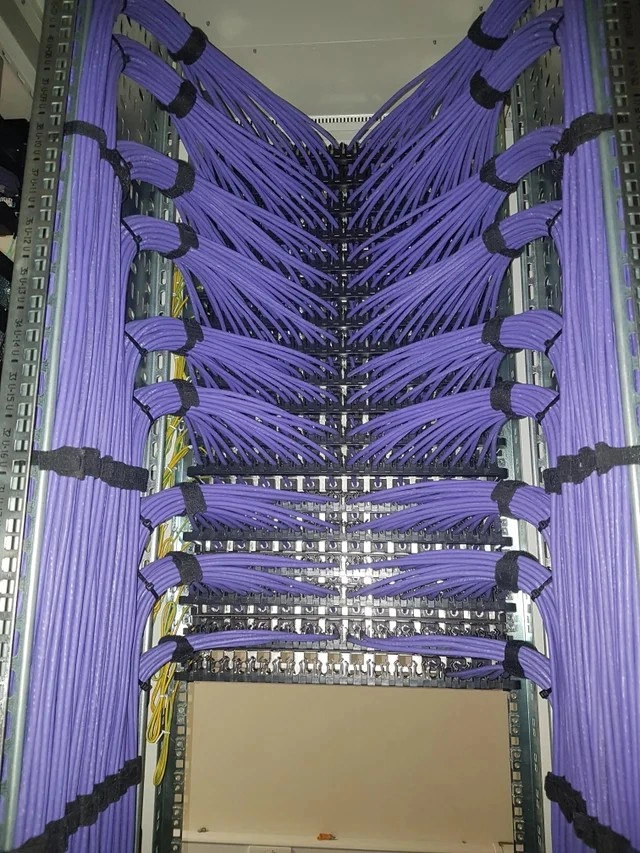
When a hardware engineer designs their entertainment center
Description
This image showcases an impeccably organized entertainment and gaming setup. A large flat-screen TV is centrally mounted on a light gray wall. Surrounding the TV are various video game consoles from different generations, including a PlayStation 3, a PlayStation 4, an Xbox, and a Nintendo Wii U, each on its own small shelf. The most striking feature is the cable management: all wires are concealed within black casings that are arranged on the wall to mimic the conductive traces of a printed circuit board (PCB), creating a clean, high-tech aesthetic. Above the entire setup, a shelf displays a collection of classic video game boxes, such as Sega Genesis, Sega CD, and original Xbox, adding a touch of retro nostalgia. The overall impression is one of meticulous planning and a deep appreciation for both technology and design. This appeals to senior engineers who value clean architecture, structured design, and elegant solutions, whether in code, infrastructure, or their own living spaces. It’s a physical manifestation of the satisfaction derived from turning chaos into order

Comments
7Comment deleted
I showed this to my lead architect, and he said, 'Finally, a dependency graph I can actually understand.' Then he submitted a PR to refactor my living room
Only a 20-year network architect would turn a game room into a PCB: five closed-source monoliths, immaculate trace routing, and one single-point-of-failure ingress - proof you can cable-manage entropy, but you still can’t HA the TV
When you spend more time architecting your cable management than your microservices, but at least the cables have clear separation of concerns and don't require a service mesh to communicate
When your cable management is so good it becomes a feature, not a bug. This is what happens when a hardware engineer designs their gaming setup with the same attention to signal routing as a multi-layer PCB - except instead of optimizing for impedance matching and crosstalk reduction, they're optimizing for aesthetic flex and console accessibility. The real question: are those traces following proper design rules for high-speed differential pairs, or is this just a very elaborate way to hide the fact that every console still needs its own power brick?
DevOps heaven: consoles as clustered nodes, traces as fiber channels - no packet loss, just perfect impedance matching
Living room as a PCB: perfect traceability, awful rollback - adding a console is a schema change that requires a sander
ADR‑042: replace spaghetti cables with PCB‑style trunking - pros: deterministic routing and excellent observability; cons: every “add one more console” becomes a breaking schema migration against the drywall