
The Art of Color-Coded Cabling
Description
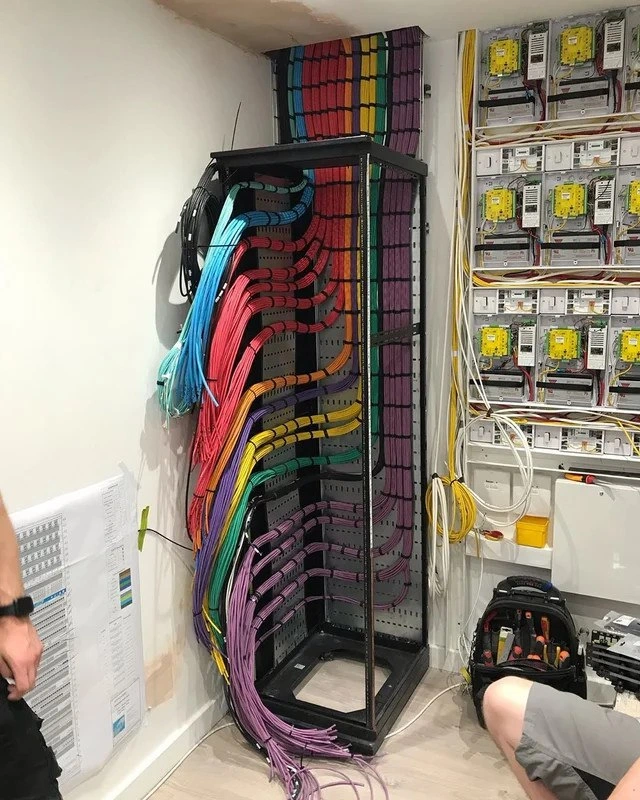
A photograph of a network infrastructure installation in progress. In the center is a black server rack with meticulously organized bundles of multi-colored cables creating a rainbow effect. The cables (red, orange, yellow, green, blue, purple) are neatly combed and secured with zip ties, flowing from a ceiling entry point down through the rack's vertical management channels. To the right is a wall with several electrical or data panels, showing complex wiring. On the floor, a technician in grey shorts is working, with a professional tool bag open beside them. On the left wall, a large technical diagram or blueprint is taped up for reference. This image is a prime example of 'cable porn,' celebrating the skill and discipline required for clean, maintainable structured cabling. The use of color-coding is not just aesthetic but a critical practice for identifying and tracing lines in complex network environments, a principle highly valued by experienced engineers


Comments
7Comment deleted
I see the frontend team is handling the cabling for this project. The backend is just a single beige wire with a sticky note that says 'RESTART IF BROKEN'
Layer 1: pristine rainbow cabling; Layer 7: a monolith held together by “TODO: refactor” comments - turns out Velcro scales better than our architecture reviews
The new hire spent three days color-coding the cables by VLAN, and now we're migrating everything to SDN next quarter
When your network engineer has more OCD than your linter has rules - this is what happens when someone applies 'clean code' principles to physical infrastructure. Each cable follows SOLID principles: Single responsibility (one connection), Open/closed (sealed terminations), Liskov substitution (any cable can replace another of same color), Interface segregation (separate VLANs by color), and Dependency inversion (high-level switches don't depend on low-level endpoints). The rainbow gradient isn't just aesthetic - it's a visual representation of the OSI model layers, where each color represents a different subnet or VLAN. Meanwhile, the rest of us are still dealing with cable spaghetti that looks like it was deployed during a 3am production incident by someone who thought 'documentation' was a type of Docker container
Physical layer technical debt: untangling this rack would take longer than migrating a COBOL monolith to Kubernetes
Manual Terraform for networks: idempotent curves, declarative color mapping - until someone yells ‘quick hotfix’ and hands you a zip tie
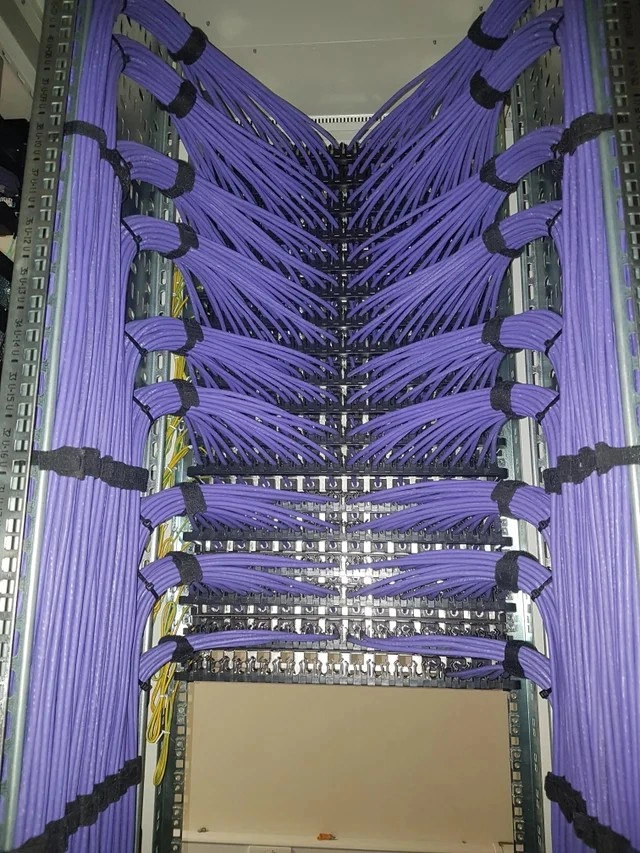
Distributed tracing without Jaeger: follow the purple span end-to-end - our service mesh is zip‑tied at layer 1, and STP now stands for Stop Touching Prod