
The Zen Art of Server Rack Cable Management
Description
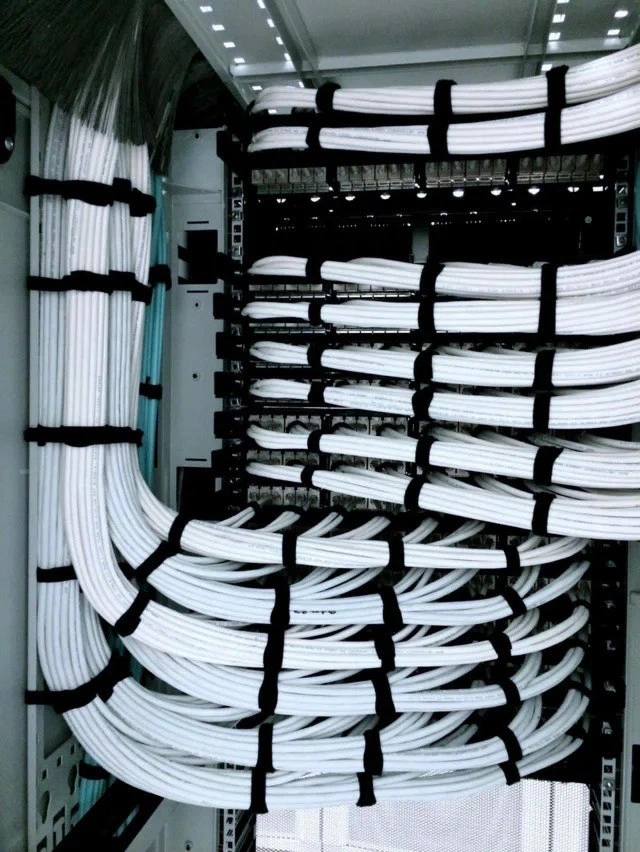
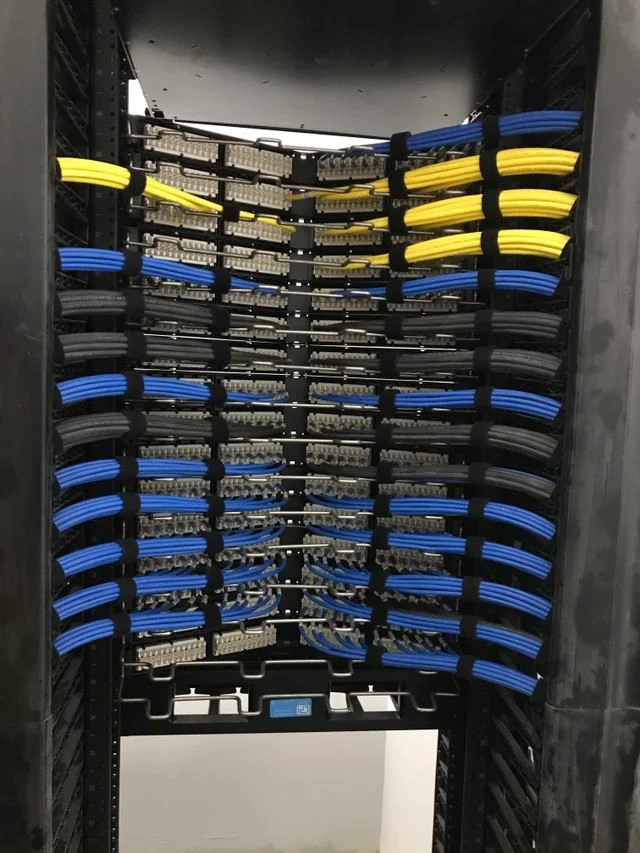
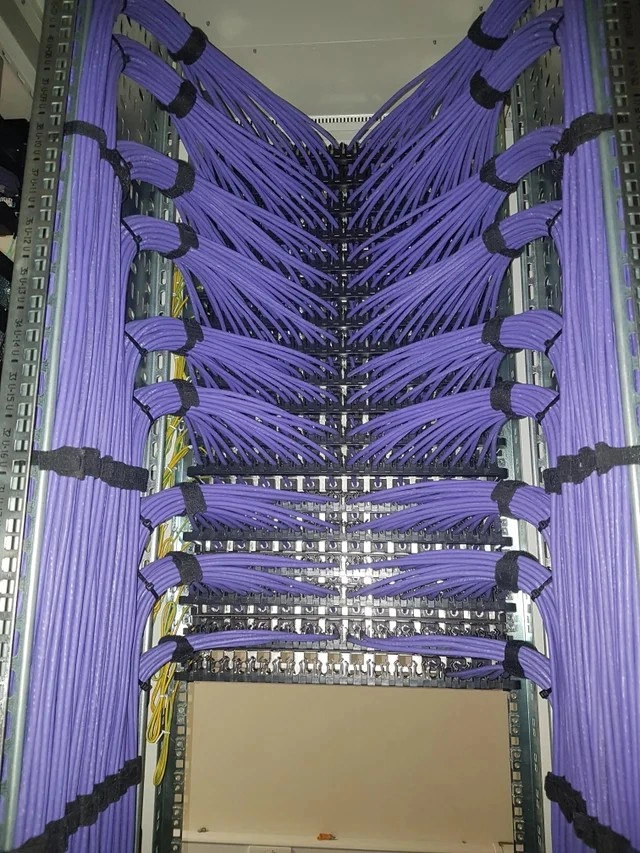
A photograph showcasing exemplary cable management within a server rack, a sight often referred to as 'cable porn' by IT professionals. The image displays dozens of thick, white networking cables meticulously organized into clean, uniform bundles. These bundles are secured with black velcro straps and sweep in graceful, parallel arcs from the side of the rack into patch panels or network switches. The background shows the dark metal frame of the server rack and the dense ports of the networking equipment. The lighting is even, highlighting the pristine condition of the cables and the overall orderliness of the setup. This image is deeply satisfying to engineers and system administrators because it represents an ideal state of infrastructure - organized, maintainable, and aesthetically pleasing - which is a stark contrast to the chaotic 'cable spaghetti' often found in real-world data centers



Comments
7Comment deleted
This is a picture of a server rack taken 5 minutes before the 'urgent' request to add 'just one more cable' was submitted
Behold: the only production environment where deterministic routing, zero tech debt, and perfectly decoupled layers are enforced with a 10-cent Velcro strap
This is what happens when you hire the contractor who charges by the meter instead of by the hour
This is what happens when your network engineer has both OCD and a performance review coming up. Meanwhile, somewhere in a startup's 'server closet' (read: broom closet), cables are achieving sentience through spontaneous spaghetti-based neural networks. The real question: did this take longer to install than migrating the entire infrastructure to Kubernetes? Probably. Was it worth it? Ask the on-call engineer who can actually trace a cable at 3 AM without having an existential crisis
The only bundle in tech without version conflicts or transitive dependency nightmares
Terraform apply IRL: state locked with zip ties; drift detected at 2 a.m.; rollback strategy - scissors
Velcro instead of zip ties: loose coupling, high cohesion, and perfect bend radius - if only our microservices looked like this patch panel