
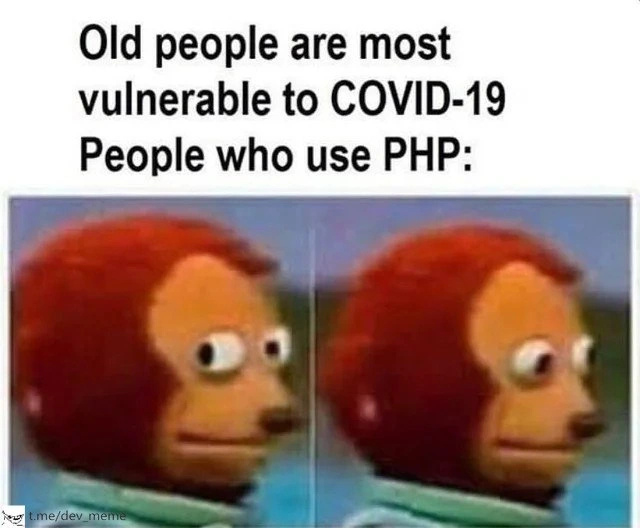
PHP Developers Checking for Symptoms
Description
A two-part meme that humorously links the PHP programming language to old age. The top section contains black text on a white background that reads, 'Old people are most vulnerable to COVID-19. People who use PHP:'. Below this text is the 'Monkey Puppet' meme format, featuring a puppet looking forward in the first frame and then darting its eyes nervously to the side in the second. This meme plays on the long-running joke within the developer community that PHP is an old, outdated, and dying language. By juxtaposing the statement about COVID-19 vulnerability with PHP users, the meme implies that PHP developers are the 'old people' of the tech world, and thus should be nervously looking over their shoulder. The humor appeals to developers familiar with language stereotypes and the endless debates about technology relevance. A watermark for 't.me/dev_meme' is in the bottom left


Comments
7Comment deleted
PHP isn't old, it's just accumulated a lot of technical debt, much like the human body. Both have questionable global state management and a surprising number of production instances you're afraid to touch
After surviving register_globals, magic_quotes and the Great 5.3→5.4 migration, a “version 19” virus just sounds like another minor patch release
The real vulnerability is explaining to your board why half the Fortune 500 still runs on PHP 5.6 while you're pushing for a Rust rewrite that'll take three years and deliver the same features
PHP developers nervously checking if their Composer dependencies are older than their last health checkup, while simultaneously maintaining codebases that predate both Docker and their own existential dread about framework choices
PHP: where eval() is a feature, not a vulnerability - unlike boomers dodging COVID, your app won't survive the next exploit wave
Call it legacy, but the PHP monolith is funding your microservice rewrite and still beats your 40-service gRPC mesh on p99
PHP engineers hearing “older stacks are vulnerable” immediately grep for register_globals, magic_quotes, and any auth that trusts == with 0e hashes