Captain America's Bad Programming Pun
Why is this Languages meme funny?
Level 1: Can’t Flip the Switch
Imagine you have two toy robots that speak different languages. One robot (let’s call it Python) is super friendly but it doesn’t have a certain button on it – let’s say there’s no switch button to change its mode. The other robot (JavaScript) does have a switch button for changing modes. Now, your friend asks, “Hey, why can’t we switch this Python robot to speak like the JavaScript robot?” And you jokingly answer, “Because this robot doesn’t have a switch!” In other words, you can’t flip a switch that isn’t there. 😄 It’s a silly play on words, right? You meant you can’t change Python to JavaScript because Python robot has no actual switch button. That’s basically the joke here!
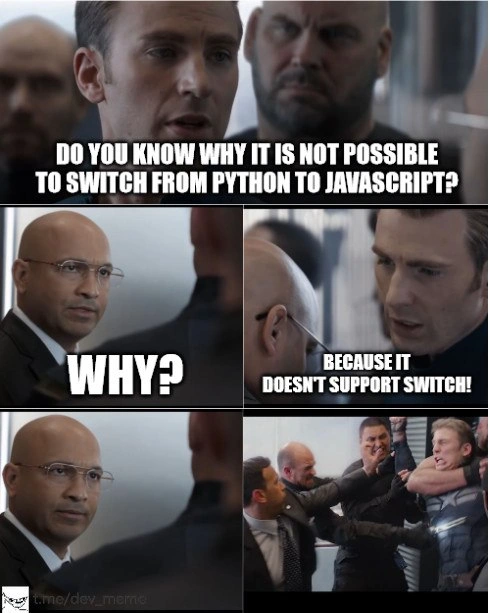
In the meme, a superhero in an elevator full of bad guys makes that kind of joke. He says you can’t “switch” from Python to JavaScript because Python doesn’t support (doesn’t have) “switch.” The bad guys go “Huh? Why not?” and he delivers the punchline: “Because it doesn’t support switch!” It’s like our robot example – you can’t use a switch if it’s missing. The reason everyone finds this funny is because it’s a big, dramatic setup for a very goofy answer. It’d be as if a teacher asked, “Why can’t this chalkboard turn into a whiteboard?” and the class clown yelled, “Because it doesn’t have a switch!” It’s a pun – using the word “switch” in two ways at once – and it catches people off guard.
Now, why the fighting? Well, that’s the exaggerated part of the humor. In the movie scene these pictures are from, a fight was about to happen anyway. In the meme, it’s like the hero’s corny joke “flips a switch” in the bad guys, and they all start tussling. It’s making fun of how a tiny silly remark (especially about something nerdy) could cause an over-the-top reaction. Of course, in real life, nobody’s going to throw punches because a programming language lacks a feature – that would be crazy! The joke is in the overreaction. It’s funny to imagine a bunch of people literally brawling over a pun.
So even if you don’t know coding, you can appreciate this meme like a regular scene: someone makes a wordplay joke about a missing switch, and a ridiculous fight breaks out. It’s like saying, “You can’t change to that channel because this remote has no switch,” and then everyone leaps up in comic frustration. The heart of it is simple: a silly misunderstanding and an exaggerated response. We laugh because it’s both clever (in a nerdy way) and absurd. The hero basically said, “We can’t switch… there’s no switch!” and that’s such a childish logic trick that it makes the situation comically dumb – in a good way. It’s the kind of joke where you groan and giggle at the same time. And seeing it lead to a big elevator scuffle — that’s just the cherry on top, showing how ridiculous and fun our developer jokes can be when taken to the extreme.
Level 2: If/Elif to the Rescue
At its core, this meme highlights a simple technical difference between Python and JavaScript in an exaggerated, comic-book way. The hero (Captain America in the images) asks: “Do you know why it is not possible to switch from Python to JavaScript?” and when one of the agents asks “Why?”, he answers: “Because it doesn’t support switch!”. This is a play on words about the term “switch”. In everyday English, to switch from Python to JavaScript means to change from using one language to the other. But in programming, a switch statement is a specific feature (a keyword) some languages have. The joke pretends that when we say “switch from Python,” we literally mean using a switch command in Python — which you can’t, because Python doesn’t have one! It’s a classic bit of CodingHumor where a technical detail is turned into a pun. The result in the meme: the agents look confused or stunned (since that answer is both clever and a tad groan-worthy), and then an elevator brawl breaks out (exaggerating how programmers might play-fight over programming choices).
So what exactly is a switch statement and why doesn’t Python support it? A switch (also known as switch–case) is a programming construct for handling multiple possible values of a variable or expression. It’s like a more structured way of writing many if-else checks. For example, in JavaScript (and in languages like C, Java, C#), you might see code like:
let color = "green";
switch (color) {
case "red":
console.log("Stop!");
break;
case "green":
console.log("Go!");
break;
default:
console.log("Proceed with caution.");
}
In this JavaScript snippet, the switch statement checks the value of color. If it’s "red", it executes one block of code; if it’s "green", another; and default covers any other value (like an else). The break; statements end each case so the code doesn’t fall through to the next case (a common pattern in C-style switch statements). This structure is convenient in languages that support it, making the code for multi-way branching look clean.
Now let’s look at Python. Python doesn’t have a switch or case keyword at all (at least it didn’t in 2020). So how do you handle multiple conditions? You simply use if/elif/else statements. For the same logic in Python, you’d write:
color = "green"
if color == "red":
print("Stop!")
elif color == "green":
print("Go!")
else:
print("Proceed with caution.")
Here, elif is short for “else if,” and you can have as many elif parts as needed for different values. This achieves the same result as the switch above: checking the color and printing a message. It’s a bit more verbose in some cases, but very straightforward. Python developers are used to this and find it readable. In fact, Python’s philosophy emphasizes clarity and having one obvious way to do things. So instead of offering two different ways to do multi-branch logic (an if chain or a switch), Python chose to have just one main way: the if/elif chain.
The meme’s humor comes from pretending that this missing feature is a literal obstacle to changing languages. The phrase “doesn’t support switch” is typically how we’d say a language lacks a feature. For example, “Python doesn’t support switch statements” is a factual statement. The meme turns this technical note into a punchline. It’s like someone asked a serious question (“Why can’t we switch from one thing to another?”) and got a cheeky literal answer (“Because we don’t have a switch to do that!”). If you’re new to coding, imagine asking “Why can’t this program do X?” and someone replies “Because the command for X isn’t there.” It’s a humorous misdirection: the question was likely meant as “why can't we change from Python to JavaScript (maybe implying difficulty of migrating code or culture)?” but the answer treats “switch” in a pure technical syntax sense.
Now, why did a fight break out in the elevator? This is referencing the Captain America elevator meme format. The images are from a Marvel movie where the hero, Captain America, is in an elevator full of agents who turn out to be enemies, and a big fight ensues in the cramped space. Internet meme culture loves using that tense scene to joke about one person versus many. Usually, the person (Cap) says something that provokes everyone else and then chaos erupts. In this meme, Captain America is essentially that one developer who drops a pun or a controversial statement in a room full of other developers. The others (the agents) could be thought of as either JavaScript developers or just unsuspecting folks who didn’t expect a nerdy joke. The “WHY?” guy in the second panel is like the straight man in a comedy routine, asking the obvious question to set up the punchline. When Cap answers with the switch joke, the others might be rolling their eyes or groaning — the kind of reaction where you playfully want to “attack” someone for such a bad joke. The next panels showing the brawl are an exaggeration, implying “that joke was so bad (or so provocative) that it started a fight.” It’s slapstick humor: of course in real life, developers don’t start punching each other over a missing language feature! They might good-naturedly argue or rib each other online, but the meme takes it to cartoonish extremes for laughs.
From a junior developer perspective, there are some takeaways and definitions here:
- Python vs JavaScript: Two popular programming languages. Python is often praised for its simple and readable syntax (using indentation and keywords like
if,elif,else), while JavaScript is the language of web browsers, known for its C-like syntax (with{}braces and keywords likeswitch,casefor similar logic structures). - “Doesn’t support X”: A phrase meaning the language doesn’t have a built-in way to do X. So “Python doesn’t support switch” means if you literally type
switchin Python code, you’ll get a syntax error. It’s not part of Python’s vocabulary. - Switch statement: A control flow structure that allows multi-way branching based on the value of a variable. Many languages have it to handle lots of conditions more neatly. Python compensated by using multiple
elifor other patterns. Fun fact: In 2021, Python introduced amatchstatement (often called structural pattern matching) which is conceptually similar to a switch/case (it lets you check a value or even complex patterns). But when this meme was made, that feature wasn’t out yet, so Python truly had no direct switch-like syntax. - If/elif/else chain: The technique Python programmers use for multiple conditions. It’s like saying “if this, do that; else if that, do something else; else, do a default thing.” It’s slightly more typing than a typical switch-case but accomplishes the same logic.
- Language quirk: A funny or odd characteristic of a programming language. Every language has its quirks that developers joke about. Python’s missing switch was one of those well-known quirks.
- Language wars: a tongue-in-cheek term for the debates and rivalries between fans of different programming languages. It’s usually in good fun, though sometimes people get very passionate. In memes, language wars are often portrayed humorously — like a trivial difference causing a huge fight scene, as we see here.
The whole scene in the meme is relatable to developers because we often see heated discussions in forums or chat groups about which language is better or what feature one language lacks. This meme compresses that idea into a quick visual gag: one line of dialogue representing a pro-Python or pro-JavaScript tease, followed by imagined fisticuffs. It’s a MemeCulture way to poke fun at how seriously we sometimes take our favorite tools. Even as a newcomer, you can chuckle at the absurdity: they’re fighting over a syntactical feature! It’s like two chefs play-fighting because one’s kitchen doesn’t have a blender. Once you know that Python indeed didn’t have a “switch” button and JavaScript does, the meme’s joke clicks into place.
Level 3: Switch-Case Showdown
In this meme’s syntax showdown, a playful jab at programming language design spirals into an all-out elevator brawl. The punchline, >“Because it doesn’t support switch!”, immediately flags an inside joke about Python’s notorious lack of a switch-case statement. Experienced developers recognize this as classic LanguageQuirks humor: Python, unlike JavaScript (and many C-style languages), historically doesn’t have a native switch statement for branching logic. Instead, Python devs rely on a chain of if/elif conditions or clever dictionary dispatch patterns. This absence has long been a trivial debate spark in LanguageComparison discussions – and here it’s fanned into a comedic LanguageWars inferno.
Why is this funny to seasoned devs? It’s the double meaning in “switch from Python to JavaScript”. Normally, “switch” means migrate or change (e.g. switching from one language to another). But Cap (our meme hero) twists it: he answers it literally in coding terms – Python can’t “switch” because the language doesn’t support a switch construct! 🤭 It’s a nerdy pun that flips a switch in the minds of those who know both languages’ syntax. The moment is extra humorous because Python’s missing switch-case is a well-known tidbit in the developer community. It’s one of those “Did you know...?” facts that Java, C, or JavaScript programmers tease Python about. Pythonistas often retort that “There should be one—and preferably only one—obvious way to do it,” quoting the Zen of Python to justify using if/elif instead of adding another keyword. Nevertheless, the lack of switch has been a recurring lighthearted gripe on forums like Stack Overflow (where newbies ask “How do I do a switch-case in Python?” only to be told to use if/elif). So when Cap drops this pun, it’s like he’s referencing an old inside joke – one that every experienced Python dev has heard ad nauseam.
Now, framing this inside the Captain America elevator scene ramps the nerdy joke into high gear. In the original Winter Soldier film clip, Cap is surrounded by hostile agents, and a tense fight breaks out in an elevator. Meme culture repurposed that iconic showdown for scenarios where one person’s remark triggers a chaotic battle. Here, the hero’s “Python can’t switch” quip is portrayed as fightin’ words in a crowded elevator of agents (perhaps imagined as die-hard JavaScript fans or just hapless coworkers caught in the crossfire of a DeveloperHumor duel). The stunned look on the bald agent’s face in the second panel – captioned “WHY?” – mirrors how a perplexed junior dev or an incredulous JavaScript pro might respond upon hearing such a groaner of a pun. Then the next frames show fists flying, which is obviously comedic exaggeration. It pokes fun at how language debates can escalate: One second it’s a silly syntax pun, the next it’s an all-out (meme) brawl. In reality, dev “battles” over languages happen in comment threads and GIF-laden rants, not elevators – but portraying it physically is what makes it absurd and laughable.
On a deeper level, this joke hints at the differing design philosophies of the two languages. JavaScript, influenced by Java/C, implements switch for convenience (even if many JS devs have mixed feelings about using switch versus more functional patterns). Python, guided by simplicity and consistency, long resisted adding a switch. Guido van Rossum (Python’s BDFL) and core devs felt that a bunch of elif statements were clear enough, and adding a new keyword wasn’t worth the complexity. They cared about DeveloperExperience_DX and readability: a new dev can read Python’s straightforward if/elif chain without learning a special switch syntax. Ironically, this stance made Python the butt of “no switch” jokes for years. (Fun fact: Python 3.10, released after this meme, introduced a powerful match statement for pattern matching – essentially Python’s fancy answer to switch – but back in April 2020, Python really had no switch to speak of!). Senior engineers chuckle because they remember these discussions on mailing lists and PEP proposals, essentially “case closed” on adding a basic switch. The meme’s exaggerated elevator showdown represents how trivial technical differences, like a missing keyword, can ignite disproportionate reactions in dev culture. We’ve all seen flame wars where a minor language feature turns into a multi-page argument. This meme condenses that feeling: one witty comment about Python vs JavaScript syntax, and suddenly it’s Captain America vs a pack of goons – a TechMemes dramatization of our everyday programmer banter.
And let’s not forget the pun quality itself – it’s deliberately corny. 😅 The kind of dad-joke a senior engineer might drop in a code review or Slack channel (“Can we switch to Python?” – “Nope, no switch statement, sorry!”). It elicits groans and laughs simultaneously. The bald agent’s incredulous “WHY?” is exactly the setup you’d expect before a punchline, and Cap’s smug answer “Because it doesn’t support switch!” lands like a final MemeCulture zinger. For those in the know, it’s equal parts educational (oh right, Python lacks switch) and absurd. In summary, at this level we’re appreciating the layered humor: the technical truth behind the joke, the clever wordplay, and the hilarious portrayal of a minor coding gripe blowing up into a Marvel-style melee. This relatableDeveloperExperience meme resonates because every coder has witnessed (or participated in) a heated debate over something as silly as bracket styles or missing semicolons – or here, a missing switch. It’s funny ‘cause it’s true, and also funny because it’s an over-the-top scenario. Cap’s elevator showdown reminds us that even the smallest language feature can be a punchy topic among passionate developers.
Description
A multi-panel meme using the 'Captain America in an Elevator' format to tell a programming dad joke. In the first panel, Captain America asks, 'DO YOU KNOW WHY IT IS NOT POSSIBLE TO SWITCH FROM PYTHON TO JAVASCRIPT?'. A man in a suit, Agent Sitwell, replies 'WHY?'. Captain America then delivers the punchline: 'BECAUSE IT DOESN'T SUPPORT SWITCH!'. The final panels show the man giving an unimpressed, deadpan stare, followed by the group attacking Captain America for the terrible pun. The humor is a play on words: 'switch' refers both to the act of changing languages and the `switch` control flow statement. For a long time, Python famously lacked a built-in `switch` statement, unlike JavaScript and many C-style languages, making this a common trope in language comparison jokes. (Note: Python 3.10 introduced a `match/case` structure, but the joke remains popular). A watermark for 't.me/dev_meme' is visible in the bottom left
Comments
7Comment deleted
Python finally got a 'switch' with the `match` statement in 3.10, but by then JavaScript developers had already switched frameworks twelve times
Pro tip: suggest porting that 800-line JavaScript switch to a Python match-case and you’ll learn in one sprint how much “business logic” your team accidentally stored in fall-through
The real reason you can't switch from Python to JavaScript is because after 15 years of explaining to stakeholders why indentation matters, you've developed Stockholm syndrome with significant whitespace
The irony is that after years of Python developers defending dictionary dispatch patterns and if-elif chains as 'more Pythonic,' Python 3.10 finally introduced structural pattern matching with match-case statements - essentially admitting that maybe, just maybe, switch statements weren't such a bad idea after all. Meanwhile, JavaScript developers are still debugging fall-through cases because someone forgot a break statement in 2024
Python's switchless era birthed dictionary dispatch hacks that outlived more patterns than your average enterprise monolith
“We can’t switch from Python to JS because Python doesn’t support switch.” Python 3.10 supports match/case; JS supports fall‑through to prod. Senior move: use a dispatch table and skip the rewrite
Python 3.10 gave us match/case; switching ecosystems means trading pip freeze for a 1,200-line package-lock and a CI that only passes on Tuesdays