Skip to content
DevMeme
2751 of 7435
One Last Feature Before Launch
Stakeholders Clients Post #3039, on May 4, 2021 in TG

One Last Feature Before Launch

Why is this Stakeholders Clients meme funny?

Level 1: The Last-Minute Room

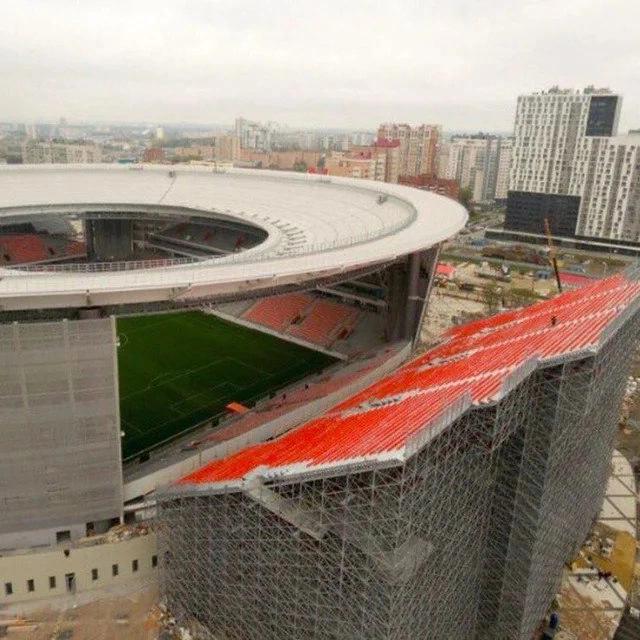
Imagine building a house, and the night before everyone moves in, someone asks for "just one more bedroom." You can nail a room onto the side, but it will look strange, leak in the rain, and make the whole house harder to fix later. This meme is funny because the stadium looks like that rushed extra room, and developers know last-minute features often feel the same way.

Level 2: Launch Eve Add-On

Scope creep means a project keeps gaining extra requirements beyond what was originally planned. A little scope change can be fine when the team has time to design, estimate, build, and test it. It becomes dangerous when it happens right before launch.

A product launch is the moment a product, feature, or release becomes available to users. Near launch, teams usually care about stability. They want known bugs tracked, tests passing, monitoring ready, rollout plans prepared, and rollback options understood.

The photo maps neatly onto software delivery:

  • The main stadium is the original product plan.
  • The giant side grandstand is the last-minute feature.
  • The visible scaffolding represents rushed glue code and workarounds.
  • The mismatched shape represents architecture that no longer fits cleanly.
  • The city around it makes the structure feel public, like a product users are about to see.

Technical debt is the future cost created by shortcuts. Sometimes debt is a reasonable trade-off: shipping matters, deadlines matter, and not every system needs perfect design. But debt becomes painful when nobody records why the shortcut exists or schedules time to clean it up. Then the next feature has to work around the workaround.

For a junior developer, this meme explains why engineers ask so many questions about "small" late requests. They are not being difficult for sport. They are trying to find out whether the request fits the existing structure, whether it can be hidden behind a feature flag, whether it needs tests, and what might break if it ships tomorrow.

Level 3: Load-Bearing Scope Creep

The post message says:

When the client asks for one last feature a day before the product launch

The photo shows why that hurts: a rounded stadium structure on the left, then a huge orange-seated grandstand jutting out from the side like it arrived after the original plan had already signed off. It is visibly connected, but it does not look integrated. That is exactly what late-stage feature creep feels like in software: the thing can be attached, sure, but now the whole system has to pretend it was designed that way.

The senior-developer pain here is not simply that clients ask for changes. Requirements change; that is normal. The problem is timing and architectural fit. A day before launch, the product is usually in some form of stabilization: release candidates are being tested, risky code paths are supposed to be frozen, documentation is being finalized, deployment plans are being checked, and the team is trying to avoid creating fresh unknowns. A "small feature" at that point is rarely small. It touches UI, backend behavior, permissions, analytics, translations, QA cases, deployment config, support scripts, and the fragile confidence that the release might actually survive contact with users.

The stadium is a perfect metaphor because software architecture also has load-bearing assumptions. Data models, APIs, component boundaries, deployment pipelines, and permission schemes are built around expected shapes of work. A last-minute request often violates those assumptions. So the team builds a bridge, adapter, special case, feature flag, conditional path, temporary table, or "just for launch" exception. Six months later, the temporary exception has a dashboard, an owner, and a second exception glued to it.

This is how technical debt accumulates without anyone feeling villainous. The client is trying to capture business value. Product is trying to protect the relationship. Management is trying to hit the launch date. Engineering is trying to avoid saying no in a way that sounds unhelpful. The result is an architectural orange grandstand hanging off the release, supported by scaffolding made of TODO comments and nervous Slack messages.

The funniest part is that the add-on in the image is enormous. That matches the classic late-change translation problem: "one last feature" often means "one last visible checkbox" to the stakeholder, but to engineering it means state migration, error handling, regression risk, and a new path through code nobody wanted to touch during release week. The request is phrased as a small favor; the implementation looks like civil engineering performed during a thunderstorm.

Description

The image shows a large stadium from above, with a normal oval arena on the left and a huge orange-seated grandstand awkwardly bolted onto the side, extending outside the main structure like an afterthought. There is no visible overlaid text in the image, but the associated caption says, "When the client asks for one last feature a day before the product launch." The visual gag compares late-stage scope creep to a physically impossible architectural add-on: technically attached, but clearly not part of the original design.

Comments

4
Anonymous ★ Top Pick That's not feature creep; that's a load-bearing sprint review comment.
  1. Anonymous ★ Top Pick

    That's not feature creep; that's a load-bearing sprint review comment.

  2. @chupasaurus 5y

    IIRC this feature was added years after the project was done.

  3. @DoriamVell 5y

    How microservices looks like

  4. @Winklnix 5y

    I know this place) It's Ekaterinburg

Use J and K for navigation