Skip to content
DevMeme
2644 of 7435
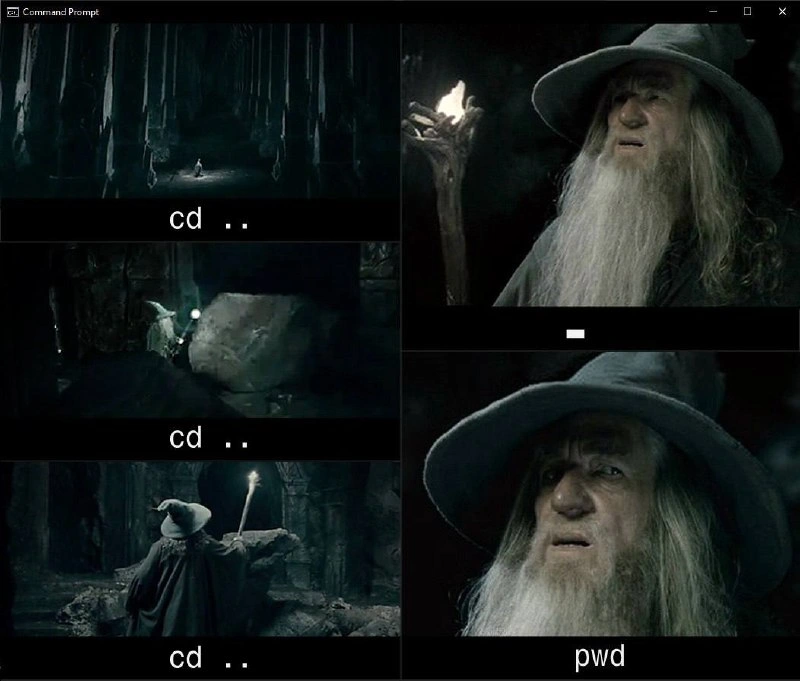
Debugging Progress: Trading One Error for Another
Debugging Troubleshooting Post #2923, on Apr 9, 2021 in TG

Debugging Progress: Trading One Error for Another

Why is this Debugging Troubleshooting meme funny?

Level 1: Better Than Before

Imagine you’re trying to solve a big puzzle and you’ve been struggling with one tricky piece for a long time. Finally, you get that piece to fit in! You haven’t finished the whole puzzle yet, but now the hard piece that was blocking you is placed, and you can move on to the next part. You feel happy because you’re making progress. That’s exactly how a programmer feels here. The code still isn’t working completely (there’s another problem to fix), but the fact that it’s a new problem means the last big problem was solved. In simple terms: things are not perfect yet, but they’re better than before. And even a small win like that can make a tired developer smile and keep going.

Level 2: One Bug Down

Let’s break it down in simple terms. In programming, a bug is a mistake or flaw in the code that causes things to go wrong. When a bug is present and you run your program, you often get an error message (perhaps red text in the console) telling you something broke. This usually comes with a stack trace – basically a report of which functions were running and on which line the program crashed. Debugging (the act of finding and fixing bugs) can be a slow, tricky process. Often you’ll run your code, see an error, make a change to fix that error, then run it again to check if it’s resolved.

Now, imagine you’ve been stuck with the same error for the last hour. Every time you test your program, it crashes at the exact same spot with the same message. Frustrating, right? You try a bunch of fixes and nothing seems to work. Finally, you change one little thing in the code – maybe you add a missing check or correct a wrong variable – and run it again. This time, the original error is gone! 🎉 But, a new error pops up instead. The program is still not working perfectly, but now it failed somewhere else. Strangely, as a developer, you feel happy about this. Why? Because a different error means you fixed the first problem that was holding you back. The program got past that point and only then hit the next bug. In other words, you’ve knocked out “Bug #1” and moved on to “Bug #2.” One bug down, onward to the next!

This is why we say a new error can be “the sound of progress.” It’s proof that your last fix did something. You’re no longer stuck in the same place. Think of it like climbing a staircase: you were stuck on one step for ages, and now you’ve finally climbed to the next step (even if there are more steps to go). Developers often deal with debugging frustration, and any sign of forward movement is a big relief. It might seem odd to celebrate an error, but in the context of software debugging, it truly is a small victory. The meme uses a scene from the video game Team Fortress 2 where a doctor character (the Medic) is performing a crazy surgery. The patient hears a scary noise and asks, “What was that noise?” and the Medic cheerfully replies, “That was the sound of progress, my friend.” In programming terms, the “noise” is like a new error popping up, and the developer is saying, “Yep, that’s progress!” It’s a fun, exaggerated comparison: fixing code can feel as intense (and messy) as an operation, and even a painful noise (an error) can mean you’re healing the patient (the program).

Almost every programmer can relate to this experience. It’s a staple of developer humor because non-coders might think, “How can an error be good news?” But fellow coders know the truth: if you’ve been troubleshooting forever, any change is better than being stuck. It’s a sign you’re on the right track. So when you finally see that new error message, you might actually smile and say, “Progress!” Now you have a fresh clue to work with, and you’re one step closer to getting your code working. That feeling of turning a corner – even a small one – is what keeps developers going during long debugging sessions.

Level 3: Bleeding Edge Debugging

Even seasoned engineers chuckle (or cringe) at this scenario because it captures a sacred rite of debugging. After wrestling the same error for ages, seeing a brand-new error is like hearing a heartbeat after risky surgery. In the meme’s first panel (from Team Fortress 2’s Meet the Medic scene), the Heavy patient hears a disturbing noise and asks, “What was noise?” The blood-splattered Medic — our stand-in for a crazed developer hunched over malfunctioning code — grins and answers, “The sound of progress, my friend.” This dark humor perfectly parallels a coder’s grim joy when the stack trace changes after an hour of despair. It means the code has moved past the old failure. The patient (our program) is still on the operating table, but hey, at least we stopped the bleeding in one spot!

In real development, fixing one bug often uncovers the next. It’s an open secret among senior devs that many bugs in software lurk in layers: solve the first problem and the code finally runs long enough to hit the next problem. It’s like peeling an onion of pain — or performing successive surgeries. The humor here comes from treating a gruesome, on-call 3 AM debugging session as a cause for celebration. A new error message isn’t success, but it signals progress: yesterday’s bug is slain. In industry terms, you’ve advanced the program’s execution beyond the previous crash. For example, maybe your app kept throwing a NullPointerException on launch. After a dozen failed attempts, you add a check for null and finally squash that bug… only to have the app now crash on a database timeout. A different error?! Champagne popped (figuratively). You haven’t crossed the finish line, but you’ve reached a new checkpoint in the race.

This is relatable dev experience at its finest — a mix of frustration and nerdy triumph. The meme nails the shared debugging pain: you’ve been staring at the same stack trace so long it’s burned into your retina. When it suddenly changes, it’s proof you made a dent. In a team setting, developers might even high-five or sarcastically cheer, “It’s failing in a new way!” 😅 That reaction might baffle outsiders (an error is bad, right?), but within coding humor culture, we recognize it as debugging productivity. It means our brute-force “surgery” on the code base is paying off. In fact, experienced troubleshooters develop a dark optimism: as long as the failure mode is changing, you’re moving forward. It’s when nothing changes at all that you really worry.

Crucially, a new error often confirms you fixed the previous root cause. This feedback is the “sound” of hard-won progress. It prevents debugging frustration from boiling over because now you have a fresh clue to investigate. Sure, the program’s still broken, but the battlefield has shifted. Seasoned devs have a tongue-in-cheek saying: “One bug down, next to go.” It’s akin to Hydra from Greek myth — cut off one head (bug), and underlying ones may appear — except here each new head means you actually defeated the last one. The meme’s comically gory surgery imagery emphasizes that debugging can be a messy, painful grind. Yet, like the Medic reveling in chaos, developers learn to savour these grisly troubleshooting victories. It’s progress by attrition: not pretty, not complete, but absolutely worth celebrating in the moment. After all, in the life of a bug-fix war, the sound of progress might just be an error log screaming in a new key.

Description

A two-panel meme based on a scene from the 'Meet the Medic' animated short for the video game Team Fortress 2. The top of the image has a caption: 'When my code returns an error, but it's a different error than the one I've been working on for the last hour'. In the first panel, the character Heavy is lying on an operating table while the blood-splattered Medic looms over him. A yellow text overlay shows the Heavy asking, 'What was noise?'. In the second panel, the Medic looks up with a confident, slightly maniacal smile and replies, 'The sound of progress my friend'. The humor stems from the relatable experience of debugging where fixing one bug only uncovers the next one in line. Getting a *new* error message is a positive sign because it confirms the previous issue has been resolved, even though the overall task is not yet complete. This captures the often grueling, incremental nature of troubleshooting complex systems, where each new failure is paradoxically a step forward
Comments

9
Anonymous ★ Top Pick In advanced debugging, the goal isn't to reach a success state, but to cycle through all possible error states until you get back to the one you started with. That's how you know you've made a full circle of 'progress'
  1. Anonymous ★ Top Pick

    In advanced debugging, the goal isn't to reach a success state, but to cycle through all possible error states until you get back to the one you started with. That's how you know you've made a full circle of 'progress'

  2. Anonymous

    You know the refactor is “working” when the NullPointerException mutates into a cross-cluster timeout - congrats, it’s officially a microservice

  3. Anonymous

    The real progress bar in debugging: watching your error messages evolve from 'undefined is not a function' to 'cannot read property of null' - at least now you know what's undefined, and that's basically a promotion in the error hierarchy

  4. Anonymous

    Ah yes, the classic debugging milestone: when your stack trace finally shows a different line number. It's like playing whack-a-mole with exceptions, except each mole reveals a deeper architectural decision you made at 2 AM six months ago. The real 'sound of progress' is when your error changes from a NullPointerException to a ConcurrentModificationException - congratulations, you've graduated from 'fundamentally broken' to 'broken in a more sophisticated way.'

  5. Anonymous

    A different error is just gradient descent on the exception surface - down from SIGSEGV to 400, convergence at “works on my machine.”

  6. Anonymous

    Different error? Excellent - means the failure boundary moved two services downstream; in microservices, that’s indistinguishable from progress

  7. Anonymous

    Ah, the debugger's upgrade path: NullPointerException to ConcurrentModificationException - multithreading just joined the party

  8. @Blazer321 5y

    When you pressed debug in DLL project

  9. @antibi0tic 5y

    TF2 one love <3

Use J and K for navigation