Skip to content
DevMeme
697 of 7435
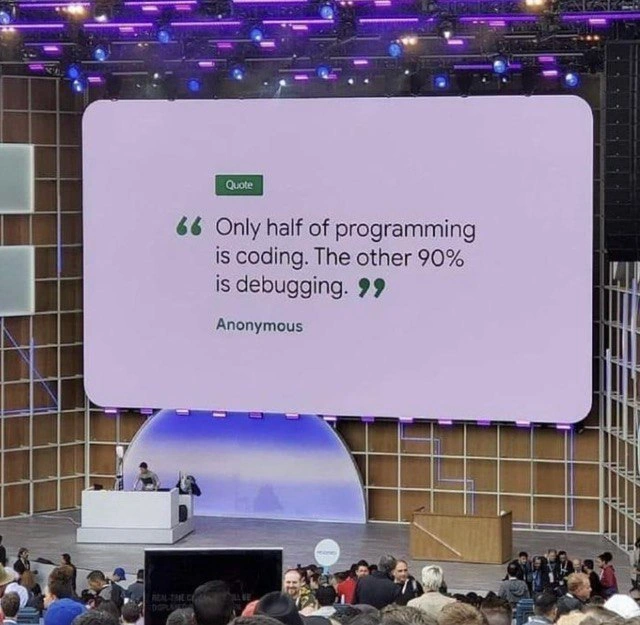
Programming Math: 50% Coding, 90% Debugging
Debugging Troubleshooting Post #790, on Nov 8, 2019 in TG

Programming Math: 50% Coding, 90% Debugging

Why is this Debugging Troubleshooting meme funny?

Level 1: Fixing the Mess

Imagine you’re building a giant LEGO castle. 🏰 Putting all the bricks together – that’s like coding, the fun part where you create something. Now picture that when you’re halfway done, you notice the door piece is in the wrong place and the castle turrets keep falling off. Uh-oh! You’re going to spend a lot of time finding that mistake and fixing it. You might have to hunt for a missing brick under the couch or rebuild a shaky wall. Debugging is like this fixing process. The joke in the meme is saying: building the castle was only “half” of the job, and the other “90%” (which is an exaggerated, funny way to say a lot more) is spent dealing with all those oopsies – finding errors and correcting them. It’s like if you spent an hour building, you then spend two hours more just to fix things so the castle doesn’t topple. The numbers don’t literally make sense (you can’t have more than 100%), but it feels that way because fixing problems can take so much longer than making the thing in the first place. The meme makes us laugh because it’s a silly way to say “fixing mistakes takes more time than making them,” and anyone who’s ever had to clean up a big mess after having fun can definitely relate to that!

Level 2: Bug Hunt Basics

Let’s break down what this meme is saying in simpler terms. In programming, coding means writing the instructions that tell computers what to do – essentially creating the features or functionality. Debugging, on the other hand, means finding and fixing mistakes in those instructions (these mistakes are what we call bugs). A “bug” is just a flaw or error that makes the software act in wrong or unexpected ways. (Fun fact: the term “bug” for a software glitch actually came from an incident in 1947 where engineers found a real moth stuck in a computer, causing an error! Ever since, tech folks have called errors “bugs” and fixing them “debugging.” 🐞)

Now, the meme quote jokes: “Only half of programming is coding. The other 90% is debugging.” If you take that literally, it sounds nonsensical – how can there be 140% of anything? You can’t have more than 100% of a task. But this is a jokey way to say “we seriously underestimate how much work debugging is.” The first “half” (50%) is the part everyone imagines programmers do: writing code to add new features or solve problems. The “other 90%” implies that debugging ends up taking almost double the time of coding itself! Of course, in reality it’s not always exactly 90%, but the exaggeration makes a point: developers often spend much more time fixing and troubleshooting code than writing it initially.

Why would debugging take so much time? Imagine you wrote a simple program for a website feature, but when you ran it, something went wrong – maybe clicking a button doesn’t do anything, or you get an error message. You can’t consider your work done until that bug is fixed. So now you enter detective mode: you read error logs (records of what the program was doing when it failed), maybe use a debugger (a special tool that lets you run code step by step to see what’s happening), add print statements like console.log("Got here!") in the code to trace execution, and try different scenarios to reproduce the issue. This investigation can be quick if the bug is obvious, but often it’s not obvious at all. Sometimes a bug’s cause is far from where the symptom appears. For example, an app might crash on the login page, but the root cause was actually a misconfigured database on the server. Chasing that down is like following a trail of clues. It’s not straightforward, so it eats up time. DebuggingPain is a common tag for a reason – it can be frustrating and time-consuming, especially when you’re dealing with a DebuggingNightmare like an intermittent bug that doesn’t happen every time.

The context of the meme is also telling. It’s shown on a huge screen at what looks like a big tech conference (think of something like Google I/O or Apple’s WWDC, where new tech and ideas are presented). The slide itself has an ornate design: a giant lavender background with rounded corners, a little green label that says “Quote,” and big quotation marks around the text. It looks very much like a real keynote presentation slide. The fact that it’s presented this way is part of the joke – it’s as if someone got on stage in front of thousands of people to reveal this “profound insight” about programming… which turns out to be a witty, sarcastic quip. The audience in the photo is presumably full of developers, and you can imagine them nodding and laughing because they all relate to it. It’s relatable humor in the developer community. Even the attribution says “Anonymous,” implying this quote is a well-worn saying that’s been passed around, not a formal citation. This kind of developer in-joke often doesn’t have a known author; it’s just something you hear in the office or see on forums, and it sticks because it rings true.

Let’s also clarify the mention of “sprint backlog” and “backlog bloat,” as referenced in the title and description. In agile software development (a common way teams organize their work), a sprint is a short, time-bound period (usually 1-2 weeks) where a set of tasks is taken from the “backlog” to be completed. The backlog is basically a big list of all pending work: new features, improvements, bug fixes – everything. At the start of a sprint, the team picks a realistic set of items from that list to work on. The term “backlog bloat” humorously implies that the backlog has grown unwieldy or swollen up, often with things that weren’t expected. Debugging can cause backlog bloat because every new bug discovered (especially during a sprint) adds another task to the list. So the joke here is that debugging is the real reason the backlog gets so fat – you planned for features (coding), but suddenly you have a ton of bug fix tasks (debugging) that blow up your plan. If half your time is coding (what you planned) and the other “90%” (an unexpectedly huge chunk) is debugging, that means you’re going over your planned capacity, and the backlog of unfinished tasks is just piling up. It’s a playful jab at how software schedules often slip due to unforeseen complications.

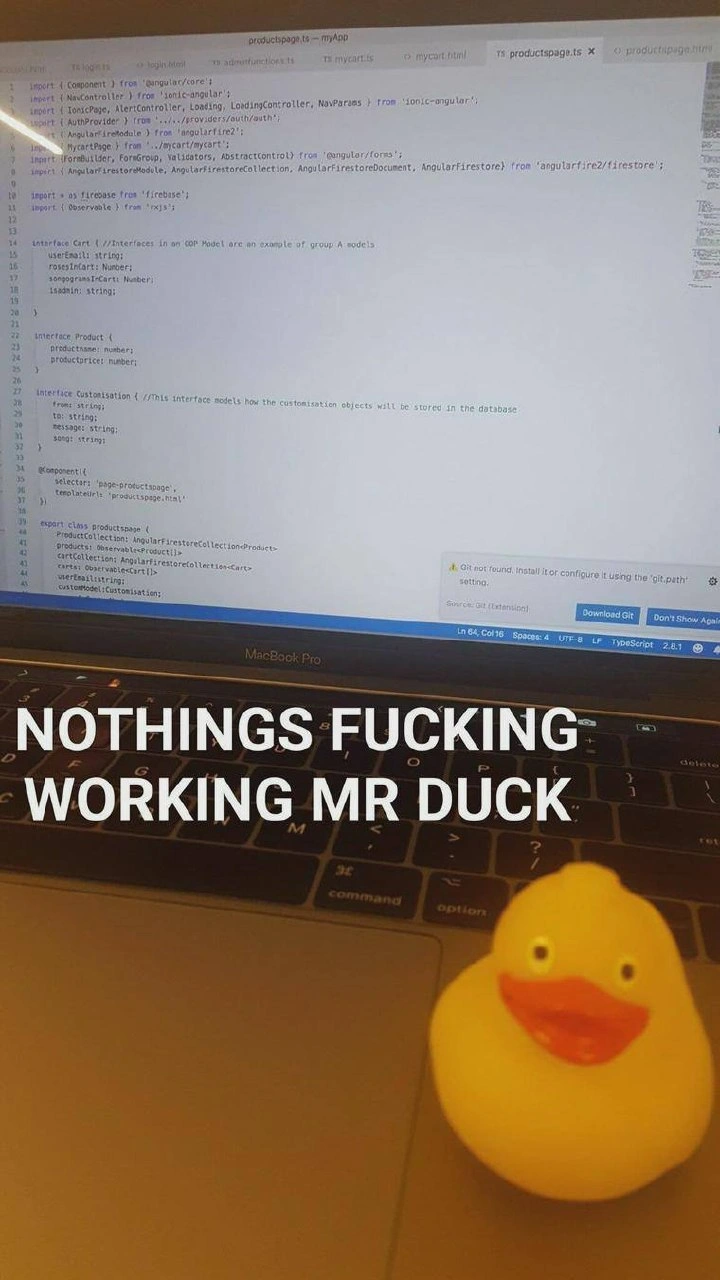
To a new programmer or someone learning to code, this meme might be a bit confusing or discouraging. Does it really mean you’ll spend almost all your time debugging? It can feel that way sometimes! The truth is, writing code and debugging go hand-in-hand. Especially as projects grow larger and involve more people, bugs in software are inevitable. Debugging is just as critical a skill as writing code. In fact, beginners often start by writing small programs where they do mostly coding and little debugging. But as you progress, you encounter those gnarly bugs and realize why every developer finds this quote funny. DebuggingFrustration is something we all go through, but we also develop strategies to handle it: writing tests, breaking problems into smaller pieces, using version control (git to track changes, so you can see what changed when a bug appeared), and sometimes just rubber duck debugging (explaining your code line-by-line to a rubber duck or a colleague, which often helps you spot the issue).

The key takeaway for a junior developer is: don’t be surprised when debugging takes a lot of time. It doesn’t mean you’re a bad coder – it’s just a natural part of development. The meme’s exaggeration (50% vs 90%) is a lighthearted way to acknowledge that everyone deals with this. It’s saying, “Hey, coding that feature is just step one. Be ready to spend even more time finding the mistakes and making it truly work right!” It’s a bit of HumorInTech that carries a real lesson about DeveloperProductivity: robust programming isn’t just about how fast you can write code, but also about how effectively you can troubleshoot and maintain it. And if you ever feel exasperated by a bug that’s eating up your day, know that countless developers worldwide are probably fighting similar battles – and possibly quoting this very meme as they grin and get back to debugging.

Level 3: The 140% Truth

Every experienced developer chuckles (perhaps a bit bitterly) at the quote: “Only half of programming is coding. The other 90% is debugging.” It’s a tongue-in-cheek exaggeration that feels 100% true after you’ve been in the industry for a while. The humor comes from that impossible arithmetic – 50% + 90% = 140% – which perfectly captures how project timelines always blow up. We plan for the coding (the fun part, the greenfield development), but we invariably end up spending an absurd amount of time on bugs, troubleshooting, and firefighting that wasn’t accounted for. That extra “90%” beyond the original plan represents all the unexpected DebuggingNightmares that devour our days and nights.

In real life, coding a new feature might take you an afternoon, but then tracking down why it crashes on one user’s device can steal the rest of your week. The sprint backlog (the to-do list for the current development cycle) starts off filled with neat feature cards, but soon it’s bloated with bug tickets: “Fix payment processing error,” “Investigate crash on Android,” “Null pointer exception on login – urgent!” This is the real sprint backlog bloat the meme title jokes about. We begin a sprint thinking we’ll build shiny new things, and end the sprint slogging through a swamp of debugging tasks that seemingly came out of nowhere. The audience at that conference sees the quote and likely roars with laughter because every one of them has lived this scenario: the ratio of time spent fixing things versus making new things is comically out of whack.

This slide, styled like a slick Google I/O keynote presentation, adds another layer of irony. At glamorous tech conferences, companies show off polished demos and new products on giant screens, but behind those scenes is a war room of engineers who spent countless hours debugging to make that demo work. The elegant purple slide with a tiny green “Quote” label and attribution to “Anonymous” makes it feel like an official industry proverb. (Honestly, it is an industry proverb at this point – no one’s sure who said it first, but every developer swears by it.) It echoes the classic joke known as the “ninety-ninety rule” in software: “The first 90% of the code accounts for the first 90% of the development time. The remaining 10% of the code accounts for the other 90% of development time.” In either formulation, the math doesn’t add up, yet we all recognize the truth in it.

Why does debugging end up taking so much time? Part of it is human nature and system complexity. When writing code, you’re in creative builder mode – it’s straightforward because you control the narrative. But when debugging, you’re suddenly a detective in a convoluted mystery where the suspects (variables, APIs, configurations, cosmic rays?) aren’t talking. As a Cynical Veteran might say, “Writing the code is just laying the trap; debugging is figuring out how the trap you built managed to catch you instead of the bug.” Often a one-line fix requires hours of investigation. Perhaps the code was legacy (old and unkempt), or there were assumptions that turned out false. Maybe it was DNS after all (as another tongue-in-cheek industry meme goes, “It’s always DNS” when tracking down weird production issues).

Another reason is that debugging is open-ended and unbounded. You can’t be sure how long it will take to find a bug — it could be five minutes or five days. There’s a shared PTSD among developers from bugs that seemed impossible: the memory leak that only happened on the production server after 17 hours of uptime, or the off-by-one error (i <= n instead of i < n) that took the entire team a day to spot. We’ve all had that “Oh no, not again” moment when a simple feature release triggers a cascade of error logs. That’s when the quote’s dark humor really hits home: you realize you’ve spent all week on what was “just a small change.” The other 90% isn’t an exaggeration at that point – it’s your life.

One classic quote in developer lore (attributed to Brian Kernighan, co-creator of C) goes: “Debugging is twice as hard as writing the code in the first place. Therefore, if you write the code as cleverly as possible, you’re, by definition, not smart enough to debug it.” That pearl of wisdom is essentially the scholarly older cousin of this meme. It underscores why a DeveloperProductivity killer like debugging can inflate to monstrous proportions. Code that was written in a hurry or in a complex “clever” way becomes a nightmare to fix later. Seasoned devs learn (the hard way) that simplicity and clarity in code are gifts to your future self when debugging. But even with clean code, non-trivial systems inevitably have bugs. So, the quote on the slide is a sardonic reminder: no matter how much time you think you’ll spend adding new features, budget even more time for debugging. It’s a collective inside joke and a coping mechanism — if we didn’t laugh, we’d cry.

And that “Anonymous” attribution? It’s perfect. No single person takes credit because, frankly, it could have been any of us who first uttered those words after a particularly grueling debugging session. It’s developer folklore. Seeing it blown up larger-than-life on a stage is simultaneously hilarious and validating. It’s like the tech world’s version of a cathartic sigh: “Oh, you too? I thought it was just me pulling 90% debug duty.” In a packed audience of engineers, that quote lands because it vindicates our shared experience. We’ve all been there, staring at a bug at 3 AM with the product launch looming, thinking, “This is taking way more than the time I spent building the darn thing.” The meme just quantifies that feeling with absurd percentages and makes it official. The truth in the joke cuts deep: programming isn’t just typing code; it’s wrangling all the unruly behavior that arises after the code is written. The other 90% is where the real work (and war stories) lie.

Level 4: Heisenbug Uncertainty Principle

Deep in the quantum realm of software, debugging takes on a life of its own. Hunting a bug can feel like observing a subatomic particle: the very act of inspecting the code can change its behavior. This is known among seasoned engineers as a Heisenbug – a bug that vanishes or alters when you try to study it. For instance, you might add a print statement (a classic debugging trick) to see why a variable is misbehaving, and suddenly the bug disappears because the extra logging changed the program’s timing or memory layout. 😤 It’s as if the software knows you’re watching and decides to play tricks. The uncertainty principle of debugging means some issues only manifest under very specific, unobservable conditions (like only on the production server at 2 AM during a leap year). This makes tracking them down an exercise in computer science theory as much as practice.

Under the hood, the complexity of debugging approaches theoretical limits. Consider that to debug a program, you’re essentially searching a vast state space for the one incorrect state or instruction causing the problem. This search can resemble an NP-hard problem – the effort might grow exponentially with the size of the codebase or the number of interacting components. Modern distributed systems and microservices amplify this: a bug might only occur when multiple services interact in a precise sequence. Finding it is like solving a giant logic puzzle where each piece is scattered across logs and metrics from dozens of servers. No wonder debugging feels like it consumes 90% of our time – the system’s complexity fights back.

There’s also a fundamental theoretical barrier: in computer science, Alan Turing’s halting problem tells us we cannot have a general algorithm that detects all possible bugs in all programs automatically. We can’t magically foresee every crash or infinite loop before running the code. This is why the other 90% of effort exists at all – we must run, observe, and painstakingly diagnose issues because no static analysis or tool can catch everything up front. Some teams attempt to reduce debugging toil through formal verification (mathematically proving code correctness) or comprehensive testing, but in the fast-paced real world of product releases and sprint deadlines, these techniques are costly and time-consuming. Thus, we fall back to the age-old practice of trial-and-error troubleshooting, armed with breakpoints, logging, and our wits. The meme’s absurd math (50% + 90% = 140%) hints at a deeper truth: debugging isn’t just another task, it’s a task that expands to fill the unplanned complexities and theoretical unknowns lurking in software. In a way, that extra “40%” beyond the whole is the chaos factor – the unpredictable interactions and edge cases that only reveal themselves in the wild. Debugging is where programming meets entropy.

Description

The image shows a large presentation screen in a conference hall, displaying a quote to a packed audience. The screen has a light purple background with a green 'Quote' tag at the top. The quote reads: '“Only half of programming is coding. The other 90% is debugging.”' and is attributed to 'Anonymous'. This meme captures a well-known inside joke in the software development community. The humor stems from the deliberately incorrect math (50% + 90% = 140%), which ironically emphasizes the truth for many developers: that debugging and fixing issues often takes far more time and effort than writing the initial code. It's a relatable commentary on the software development lifecycle, where unforeseen problems and complex bug hunts can dominate a project's timeline, making the initial coding phase seem like the smaller part of the job

Comments

7
Anonymous ★ Top Pick The math is simple: 50% coding, 90% debugging, and the other 50% is spent in meetings explaining why the debugging is taking 90% of the time
  1. Anonymous ★ Top Pick

    The math is simple: 50% coding, 90% debugging, and the other 50% is spent in meetings explaining why the debugging is taking 90% of the time

  2. Anonymous

    Nice to see the slide allocate 140 % of our time - exactly the same arithmetic our PM uses when planning a two-week sprint

  3. Anonymous

    After 20 years in the industry, I've learned the real breakdown is 10% coding, 20% meetings about the code, 30% explaining why it'll take longer, 40% debugging, and 100% wondering why the previous developer didn't leave any documentation. Yes, that's 200% - just like every sprint commitment we've ever made

  4. Anonymous

    The math checks out perfectly: 50% coding, 90% debugging, and 100% wondering why you didn't write tests in the first place. This is the kind of arithmetic that makes perfect sense after your third production hotfix at 2 AM, when you realize the 'quick fix' you deployed last sprint has now consumed more time than the original feature took to build. Senior engineers know this isn't hyperbole - it's an optimistic estimate that doesn't account for the 60% spent explaining to stakeholders why the bug exists, the 40% in post-mortems, and the 30% updating documentation that nobody will read until the next incident

  5. Anonymous

    If coding is 50% and debugging 90%, the remaining -40% is writing the postmortem proving it was an eventual-consistency race in a service you don’t own

  6. Anonymous

    50% coding, 90% debugging - the 40% gap is just the optimism in your initial git commit message

  7. Anonymous

    Distributed-system arithmetic: 10% coding, 90% debugging, and the rest spent convincing flaky e2e tests and eventual-consistency traces that your fix actually exists

Use J and K for navigation