Skip to content
DevMeme
3732 of 7435
The Primal Dopamine Rush of Finally Working Code
Debugging Troubleshooting Post #4071, on Dec 27, 2021 in TG

The Primal Dopamine Rush of Finally Working Code

Why is this Debugging Troubleshooting meme funny?

Level 1: Finally, It Works!

Have you ever worked really hard on a tricky puzzle or a hard homework problem and felt super happy when you finally solved it? That’s exactly what this picture is about, but with computer code. Imagine a student struggling with a tough math problem: they try lots of different ways to solve it, get frustrated, maybe even get a little upset that it’s not working. Then, suddenly, they figure it out and get the answer right – hooray! They feel a rush of joy and relief. In this meme, the programmer is like that student, and the “brain lighting up” is showing how incredibly happy they feel inside when their code runs without errors. The monkey is there just to be funny – it’s like saying even a monkey’s brain would light up with joy in that moment. We all have a little monkey part of our brain that jumps for joy when we finally achieve something we’ve been struggling with. So the whole joke is a playful way to say: writing code can be really hard, but when it finally works, you feel amazing!

Level 2: Green Build Bliss

Let’s break this down in simpler terms. The meme shows a monkey’s brain lighting up when the code finally works. In developer life, a “green build” is jargon for a successful run of all your tests or build process. Many teams use Continuous Integration (CI) systems (like Jenkins or GitHub Actions) that run your code through tests every time you update it. When something is wrong – maybe a syntax error or a failing test – the CI will mark the build as failed, often with a big red ❌ or red light. This is super useful for catching issues early, but it means you might see red failures repeatedly while fixing a tough bug. “Finally passed CI” (one of the tags here) refers to that sweet moment when the CI system gives you a green light (✅) after a series of frustrating failures. It’s like the software saying, “All tests passed, everything is okay now!”

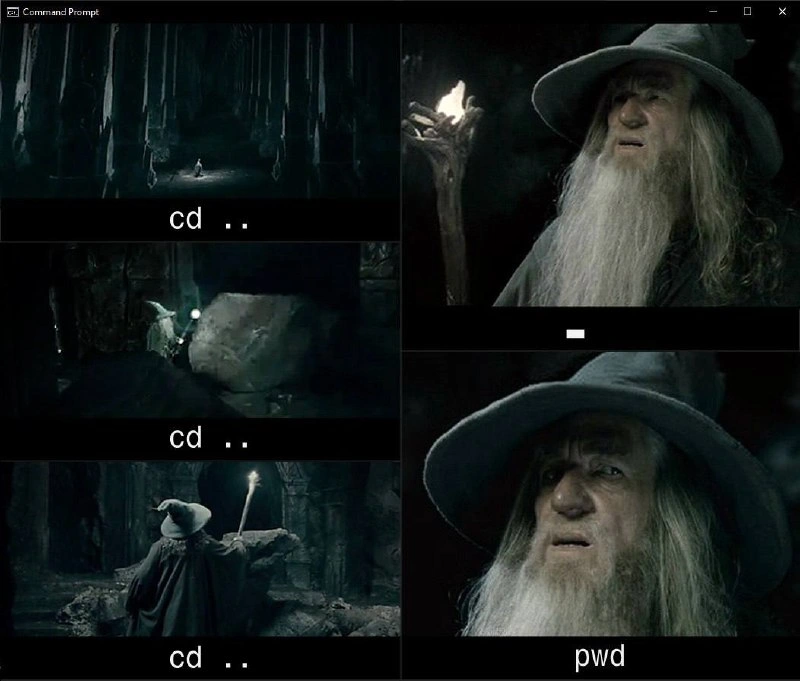
Why the monkey and neuron graphic? It’s a funny way to say that when a developer sees their code working at last, it triggers a rush of happiness in the brain. The top text "WHEN YOUR CODE FINALLY WORKS" is basically describing the situation. Below it, the picture is styled like a science diagram: a monkey’s brain has a pink highlighted area with a label "Neuron activation" and an arrow, as if scientists are measuring brain activity. The caption "Monkey sees action" originally might come from a neuroscience experiment where a monkey’s brain lights up on seeing or doing something (scientists often study monkeys to understand how our human brains work). Here, it humorously suggests that a developer’s brain reacts just as excitedly as that monkey’s when a broken code is fixed. Essentially, the meme is comparing a programmer to that monkey – when the programmer sees their program finally running correctly (the “action”), there’s neuron activation in the reward center of the brain. In plainer terms, the developer feels awesome. This is that dopamine_hit they mention: dopamine is a brain chemical that makes you feel pleasure or reward, and it’s released in moments of achievement or joy. So, finally getting that code to run is like hitting a little internal jackpot.

The snippet of Python code superimposed on the brain is an actual example of what might have been causing grief. It starts with for i in page.display_users: which is a for loop (a way to repeat a block of code for each item in a list – in this case, for each user on a page). Inside, there are some conditions (if/else branches) and an API call (requests.get(user.timeline, ...) suggests the code is fetching each user’s timeline from some service). There’s even a print statement at the end of the snippet. All this hints the programmer was debugging – maybe checking which users have “tweeted” or not. In practice, when something’s not working, developers add print lines or log statements to see what’s going on inside the loop (like “is this value what I expect here?”). This is what we call Debugging_Troubleshooting: finding and fixing errors (bugs) in the code. The tag Heisenbug refers to a special kind of bug that seems to disappear or change behavior when you try to investigate it (named after the Heisenberg uncertainty principle in physics). If you’ve ever had a toy that only malfunctions when no one’s looking, it’s like that – very frustrating! A lot of us have dealt with issues where adding a print statement or running in debug mode makes the problem vanish, which makes it really hard to fix. That’s why fixing such bugs can take a long time and a lot of careful testing.

Now imagine spending hours or days on a problem like that. DeveloperFrustration builds up with each failed attempt. You might try dozens of small changes, run the code, see another error, and feel your heart sink each time (that’s the “red build” despair). You dig through trace-level logs, meaning extremely detailed logs of what the application is doing step by step, hoping to catch the culprit. (Logging at “trace” level is even more detailed than “debug” level – it can record almost every tiny action in the code, which helps to trace the exact sequence of events leading to a bug). It’s tedious but necessary for tough bugs. This is often where SharedPain among developers comes in – we swap stories of these all-nighters looking at logs, because everyone has been through it. It’s very RelatableDevExperience for anyone who’s written programs.

Then, finally, eureka! Maybe you discover a typo in a variable name or realize a certain API call was returning data in a format you didn’t expect. You fix that one line (or ten lines), and run the build again. This time, all the tests pass – the build turns green. That moment can feel disproportionately amazing. People sometimes literally cheer or do a happy dance at their desk when a stubborn bug is fixed. It’s such a universal part of being a programmer that it’s become a big source of DeveloperHumor and DeveloperJokes online. We laugh at ourselves for how happy we get over something finally working, especially when it was making us miserable just minutes before. The meme captures that by showing a monkey’s brain going zing! with activation, as if to say “Look, we’re basically lab monkeys hitting a button for a reward.” The neuron_activation_diagram style just exaggerates it in a funny, scientific way. And indeed, neurologically speaking, what’s happening is that your brain is releasing chemicals that make you feel good – akin to finishing a challenging puzzle or winning a small prize. In developer terms, getting that CI pipeline green light is like scoring a goal after a long, tough game. It instantly validates all the hard work.

In summary, this meme is explaining the almost primal joy a coder feels when they finally resolve a pesky issue. It takes something very technical – a build passing after debugging – and shows it in a very human (or monkey) way: with brains and neurons lighting up. If you’re new to coding, know that this rollercoaster of DebuggingFrustration followed by triumph is normal. Every programmer from newbie to senior has experienced that huge grin when the program output is finally correct. It’s both funny and comforting to realize your brain will give you a nice little reward (that dopamine rush) when you push through and succeed. That’s why we keep coding, despite the bugs – it literally feels rewarding when you solve one!

Level 3: Dopamine-Driven Development

At a senior engineer’s level, this meme hilariously captures the DebuggingFrustration -> euphoria cycle that seasoned developers know all too well. The image mashes up a serious neuroscience diagram with a Python code snippet overlay to illustrate the primitive rush we get when a fix finally works. The bold header "WHEN YOUR CODE FINALLY WORKS" sets the stage: after countless failed runs and troubleshooting sessions, that triumphant moment triggers a neuron activation in our brain’s reward center. In the meme, a monkey’s brain is highlighted pink with a label "Neuron activation" and caption "Monkey sees action." The joke implies our developer brains aren’t so different from a lab monkey’s – when we see the build turn green, our neurons fire off a dopamine hit, just like a rewarded monkey in a science experiment. It’s a tongue-in-cheek nod to how DeveloperExperience_DX can be deeply visceral.

The tiny Python code_screenshot_overlay in the monkey’s brain is a nice touch of CodingHumor. It shows a for loop (for i in page.display_users:) with if/else branches and an API call – likely pseudo-code of the very bug fix or feature that caused so much grief. Perhaps the developer was iterating through user data, checking if each user posted a tweet, and printing out who hasn’t “tweeted in the past”. This detail screams recently resolved bug: maybe it was a sneaky logic error or a Heisenbug that had them scratching their head. The text print( i.screen_name, "has not tweeted in the past", days) in that snippet shows the dev instrumenting their code with extra logs or output to catch the bug, a classic Debugging_Troubleshooting move. After days of trace-level log diving and adding print statements everywhere, finally seeing correct output is like fireworks in the brain. The monkey_brain_meme format perfectly visualizes that primal satisfaction.

What makes this resonant among experienced devs is the SharedPain and the well-earned payoff. We’ve all been there: countless test failures, possibly a continuous integration run (“CI pipeline”) that’s been stubbornly red for days. Every attempt at a fix leads to another error or a flaky test that fails only on the CI server (cue the It’s always the environment rant). You double-check config files, sprinkle console.log or print() statements (the software equivalent of bread crumbs in a forest), and maybe even question your career choices at 2 AM. This is the DeveloperFrustration phase where caffeine and determination are fueling you. Then finally, something clicks – the last commit fixes the elusive bug, and the next build turns green. That green finally_passed_ci indicator (whether it’s a green checkmark in GitHub Actions or the all-clear from Jenkins) unleashes an immediate wave of relief and triumph. It’s practically a dopamine_hit to the brain’s reward circuitry. Senior devs jokingly call it “deploying to dopamine” because the rush is real. The meme’s faux-scientific style exaggerates this feeling to Neuron-level intensity, as if an fMRI could show our brain’s neurons lighting up at the sight of a successful run. And honestly, it probably could – this moment is thrilling.

From an experienced perspective, the humor also lies in recognizing how relatable this is across the industry (RelatableDevExperience is literally tagged). No matter what stack or language – be it a Python script, a front-end build, or a backend microservice – that “It works!!!” moment hits like pure joy. We joke that we’re addicted to coding because of these little victories. There’s even a subtle nod to the idea that writing code can trigger a reward loop: fix bug, feel good, take on another bug. The monkey in the image is pixelated (anonymity or just meme style), implying “this could be any of us” devolving to our primal brain state when chasing a fix. The Monkey sees action caption references classic neuroscience experiments (where a monkey’s neuron fires upon seeing something rewarding), but here the action is our code finally doing what it’s supposed to. It satirizes the fact that under all our advanced technology, a part of a developer’s brain still reacts like a caveman who just discovered fire when a program runs without errors. This mix of DeveloperHumor and literal brain chemistry is funny because it’s true – the emotional rollercoaster of debugging is a fundamental part of the developer experience.

Ultimately, the meme’s brilliance is in equating a passing test suite to a neurochemical high. It pokes fun at how intensely we care about these green checkmarks and bug fixes. Seasoned engineers might chuckle and then recall their own war stories: that one Heisenbug that only appeared on production servers during a full moon, or the week spent chasing a race condition that finally got solved with one line change. The moment you confirm the fix, you feel on top of the world, even if it’s midnight and no one else is around. This universal high-five yourself feeling is what keeps us coming back to coding despite the headaches. In summary, the meme uses an absurdly scientific visual metaphor to celebrate a very real developer high – a neuron-level dopamine spike that any veteran troubleshooter instantly recognizes and appreciates. 🚀

Description

The meme uses the 'Neuron Activation' format. At the top, a bold white text banner reads, 'WHEN YOUR CODE FINALLY WORKS'. Below, the main image shows a diagram of a monkey with a section of its brain exposed and highlighted, labeled 'Neuron activation'. The monkey has a wide-eyed, intensely focused expression, and below it, the text 'Monkey sees action' is visible. To the right of the monkey is a screenshot of a Python script in a dark-themed editor. The script appears to be interacting with an API (likely Twitter's), handling data and printing outputs. The meme humorously reduces the complex, often frustrating process of programming and debugging to a primal, instinctual reward mechanism. When the code finally succeeds, the developer's brain experiences a simple, powerful 'neuron activation,' a dopamine hit akin to a basic stimulus-response, capturing the universal feeling of relief and triumph in a single, relatable image
Comments

11
Anonymous ★ Top Pick Ah, the brief moment of god-like power experienced between 'it works' and 'wait, why does it work?'
  1. Anonymous ★ Top Pick

    Ah, the brief moment of god-like power experienced between 'it works' and 'wait, why does it work?'

  2. Anonymous

    Our dopamine pipeline is clearly event-driven: one green test run and the cortex autoscales to infinite QPS - until the next null-pointer hits prod

  3. Anonymous

    After 15 years in the industry, I've realized the monkey brain dopamine hit from 'print("Hello World")' working is exactly the same as getting a distributed system with 47 microservices to pass integration tests on the first try - we just pretend the latter is more sophisticated

  4. Anonymous

    Twenty years of experience and the reward function hasn't changed: code runs once, neuron activates, and we ship before it can change its mind

  5. Anonymous

    The neuroscience of software engineering: when your Django ORM query finally executes without raising DoesNotExist, your brain releases the same dopamine surge as discovering fire. Evolution spent millions of years optimizing for 'monkey sees action,' but it turns out the most potent trigger is 'developer sees green CI pipeline.' We're essentially Pavlovian dogs, except our bell is the absence of stack traces, and our reward is the fleeting moment before we realize we need to refactor the entire thing

  6. Anonymous

    That neuron surge when print debugs prove it works - until removing them resurrects the Heisenbug

  7. Anonymous

    Our brains are basically RL agents with a broken reward function: +1 dopamine when the CI turns green, −10,000 at 3am when the flake hits prod

  8. Anonymous

    That dopamine hit when a flaky Python script finally runs: pip freeze > requirements.txt, snapshot the container, and back away slowly - never refactor a system in an excited state

  9. @mpolovnev 4y

    It always works! It simply does the wrong job 😄

    1. @ZgGPuo8dZef58K6hxxGVj3Z2 4y

      Lol

  10. dev_meme 4y

    Lmao

Use J and K for navigation