
LegacySystems Post #324 · source on Telegram
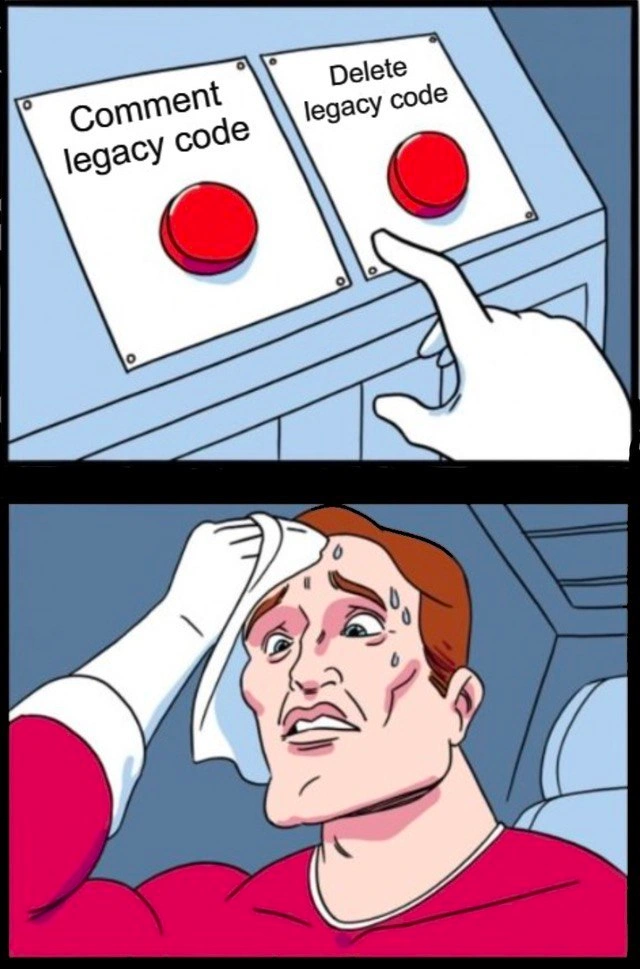
Developer sweating over the choice: comment out or delete legacy code
Description
Classic two-buttons meme in comic style, split into two panels. Top panel: a gloved hand hovers between two bright red buttons mounted on a control box; left button label reads "Comment legacy code" and right button label reads "Delete legacy code" (all text shown exactly as in image). Bottom panel: same gloved superhero-like character, clad in a red suit, nervously wipes sweat from his forehead, visually conveying indecision and anxiety. The meme humorously illustrates a common engineering dilemma around handling brittle legacy code - whether to keep it around in commented form for safety or remove it entirely to reduce technical debt - highlighting refactoring pain, code maintenance trade-offs, and fear of breaking production
More like this
More like this in LegacySystems →
Use J and K for navigation
Comments
7Comment deleted
Comment it out and become eternal owner in ‘git blame’, or delete it and find out at 2 AM that it was the undocumented rate-limiter for the payment gateway - choose your fighter
The real third button is "git blame" to find out who wrote it, then realize it was you during your startup's pivot three acquisitions ago
Git remembers everything, yet we keep commented-out code around like a will - just in case the deceased function had dependents
The real senior move? Press both buttons simultaneously by wrapping the legacy code in a feature flag, adding a TODO comment with a JIRA ticket from 2015, and scheduling a 'quick 15-minute' architecture review meeting that somehow gets recurring for the next three years. Version control exists for a reason, but we all know that one time someone needed that 'temporarily' commented code from six months ago during a 3 AM production incident
Commenting legacy code is the enterprise feature flag; deleting it is how you schedule a 3 a.m. lesson in reflection-based dependencies only prod knew about
Senior move: write a characterization test, then git rm the fossil - otherwise you’re just curating a museum in your VCS
Commenting legacy code documents the crime scene; deleting it makes you the prime suspect in the prod outage investigation