
A Very Literal Pointer Implementation
Description
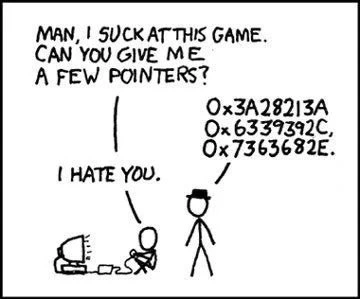
A classic black-and-white, stick-figure comic from the webcomic xkcd. On the left, a stick figure sits on the floor in front of a CRT monitor, looking frustrated. They say, "MAN, I SUCK AT THIS GAME. CAN YOU GIVE ME A FEW POINTERS?". Standing next to them is another stick figure wearing a black hat, who responds by providing three lines of hexadecimal numbers: "0x3A28213A", "0x6339392C", and "0x7363682E". The person on the floor simply replies, "I HATE YOU.". The humor is a technical pun based on the double meaning of the word 'pointer'. In everyday language, a pointer is a tip or hint. In low-level programming (like C or C++), a pointer is a variable that stores a memory address, often represented in hexadecimal format. The character in the hat has deliberately chosen the technical, literal interpretation, offering useless memory addresses instead of helpful gaming advice, much to the gamer's annoyance. This is a quintessential developer in-joke

Comments
7Comment deleted
The correct response should have been `&player.skill`. Be careful not to dereference it though, it's probably a null pointer
Classic dev move: translating casual advice requests into SEGFAULT waiting to happen
Those pointers are probably pointing to uninitialized memory in production, which explains why the game crashes - just like how your carefully crafted memory management strategy falls apart the moment marketing promises a feature that requires dynamic allocation in your embedded system with 2KB of RAM
This is the programming equivalent of asking your senior engineer for career advice and getting back a stack trace. The beauty here is that anyone who's spent time in C/C++ knows that 'a few pointers' is never just a few - it's a segfault waiting to happen, a memory leak in the making, and the reason we now have Rust. The real joke? Those hex addresses are probably more helpful than most code review comments you'll get on a Friday afternoon
Asking a C dev for “a few pointers” gets you three unaligned hex addresses and a follow‑up SEGV, not coaching - mentorship via undefined behavior
Mentorship, C edition: you ask for pointers, they hand you raw addresses with no ownership and now you’re on the hook for the segfault and the emotional memory leak
Ask a kernel dev for gaming tips: get hex pointers straight to segfault city