
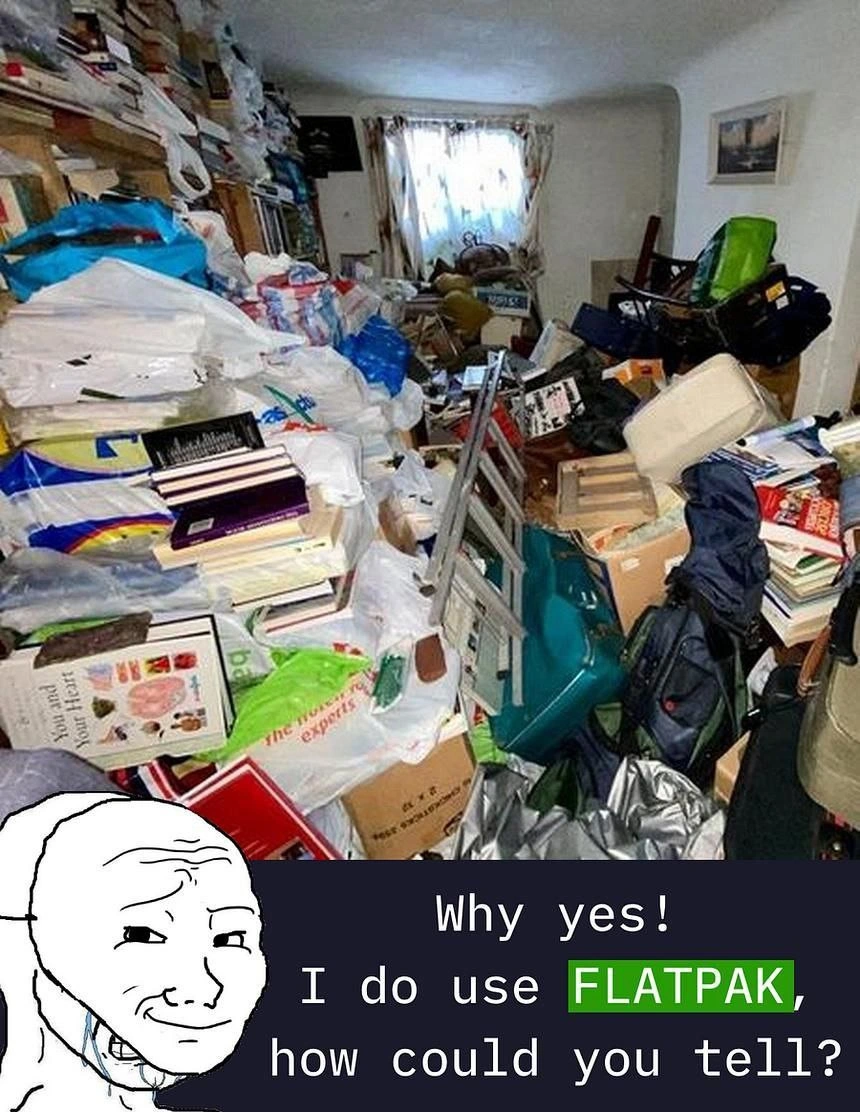
A Flatpak User's File System
Description
The meme displays a photograph of an extremely cluttered and disorganized room, reminiscent of a hoarder's living space, filled with stacks of books, plastic bags, and miscellaneous items. In the bottom left corner, a 'Smug Wojak' meme character, who appears to be crying behind a smiling mask, is overlaid. Below the image, against a dark background, is the text: 'Why yes! I do use FLATPAK, how could you tell?'. The word 'FLATPAK' is highlighted with a green background. The meme satirizes the Flatpak application packaging format by comparing a user's system to a hoarder's room. The joke is that Flatpak's method of bundling all dependencies with each application leads to significant disk space consumption and duplication of libraries, creating a cluttered and bloated file system, much like the room shown


Comments
7Comment deleted
My filesystem is like this room: everything is containerized, but I have 17 different versions of libc and I'm afraid to delete any of them
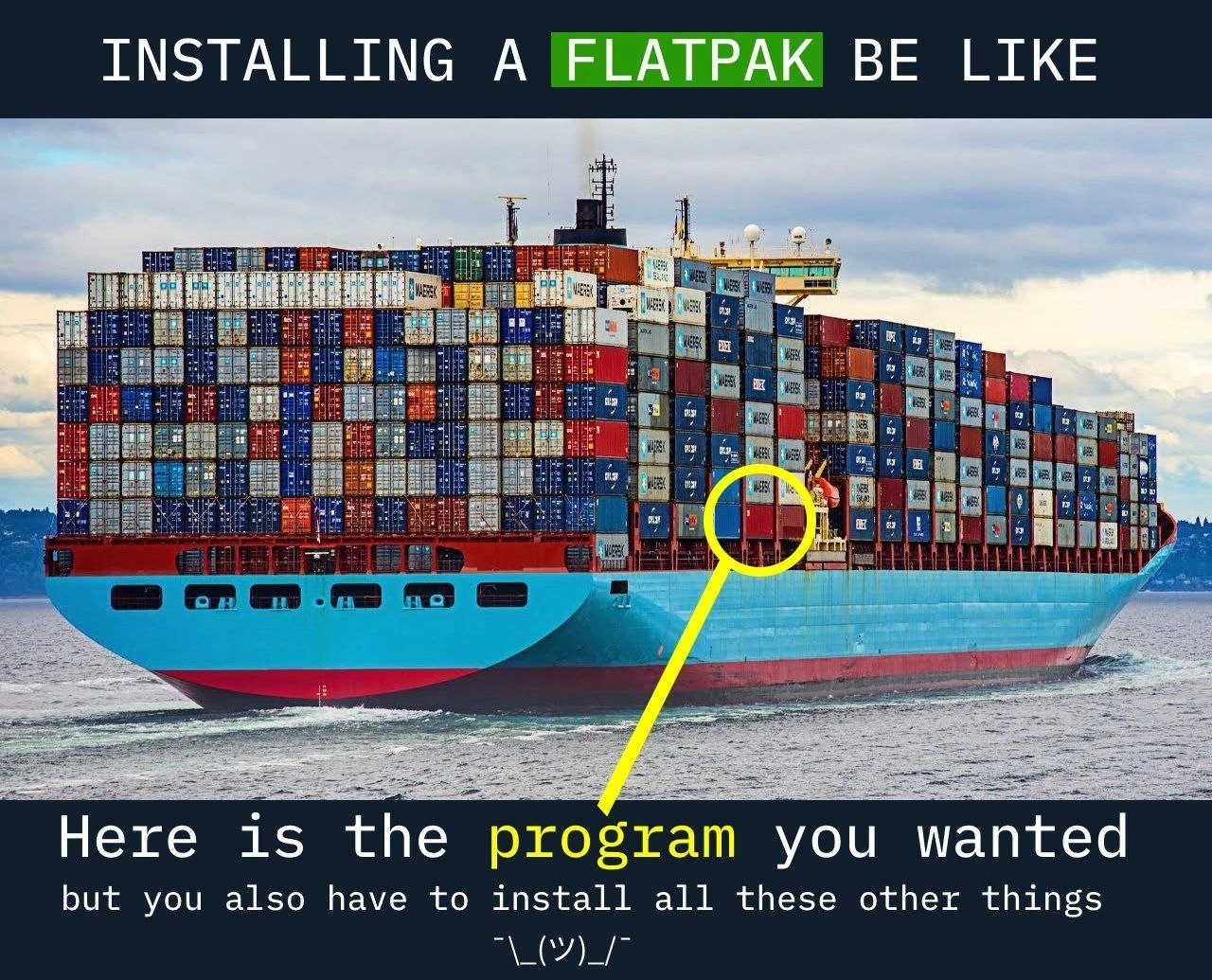
Flatpak: because every calculator clearly needs its own private build of WebKit and three GTK themes
"I've achieved perfect dependency isolation - each of my 12 Firefox installations has its own complete copy of GTK, and they're all slightly incompatible with my system theme."
Flatpak users explaining why having 47 copies of the same GTK runtime across different sandboxes is actually a feature, not a bug - meanwhile their `/var/lib/flatpak` directory has achieved sentience and is now applying for its own filesystem partition
Flatpak: sandboxing so pure, it demands a private glibc multiverse per app - efficiency through exponential redundancy
Flatpak solved dependency hell by isolating it into ~/.var - now even the calculator ships a full GNOME runtime and my home directory has more shards than our prod DB
Flatpak: install a 12 MB editor, receive three org.freedesktop runtimes, locale packs you’ll never use, and a private landfill at ~/.var/app - df -h becomes your observability stack