Skip to content
DevMeme
6154 of 7435
Relationship Security: A Use-After-Free Vulnerability
Security Post #6749, on May 15, 2025 in TG

Relationship Security: A Use-After-Free Vulnerability

Why is this Security meme funny?

Level 1: Impossible Cake Wish

Imagine you have a slice of cake. If you eat the cake, you can’t have it anymore because it’s gone. 🥮 This meme jokes about that simple idea. The girlfriend says she wants to both eat her cake and still keep it afterward, which is an impossible wish (once you eat something, it doesn’t magically stay on the plate!). The boyfriend, being a total computer nerd, responds by calling that scenario a “use-after-free bug” – which is just a super technical way of saying “you’re trying to use something that isn’t there anymore.” In plain terms: once the cake is eaten, it’s gone. He basically told her in geek-speak that what she wants can’t happen. It’s funny because he turned a normal everyday saying into a hardcore programming reference. He mixed love and logic in a silly way, and that surprise twist is what makes it humorous – even if it earned him an eye-roll from his girlfriend.

Level 2: Manual Memory Missteps

In programming terms, a use-after-free bug means exactly what it sounds like: you’re using memory after you’ve freed it. Let’s break that down. In languages like C and C++, you manage memory manually. You might use malloc() or new to grab a chunk of memory (say, to create an object or a string), and later call free() or delete to give that memory back when you’re done. Freeing memory is like saying to the system, “I’m done with this cake, you can clear the table.” A pointer is a variable that holds the address of that memory chunk – think of it like a treasure map pointing to where your data is stored. After you free the memory, that pointer becomes a dangling pointer because it’s pointing to a spot that’s no longer yours. The big no-no is then trying to use that pointer after free. At that point, the program might either read garbage data, overwrite something it shouldn’t, or just outright crash. It’s similar to having a house address for a building that’s been demolished – if you send mail there, who knows what happens! In computing, doing this is an error that often causes a segmentation fault (a crash due to invalid memory access) or other wild misbehavior. In short, the program loses its mind because you told it “that cake is gone,” but then later you said “hey, use that cake again.”

Here’s a quick C++ example of a use-after-free mistake:

std::string* cake = new std::string("Chocolate Cake");
// We allocated memory on the heap for a string
delete cake;  
// Freed the memory; 'cake' pointer now dangles
std::cout << *cake << std::endl;  
// Oops! Using memory after free – undefined behavior

In this snippet, we allocate a std::string dynamically and then delete it. Afterwards, cake is a dangling pointer. If we try to print *cake, we’re dereferencing a pointer to freed memory. The program might still print “Chocolate Cake” (if that memory hasn’t been reused yet and still holds the old data by chance), or it might print gibberish, or it could just crash then and there. The result is unpredictable because we violated the rules. This kind of bug is called undefined behavior – the C++ language spec doesn’t define what should happen, so anything can happen.

For newer developers, it helps to contrast this with a more common issue: a memory leak. A memory leak is when you forget to free memory; the program keeps that “cake” on the table forever, even when it’s not needed, eventually cluttering the table. In a use-after-free, you cleared the table (freed the cake) too early, but then you still tried to dig in with your fork – not good! Memory leaks eventually exhaust resources, while use-after-free bugs can cause immediate crashes or bizarre behavior. That’s why use-after-free is considered more severe. It can even be a security problem (if someone figures out how to exploit that dangling pointer, they can manipulate the program). To avoid these issues in C/C++, developers follow best practices: for example, setting a pointer to nullptr after freeing it, so you’ll crash immediately if you accidentally use it (a null pointer crash is easier to catch than silently using bad memory). Better yet, they use smart pointers (std::unique_ptr, std::shared_ptr) which automatically manage memory, or tools like valgrind and sanitizers to detect mistakes. And if all this manual memory management sounds scary, that’s exactly why languages like Java and Python use automatic garbage collectors – they take care of the cake for you so you can’t accidentally eat it twice. C and C++ give you great power over memory, but with great power comes great responsibility (and the occasional debugging session chasing a segfault).

Level 3: Dangling Desires

This meme perfectly captures that classic developer habit of translating everyday life into code. The girlfriend uses the common expression “I want to have my cake and eat it too,” meaning she wishes she could enjoy something and still keep it afterwards (basically wanting two contradictory outcomes). The punchline is the boyfriend’s deadpan response: “That's a use-after-free vulnerability.” In other words, he jokingly labels her wish as a logic bug. This is hilarious to programmers because “having your cake after you’ve eaten it” maps almost exactly to the concept of using memory after freeing it – an obviously impossible (and dangerous) operation in programming. It’s as if she proposed an absurd product requirement, and he immediately flagged it as a critical error in the spec! (Not exactly the sweet romantic reassurance she was hoping for, but hey, he’s a coder.)

Seasoned C/C++ developers who deal with manual memory management chuckle at this because they’ve been burned by dangling pointers before. A nasty dangling pointer bug can make a program crash unpredictably or introduce sneaky security holes. So when the boyfriend hears her impossible wish, he compares it to one of the worst software mistakes he knows – a violation of basic memory safety. There’s a dark humor here: wanting to keep the cake after eating it isn’t just impractical, in his mind it’s the relationship equivalent of invoking undefined behavior. And every experienced developer knows that undefined behavior leads straight to chaos (cue those legendary 3 AM debugging sessions chasing down memory corruption). By referencing a use-after-free (one of the most notorious C/C++ mistakes), he’s basically saying, “If we tried to do that, things would blow up!”

The meme also slyly nods to real-world tech scenarios. Ever had a project manager or client ask for mutually exclusive features? Like, “We need maximum security, but also zero performance impact,” or “Keep all user data absolutely private, but also share it with partners for analytics” — basically, have our cake and eat it too. Developers often joke that such requests would break the laws of computing. Here, our intrepid developer takes that to the extreme by naming it after a C++ memory safety violation. It’s a way of saying, “Your request isn’t just hard, it fundamentally doesn’t make sense – if I tried to fulfill it, the system would crash!”

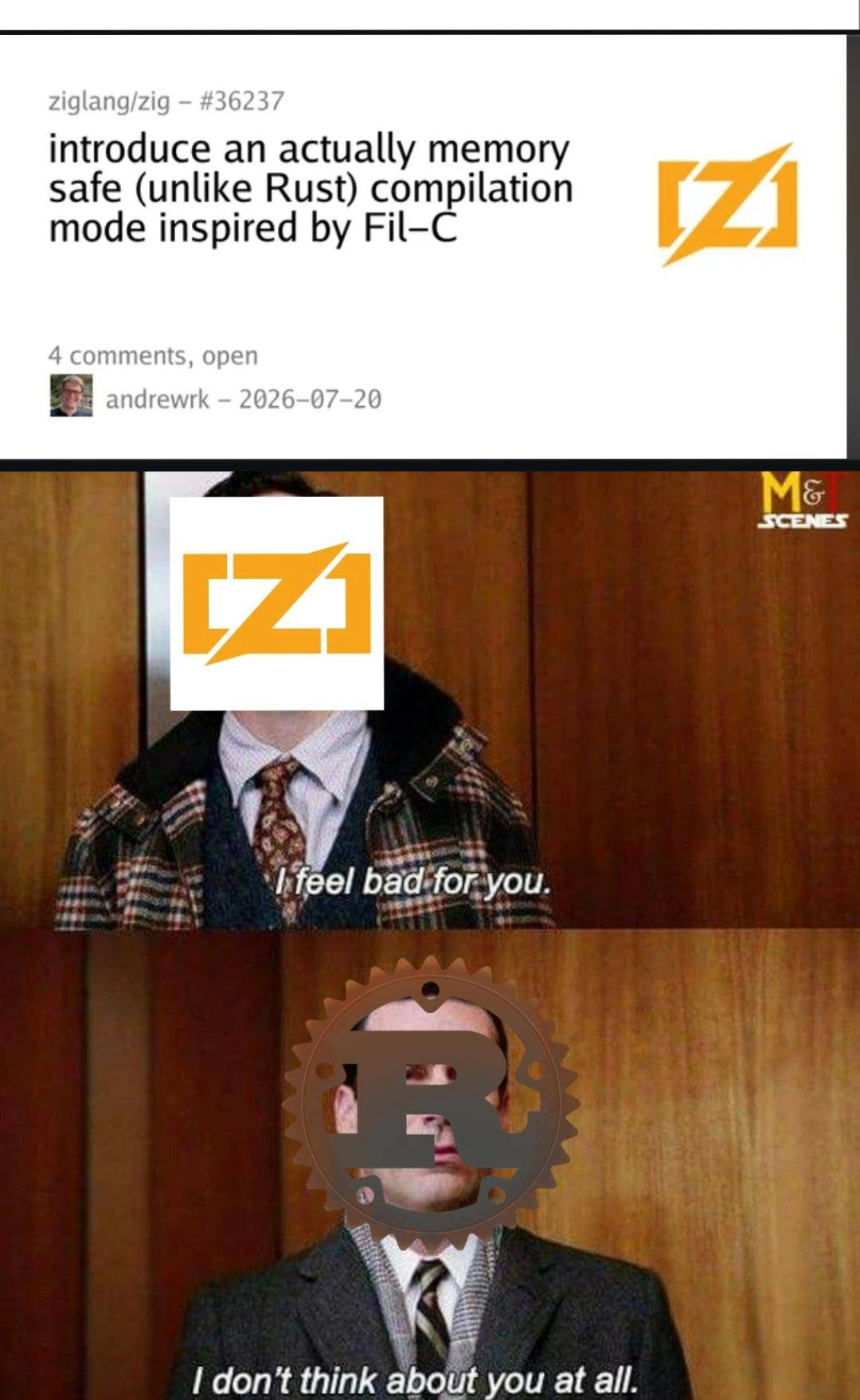
Even the image adds to the joke: the woman stands behind the guy at his computer, presumably after making her request, and the guy is staring at the screen with that familiar focused coder look. You can almost hear him processing her words and thinking, “Whoa, she just described undefined behavior in relationship terms.” His serious, jargon-filled reply comically contrasts with her casual idiom. This mismatch – a heartfelt (if paradoxical) desire met with a nerdy programming analogy – is what makes developers laugh and feel seen. Many of us have blurted out a tech joke in a normal conversation and gotten that “I have no idea what you just said” look. This meme nails that dynamic perfectly, blending everyday love-life talk with low-level programming humor.

Level 4: Pointer Necromancy

At the deepest technical level, this meme is referencing a use-after-free vulnerability, which is a notorious example of a temporal memory safety violation. In low-level programming languages like C/C++, memory for data (like the “cake” in the metaphor) is manually allocated on the heap and later explicitly freed. If a program continues to use a pointer to that memory after it’s been freed, that pointer is now a dangling pointer – it no longer points to a valid object. Dereferencing such a dangling pointer is undefined behavior: absolutely anything could happen, because the C/C++ standard makes no guarantees once you break the rules. (As seasoned developers joke, it might even make demons fly out of your nose! 👻) This unpredictability is because the freed memory might get reallocated for a different use, or marked as off-limits by the OS, so touching it is like walking into a trap door that wasn’t there a moment ago.

From a security perspective, use-after-free bugs are especially dangerous. When memory is freed, an attacker might manipulate the program to allocate a new object in that exact same spot in memory. Now, if the program mistakenly uses the stale pointer (thinking it’s still the old data), it could actually be operating on attacker-controlled data. This is how a simple mistake becomes a serious security vulnerability: the program might end up executing malicious code or leaking sensitive information. Many real-world exploits (especially in complex C++ applications like web browsers) have used this trick – free an object (say, a DOM node in a browser), then cleverly cause a malicious object of the same size to be placed at its old address, and voilà: the next use of the dangling pointer can hijack the program. Modern mitigations like address sanitizers, garbage collectors, and memory tagging are all about preventing this kind of memory access violation or at least detecting it early.

Languages that enforce strict ownership semantics – most famously Rust – were designed to avoid these scenarios altogether. Rust’s compiler will flat-out refuse to compile code that tries to use a value after it’s been moved or dropped (freed), essentially preventing the “have your cake and eat it too” situation in code. C++ developers, on the other hand, must rely on discipline, smart pointers (like std::unique_ptr), or runtime tools to catch mistakes. The meme humorously casts a relationship wish (“have my cake and eat it too”) as an impossible programming action, highlighting how in programming, as in life, trying to use something after you’ve disposed of it breaks the fundamental rules.

Description

The meme uses the 'Man Ignoring Woman for Computer' stock photo format. In a dimly lit room with a blue glow from a monitor, a man is intently focused on his computer screen, while a woman in pajamas stands behind him, looking sad and concerned. The top text reads, 'I TOLD HIM THAT I WANT TO HAVE MY CAKE AND EAT IT TOO'. The bottom text provides the punchline: 'HE SAID THATS A USE AFTER FREE VULNERABILITY'. The humor stems from the programmer's literal and technical interpretation of a common idiom. The phrase 'to have one's cake and eat it too' means to enjoy two mutually exclusive things. He translates this concept into a 'use-after-free' vulnerability, a critical memory corruption error in low-level programming where a program tries to use a piece of memory after it has been deallocated (the 'cake' has been 'eaten'). This creates a dangling pointer, leading to unpredictable and often catastrophic behavior, making it a clever and niche analogy for a senior developer or security professional
Comments

28
Anonymous ★ Top Pick Trying to maintain state in a stateless relationship is just asking for a race condition
  1. Anonymous ★ Top Pick

    Trying to maintain state in a stateless relationship is just asking for a race condition

  2. Anonymous

    Relationships would be simpler if humans came with smart-pointers; at least then the compiler would refuse the double-free break-up

  3. Anonymous

    The real vulnerability here is explaining to the board why fixing a decade-old use-after-free in production requires rewriting half the codebase because someone in 2014 thought manual memory management with raw pointers was 'more performant' than using smart pointers

  4. Anonymous

    The beautiful irony here is that after 40+ years of C/C++ dominance, we're still explaining to stakeholders why 'having your cake and eating it too' with manual memory management inevitably leads to CVEs. Meanwhile, Rust developers are smugly sipping their zero-cost abstraction lattes, knowing their borrow checker would have rejected this relationship at compile time. But hey, at least we have ASAN now - it's like couples therapy for your pointers, catching use-after-free drama before it goes to production and ruins everyone's weekend

  5. Anonymous

    UAF classic: allocate the cake, free the budget, dereference anyway - segfault with sprinkles

  6. Anonymous

    Product says, “Ship now, free the memory later, but keep all behavior.” Me: Cool - temporal memory safety failure. Would you like RCE with that segfault?

  7. Anonymous

    Enterprise planning: finance frees the capacity budget in Q2; product dereferences it in Q4 - classic use-after-free with SRE as the dangling pointer

  8. Sure Not 1y

    @durov is this true?

    1. Sure Not 1y

      @durov is this true?

      1. Sure Not 1y

        He is back peddling. Must be true.

      2. @ZgGPuo8dZef58K6hxxGVj3Z2 1y

        Probably

        1. Sure Not 1y

          I'm 99.999% sure

  9. @phobosperi 1y

    @gork is this real?

    1. @callofvoid0 1y

      @grok ?

      1. @karim_mahyari 1y

        @gork reanimates Maxim Gorky, gets an answer, puts him back to rest

        1. @deadgnom32 1y

          you think Maxim Gorky hates musk?

          1. @karim_mahyari 1y

            I think this is very far from the narrow bit of humor I could find in @gork

  10. @LonelyGayTiger 1y

    It annoys me how many people misattribute this quote. It's "eat my cake and have it to".

    1. @kitsukatsu 1y

      shut up gay

      1. @purplesyringa 1y

        please don't use gay as an insult

        1. @kitsukatsu 1y

          isnt it a mental disease?

          1. @sylfn 1y

            1. no it's not 2. please don't use mental illnesses as insults

          2. @purplesyringa 1y

            ...no, that's not how it works, please educate yourself

          3. dev_meme 1y

            If done correctly; yes Refer to it as incurable deviation - ain’t nobody will argue with dat

          4. dev_meme 1y

            You were warned, next time you gonna be kicked out Please, behave. Jokes is one thing, stupid disrespect is another

          5. dev_meme 1y

            How I might have missed a chance to use it in the first place

    2. @purplesyringa 1y

      found the unabomber

  11. @purplesyringa 1y

    roger that

Use J and K for navigation