Skip to content
DevMeme
3317 of 7435
When a library can't save you and you have to do it yourself
Dependencies Post #3641, on Sep 4, 2021 in TG

When a library can't save you and you have to do it yourself

Why is this Dependencies meme funny?

Level 1: I'll Bake It Myself

Imagine you really want a special kind of cupcake that no store seems to sell. You check all the bakeries in town and search online, but nobody has that exact flavor you want. It's disappointing because it would be so much easier if you could just buy it. Finally, you throw up your hands and say, "Fine, I'll bake it myself!"

So you go to the kitchen, gather ingredients, and start mixing and baking. At first you're a bit frustrated — why isn’t this available ready-made? — but now you’re also determined. By baking it yourself, you can make exactly what you wanted, even if it takes more effort. You might even feel a little proud as it comes out of the oven: you solved the problem on your own.

This is just like what’s happening in the meme. The programmer wanted to find a ready-made piece of code (kind of like a pre-made cupcake) to solve a problem. They looked everywhere in the usual places (like how you checked all the bakeries) but couldn’t find it. In the end, they decided, “I’ll do it myself,” and started writing the code from scratch (just like you baking from scratch).

It’s funny because we all recognize that feeling. We usually prefer the easy route — buying the cupcake or using someone else’s solution — but when that fails, we shift gears. There’s that moment of mild annoyance ("Really? No one has this?") followed by a sense of resolve ("Alright, I got this."). The meme makes it extra dramatic by showing a powerful character saying the line, which is like imagining you turn into a superhero (or maybe a supervillain!) when you decide to tackle the problem yourself. In simple terms, if no one else has what you need, sometimes you just have to make it on your own, and there’s something both frustrating and a little empowering about that.

Level 2: Time to Reinvent the Wheel

This meme highlights a common scenario in programming: you need to add a feature to your software, and you hope someone else has already written something you can reuse. In developer terms, you're looking for a library (also called a package or module). A library is a bundle of pre-written code that provides certain functionality, so you don't have to write it from scratch.

For example, if you need to format dates nicely or generate a PDF, you might search for an existing library to do that for you. Developers use package management tools (like npm for JavaScript, pip for Python, or Maven for Java) to find and install these libraries easily. This is a big part of code reuse – leveraging community-written code to save time. Your project will list these libraries as dependencies because your code depends on them to work. Managing these external packages (making sure you have the right versions, avoiding conflicts, etc.) is what's known as dependency management.

Now, the top text of the meme says: "when you can't find a library to do the job for you:". So imagine the developer has tried searching their package repository but struck out. Maybe every library they found was outdated, too complex, or didn't exactly solve the problem. Essentially, the search failed to find a useful result. Enter the image: we see Marvel's villain Thanos putting on his Infinity Gauntlet and saying, "Fine, I'll do it myself." In the movie, this line means Thanos will personally take on a task because others failed. In the meme, Thanos represents the programmer, and the gauntlet is like the programmer gearing up to write the code by hand.

"Fine, I'll do it myself." in this context translates to: "Alright, no existing code library can solve this for me, so I'll implement the functionality on my own." This is often jokingly called reinventing the wheel. That phrase means creating something from scratch that others have already made (like deciding to build a car wheel yourself even though wheels already exist). Typically, developers avoid reinventing the wheel because it's easier and more reliable to use tried-and-tested solutions. But here, the humor is that the programmer genuinely tried to find a ready solution and there was none suitable. So, they have no choice but to invent the "wheel" themselves, with a mix of frustration and determination.

Let’s break down why this situation is funny (especially to those in DeveloperHumor circles):

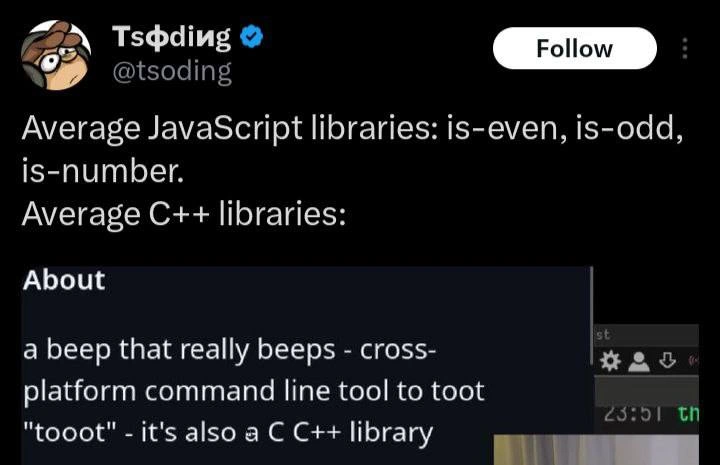
  • We expect a library for everything: These days, there's a saying among developers, "There's a library for that." The npm registry alone has over a million packages, including some for very trivial tasks (for example, there was famously a package just to pad a string with spaces, and another one to check if a number is even or odd!). Because of this, developers get used to finding premade solutions for almost any task. If you actually can't find one, it feels surprising and a little ironic.
  • From easy mode to DIY mode: Using libraries is like taking the easy route. You run a quick command, import something, and boom — feature added. This is great for developer experience (DX) because it makes life smoother. But when that fails, you suddenly have to switch to DIY mode. It's like expecting to buy a part off the shelf but then realizing you have to craft it yourself. The meme exaggerates this shift by showing a powerful character stepping in personally, which adds drama to what is usually just a programmer sighing at their keyboard.
  • "Not Invented Here" twist: There’s a term Not Invented Here (NIH) syndrome for when people refuse to use outside solutions and insist on making their own. That’s generally seen as a bad habit because it can waste time. In our scenario, the developer did try to find an outside solution — they weren’t being stubborn initially — but circumstances force them into making their own anyway. It’s ironic because even though they don’t want to reinvent the wheel, they end up doing it. The meme pokes fun at how, despite our best intentions to use existing code, we sometimes end up reimplementing things.
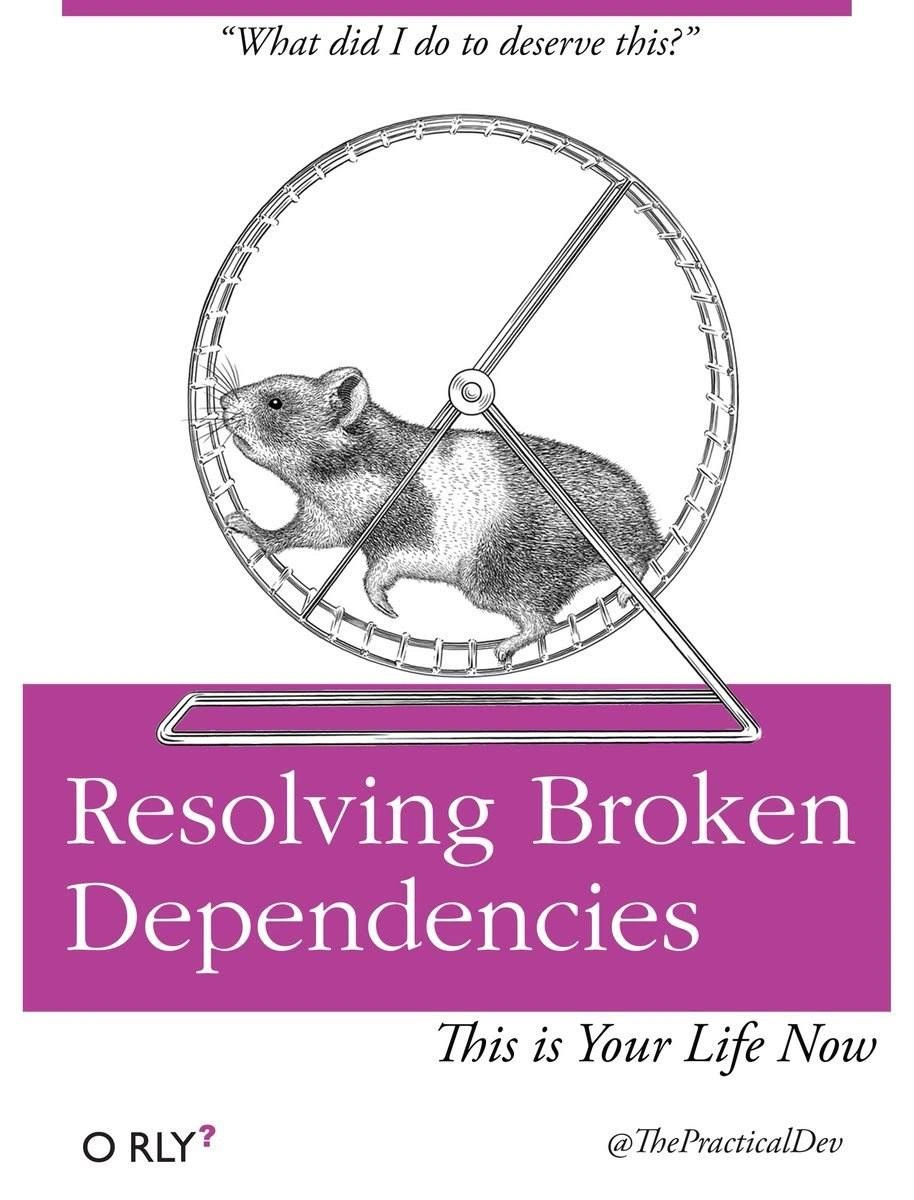
  • Avoiding dependency hell: Another subtle reason a developer might write their own solution is to avoid adding another dependency to the project. Dependency hell refers to the pain when too many dependencies cause conflicts or maintenance headaches (imagine one library requires version 1.0 of something but another needs version 2.0 — it's like a puzzle that doesn’t fit together). If the libraries available are too heavyweight or problematic, a developer might think, "You know what, it might actually be simpler if I just write this myself rather than pull in a bunch of other code." So the "do it myself" attitude can sometimes save future trouble, even if it’s more work upfront.

In the end, the meme is showing a programmer’s relatable moment of resignation-turns-into-determination. They went looking for a shortcut and didn’t find it, so now they’re rolling up their sleeves. The use of Thanos is tongue-in-cheek — it humorously exaggerates the developer’s feeling of, "Fine, I'll take matters into my own hands," by equating it with a supervillain deciding to personally handle a problem. It’s a bit grandiose for writing some code, and that’s exactly why it’s funny.

So, to put it simply: the developer in the meme couldn’t find any premade help (no library or package for their specific task), and their reaction is, "Alright then, I’ll build it from scratch." Developers laugh at this because they’ve all been through that little drama. It captures a mix of frustration (ugh, now I have to do extra work) and empowerment (heck yeah, I have the skills to make this). And who better than a comic book titan to illustrate feeling powerful enough to solve the problem single-handedly?


Level 3: Gauntlet of Dependencies

"Fine, I'll do it myself."

If a developer is quoting Thanos, you know they've reached that enough is enough moment. The top caption sets the stage: “when you can't find a library to do the job for you:”. It’s calling out our modern dependency-driven workflow — if there's a problem, our first instinct is to search the package registry (be it npm, pip, or Maven) for a drop-in solution. Why write code from scratch when someone else on the internet might have already solved it, right?

But sometimes the search comes up empty or the existing libraries are just not up to snuff (outdated, too heavy, missing features, or saddled with more tangled dependencies than your problem warrants). In those rare moments, the developer slips on the metaphorical Infinity Gauntlet and declares, in dramatic fashion: "Fine, I'll do it myself." The meme image uses the villain Thanos sliding on his golden gauntlet, capturing that mix of frustration and resolve. It's a tongue-in-cheek way to portray a programmer deciding to hand-roll a solution after facing a library_search_failure in the vast cosmos of open source packages.

Experienced devs find this hilarious because it's too real. They've been there. You spend half a day scouring npmjs.com or Stack Overflow for that perfect package, only to realize either it doesn’t exist or the ones that do exist create more problems than they solve (hello, dependency hell!). The Node ecosystem has a package for seemingly everything — there's literally an npm install is-odd (yes, a package to check if a number is odd) which itself depends on another package (is-number). It's absurdly meta. Yet here you are, needing some niche functionality and discovering no one has shared exactly what you need. Or maybe the one library you did find was last updated 7 years ago and has 12 open security advisories. Using it feels like strapping on a broken jetpack.

So the humor comes from this inversion: in a world where devs have grown accustomed to quick code reuse and one-liner imports, not finding a library is like the universe saying "you're on your own." The developer's reaction in the meme (Thanos with his I’ll handle it attitude) dramatizes that internal monologue:

No library for this? After 1.2 million packages on npm? Fine. I'll build the darn thing myself.

It's a mix of annoyance and a hint of mischievous pride. Annoyance because we really hoped to save time with a pre-built solution; pride because, well, if it's not out there, maybe we get to be the trailblazer. This touches on the infamous Not Invented Here syndrome. Usually, NIH is criticized — reinventing the wheel instead of using community-vetted solutions is often a waste. But here, it’s almost justified. It's not a case of arrogance ("I can do better than any library!"), but necessity ("None of the existing stuff fits, so I have to do it"). Still, the meme winks at NIH because the outcome is the same: writing your own code rather than reusing.

Under the hood, there's a real engineering trade-off being poked at. Depending too much on third-party packages can be risky. One tiny dependency can yank in dozens more (ever done an npm install and watched 500 packages flood your node_modules?). Each dependency is another thing that can break, conflict, or become unmaintained. Case in point: the notorious left-pad incident. A trivial 11-line function to pad strings on the left was an npm package that thousands of projects relied on. When its author unexpectedly yanked it from the registry, it broke countless builds. Developers worldwide woke up to find their apps wouldn’t compile because one tiny wheel was removed from the machine. People scrambled to literally reimplement that function overnight in their codebases:

// Example of "left-pad" functionality, implemented manually:
function leftPad(str, length, char = ' ') {
  while (str.length < length) {
    str = char + str;
  }
  return str;
}
console.log(leftPad('NPM', 5, '*')); // "**NPM"

(Above: roughly the kind of simple code many had to write themselves when the left-pad package vanished.)

That fiasco became a cautionary tale: maybe we rely a bit too much on micro-packages. So a senior dev sees Thanos gearing up to "do it himself" and chuckles — sometimes taking matters into your own hands (writing the functionality from scratch) is the sane path, not the crazy one.

But let's be real: writing it yourself comes with its own gauntlet of challenges. Now you are responsible for maintaining that code, handling edge cases, and debugging it in the middle of the night if something goes wrong. It might feel empowering today ("I am inevitable...ly going to finish this feature on my own"), but it could become technical debt tomorrow if not done carefully. The meme plays on that dramatic irony: the developer is momentarily a heroic (or villainous) figure, wielding all the power (and all the burden) by coding the solution solo.

In terms of Developer Experience (DX), this scenario highlights both the beauty and the beast of modern programming. The beauty: we have rich ecosystems where package managers like npm give us building blocks for almost anything, boosting productivity dramatically. The beast: we've become so used to that convenience that hitting a dead-end in a package search feels like a personal affront. It's like being a spoiled wizard whose spells (libraries) suddenly fail, forcing them to resort to good old manual labor (writing logic). Seasoned developers appreciate this humor because they've felt that exact "oh fine, I guess I'll actually code this" moment, often late at night after trying every quick fix.

Finally, there’s a sly nod to how open-source software grows. Today’s “Fine, I’ll do it myself” hack can become tomorrow’s popular library for others. Many great tools are born from frustration and necessity. The next time someone searches the registry, they might find your package. Thanos aimed to bring balance to the universe; the developer just aims to bring a working feature to their codebase. That determined, slightly exasperated spirit — half frustration, half I'll show them confidence — is what this meme perfectly captures.


Description

A two-panel meme. The top panel has black text on a white background that reads, "when you can’t find a library to do the job for you:". The bottom panel features a close-up shot of the character Mr. Incredible from the movie "The Incredibles." He has extremely bloodshot, tired-looking eyes and is pulling his black superhero mask over his face. A caption at the bottom of the image reads, "It's showtime!". This meme humorously captures the moment a developer realizes they have to implement a complex feature from scratch instead of relying on a pre-built solution. The exhausted expression combined with the determined "It's showtime!" perfectly encapsulates the feeling of begrudgingly accepting a difficult challenge, a common experience for senior engineers who often tackle problems that lack off-the-shelf answers
Comments

12
Anonymous ★ Top Pick That's the face you make after discovering the only npm package that does what you need has 247 critical vulnerabilities and was last updated during the Obama administration
  1. Anonymous ★ Top Pick

    That's the face you make after discovering the only npm package that does what you need has 247 critical vulnerabilities and was last updated during the Obama administration

  2. Anonymous

    Security: “That npm deep-merge package drags in 3,700 transitive deps and two active CVEs.” Me, sliding on the gauntlet: “Fine - I'll write the 12-line function myself and we can spend the sprint bikeshedding its parameter order.”

  3. Anonymous

    After 15 years of npm install solving everything, you suddenly realize you're about to write the world's 47th implementation of a date picker because yours needs to handle lunar calendars, skip February 30th, and integrate with a COBOL backend that thinks Y2K never ended

  4. Anonymous

    Ah yes, the classic 'npm install' returns zero results moment - when you realize you're about to become the maintainer of yet another underscore-left-pad-but-for-X utility that'll haunt your GitHub profile forever. At least you can add 'Created widely-used OSS library' to your LinkedIn... right after you spend three months handling edge cases you never knew existed and fielding issues from developers who expect enterprise-grade support for your weekend project

  5. Anonymous

    When npm has nothing, you end up npm‑installing yourself - v0.0.1, no README, lifetime LTS, and a future postmortem

  6. Anonymous

    It's not NIH syndrome if the ecosystem hasn't evolved the wheel you need yet

  7. Anonymous

    Build vs buy always ends the same: we ‘temporarily’ roll our own to cover the last 10%, then spend two quarters reading RFCs, reimplementing chunked transfer and Unicode normalization, and realize the scariest dependency in prod is us

  8. @Gefrubbel 4y

    ❤️

  9. @arpanetus 4y

    business ain"t gonna wait

  10. @feskow 4y

    When library exists: left-pad

    1. @feskow 4y

      One guy deleted his module from npm and a lot of projects stopped working

  11. @ZgGPuo8dZef58K6hxxGVj3Z2 4y

    That he even if the library already exists

Use J and K for navigation