Skip to content
DevMeme
3318 of 7435
The Three Phases of a Programmer's Day: Exhaustion, Frustration, and Hyperfocus
DeveloperProductivity Post #3642, on Sep 4, 2021 in TG

The Three Phases of a Programmer's Day: Exhaustion, Frustration, and Hyperfocus

Why is this DeveloperProductivity meme funny?

Level 1: When Sleepy Turns Super

Imagine you’re so sleepy in the morning that you accidentally pour juice into your cereal because your eyes are barely open. All day you feel tired and slow, like a zombie dragging your feet. But then late at night, when everyone else is snoozing, an emergency happens — say, your friend calls because their toy is stuck on the roof or there’s a big mess to clean. Suddenly, you wake up completely and turn into a hero ready to save the day (or night)! You climb out of bed with a burst of energy and grab a flashlight to fix the problem, even though it’s 2 AM and you were exhausted before. It’s like a switch flipped: one moment you could hardly keep your eyes open, and the next moment you’re a wide-awake superhero. This is funny because we don’t expect someone who is half-asleep all day to magically become super active in the middle of the night. It’s the silly idea of a person going from yawning to zooming just because something important needs to be done. We laugh because it’s a little bit like a cartoon: the character is drooping and snoring, but when trouble strikes at an odd hour, zing! they’re suddenly full of life and ready to fix everything in their pajamas.

Level 2: Zombie Mornings, Hero Nights

This meme uses Marge Simpson to represent a developer’s wild energy_cycles over a day, especially when they’re on call for production issues. Let’s break down each panel and why it’s so relatable to anyone in software development (especially those doing OnCall_ProductionIssues duty):

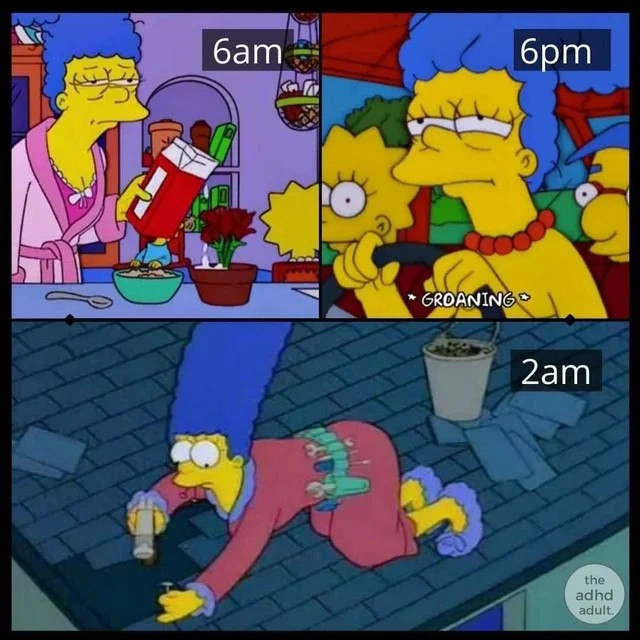
  • 6am – “Stand-up Zombie”: In the top-left image, Marge is barely awake, accidentally pouring coffee into her cereal. This is a funny take on how a programmer feels at the morning stand-up meeting. A stand-up is a short daily team meeting (often early in the morning) where devs share what they’re working on. But if you’ve been up late coding or handling an issue, you feel like a zombie at 6 AM. Your eyes are half-open, your brain is foggy, and you might do silly things like put the wrong ingredient in your breakfast. Developers often survive these mornings by chugging coffee. The label "6am" and Marge’s half-asleep state show that the dev hasn’t fully recovered from the previous night’s work. It’s a comedic way to say “I’m awake, but only on paper.” Everyone in the team might be chipper, but the on-call engineer is struggling not to faceplant into their cereal bowl.

  • 6pm – “Comatose Commute”: The top-right panel (labeled "6pm") shows Marge Simpson groaning with heavy eyelids while driving. By 6 PM, our developer has put in a full day of coding, debugging, and meetings. They are exhausted — practically comatose. “Comatose” means almost unconscious; here it exaggerates how drained you feel after a tough workday. The dev is driving home on autopilot, groaning because they used all their energy at work (and maybe didn’t sleep well the night before). Many new devs experience this: after your first day fixing tough bugs or battling build errors, you’re so tired you could fall asleep at the wheel (not safe, but it happens). This image captures DeveloperFatigue perfectly — that evening crash where your brain just shuts down. You might have spent the afternoon fighting a tricky bug (a true DebuggingNightmares scenario), and by the time you head home, you’re completely spent. The humor here is also relatable: who hasn’t felt drowsy during the commute after an intense day, maybe even muttering "ugh, I need a nap"?

  • 2am – “On-Call Superhero”: The bottom panel (labeled "2am") is the big payoff. Marge is suddenly wide awake, crawling on a rooftop in her pajamas with a flashlight and tools scattered around. This represents a developer who has been jolted awake by a pager_alert in the middle of the night. In tech, being on call means you’re responsible for responding to emergencies outside regular hours — if something breaks in the production environment (the live site or service users rely on), you get alerted (historically by a beeper or pager, nowadays an app). Here, 2 AM is when a ProductionIncident happens: maybe the website went down or a server crashed, so the dev has to jump out of bed and fix it. Just like Marge scrambling on the roof to fix a leak in the middle of the night, the developer is scrambling to fix a critical issue in the dead of night. Suddenly, all that tiredness from the day is gone — adrenaline kicks in. Adrenaline is the body’s emergency energy hormone, and it can make you very alert when something urgent happens. So our once-exhausted programmer now becomes a sort of emergency superhero, LateNightCoding with intense focus. This is often called ProductionFirefighting – because you’re basically fighting a “fire” in the production system. The term “hero” is used because saving a broken system at 2 AM does feel heroic (though it’s also something we’d rather avoid!). It’s funny because just a few hours ago the dev could barely keep their eyes open, and now they’re debugging and patching code like a champ in the middle of the night, fully awake. The contrast is extreme and humorous.

What’s the overall point? Developers often joke about their OncallLife turning them into night owls. During normal work hours they might feel drained (especially after many interruptions or lack of sleep), but the quiet of night (and the urgency of a problem) can flip a switch. Suddenly you go from drooling on your keyboard to diagnosing a server crash with laser focus. It’s an extreme example of sleep_deprivation mixed with dedication. Junior devs might not have experienced this yet, but it’s common in teams where someone always has to be ready to handle ProductionIssues. It also highlights the unhealthy side: nights like this can ruin your sleep schedule and leave you feeling like a zombie the next morning – starting the cycle over again. The reference to The Simpsons (Marge Simpson’s scenes) makes it lighthearted and instantly recognizable, because The Simpsons has a character or scene for every situation. The meme’s funny because it exaggerates a truth: many programmers feel dead tired at conventional times but come alive when duty calls late at night. It’s a mix of tech life humor and a cautionary tale about how crazy on-call hours can be.

Level 3: Graveyard Shift Debugging

At 6am, the developer is basically a walking zombie in the daily stand-up meeting. This is that cheerful morning Scrum ritual where everyone shares updates — except our dev hasn't fully booted their brain yet. The meme shows Marge Simpson in a robe, eyes half-closed, accidentally pouring coffee into a cereal bowl. Why is this so darkly funny? Because every senior engineer who’s done OnCallDuty knows that feeling: you’re technically present at the meeting, but mentally you’re still in a memory dump from two hours ago. The circadian_drift is real. After a night wrestling with a prod_outage_2am alert, you show up to the 9 AM stand-up like Marge, almost putting caffeine in the corn flakes. You’re sleepwalking through your status report while clutching a mug that’s basically life support.

By 6pm, after slogging through code reviews, bug tickets, and endless Zooms, our dev is utterly spent. The meme’s second panel (Marge groaning, nodding off at the wheel) nails that drive_home_exhaustion feeling. It’s the end of a typical day in Debugging_Troubleshooting hell. You’ve fought fickle unit tests, merged a hotfix for that one user in Australia, and dealt with a ProductionIssues post-mortem meeting (where of course everyone asks why it happened this time). Come evening, you’re running on fumes — the morning’s pot of coffee has long since abandoned you, leaving a developer_fatigue crash. Eyes drooping, you could fall asleep on your keyboard or even during your commute. Groaning indeed: been there, done that, spilled the cold coffee down the shirt.

But behold 2am — the witching hour of dev heroics. The bottom panel shows Marge in pajamas on a rooftop, clutching a flashlight with startling alertness. That’s the OnCallLife distilled: comatose by dinner, yet a sudden pager_alert transforms you into an adrenaline-fueled code surgeon at 2 AM. It’s like some twisted superhero origin story: mild-mannered and half-dead by daylight, but let production go up in flames after midnight, and you spring to life. This is ProductionFirefighting at its finest. Pager duty goes off, your heart spikes, and you’re crawling through the codebase’s dark crevices (your metaphorical roof) trying to patch leaks (like Marge fixing shingles in the dead of night). The body’s stress response floods you with enough adrenaline to temporarily banish SleepDeprivation. Suddenly you have laser focus debugging that critical outage, tailing logs and chasing down exceptions with a clarity you didn’t have all day. The meme exaggerates it hilariously, but it’s painfully true: there’s a bizarre energy_cycle inversion where a dev hits peak performance at the worst possible hour.

Why does this happen? Partly it’s the on-call nightmare scenario: you must fix the issue or the site stays down. High stakes and fear are a heck of a stimulant. Plus, at 2 AM there are zero product managers pinging you and no new Jira tickets popping up — it’s just you and the broken system in silence. That quiet focus (and sheer terror of a ProductionIncident) can put you “in the zone” fast. Many of us secretly admit: some of our clearest thinking happens in these crisis moments. It’s a twisted form of DeveloperProductivity — running on cortisol and caffeine instead of sleep. This is also a known anti-pattern called the "hero culture": the system’s on fire, and an individual dev pulls a miracle fix last minute. We laugh, but it’s a weary laugh, because living like this long-term is not sustainable (hello burnout). Yet in the moment, there’s a grim pride in being the late_night_coding savior who commits a patch at 3 AM that rescues the company.

To visualize the oncall_nightmares energy curve, consider this tongue-in-cheek table of a developer’s daily life-cycle:

Time Developer State Fuel
6 AM 😴 Stand-up zombie Lukewarm coffee (accidentally in cereal)
6 PM 😩 Comatose commute Caffeine crash, code fatigue
2 AM 🚑 On-call superhero Pure adrenaline (production on fire)

In code form, the day might as well be scripted as:

if (time === "6am") {
    developer.energyLevel = "zombie";
    pour(coffee, cerealBowl);  // Breakfast of programming champions
}
if (time === "6pm") {
    developer.state = "groaning";
    developer.driveHomeOnAutoPilot(); // hoping no one calls
}
if (time === "2am" && pager.isRinging()) {
    developer.mode = "firefighter";
    production.issue.hotfix();  // deploy hero patch in PJs
}

This meme strikes a chord with veterans because it’s too real. It lampoons the circadian inversion many devs experience: by day you’re running on empty, by night you’re somehow running on all cylinders when ProductionIssues demand it. It highlights the absurd reality of on-call rotations: you end up feeling like a Simpsons character in a slapstick scenario, doing things at 2 AM you never thought possible — like Marge on a roof, or a bleary-eyed programmer SSH’d into a server, debugging by the light of the error log. The humor is both in the exaggeration and in the accuracy: we laugh so we don’t cry, acknowledging how dysfunctional it is to only find your mojo at an hour that literally no one should be awake.

Description

A three-panel meme using scenes of Marge Simpson to illustrate a programmer's daily cycle, with the original post caption 'Programmers be like'. The '6am' panel shows a tired Marge in a robe, mechanically pouring cereal, representing the groggy start to a day of coding. The '6pm' panel shows an annoyed Marge, groaning as Lisa plays the saxophone, symbolizing the burnout and frustration after a full day of meetings, interruptions, and complex problems. The final panel, labeled '2am', depicts a wide-eyed, hyper-focused Marge in her pajamas, crawling on the roof with tools to fix a single shingle. This perfectly captures the nocturnal burst of productivity when, free from distractions, a programmer can finally enter a flow state and solve a nagging problem with intense, almost obsessive concentration. The meme highlights the stark contrast between the draining nature of the corporate workday and the exhilarating focus of late-night coding sessions
Comments

7
Anonymous ★ Top Pick The business thinks my productivity peaks at 10 AM. My git commit history proves it's actually 2 AM, when my only dependencies are caffeine and a silent house
  1. Anonymous ★ Top Pick

    The business thinks my productivity peaks at 10 AM. My git commit history proves it's actually 2 AM, when my only dependencies are caffeine and a silent house

  2. Anonymous

    Why invest in complex AIOps when your ops engineer’s REM cycle already triggers an auto-scaling burst of productivity at exactly 02:00?

  3. Anonymous

    After 20 years in tech, I've learned that the only difference between junior and senior developers is that seniors have optimized their 2am floor position for better lumbar support while debugging production issues

  4. Anonymous

    The classic developer circadian rhythm: 6am optimistically watering your side projects, 6pm groaning through code reviews, 2am face-down on the keyboard after finally reproducing that Heisenbug in production. The real question is whether that 2am collapse happened before or after you force-pushed to main

  5. Anonymous

    My executive-function HPA scales to zero during business hours, then a 2am CronJob spins up ten replicas to rewrite the module - no README, just a 5am PR

  6. Anonymous

    Marge nails the SRE paradox: O(1) grogginess by day, infinite scalability at 2AM PagerDuty

  7. Anonymous

    My brain’s scheduler: 6am cold start, 6pm throttled, 2am preemptive real‑time thread that decides to re‑roof the house and refactor the build pipeline

Use J and K for navigation