Skip to content
DevMeme
5544 of 7435
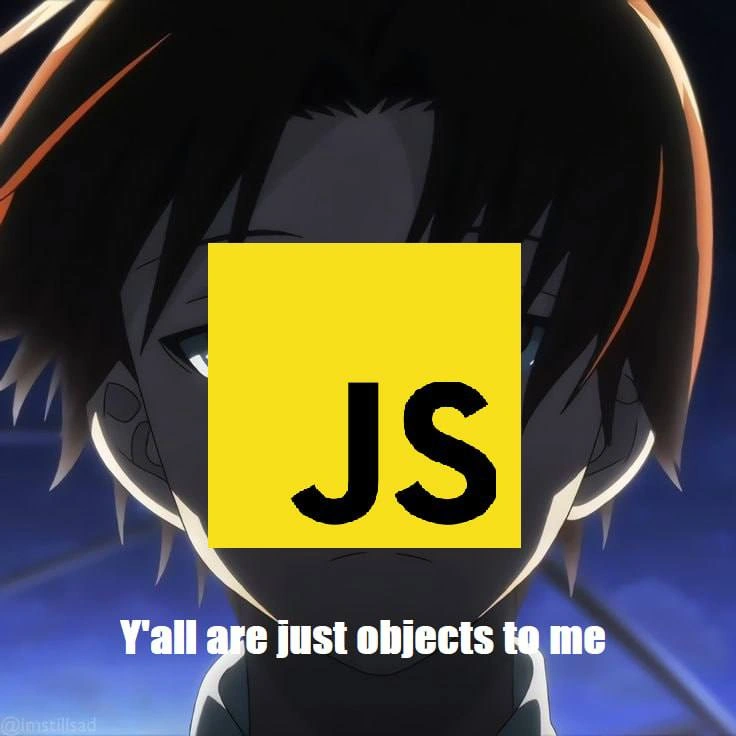
We All Live in a Yellow Subroutine
CS Fundamentals Post #6086, on Jun 28, 2024 in TG

We All Live in a Yellow Subroutine

Why is this CS Fundamentals meme funny?

Level 1: Code Sing-Along

Imagine taking a famous song lyric and changing one word to something from your own life – that’s exactly what’s happening here. The original lyric “We all live in a yellow submarine” comes from a fun Beatles song about friends on an adventure under the sea. The meme swaps out one word: instead of a yellow submarine (a boat that goes underwater), it says yellow subroutine (which is a fancy word for a little piece of computer code). That one small change makes the whole line sound silly and geeky, because normally nobody would sing about living inside a piece of code! It’s a simple pun that mixes something serious and technical (programming terms) with something lighthearted and popular (a Beatles tune). The reason it’s funny is the same reason a lot of parody songs are funny – it’s unexpected. We expect “submarine” from that lyric, and hearing “subroutine” instead is a surprise that makes us laugh, especially if we know just enough about coding to recognize that word. In plain terms, the meme is like a bunch of programmers jokingly singing a classic song but with nerdy lyrics. It creates a feeling that “hey, we’re all in this coding thing together, even in the old-fashioned parts of it, and we can laugh about it.” You don’t have to be a programming expert to get the gist: it’s just a playful way to say sometimes our world of code is as quirky as a Beatles fantasy, and we’re all merrily riding in that yellow subroutine together.

Level 2: Beatles Meet BASIC

This meme’s caption is a clever mash-up of pop culture and programming. “Yellow Submarine” is a famous 1966 song by The Beatles with the catchy line, “We all live in a yellow submarine.” The meme replaces submarine with subroutine because the two words sound very similar. So instead of an underwater boat, it’s talking about a bit of code. That one-word swap turns a normal lyric into a programmer’s inside joke. It’s a classic example of techie Wordplay: take something everyone knows and tweak it to include a geeky term.

Now, what exactly is a subroutine? It’s basically an old-school word for a function or procedure – a reusable chunk of code that performs a specific task. You can “call” a subroutine whenever you need that task done, and then the program will jump back to where it left off. It’s like a mini-program inside your program. For example, if your code needs to calculate something or print a certain message many times, you’d put that logic in a subroutine and call it each time, instead of writing the same instructions out over and over. This makes programs easier to read and maintain. Almost all programming languages have this concept, though these days we just say function or method. The term “subroutine” was more common in the earlier days of programming (think 1960s-1980s), especially in languages that were strictly procedural, meaning they organized the program as a sequence of steps and sub-steps.

Back in those early languages like BASIC, Pascal, or FORTRAN, subroutines were a primary way to structure code. For instance, in BASIC (one of the beginner-friendly languages of the late 70s and 80s), you might literally use line numbers and a GOSUB command to jump to a subroutine, then a RETURN command to come back. It looked like this:

10 PRINT "Start of main program"
20 GOSUB 100      REM go to the subroutine at line 100
30 PRINT "Back in main program"
40 END

100 PRINT "We all live in a yellow subroutine!"
110 RETURN         REM return to where we left off

In that snippet, the program prints a start message, then goes to line 100 to execute the subroutine code, prints the joke line, and then returns to continue after where it left off. This was how you did things before modern concepts like objects or modules. Other languages had similar ideas: Pascal had procedure (for subroutines that don’t return a value) and function (for ones that do return something), C just uses the term function for everything, and in older Fortran you’d literally write SUBROUTINE name(...) to define one. All these are variations on the same theme: grouping code into reusable pieces.

The meme also uses the word recursive in the extended caption. If something is recursive, it means it refers to itself or calls itself. In programming, a recursive subroutine is one that calls itself as part of its operation. It’s like a loop, but written by having the function re-enter itself on a smaller problem. A classic example is a function to calculate factorials: factorial(5) might call factorial(4), which calls factorial(3), and so on, until it reaches factorial(1) and knows the answer. Each call is a subroutine call to the same piece of code. Recursion is a useful concept taught in CS fundamentals because it can solve certain problems very elegantly (like searching through trees, solving puzzles like the Towers of Hanoi, etc.). But if a recursive function never meets a condition to stop calling itself, it will keep going forever (or until the computer runs out of memory for it). That’s why repeating “recursive subroutine” three times in the lyric is a tongue-in-cheek joke: it’s mimicking a subroutine that’s stuck calling itself over and over. The song lyric gets “stuck” in a loop, much like a buggy recursive function would. It’s the kind of little joke you appreciate more once you’ve written or at least learned about a recursive function.

Now let’s bring The Beatles back into it. The Beatles are an old but incredibly popular band; even if you’re a younger developer, you’ve likely heard some of their songs in movies, commercials, or from your parents. “Yellow Submarine,” in particular, is almost like a children’s song – it’s simple, catchy, and everyone can sing along to the chorus after hearing it once. The imagery is very whimsical: living in a bright yellow submarine with all your friends, under the sea, having a great time. It’s not meant to be literal; it’s just fun and imaginative.

What the meme does is it connects that imaginative scenario to something in programming. Instead of friends in a submarine, it’s programmers in a subroutine. Of course, programmers don’t literally live inside code, but if you spend your day working on one large piece of software, it can feel like you’re inhabiting that environment. By saying “We all live in a Yellow Subroutine,” the meme humorously suggests that developers (as a community) are all together in this somewhat outdated style of coding, cruising along like the crew of a sub. The word yellow here is mostly just to complete the pun (because it’s in the song). But it does evoke that same vintage feel — many old computer manuals were yellowed with age, and “yellow submarine” itself has a 60s retro vibe, which matches the idea of an old codebase.

Let’s also clarify LegacyCode, since it’s mentioned that this meme pokes fun at legacy procedural constructs. Legacy code means any code that has been around a long time and is still in use, usually without a lot of modern frameworks or techniques. It’s the code your predecessors wrote, and now you have to deal with it. Often, legacy code was written in a procedural way (lots of subroutines, few comments, maybe some global variables holding everything together). Modern engineers sometimes feel “trapped” by legacy code because it can be hard to extend or change – it’s like trying to renovate an old house while people are still living in it. When the meme jokes about “many legacy codebases still trap modern engineers in decades-old procedural constructs,” it’s acknowledging a common situation in the tech industry: even though we have newer paradigms (like object-oriented programming, or microservices, or cloud computing), plenty of us have to work with systems designed in a much earlier era. It’s a shared experience that the meme is playfully nodding to.

So, put it all together: This meme makes people laugh because it mixes a TechHistory lesson with a dash of music and humor. You’ve got the Beatles reference (instant recognition and a smile), and you’ve got the term subroutine (which brings to mind the “good old days” of coding). It’s saying, in a joking way, “Remember those old programming days? We’re kind of still in them, all of us together — and isn’t that ironically fun?” You don’t have to know FORTRAN or BASIC to get the joke, but if you do, it’s even better. It’s a lighthearted reminder that, in a fast-changing field, some ideas (and jokes) never truly go away — they just resurface in memes like a submarine popping up from underwater.

Level 3: Monolithic Melody

For the seasoned coder, seeing “We all live in a Yellow Subroutine” triggers a knowing grin. This meme hits two nostalgic notes at once: a classic Beatles song and a classic programming paradigm. It’s the kind of TechHumor that makes older developers chuckle and groan, because it’s a cheeky reminder of the days when code was one big procedural party. The term subroutine itself is a throwback. Nowadays we talk about functions, methods, or modules, but say “subroutine” and you’re teleported to an earlier era of computing. Picture a LegacyCode base from the 70s or 80s – maybe a massive FORTRAN scientific program or a business app in COBOL – where the world was one long list of subroutine calls (and maybe a few dreaded GOTO statements). Calling something a “subroutine” today feels quaint and archaic, like referring to a modern car as a “horseless carriage.” It immediately evokes dusty books, green-on-black terminal screens, and code that might as well be fossilized.

The meme capitalizes on that imagery. We have this bright yellow cartoon submarine (straight out of 1960s pop art), and instead of being under the sea, it’s under layers of old code. The phrase “We all live in a Yellow Subroutine” playfully suggests that developers – especially those maintaining old systems – are all crammed together in this antiquated vessel, chugging along in the depths of a legacy code ocean. It’s funny because there’s a grain of truth: many devs do feel like they’re stuck “living” inside some decades-old codebase, insulated from modern conveniences like microservices or cloud deployments, much like submariners isolated underwater. The DeveloperNostalgia here is strong; it’s the same kind of fond-yet-exasperated feeling you get when remembering CRT monitors or dial-up internet. You laugh because you survived it.

The Beatles reference amplifies the humor. “Yellow Submarine” is an upbeat, almost childlike song about solidarity and whimsy (“and our friends are all aboard…”). By turning it into “Yellow Subroutine,” the meme injects solidarity among programmers: we’re all in this together, chaps, stuck in the old subroutine! It’s easy to imagine a room of veteran programmers at a pub, turning this into a sing-along parody after a long week: “We all live in a legacy code routine…,” pint glasses swaying in unison. In fact, the post’s author went ahead and rewrote a chunk of the lyrics to hammer the joke home. They mention Pascal, Lisp, and C – languages spanning different decades and styles – as if to say, “whatever language you learned back in the day, we all shared this subroutine-centric worldview.” A senior developer reading those parody lyrics can’t help but smile at the roll call of old languages (and maybe start humming along). It’s a throwback to their early coding days: Pascal with its strict structure (and those endless begin/end blocks), Lisp with its intimate love affair with recursion, and C with its no-nonsense, procedural approach (and manual memory management headaches). Each of those languages had you writing lots of subroutines, long before buzzwords like API or DevOps existed.

The line “recursive subroutine, recursive subroutine, recursive subroutine...” repeating is the extra seasoning that makes this meme gourmet for experienced devs. On the surface, it’s just echoing the song’s chorus structure. But anyone who’s spent nights debugging will recognize it as a wink at what happens when a recursive function doesn’t have an exit condition – you get an endless loop (or until you crash). Hearing “recursive subroutine” on loop instantly brings to mind that dreaded stack overflow error or the program that froze because it kept calling itself. It’s a cringe-memory and a laugh at the same time. (Who among us hasn’t written a mistaken recursive call that spun out of control at least once?) This meme manages to set that relatable mistake to music.

Beyond the wordplay, there’s an underlying commentary that senior devs appreciate: a lot of important software still runs on these old principles. We joke about it with songs and memes, but banks, governments, and universities around the world are running critical systems built like this – big procedural programs, thousands of lines long, maintained over decades. Many of today’s programmers will at some point in their career inherit a “yellow subroutine” — a legacy system that they didn’t write but must navigate. It might be a monolithic Java method that’s 5000 lines long or a COBOL batch process from 1985, but the feeling is the same: you step inside this capsule of old code and think “wow, we’re really still in here, huh.” The meme captures that surreal realization and defuses the frustration with humor. It tells every developer who’s ever cracked open a crusty old code archive, “Hey, you’re not alone – we all live in this yellow subroutine together and can laugh about it.”

In summary, at the senior perspective this meme shines as a cultural crossover. It’s GeekHumor encapsulating decades of tech history in one line. The senior folks are laughing at the absurdity and accuracy of it: the absurdity of picturing themselves literally inside a subroutine submarine, and the accuracy in how it describes the camaraderie (and occasionally, the despair) of working with legacy procedural code. It’s a knowing laugh, the kind shared by people who’ve been through similar journeys under the code sea. And if you can’t change the fact that you’re stuck in a giant old subroutine at work, well, you might as well sing about it and have a little fun – that’s the vibe this meme absolutely nails.

Level 4: Stack Frames Under the Sea

In the late 1960s, while The Beatles were taking listeners on a psychedelic journey in a Yellow Submarine, computer scientists were diving deep into the concept of the subroutine — an essential building block of early programming. Coincidentally, 1968 saw two revolutions in different realms: the premiere of the Yellow Submarine film and the rise of structured programming in tech (sparked by Edsger Dijkstra’s famous letter “Go To Statement Considered Harmful”). This meme cleverly bridges those worlds. Back then, a subroutine wasn’t just a cute idea; it was a fundamental shift away from unstructured spaghetti code towards organized, reusable code blocks. Under the hood, calling a subroutine meant manipulating the call stack: pushing a return address and jumping into a sub-program, then popping back. Early hardware started to support this directly — for example, the PDP-11 (a 1970s-era minicomputer) had a JSR (Jump to SubRoutine) instruction and a matching RTS (ReTurn from Subroutine), making subroutine calls a built-in part of the machine’s design. This was cutting-edge at the time: it meant the CPU would remember where it left off, sort of like marking your page in a book before flipping to a referenced section.

One of the deeper computing concepts at play here is recursion – when a subroutine calls itself. The extended joke in the caption, “recursive subroutine, recursive subroutine, recursive subroutine...,” is a wink to that idea. Academically, recursion was a big deal: it’s tied to the very foundations of computer science (like mathematical induction in code form). Early languages had varied support for it. For instance, the original FORTRAN (1950s) used subroutines for reuse, but it didn’t allow a subroutine to call itself – there was no dynamic stack for local variables, so recursive calls would overwrite the same memory. In those days, if you tried to make a subroutine invoke itself, you’d break things spectacularly. By contrast, LISP (late 1950s) and later ALGOL (1960) fully embraced recursion, which pushed the development of true stack-based function call mechanics. The introduction of an automatic stack to handle stack frames (each call’s local context) was a game-changer. It let routines dive deeper and deeper, much like a submarine going further underwater with each recursive call. Of course, there’s a limit — go too deep and you face a stack overflow (in submarine terms, too much pressure!). The meme hints at that with the endlessly repeating line: a recursive subroutine that never finds a base case is like a song chorus that never ends (amusing at first, then disastrous if it were a real program).

So at this level, “Yellow Subroutine” isn’t just a punny Beatles reference — it’s packing the history of programming practices into a one-liner. It reminds us that by the time the Beatles were singing about living under the sea, programmers were figuring out how to not drown in their own code by using subroutines. The humor gains an extra layer when you realize how far we’ve come: from the procedural CS_Fundamentals of yesteryear (where subroutines were king, and recursion a novel trick) to today’s world of microservices and object-oriented design. Yet, even now, every function call we make is still, deep down, the same old voyage: push an address, jump into a subroutine, do work, return. We’re all still riding in that metaphorical submarine in the ocean of code — even if we’ve painted it with new colors over the decades.

Description

The image is a parody of the iconic artwork for The Beatles' song 'Yellow Submarine.' It features a bright yellow, cartoonish submarine against a solid blue background. Overlaid in white text across the submarine are the words 'We all live in a Yellow Subroutine.' This creates a pun by replacing the original lyric 'submarine' with 'subroutine,' a term for a block of code that performs a specific task and can be called from elsewhere in a program. The joke humorously equates the enclosed, shared experience of living on the submarine with the daily reality of software developers, whose work often involves being deeply immersed in and repeatedly calling upon various subroutines or functions. It's a clever blend of classic pop culture and a fundamental computer science concept
Comments

17
Anonymous ★ Top Pick Our legacy codebase is a yellow subroutine: it's been around since the 60s, no one fully understands how it works, but we all just sing along and hope it doesn't spring a memory leak
  1. Anonymous ★ Top Pick

    Our legacy codebase is a yellow subroutine: it's been around since the 60s, no one fully understands how it works, but we all just sing along and hope it doesn't spring a memory leak

  2. Anonymous

    Catchy tune - until you realise that this one subroutine hasn’t been refactored since ’68 and the globals are still being used as ballast

  3. Anonymous

    Just like The Beatles' submarine, our subroutines are also full of bugs, endlessly recursive, and everyone's stuck inside them wondering how to get out - except instead of 'all together now', it's 'all stack overflow now'

  4. Anonymous

    This hits different when you realize we've been living in yellow subroutines since the 1960s - both the song and FORTRAN subroutines are from the same era. Though unlike The Beatles' submarine, our subroutines rarely surface gracefully and often leave us debugging in the deep end of the call stack, wondering if we'll ever return to main()

  5. Anonymous

    In our legacy monolith we all live in a yellow subroutine - nine frames deep, globals sloshing in the hull, and the only observability is printf sonar

  6. Anonymous

    The only subroutine where tail-call optimization is a pipe dream - and we're all still diving

  7. Anonymous

    We all live in a yellow subroutine - global state for ballast, reentrancy holes in the hull, and every chorus adds another frame to the call stack

  8. @Sp1cyP3pp3r 2y

    Showing children Pascal code should be considered molesting

    1. @ZgGPuo8dZef58K6hxxGVj3Z2 2y

      AYO!? Why tho? (Not Pascal dev here)

    2. @kvassilisk 2y

      My guy Pascal was in Moldova's curriculum when I was at school And while you _could_ c/c++ The textbook was in Pascal We used tp7 in dosbox

      1. dev_meme 2y

        No idea why you guys hate Pascal so much, all in all it’s not a bad language from any point of view

        1. @endisn16h 2y

          decompiles like shit

        2. @kvassilisk 2y

          It wasn't a hateful comment tbf I loved it But the FS and general system interfacing in fpc... Is not of my liking

  9. @nmetelica 2y

    pepperidge farm remembers

  10. @ZgGPuo8dZef58K6hxxGVj3Z2 2y

    My mom bought me Turbo Pascal book when I was ~11-ish 💀

  11. @karanokyoukai 2y

    In the town where I was born, Lived a man, who played with 'C'. And he coded his whole life On a stack of Function Keys. So we traced to his data schemes, Til we found a 'C' routine.. And we lived beneath the SAVES, In our yellow Sub-Routine... Chorus: WE ALL live in A YELLOW SUB-ROUTINE, YELLOW SUB-ROUTINE, YELLOW SUB-ROUTINE .... (ETC) When our friends are on the boards, Many MODEMS RETURN NEXT:FOR Then the BAUD RATE goes astray... (B-B-BEEP, BEEP BEEP B-B-BEEP..) Chorus (IF YOU CAN STAND IT!) As we live in Memories Every one of us Returns Linefeeds... CPU and 'C' Routine, In our yellow SUB-Routine...

  12. @hovhannisyana 2y

    https://t.me/indexofchannel/397

Use J and K for navigation