Skip to content
DevMeme
2511 of 7435
Waiting for a Retro That Never Seems to End
Agile Post #2785, on Feb 23, 2021 in TG

Waiting for a Retro That Never Seems to End

Why is this Agile meme funny?

Level 1: Waiting Forever

Imagine you and your friend are told you’ll get to have a special talk every so often about how to make things better – like a class meeting to say what’s good or bad and how to fix problems. But every time the day for that talk comes, something else happens and the talk gets canceled. Now picture you both sitting and waiting and waiting for that promised talk, but it never seems to happen. This meme is joking about that feeling. It’s like waiting for a friend who never shows up. The picture shows two people waiting on a barren ground with nothing growing, under a big dim moon – it makes you feel like they’ve been waiting a loooong time. They’re tired and a bit hopeless. The joke is that in some software teams, the meeting where everyone is supposed to discuss how to improve keeps getting pushed off, just like a promise that’s never kept. It’s funny in a kind of sad way: we laugh because we know what it’s like to wait forever for something that was supposed to be important. In simple terms, the meme is saying: “We’ve been waiting so long for our team’s improvement meeting that it’s become a never-ending story!”

Level 2: Retro Purgatory

Let’s break down what’s going on for those newer to Agile or unfamiliar with Waiting for Godot. First, “retro” is short for sprint retrospective, a regular meeting in Agile development. In frameworks like Scrum, teams work in time-boxed iterations (often 1-2 weeks) called sprints. At the end of each sprint, there’s supposed to be a retrospective meeting where the team talks about how the sprint went and how they can improve next time. It’s one of the key Agile ceremonies (alongside things like sprint planning, daily stand-up meetings, and sprint reviews). The retrospective is basically the team’s dedicated time to reflect and adapt their process – a cornerstone of being “Agile,” which is all about responding to change and continuously improving.

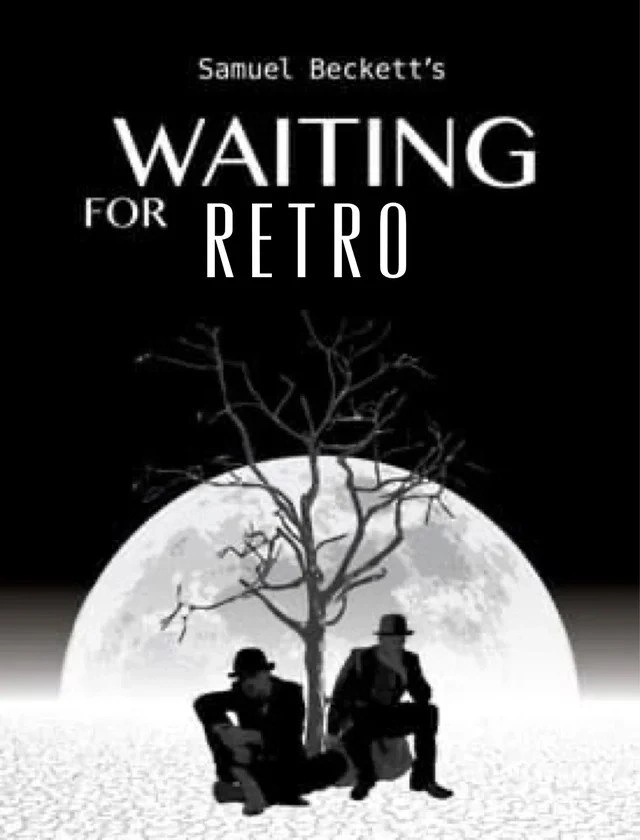
Now, the meme image is styled like a poster for a famous play by Samuel Beckett called “Waiting for Godot.” In that absurdist play, two characters literally wait the entire time for someone named Godot who never actually arrives. It’s a story known for symbolizing endless waiting and the seeming pointlessness of certain routines. The meme cleverly replaces “Godot” with “RETRO” – implying that the team’s sprint retrospective is the thing that never arrives. The top text even says “Samuel Beckett’s Waiting for Retro,” mimicking the original playbill. The visual elements reinforce this parody: the monochrome (black-and-white) palette, a leafless tree, cracked dry ground, and two men in bowler hats sitting and waiting. These details all reference classic imagery from Waiting for Godot. In the context of the meme, those two bowler-hatted figures represent developers or team members, slumped and waiting for the retrospective meeting that keeps getting delayed. The huge full moon and barren landscape create a feeling of time dragging on and on with no change – much like a team stuck in a rut.

For a junior developer or someone new to workplace culture, here’s the scenario: Imagine your team is supposed to have a meeting every couple of weeks to talk about how things are going – what’s working, what’s not, and how to get better. This is the sprint retrospective. It’s an important part of agile methodology (like Scrum) because it’s how the team learns and improves continuously rather than just plowing ahead without reflection. But in some companies or teams, things get busy or the culture doesn’t value that meeting, so it gets canceled or postponed repeatedly. Maybe there was a rush to meet a deadline, or another meeting took priority, or people think “Ugh, one more meeting, do we really need it?” Over time, the retro either happens rarely or, when it does happen, it feels superficial (people might be reluctant to speak up, or the same issues keep coming up with no action taken). This leads to frustration because one of the key promises of Agile – that the team will regularly course-correct and improve – isn’t actually happening.

The meme is a satire of agile meeting culture. “Waiting for Retro” suggests that the team has been waiting forever for this elusive retrospective that either gets delayed or, if it happens, doesn’t produce results. Meeting fatigue is a term that means people are tired of having too many meetings. Paradoxically, here the one meeting that could actually help the team (by solving problems that cause other extra meetings or issues) is the one being missed. It’s a common Agile pain point: teams go through the motions of Scrum (like daily stand-ups and sprint planning) but then skip the retro, maybe because they think they don’t have time for it. The humor comes from the exaggerated comparison – the meme frames this ordinary work problem as something as dramatic and absurd as a Beckett play. It’s like saying, “Our situation is so ridiculous, it might as well be a famous absurd play.”

Also, let’s clarify the word “retro” here: in dev-speak it’s short for retrospective, not referring to retro style or retro games or anything. And the meme’s use of Beckett’s style is a kind of nerdy joke. Many developer memes stick to code and tech references, but this one assumes you might know a bit about literature or at least recognize the Waiting for Godot reference. If you don’t, no worries – the image of two people waiting endlessly under a dead tree still gets the idea across. They look bored or defeated, implying they’ve been there a long time. In software teams, a delayed retrospective can feel like that – you’re stuck in the same problems sprint after sprint, waiting for a chance to talk about them or fix them.

The bottom line for a newcomer: Agile is meant to be about iterate-and-improve. The sprint retrospective is the meeting where that improvement is supposed to spark. When a team continually postpones it, it’s ironic and frustrating – kind of like being promised something good and never getting it. Developers made a joke by comparing it to Waiting for Godot, which is the quintessential story of waiting for something that never happens. It’s a bit of a high-brow joke, but it’s funny to those in the know because it perfectly captures how exasperating it feels when an Agile process breaks down in this way.

Level 3: Agile Absurdism

In this meme, experienced developers immediately recognize a darkly comic jab at Agile ceremonies. It mashes up the existential play Waiting for Godot with the all-too-familiar purgatory of a delayed sprint retrospective. The poster-style image screams theater of the absurd: a barren landscape, a leafless tree, and two weary figures in bowler hats (a direct nod to Beckett’s characters Vladimir and Estragon) waiting under a haunting full moon. Instead of Beckett’s elusive Godot, they’re waiting for “RETRO” – the Agile ceremony that’s forever postponed. Seasoned devs will smirk (or groan) because they’ve lived this Agile pain point: the sprint ends, everyone’s exhausted or firefighting, and the retrospective gets pushed off. Next iteration, we’ll definitely have that retro… promise! Of course, next iteration comes and goes, and the cycle repeats. The meme lands its punchline by elevating this mundane office frustration to literary absurdity. It’s agile futility portrayed as an absurdist drama: a team spiritually stuck in a loop, “inspect and adapt” ritual eternally promised and eternally delayed.

From a senior perspective, the humor cuts deep. Scrum – one popular Agile framework – prescribes a retrospective every sprint as a crucial feedback loop. It’s where teams reflect on what went wrong or right and commit to improvements. Skipping it is practically heresy to Agile purists. Yet in the real world, how often have we heard: “We’re too busy for the retro this time” or “Let’s combine it with the next sprint’s planning (and then quietly drop it)”? This is classic ScrumHumor born from pain. The meme exaggerates it by implying we might be stuck waiting forever for that promised meeting. It’s all too relatable: critical bugs, client deadlines, or plain meeting fatigue leads to retros being canceled or perfunctory. Over time, the team’s “continuous improvement” muscle atrophies. Nothing changes – just like Godot never arrives, meaningful change never comes. It’s a vicious loop that the Agile manifesto explicitly tried to avoid, now turned into a tragicomedy.

There’s an ironic historical echo here too. Early Agile pioneers introduced frequent retros as an antidote to the old waterfall model, where teams would only hold a post-mortem (project review) at the very end, if at all. The Agile Manifesto (2001) championed regular reflection: “At regular intervals, the team reflects on how to become more effective, then tunes and adjusts its behavior accordingly.” Frameworks like Scrum codified this into the Sprint Retrospective, because small continual course-corrections are cheaper and more effective than a huge post-project autopsy. Yet, as Agile spread, many organizations adopted the rituals in name but not spirit – the dreaded “Scrum, but” syndrome (“We do Scrum, but we skip retrospectives because we’re on a tight schedule…”). The result? Teams end up lurching from sprint to sprint without ever improving their process, exactly what Agile was supposed to fix. A grizzled veteran developer has seen this all before: the backlog keeps growing, same mistakes repeat, and morale dries up like that cracked ground in the image. The meme brilliantly encapsulates this disillusionment with a dash of high-brow humor: comparing a dysfunctional Agile practice to one of the most famous plays about endless waiting.

This parody also pokes fun at meeting culture in tech. In many companies, calendars are overflowing with stand-ups, plannings, demos, and all-hands meetings – so much that an actually valuable meeting like the retrospective either gets no time or, when it does happen, people are too drained to care. The phrase “meeting fatigue” isn’t just a joke; it’s a daily reality. By the time the retro rolls around (often Friday afternoon, when everyone’s brain is fried), either half the team skips it, or it turns into a mechanical, rushed session yielding the same tired action items that no one will follow up on. The meme’s bleak black-and-white scene captures that drained, end-of-sprint Agile humor feeling: we know we need to talk about how to improve, but honestly, we’re just... done. It’s cynical and true-to-life – the AgileCeremonies meant to energize continuous improvement can devolve into checkbox exercises or be perpetually postponed. The image of developers as Beckett’s tramps waiting by a dead tree is a sharp satire: in Agile meeting satire terms, the retro has become as mythical and out-of-reach as Godot. Everyone keeps saying it’ll show up “next time,” and the team sits around cracking dry jokes to cope with the absurdity.

Despite the cynicism, there’s a knowing laugh here. The meme speaks to a shared experience: Scrum humor that senior devs, scrum masters, and Agile coaches all recognize with a wince. “Waiting for Retro” is both a clever literary pun and a critique of bad Agile. It underscores how not doing retrospectives leaves a team stuck in limbo. And like in Beckett’s play, the situation is as funny as it is tragic – the longer you’ve worked in software, the more you appreciate that blend of comedy and despair. In the end, the meme says: Our sprint is done, our souls are tired, and still we wait... It’s the perfect punchline for anyone who’s ever stared at a calendar invite for a retro that keeps getting bumped, wondering if improvement will ever actually arrive.

Description

A black and white image styled like a theater poster for a play. At the top, in white text, it says 'Samuel Beckett's'. Below that, in larger text, 'WAITING FOR RETRO'. The scene depicts two silhouetted figures in bowler hats sitting at the base of a barren tree, with a large, full moon in the background. This is a direct visual parody of the famous absurdist play 'Waiting for Godot.' The technical joke equates the existential, endless waiting for the character Godot with the often drawn-out, seemingly pointless, or perpetually delayed retrospective meetings in Agile methodologies. For experienced developers, it's a humorous and cynical take on corporate agile rituals, suggesting they can feel as futile and unproductive as waiting for something that will never arrive
Comments

8
Anonymous ★ Top Pick Our retrospectives feel like 'Waiting for Godot,' but instead of a no-show messenger, we get a Scrum Master insisting that if we just adjust our story points, meaningful change will *definitely* arrive next sprint
  1. Anonymous ★ Top Pick

    Our retrospectives feel like 'Waiting for Godot,' but instead of a no-show messenger, we get a Scrum Master insisting that if we just adjust our story points, meaningful change will *definitely* arrive next sprint

  2. Anonymous

    Sprint after sprint we wait by the Zoom link - monoliths shatter into microservices, then quietly re-coalesce - yet the retro invite remains “TBD”; turns out Agile is just Samuel Beckett with story points

  3. Anonymous

    After 15 years of 'continuous improvement,' I've realized our retrospectives are just distributed consensus algorithms where we all agree nothing will change - at least Paxos eventually converges

  4. Anonymous

    Much like Beckett's Vladimir and Estragon waiting endlessly for Godot who never arrives, senior engineers find themselves perpetually waiting for that 'retro' where leadership finally approves the legacy system rewrite - spoiler alert: it's always 'next quarter.' The absurdist parallel is uncanny: both involve repetitive dialogue, existential questioning of purpose, and the nagging suspicion that what you're waiting for might not actually exist. At least Beckett's characters had a tree for shade; we just have technical debt documentation gathering dust in Confluence

  5. Anonymous

    Our Scrum cadence follows the Beckett consistency model: the retro exists in the roadmap, but no process ever observes it

  6. Anonymous

    Godot at least spared them action items; retros deliver those eternally postponed

  7. Anonymous

    Enterprise Agile: “Waiting for Retro” - the recurring invite that keeps getting bumped to “async” until it becomes a Jira epic called “Continuous Improvement” with status “Backlog.”

  8. @JustAFlashWound 5y

    Adore this joke!

Use J and K for navigation