Skip to content
DevMeme
2927 of 7435
Every Segfault is a Personal Journey of Discovery
Bugs Post #3233, on Jun 13, 2021 in TG

Every Segfault is a Personal Journey of Discovery

Why is this Bugs meme funny?

Imagine you have a special cookie jar on a high shelf that you’re not really supposed to reach without help. One day, you really want a cookie, so you climb up on a stool and stretch your arm way out to grab it. Suddenly – CRASH! 😱 The stool tips over, the jar falls and breaks, and cookies are everywhere. You sit there in the mess and at first you think, “Uh oh, the jar fell!” Maybe you feel like blaming the wobbly stool or the slippery jar. But then you realize the truth: the jar fell because you were reaching where you shouldn’t have. It was your action that caused the accident. So you sigh and admit, “Okay, that was my fault.”

That’s exactly the feeling this meme is joking about, but with computers. The top part, “SEGFAULT,” is like the jar breaking – it’s a big error where a program crashes. The bottom part, “MYFAULT,” is like saying “oops, my mistake.” It’s funny because the person in the picture (the programmer) is accepting blame with a sheepish smile, just like you would about the cookie jar. Essentially, the computer crash is the broken jar and spilled cookies, and the programmer is the kid who reached too far. The meme makes us laugh because every programmer has had a moment like this: the computer had an error, and in the end we had to admit, “I caused it, didn’t I?” It’s a humble little confession, dressed up as a joke, that reminds us not to climb too recklessly in either kitchens or code.

Level 2: Pointer Crash Course

Let’s break down what’s happening in this meme in simpler terms. The term segfault is shorthand for segmentation fault, a common error in low-level programming (especially in C and C++). A segmentation fault is basically a crash that happens when a program tries to access memory that it’s not supposed to. Think of your program’s memory like a series of lockers that belong to it. If your program tries to open a locker that isn’t its own (or one that doesn’t exist), the operating system steps in and says “No way!” and shuts the program down. That shutdown is the segmentation fault error. It’s the computer’s equivalent of pulling the plug because something potentially dangerous or illegal was about to happen in memory.

Now, why would a program try to access the wrong memory? Enter the concept of a pointer. In languages like C and C++, a pointer is a variable that holds a memory address (kind of like a specific locker number). For example, you might have a pointer that’s supposed to point to the start of an array or some data structure. If that pointer has the wrong value (bad locker number), or if you move it incorrectly, you’ll end up trying to read/write where you shouldn’t. This is called a pointer dereference error when you do *pointer and the pointer isn’t valid. The meme’s text highlights exactly this: “SEGFAULT” (the error) turning into “MYFAULT” (the programmer admitting they set that pointer wrong).

Common causes of a segmentation fault in programs (especially in C/C++ where the programmer manages memory) include:

  • Dereferencing a NULL pointer – e.g., doing something like int *ptr = NULL; *ptr = 42;. NULL is a special pointer value meaning "points to nothing." If you try to use it as if it's a real address, the program will crash.
  • Array index out of bounds – e.g., you have an array of 5 items but you try to access the 6th item. You’ve gone beyond the memory that was set aside for that array. This is a memory_access_violation because you’re now poking into memory that isn’t yours or isn’t valid for that array.
  • Use-after-free or dangling pointer – e.g., you had a pointer to some memory, you freed or deleted that memory (returned those lockers to the system), but you mistakenly kept using the pointer. Now it points to memory you no longer own. Accessing it can cause a crash or, even worse, weird behavior.
  • Stack overflow – (not the Q&A site, but the actual event) if you use too much stack memory (like deep recursion or a huge stack array), you can overflow into memory that isn’t allocated for stack. That often manifests as a segfault when the program tries to go beyond the stack’s bounds.

All of these are examples of DeveloperMistakes in code that can lead to a segfault. Notice a pattern? The computer isn’t making random mistakes – it’s just doing what we told it to do, but our instructions were faulty. Hence, the cheeky switch from "segfault" to "my fault." The meme text implies: the bug was in my code, not in the machine.

Imagine you wrote a C program and ran it, and it printed: Segmentation fault (core dumped). That’s the system telling you a serious error happened: a memory_access_violation. The “core dumped” part means it saved a snapshot of the program at crash (which advanced users can load in a debugger to find exactly where it crashed). But as a beginner, all you see is your program ended abruptly with this cryptic message. It doesn’t pinpoint the bug for you – you have to go find it. That can be super frustrating (DebuggingFrustration is real!). Often, you’ll have to comb through your code, add print statements, or run a debugger to figure out which line accessed memory incorrectly.

Let’s look at a tiny example of code that would cause a segfault:

#include <stdio.h>

int main() {
    int *ptr = NULL;            // pointer that currently points to nothing
    *ptr = 42;                  // ERROR: trying to write to address 0 (NULL)
    printf("Value: %d\n", *ptr);
    return 0;
}

If you compile and run this C program, it will immediately crash with a segmentation fault. Why? Because ptr was set to NULL (which is essentially 0, an invalid memory address) and then we attempted *ptr = 42, i.e., “store 42 in the memory location that ptr points to.” But ptr doesn’t point to a valid location! The operating system says, “Whoa, writing to address 0? That’s not allowed,” and it kills the program. The output you’d see in the terminal is something like:

Segmentation fault (core dumped)

This tells you what happened (segfault) but not why or where in your code. You’d have to realize, “Oh, I dereferenced a NULL pointer, that must be it.” And then you fix the bug (maybe by allocating memory for ptr or not dereferencing it when it’s NULL).

In contrast, if this were, say, Python and you tried to do something invalid (like access a list out of range), Python would throw an IndexError exception telling you exactly what went wrong. C and C++ don’t do that. They expect you to be careful. If you’re not, you get a crash. That’s why older languages are considered LowLevelProgramming – you work closer to how the machine actually operates, and thus you must manage details like memory manually.

Now back to the meme: the top panel caption “SEGFAULT” is basically showing the error message. The bottom caption “MYFAULT” is a play on words, changing the system error into a personal admission. It’s humorously saying, “Yeah, that crash? That was on me.” Developers find this funny because it’s a very common experience. It’s almost a joke of initiation: the first time you cause a segfault in your code, you’re truly programming “close to the metal.” And eventually, you learn that blaming the computer or the language runtime is futile; the cause is almost always a mistake in your code. Instead of saying "stupid computer crashed on me," experienced devs often chuckle and say "oops, that one's my fault."

This self-blaming isn't about being overly hard on oneself – it's more about acknowledging reality and maybe coping with a bit of humor. RelatableHumor like this helps turn the stress of debugging into something to laugh at. We’ve all written bugs that crash programs. It’s practically a rite of passage in C/C++ programming to see that dreaded segfault message. The faster you can move from "What’s wrong with this dumb machine?" to "Alright, where did I mess up?", the faster you can fix the bug. So the meme resonates especially with people who have gone through this cycle: confusion, frustration, discovery, and finally a wry acceptance that, yes, it was user_blaming_self time.

To summarize: “SEGFAULT” = the program crashed due to a memory error. “MYFAULT” = the developer humorously admitting the bug causing the crash was their own mistake (like a bad pointer). The older gentleman smiling is the perfect image for that internal cringe. You’re smiling on the outside because you finally found the bug, but inside you’re like, “D’oh! I can’t believe I did that.” It’s a funny, humbling moment every programmer eventually knows, and that’s why this meme gets passed around among coders with a knowing grin.

Level 3: Core Dumped, Ego Bruised

This meme hits home for any seasoned engineer who has wrestled with segfaults during late-night coding sessions. The top panel’s big white text “SEGFAULT” is that dreaded message every C/C++ programmer has seen at least once (often accompanied by the ominous phrase "(core dumped)" in the console). It usually appears right after your program suddenly dies. In that moment, your heart sinks and your mind races: What just happened? Was it a cosmic ray? Did the compiler screw up? Is the OS having a bad day? But as experience teaches us, nine times out of ten, the real answer stares back from the bottom panel: "MYFAULT". The meme delivers the punchline that every debugging_troubleshooting veteran eventually acknowledges — the bug is mine. 😔

The humor here is the DeveloperSelfDeprecation and recognition of a common pattern. At first, you might treat a segmentation fault like some external event (“Segfault? Ugh, the system did something weird.”). But eventually, you reach the same conclusion as our friend in the meme: “Nope, it was my own mistake.” The visual of the older man with a forced smile is perfect. That gentleman is a famous meme figure often called “Hide the Pain Harold.” He’s known for smiling through apparent discomfort, which is exactly what a programmer does when they realize a crash was caused by their own oversight. In both panels he’s holding a coffee mug and grinning, but in the second panel that smile looks more pained and apologetic. It's like he's saying, "Yeah... that one's on me." The white, bold Impact font is typical meme-style text, making it clear this is a tongue-in-cheek moment of acceptance.

Why do developers chuckle at this? Because it’s relatable humor born of real pain. Imagine spending hours chasing a mysterious crash. You’ve rebooted your machine, run tests, maybe even yelled at your screen (“Why are you doing this to me?!”). Eventually, you dig into the code and spot the culprit: a pointer that wasn’t initialized, or an array index that went one past the end. That sinking feeling is captured perfectly by "MYFAULT". It’s the debugging frustration stage where you go from denial to acceptance. There’s even an unofficial rite of passage: the first time you debug a segmentation fault down to your own bad pointer, you earn a scar (and a story to tell). Seasoned devs have a library of such war stories, each ending with, "And of course, the segfault was my fault."

The meme text cleverly plays on the word "fault." A segfault (segmentation fault) is an error where your program tries to use memory it shouldn’t. Linguistically, it has the word "fault," but originally that refers to an electrical fault or error condition, not moral blame. The meme flips it to "my fault", shifting the meaning to personal blame. It's a classic pun in programming humor: taking a technical term and making it literal. We laugh (perhaps a bit bitterly) because every experienced programmer has had that moment of DeveloperMistakes and subsequent humility. No matter how guru you are, if you venture into LowLevelProgramming with C/C++ pointers or manual memory management, sooner or later you'll cause a crash. And when the dust settles, you do exactly what this meme shows: you sigh, maybe sip your coffee, and admit "Yep, I screwed that up."

Digging a bit deeper, this speaks to the culture of blameless post-mortems in DevOps and engineering. We try not to shame others for bugs, but when you’re alone at your desk at 2 AM debugging a core dump, it sure helps to have a sense of humor about your own fallibility. The top caption “SEGFAULT” is basically the program yelling at you, “I crashed!” The bottom caption “MYFAULT” is you yelling back, “Alright, alright, it was me. Satisfied?!” That internal dialogue is something we rarely say out loud in the office, but it’s so true. This self-blaming is half jest, half genuine. On one hand, it's comic exaggeration — of course we know logically that a segmentation fault is not some personal failing or character flaw, it's just a coding mistake. But on the other hand, after the bugs_in_software ruin your day, you kind of feel like it's a personal failure. So developers cope by joking about it.

Consider the typical C/C++ debugging scenario this meme alludes to. Say you’re writing a simple program, and it randomly crashes. A novice might react, “Why did the program just vanish? It must be the computer’s fault!” A seasoned dev, however, immediately suspects, “What did I do wrong with memory?” Initially, even veterans can have a moment of denial: maybe it was the library’s fault, or the OS, or some heisenbug triggered by specific input. But as you eliminate external causes, you zero in on that stray pointer or that out-of-bounds write. There's a famous saying among C programmers: “When you have eliminated the impossible, whatever remains, however improbable, must be your bug.” 😅 And indeed, it’s almost always something you did.

Let’s talk about why a segmentation fault is so often the programmer’s fault (aside from the obvious fact that code doesn’t write itself). In languages like C, there are no training wheels. If you do pointer = nullptr; *pointer = 5; the program won’t politely warn you — it will just attempt to write to memory address 0 and promptly crash. The runtime isn’t going to save you here. It’s not like a Python IndexError that tells you exactly what went wrong. Nope, you get the equivalent of a blank stare and a sudden death. So naturally, when a segfault happens, the cause is usually a mistake in the code logic: using an uninitialized pointer, forgetting to check a pointer for NULL, miscalculating an array length, etc. This is why the bottom panel reads "MYFAULT": the developer is basically confessing, “I wrote something I shouldn’t have — and the program died because of me.”

Another layer to this meme is the image selection. That “older man at a laptop” image is intentionally incongruous. Here’s this cheerful-looking elder gentleman in a bright, tidy room, watering two tiny plants of code (well, not literally, but they’re on the windowsill) and everything seems peaceful. Yet the text is about one of the most panic-inducing errors in programming. The contrast is comedic: he looks calm and happy (sipping his pink coffee mug, no less), but the captions suggest a storyline of annoyance and resignation. It’s basically the “This is fine” dog meme, but for C programmers. The developer’s face says, “I’m okay with this,” while internally he’s likely screaming, “Why do I still do this to myself?!” That cognitive dissonance is something many devs recognize — smiling externally on a video call while your code is crashing and burning inside.

In practice, software teams treat crashes seriously. If a program segfaults in production, there might be a scramble (pages sent to on-call engineers at ungodly hours). The post-incident review often turns into a hunt for the root cause. And almost inevitably, someone finds the line of code that did an out-of-bounds write or a faulty pointer arithmetic. When the fix is pushed, there’s relief, but also a collective face-palm if it’s a silly mistake. The best teams handle it with a bit of humor: “Well, at least it wasn’t a mysterious hardware glitch — Bob just forgot that arrays are 0-indexed again.” This meme distills that entire drama into two words: SEGFAULT -> MYFAULT. It’s succinct and perfect. We laugh because we’ve lived it. It’s the programmer equivalent of tripping on your own shoelaces: it’s embarrassing, it can happen to anyone, and all you can do is grin through the pain like our friend Harold.

So, the next time your C++ program crashes and you see that stark “Segmentation fault” message, remember this meme. Instead of yelling at your computer, you might just shrug, grab a coffee, and mutter “my bad” under your breath. It’s a humble, slightly bitter chuckle at our own expense — exactly the brand of DeveloperHumor that keeps us sane in this crazy debugging journey. After all, as every battle-hardened coder knows, admitting “My fault” is the first step towards fixing the bug. And maybe, just maybe, avoiding it next time (until the next 3 AM segfault comes along, and the cycle repeats).

Level 4: Memory Fault Line

Under the hood, a Segmentation Fault is the operating system’s way of saying “you shall not pass” to your program. It happens when your code steps beyond the memory boundaries it's allowed to use. Modern CPUs and OSes enforce memory protection via virtual memory and privilege levels. Each process thinks it has a contiguous chunk of memory, but the OS only maps the portions it’s actually allowed to touch. If your program tries to read or write an address outside its allocated region (say, a pointer gone rogue), the CPU’s memory management unit raises a hardware exception. The OS then sends a SIGSEGV (Segmentation Violation Signal) to your process. By default, that signal does one thing: terminate the program and (if enabled) dump a core file. A “core dump” is like a snapshot of the program’s memory at the moment of crash, which old-timers (like me) use with a debugger to play CSI:Memory Murder Mystery.

The term segmentation fault harks back to an older era of computing. Early architectures (and some OS designs) divided memory into segments (for example, a code segment, data segment, stack segment each with fixed size). If a program tried to access an address outside its segment, boom — segfault. Even though today we mostly use paged memory, where each process has isolated pages, we kept the dramatic terminology. It’s a low-level error that only occurs if you break the rules of memory access. Higher-level languages and runtime environments have safety checks: for instance, in Java or Python, if you go out of an array’s bounds, you don’t get a true segfault; instead, you get an exception (like IndexError) or the runtime intervenes. In managed environments, the debugging_troubleshooting experience is a bit less soul-crushing — you get a clear error message and stack trace. But in C/C++ or other LowLevelProgramming situations, a segmentation fault is the message: your program just vanishes and prints “Segmentation fault (core dumped)”. It's a generic tombstone that tells you nothing except "you messed up somewhere with memory."

From a theoretical standpoint, what leads to a segfault is often undefined behavior in languages like C and C++. The language standard essentially says: “If you trespass memory boundaries or misuse pointers, all bets are off.” In mathematical terms, once you invoke undefined behavior, the program state is no longer predictable — like entering the chaotic realm where the usual rules of logic don't apply. Often, the consequence is a segfault, but just to keep things interesting, sometimes it might not crash immediately. You might corrupt some unrelated part of your memory (like overwriting a nearby variable or a control structure), causing bizarre symptoms later on — the infamous scenario where a bug's effect is observed far from its cause. This is why some memory bugs are dubbed heisenbugs: the act of observing them (for example, running the program under a debugger or adding logging) might alter timing or memory layout, making the bug disappear or change behavior. Tracking those down requires true wizardry (and maybe a bit of black magic incantation over the core dump).

Now, why do languages allow such dangerous freedom? It’s largely about trust (or betrayal, depending on your view) and performance. Low-level languages like C and C++ operate close to the metal. They assume the programmer knows what they’re doing with memory. There’s no automatic bounds-check on every array access because that extra safety net has a cost in speed. You get the ultimate power to manage memory manually, which also means you get enough rope to hang yourself. The result is blazing-fast code... until you mismanage a pointer and it blows up in your face. A veteran C developer has learned the hard way that every segfault is essentially the machine telling you, “This is on you, buddy.” We joke that in C, “undefined behavior” is a feature: it’s the language’s way of saying “if you do something stupid, I’ll assume you meant it and proceed without complaints… until the OS steps in.”

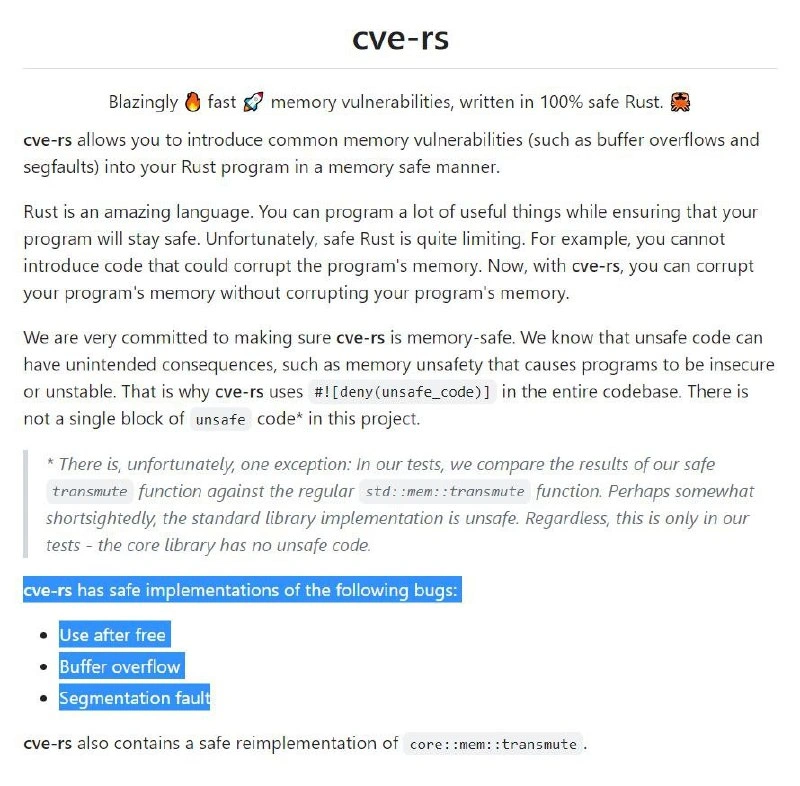
Over the decades, the industry has swung around to acknowledge this pain. There’s been a proliferation of tools and techniques to prevent or catch these memory errors. AddressSanitizer (ASan) and tools like Valgrind can poison unused memory and detect out-of-bounds accesses or use-after-free bugs, turning subtle corruptions into immediate, debuggable crashes. Even better, newer languages like Rust build memory safety into the type system, preventing common mistakes at compile time. In Rust, the philosophy is “if it compiles, it’s (mostly) correct,” so a whole class of segfault-like bugs are eliminated. However, this comes at the cost of a steep learning curve and strict rules (the infamous borrow checker that every Rust newbie wrestles with). But in good old C/C++, it’s the Wild West: you manage memory yourself. The only sheriff in town is the OS, and a segfault is how it enforces the law.

So in a deep technical sense, the meme’s humor lands because it flips a cold system error into a human admission of guilt. A segmentation fault is literally a memory access violation. It's the runtime screaming, “Memory access violation – you violated the memory, not the other way around!” By changing it to “MYFAULT,” the meme conveys that truth: there’s no mysterious external gremlin, just the developer’s own mistake crossing the memory fault line. It’s a clever nod to the reality that, at the lowest levels of software, BugsInSoftware like these are almost always our own doing, no matter how much we might wish to blame cosmic rays or the phase of the moon. In the world of pointers and manual memory management, when things crash, it’s nearly always my fault – in more ways than one.

Description

This meme uses the two-panel 'Hide the Pain Harold' format to capture the emotional rollercoaster of debugging low-level code. In both panels, Harold, an older man known for his pained and forced smile, is sitting at a desk with a laptop and holding a coffee mug. The top panel is captioned with the word 'SEGFAULT,' referring to a segmentation fault - a critical error caused by a program trying to access a restricted area of memory. Harold's expression of quiet suffering perfectly represents the initial frustration and confusion of encountering such a crash. The bottom panel is identical, but the caption changes to 'MYFAULT.' This simple pun ('Segfault' -> 'My fault') illustrates the developer's dawning, painful realization that the complex, system-level error was not caused by the system itself, but by their own mistake, such as a null pointer dereference or a buffer overflow. It's a moment of accepting blame for the crash, and Harold's smile is the mask for that internal pain

Comments

10
Anonymous ★ Top Pick A segfault is the kernel's polite way of saying 'You shall not pass!' to a rogue pointer. The 'myfault' is the moment you realize you're the one who sent it on its quest
  1. Anonymous ★ Top Pick

    A segfault is the kernel's polite way of saying 'You shall not pass!' to a rogue pointer. The 'myfault' is the moment you realize you're the one who sent it on its quest

  2. Anonymous

    Nothing humbles a staff engineer faster than ASan calmly underlining the byte you double-freed three releases ago - instant upgrade from SEGFAULT to very much MYFAULT

  3. Anonymous

    After 20 years in the industry, you learn that 'Segmentation fault (core dumped)' is just the compiler's way of saying 'You touched memory that wasn't yours, and yes, we both know it was that clever pointer arithmetic you were so proud of yesterday.'

  4. Anonymous

    The evolution of a senior systems programmer: First you blame the compiler for SEGFAULT, then the OS, then cosmic rays flipping bits... until you finally achieve enlightenment and realize it's MYFAULT for dereferencing that NULL pointer after freeing the memory you're still holding a reference to. At least Rust developers never reach this stage of self-awareness - the borrow checker handles the denial phase for them

  5. Anonymous

    Every segfault starts as "glibc regression" and ends as "I turned off -fsanitize=address to benchmark and shipped a use-after-free."

  6. Anonymous

    Segfault: C's polite reminder that 'undefined behavior' always resolves to 'your fault' in prod

  7. Anonymous

    After enough postmortems, you learn SIGSEGV’s RCA isn’t the kernel or compiler - it’s me, a hopeful dereference, and a pointer off by one

  8. @NoCountryForOldBuffet 5y

    Who is seg, I’m gonna whip his ass for tryna fuck with that out of bounds memory

  9. @feskow 5y

    .at(index)

  10. @alhimik45 5y

    - my fault - but you are writing on PHP

Use J and K for navigation