The Devilish Clean Build
Why is this BuildSystems CICD meme funny?
Level 1: A Spooky Good Result
This is funny because it is like pressing a broken-looking vending machine button and instantly getting the perfect snack, but the machine flashes a spooky number while doing it. You know it looks suspicious, but the result is too good to complain about.
Level 2: Fast and Clean
A build is the process of turning source code into something that can run or be deployed. Depending on the language and project, it may compile code, bundle files, download dependencies, run checks, or prepare an application package.
A compiler error means the computer cannot successfully build the program. Maybe the syntax is wrong, a type does not match, or a required symbol cannot be found. The developer has to fix it before moving on.
A warning is less severe but still important. It says, "This built, but you should look at this." Warnings can point to unused variables, risky conversions, deprecated APIs, missing null checks, or suspicious patterns. Good teams try to keep warnings low because ignored warnings hide real problems.
The funny part is that the build finished with no errors, no warnings, and did it in 666 milliseconds. Developers love fast builds because they can keep working without waiting. The number 666 makes it look like the result is cursed, but the output is so good that the developer accepts the imaginary deal immediately.
Level 3: Faustian Build Cache
The image is just a tiny build-status line, but for developers it is a suspiciously beautiful sentence:
15:01:39 Build Finished, 0 errors, 0 warnings. (took 666ms)
The post caption adds the bargain:
666ms per build in exchange for 0 errors and 0 warning?
Son of a bitch, I'm in!
The humor depends on the collision between two meanings. In software terms, 666ms is excellent: less than a second between changing code and getting feedback. In cultural shorthand, 666 is ominous, so the clean build starts to look like it came with terms and conditions written in fire. The developer's response is basically: if the build is fast and clean, hand me the contract. I have already lost more of my soul to Gradle.
The technical pain behind the joke is the development feedback loop. A build is not just a ceremonial step before release; it is the heartbeat of everyday programming. Edit code, build, read errors, fix, rerun tests, repeat. When that loop is slow, every thought gets taxed. A ten-second build breaks concentration. A two-minute build encourages context switching. A twenty-minute build turns debugging into archaeology with snack breaks. A 666 millisecond build with 0 errors and 0 warnings is almost suspicious because it removes so much friction.
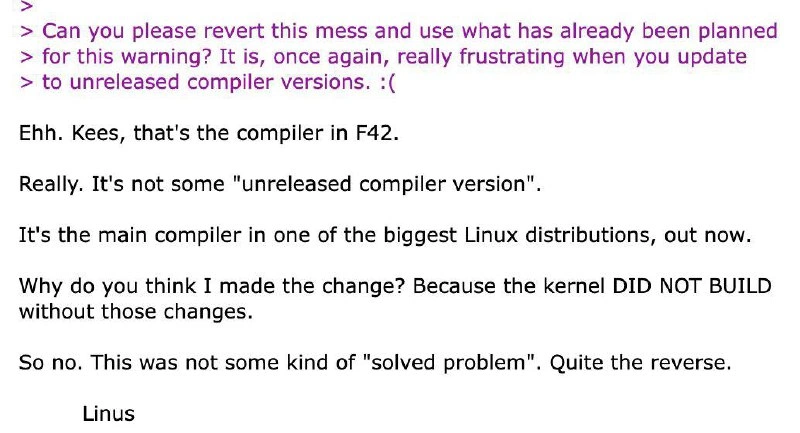
The clean warning count matters too. Compiler errors stop the build because the program cannot be produced correctly. Warnings are different: they often mean "this might work, but something is risky, deprecated, ambiguous, unreachable, unchecked, unused, or quietly waiting to embarrass you later." A codebase with ignored warnings becomes a smoke alarm everyone got used to sleeping through. So "0 warnings" is not merely aesthetic; it suggests the team has kept the signal clean enough that new warnings still mean something.
That is why the meme fits BuildSystems_CICD, CompilingCode, CompilerErrors, and CodeQuality. Modern build systems juggle compilation, dependency resolution, code generation, bundling, linting, type checking, tests, packaging, and sometimes a CI pipeline held together by YAML and institutional memory. A clean, fast local build feels like magic because so many things must line up: cache hits, correct dependencies, compatible toolchains, stable generated files, no stale artifacts, no broken imports, and no one accidentally committing half a migration at 5:59 PM.
Description
A narrow IDE or terminal-style status bar shows the text "15:01:39 Build Finished, 0 errors, 0 warnings. (took 666ms)" highlighted in blue. The source caption says "666ms per build in exchange for 0 errors and 0 warning? Son of a bitch, I'm in!" The humor comes from treating a perfectly clean and fast build as a suspicious bargain, because the ominous 666 millisecond duration is still worth it to avoid compiler errors and warnings.
Comments
5Comment deleted
A 666ms clean build is just the compiler confirming the pact was linked successfully.
Empty project moment Comment deleted
Thats devilish Comment deleted
It's a sin! Comment deleted
And all it takes is one immortal soul Comment deleted