A Statement on the Limited Impact of Hacking
Why is this Security meme funny?
Level 1: What Could Possibly Go Wrong?
Think of it like this: imagine a kid proudly telling his parents, "Don't worry, no one can steal cookies from the cookie jar in our kitchen." He says this while standing in a huge fancy kitchen with the cookie jar sitting right there on the counter. Every other kid listening knows that's a silly thing to say. If the jar isn't locked or guarded, a sneaky little brother (or anyone, really) will try to grab a cookie when nobody's looking. The more the kid insists "it just can't happen," the more you suspect he's either clueless or maybe even the one planning to swipe a cookie himself!
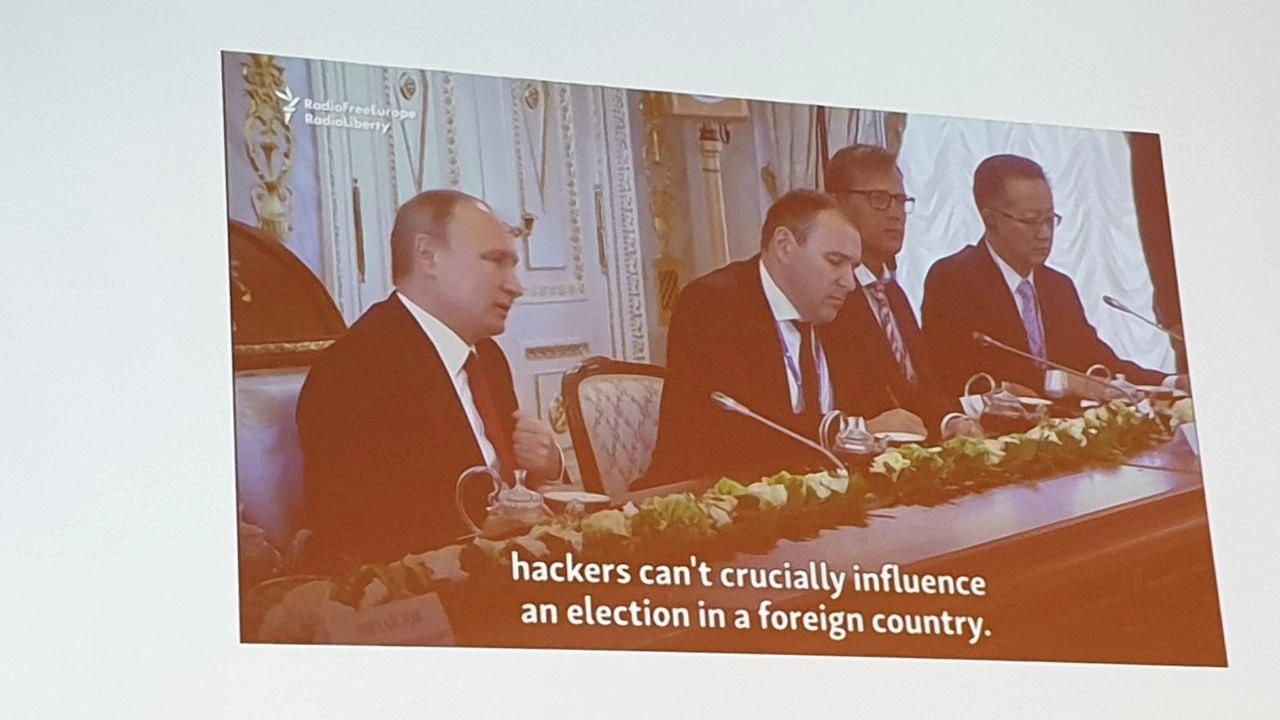
In this meme, the officials at the grand table are like that overconfident kid. They're confidently saying no one can mess up the election (the cookie jar), even though we know mischievous hackers (the little-brother type, but with computers) are definitely out there. It's funny in a face-palming way: the people in charge act like everything is perfectly safe when common sense (and all the kids who know how tempting cookies are) says, "Umm, you sure about that?". In simple terms, it's a joke about overconfidence – the big shots are so sure nothing bad can happen, which just makes everyone who knows the situation laugh and say, "Famous last words!"
Level 2: Hackers vs Suits
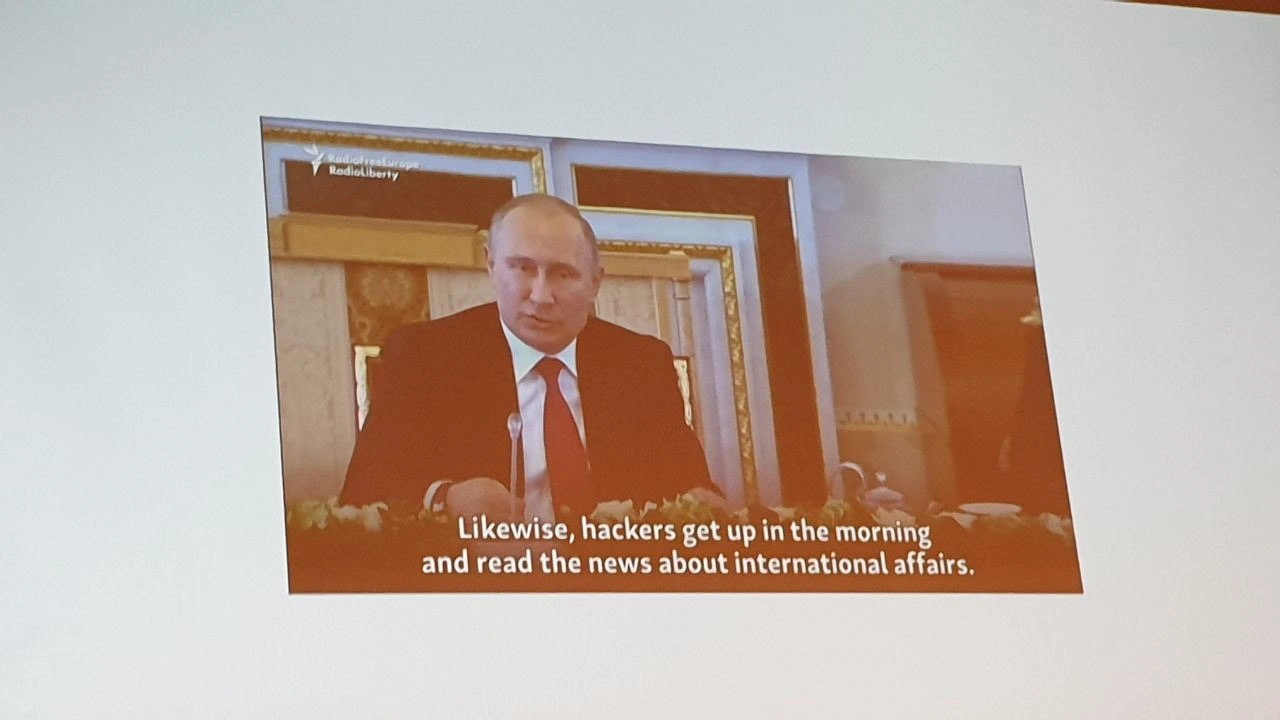
Let's break down what’s happening here in simpler terms. The image shows a group of government officials in a very opulent boardroom (imagine gold-trimmed walls, expensive suits, and fancy microphones on a long table). They are giving a formal briefing, and the subtitle on the screen reads: "hackers can't crucially influence an election in a foreign country." In other words, these officials are confidently telling everyone, "Don't worry, no hacker from another country can change the outcome of our elections." This is a bold public statement. The humor (and concern) comes from the fact that, in the tech world, we know hackers try to do exactly that all the time.
First, some definitions. Cybersecurity is the field focused on protecting computers, networks, and data from attacks. A hacker is someone who uses technical knowledge to break into systems or manipulate them, sometimes for malicious reasons. When we say nation-state hackers, we mean hackers who work for or are sponsored by governments. These are not just lone teenagers in a basement; they are often well-funded groups (often called Advanced Persistent Threats (APTs)) with serious skills and resources. Their job might be to spy, steal information, or even try to influence foreign events like another country's elections.
Now, how could hackers influence an election? Here are a few realistic examples:
- Breaking into voting systems: Hackers might try to exploit vulnerabilities (bugs or weak spots) in voting machines or election software. If a voting machine isn’t well-protected, an attacker could theoretically alter vote counts or install malware to tamper with results.
- Voter database hacks: Elections rely on big databases of registered voters. If attackers breach those, they could delete or alter entries (imagine people showing up to vote and being told they're not on the list) or steal personal data on voters.
- Email leaks and phishing: A common tactic is hacking into email accounts of political candidates or parties via techniques like phishing (tricking someone into giving up their password). Stolen emails or documents can then be leaked to the public to embarrass a candidate or change voters' minds.
- Social engineering & propaganda: This doesn't always involve breaking into a computer – often it's about "hacking" people's opinions. Hackers (or the organizations behind them) create fake social media accounts and fake news stories to spread misinformation. This is a form of social engineering, where the trick is aimed at people’s trust rather than code. By spreading false or misleading information, they hope to influence how people vote.
- Denial-of-Service attacks: Attackers might try to flood important election websites or services with traffic to make them crash (a Denial-of-Service (DoS) attack). For example, taking down the website that reports live election results or disabling online voter registration systems right before the deadline can cause chaos and shake people’s trust.
So when those officials say hackers can't significantly affect a foreign election, any security-aware developer or engineer hears a big record-scratch moment. We know there are many ways such interference could happen, because we've seen or studied these tactics in action. Security awareness training always stresses that threats are real and you should never assume you're "too secure" to be hacked. But here we have very powerful people essentially saying, "Relax, it's not a real threat."
This highlights a gap between public perception and reality. Many non-technical folks might believe these reassuring statements. Meanwhile, the hacker culture and the security community are likely shaking their heads. Hacker culture often includes a healthy dose of skepticism about bold claims. It's the same culture that jokes "It's always DNS" when diagnosing mysterious network outages – meaning the simplest, dullest explanation is often true, even if people overlook it. In this case, the officials' confident line is "There's nothing to worry about; hackers can't do anything," and the tech community’s reaction is a collective "Yeah, right...".
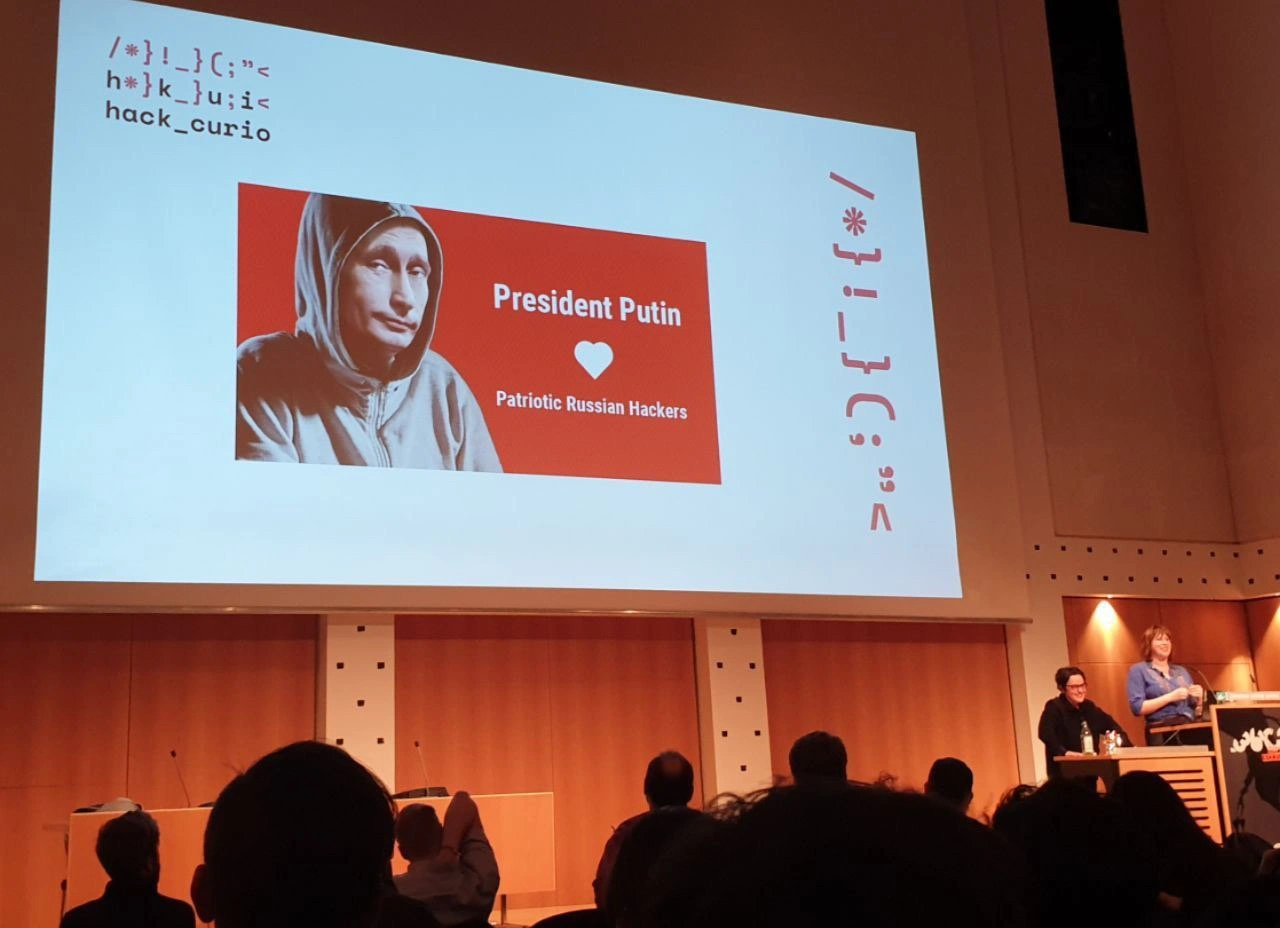
Also notice the context: this image was likely used in a conference presentation by a security expert to prove a point. In cybersecurity talks about topics like election hacking or misinformation, speakers often show ironic quotes from public figures. It's a way to highlight how out-of-touch or misleading some official statements can be. Seeing these suited officials in a luxurious room dismissing hacker threats is almost comically stereotypical – it’s basically the "bosses in fancy rooms have no clue about tech" cliché. The meme is funny to tech folks because it captures that scenario perfectly, while also serving as a cautionary reminder that confident denial doesn’t equal reality.
Level 3: Nation-State of Denial
"hackers can't crucially influence an election in a foreign country."
Security engineers have a grim joke: the fastest way to test if something is hackable is for a CEO or official to declare it "unhackable" in public. This meme nails that irony. In the image, a group of high-ranking suits in a gilded boardroom (one of whom looks suspiciously like a certain president accused of orchestrating exactly this kind of interference) smugly assure everyone that hackers basically can't mess with foreign elections. It's the ultimate "Nothing to see here, folks!" from the very people who might have everything to do with it. The humor hits close to home for anyone in InformationSecurity: we've all seen leadership confidently dismiss a threat that we know is very real.
This scenario is basically a Denial-of-Risk attack – the leadership version of putting your fingers in your ears. The lavish setting and stern faces scream authority and confidence, but the content of the statement screams willful ignorance (or outright propaganda). Industry veterans remember that around this meme's date (late 2010s), nation-state hacking of elections was front-page news. From leaked campaign emails to coordinated social media disinformation campaigns, there was ample evidence that foreign hackers could (and did) try to sway outcomes. Hearing officials flat-out say it can't happen is like hearing a CTO insist "we don't need security audits, our system is totally secure" – famous last words in tech.
This disconnect between public perception and reality is a classic in security. Leaders often downplay threats for political or PR reasons. It's much more comforting (especially for the folks in charge) to tell the public "our voting system is rock solid" than to admit the messy truth that hackers (some backed by entire intelligence agencies) are constantly probing and occasionally penetrating these systems. Meanwhile, the engineers and analysts in the trenches are exchanging knowing glances, because they've seen the phishing emails, the malware signatures, the strangely timed network traffic at 3 AM on election day. They know it's not only possible to influence a foreign election – it's already happened.
One unspoken shared experience here is the frustration of security professionals whose warnings go unheeded. If you've ever been an on-call engineer begging upper management to patch a critical vulnerability, you recognize this vibe. The boss says "there's no real risk" while you're staring at intrusion logs thinking, "If only you knew...". This meme encapsulates that exasperation. It's industry satire highlighting the huge gap between what executives are willing to acknowledge publicly and what the technical teams know privately. Often, it takes a very public failure (a massive breach, a defaced website, or yes, a compromised election result) to bridge that gap – at which point those confident officials have to eat their words.
Level 4: Byzantine Ballots
In computer science theory, a national election can be seen as a massive distributed consensus problem – except instead of servers reaching agreement, it's millions of people and machines agreeing on a result. The kicker is, unlike a properly engineered consensus protocol, real elections have no built-in Byzantine Fault Tolerance (BFT). The Byzantine Generals Problem taught us how a single treacherous actor (or node) can disrupt group agreement if there's no robust mechanism to handle traitors. Here, the officials confidently claiming "hackers can't crucially influence an election in a foreign country" are basically asserting that our electoral process is magically immune to any Byzantine faults – a claim that any seasoned engineer or security researcher would greet with a bitter laugh.
In a truly secure distributed system, we'd implement Byzantine Fault Tolerance, meaning we assume some participants (or machines) might be compromised and still guarantee correct consensus if the majority is honest. But elections in the real world rely on a patchwork of trust and manual processes: paper ballots (when we're lucky), hash-verified voting machine software (sometimes), and audit trails managed by humans. There is no mathematically provable guarantee that a determined adversary can't tip the scales. A well-funded nation-state attacker – essentially an Advanced Persistent Threat on a geopolitical scale – only needs to compromise a subset of these components to create chaos. Whether it’s slipping a malware 0-day exploit into electronic voting machines or quietly altering voter registration databases, it's the classic security maxim: the system is only as strong as its weakest link.
There's also cryptography in play for protecting data in transit (say, encrypting results as they're sent to central tally systems) and verifying identities, but cryptography can't solve the problem of garbage in, garbage out. If attackers manipulate inputs (like vote totals or public opinion data) before the crypto ever kicks in, all the encryption in the world won't save the integrity of the outcome. Some researchers advocate end-to-end verifiable voting schemes – imagining each vote as a kind of digital transaction you can audit on a blockchain or via mathematical proofs. But implementing that at national scale is an unsolved challenge, and ironically, many of the same officials dismissing foreign hacking fears also dismiss new secure voting tech as "too complex". We end up stuck with aging election infrastructure and gaping attack surfaces.
Under the hood, the humor here taps into fundamental security truths. One is the attribution problem: state-aligned hackers hide their tracks so well (routing through global proxies, planting false flags in code) that leaders can claim nobody really knows who did what. There's a kernel of complexity here: how do you prove an election was swung by hackers? It's like proving a specific microservice caused a distributed system crash when dozens of components failed – theoretically possible with enough data, but messy and debatable. However, asserting that influence is impossible is a bold stance flying in the face of decades of cybersecurity experience. It's akin to claiming your network is unhackable – practically an invitation for trouble. In short, these officials are ignoring both the computational realities of complex systems and the adversarial mindset: if a target is valuable, attackers will innovate to break it. Pretending otherwise isn’t just naïve; it’s tempting fate.
Description
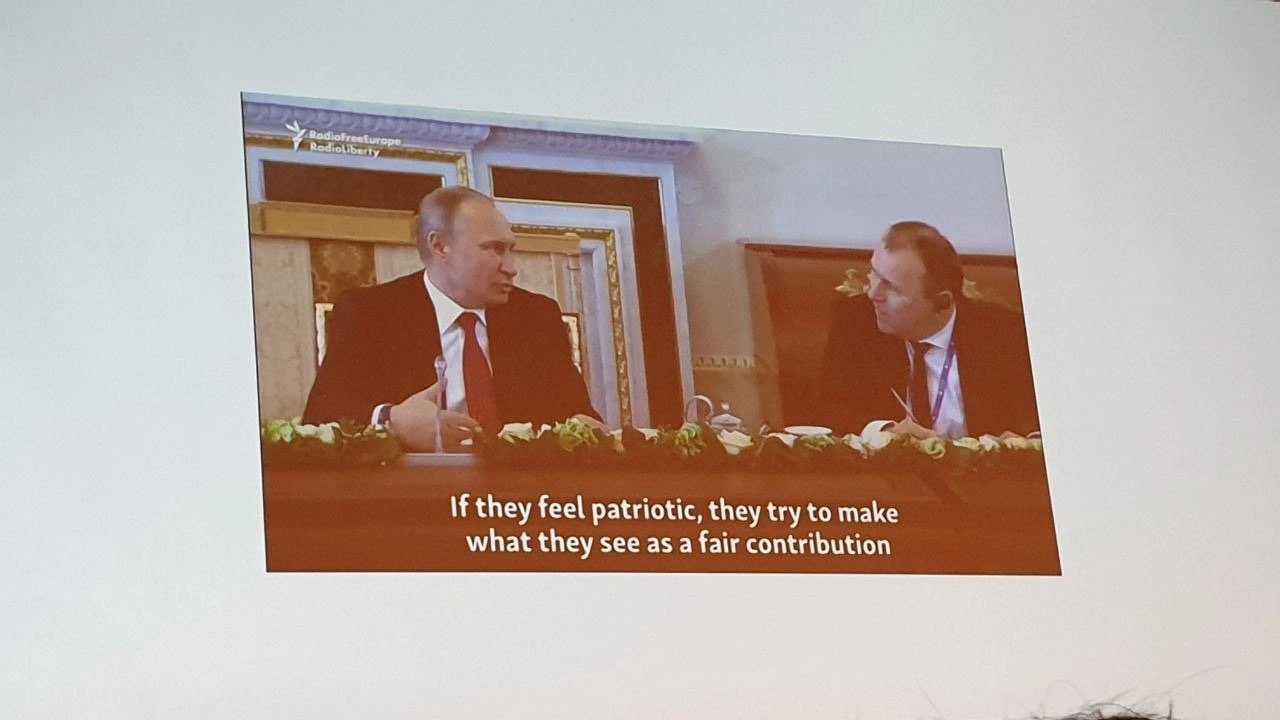
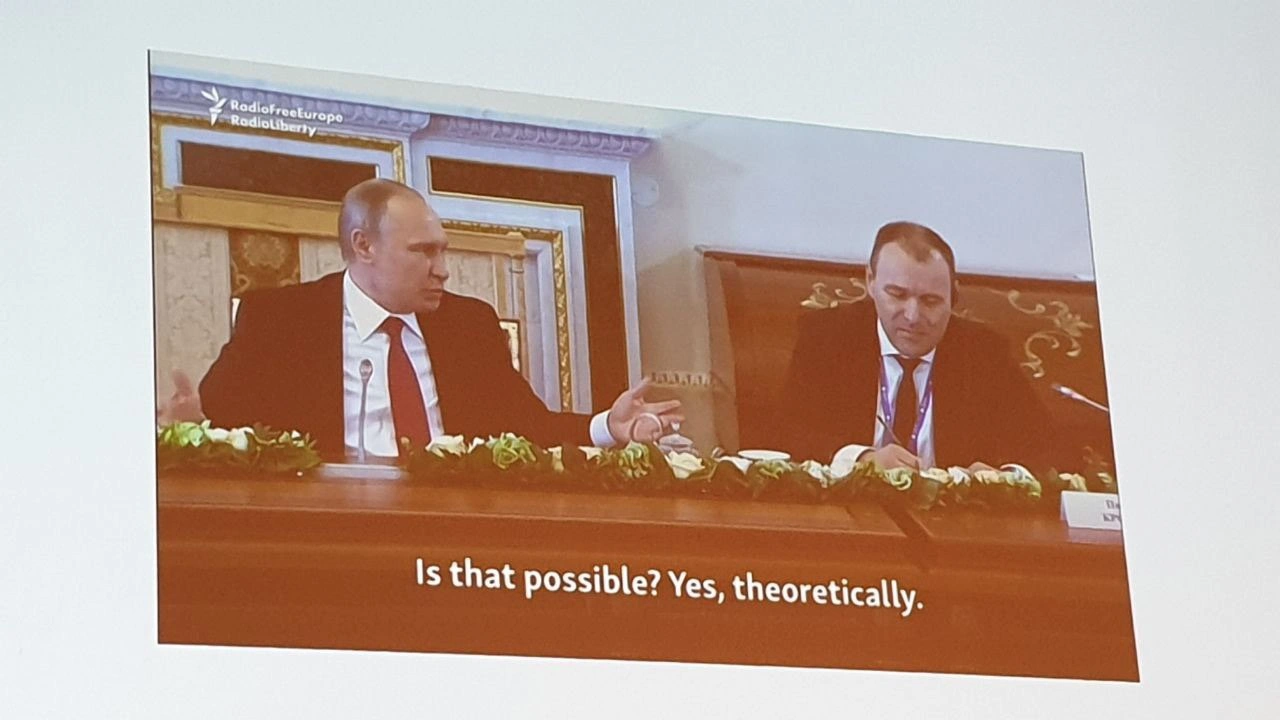
A screenshot taken from a screen showing a video broadcast of Russian President Vladimir Putin at a meeting with several other officials. They are seated at a long, formal table. The background features ornate, gilded wall decorations. English subtitles are displayed at the bottom of the frame, stating: 'hackers can't crucially influence an election in a foreign country.' The 'RadioFreeEurope RadioLiberty' logo is visible in the top-left corner. The humor is deeply ironic, given the widespread evidence and allegations of state-sponsored hacking influencing foreign elections. For senior engineers, this statement is the geopolitical equivalent of a CEO declaring that a single unpatched vulnerability 'can't crucially influence' the company's production environment, demonstrating a profound and dangerous underestimation of how small exploits can have cascading, systemic consequences
Comments
7Comment deleted
Famous last words. That's the political equivalent of 'This change is just a minor CSS tweak, it doesn't need testing.'
Relax - hackers can’t influence elections; they just patch the recommender system until democracy segfaults
The same team that spent three sprints implementing "unhackable" air-gapped voting systems just discovered their Jenkins server has been mining Monero for the FSB since 2016
When your APT group has successfully compromised election infrastructure across multiple states, exfiltrated voter databases, deployed sophisticated phishing campaigns targeting campaign officials, orchestrated coordinated bot networks for disinformation at scale, and weaponized social media algorithms - but management insists on a press release stating 'our security posture remains robust and no material impact occurred.' Classic case of security theater meeting geopolitical plausible deniability, where the CISO's incident response report mysteriously never makes it past legal review
That caption reads like a compliance control - impact=low, likelihood=rare - while any senior eng’s threat model says: phish one campaign account, pop OAuth, let the recommender system run your APT’s growth strategy
Press-conference - driven threat model: attacker := nil; risk := 0; ship statement - meanwhile the APTs are in prod running better A/B tests than our growth team
Putin's attribution defense: flawless until the C2 domain WHOIS drops