Skip to content
DevMeme
833 of 7435
Putin's Fan Club of 'Patriotic Hackers'
Security Post #947, on Dec 29, 2019 in TG

Putin's Fan Club of 'Patriotic Hackers'

Why is this Security meme funny?

Level 1: We All Saw It Coming

Imagine you’re playing a game of bingo where each square is something you think a speaker will talk about during a show-and-tell. For example, you just know your teacher will mention the class clown or that one famous science fact – so you put those on your bingo card. As the talk goes on, you check off the things that actually get mentioned. Now picture that you only have one square left to win. You’re waiting and waiting, and then – yes! – the teacher says that exact predictable thing. Bingo! You and your friends giggle because you totally called it.

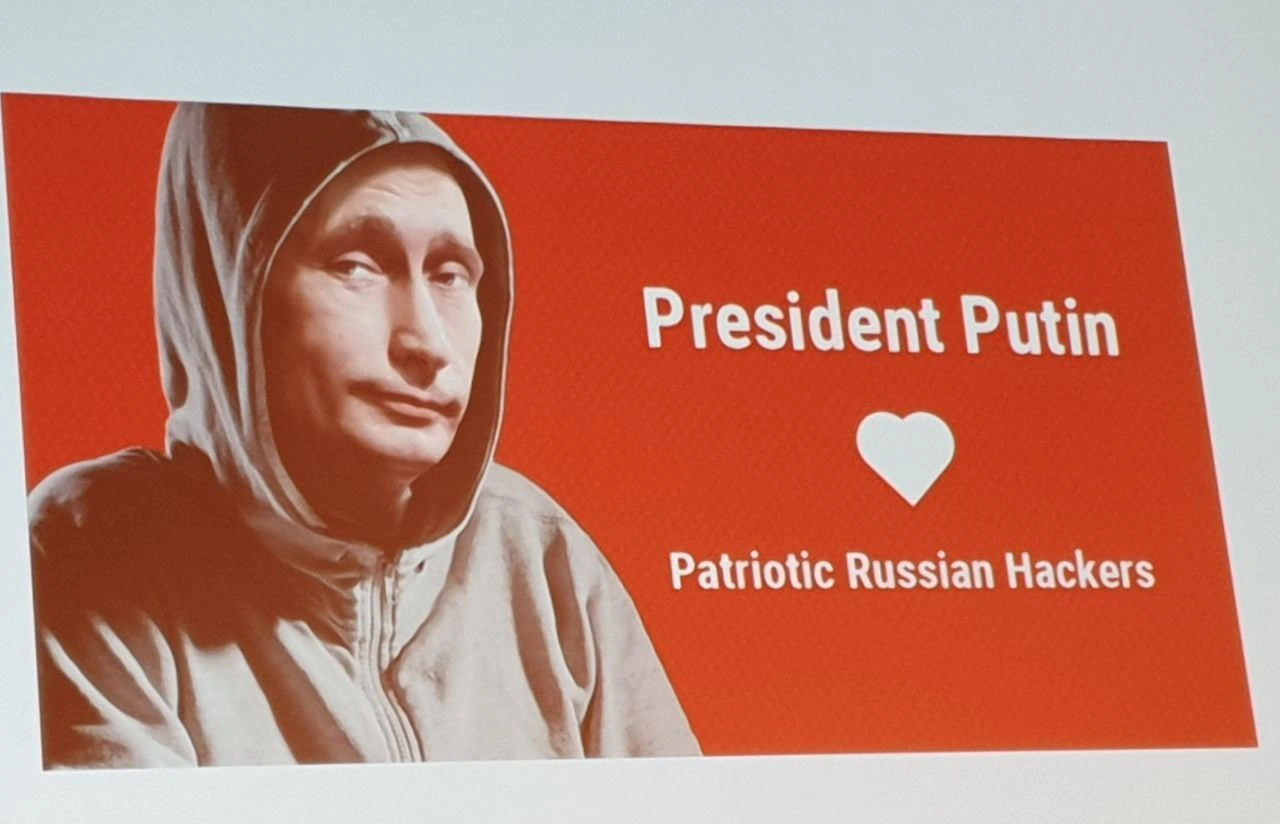
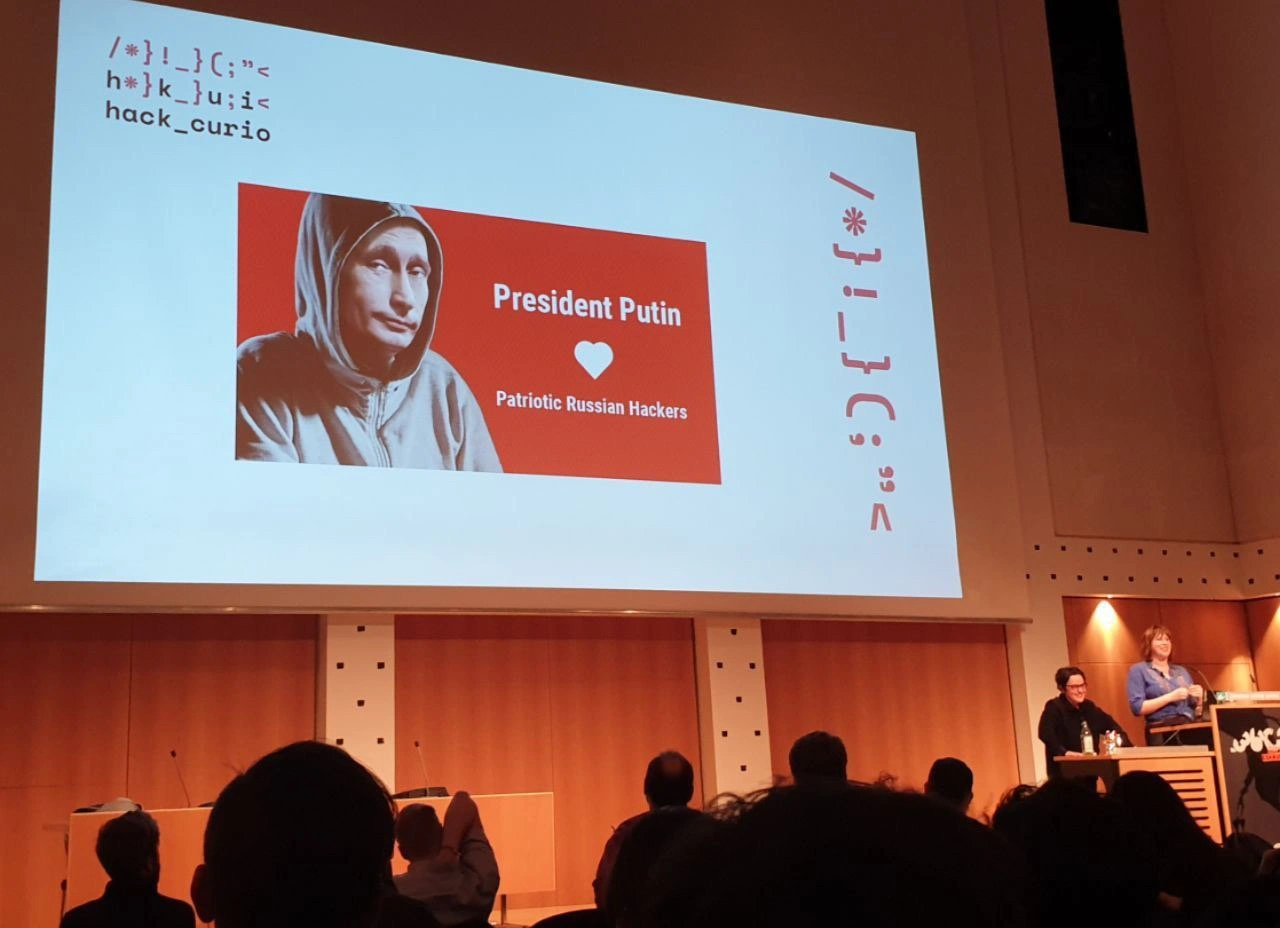
That’s basically what happened in this meme. There was a big security talk, and everyone expected the speakers to bring up the super-famous idea of “Russian hackers” at some point (since they’re often blamed for hacking mischief around the world, it’s a common topic). The speakers did exactly that, but in a jokey way: they showed a huge slide with Russia’s leader, Putin, wearing a hacker’s hoodie and a heart symbol, saying he “loves” his country’s hackers. It’s a silly, over-the-top picture – kind of like seeing a school principal on a slide saying “I ♥ the pranksters in our school!” It made people laugh because it was goofy and bold. But more importantly, everyone in the audience already guessed this would happen. The moment that slide appeared, it was like finishing the last square on their prediction bingo card. They all basically thought, “Ha ha, we knew it!” It’s funny in the same way an inside joke is funny – you feel proud for seeing it coming and it’s satisfying when it actually happens. In simple terms, the crowd was laughing because the presenters did the big obvious thing everyone was waiting for, just like shouting “Bingo!” when your final number gets called. The joke wasn’t a total surprise – and that’s exactly why it was so much fun when it showed up.

Level 2: Security Buzzword Bingo

Let’s break down what’s going on here. We’re at an infosec (information security) conference, basically a big meetup where hackers and security pros share stories of breaches and defenses. On the stage screen, the speakers have put up a joke slide. It shows a picture of Russia’s President Putin wearing a hacker-style hoodie, with a big heart symbol next to his image, and the text “President Putin ♥ Patriotic Russian Hackers.” There's also some funky text art (/*}!_}{; and the tag hack_curio) decorating the slide, which gives it a cool ASCII art aesthetic – that’s when you draw logos or pictures using keyboard characters. This whole slide looks half like an old-school hacker poster and half like a political propaganda ad. It’s clearly meant to be funny in a sarcastic way. The presenters are basically joking that the “big boss” (Putin) loves his country’s hackers who are helping his causes. It’s the kind of edgy humor you often see in the HackerCulture at these events, mixing politics with tech in a snarky graphic.

Now, why did this make the audience react and laugh? Because in the security community, talk of “Russian hackers” is super common – almost a running gag at this point. In recent years, Russian state-sponsored hackers (often called patriotic hackers by Russian officials) have been blamed for a lot of high-profile cyber attacks worldwide. They’re what we call state_sponsored_hacking – hackers backed by a government to attack targets in other countries. So if you’re at a security talk and the topic is threats, you expect someone to bring up the Russians eventually. It’s like watching a thriller movie and expecting the main villain to appear – it’s not a matter of if, but when.

Attendees sometimes make a game out of these expected references. Enter the idea of a “buzzword bingo” or specifically here a “threat-model bingo card.” 🎰 This isn’t a real card, just a playful concept. You imagine a bingo board filled with all the big buzzwords and typical examples that might come up in security talks: things like “nation-state hacker,” “zero-day exploit” (which means a totally new, unpatched security hole), “phishing email,” “insider threat,” or mentions of hacker groups like Fancy Bear (a famous Russian hacker squad). As the talk goes on, you mentally “mark” each term when it’s mentioned. If you mark off a whole row or column, that’s bingo! – you’ve spotted all the expected tropes. It’s a lighthearted way for the audience to stay engaged, almost like an inside joke among DevCommunities in security.

So, when this slide with Putin and the love-heart for Russian hackers popped up, it was the big moment. It basically confirmed another square on the imaginary bingo card that everyone had in their heads. In fact, that might have been the final square someone needed to win the little mental game. You can almost imagine people nudging each other like, “Ha, there it is – I knew they’d bring up Putin’s hackers!” The phrase “completes everyone’s threat-model bingo card” just means the talk included every single expected topic – and the Putin/hackers reference was the last piece that made it complete for everybody.

Let’s also decode the slide’s style a bit. The use of a hooded_hacker_figure is no accident: typically, whenever media talks about hackers, they show some anonymous person in a dark hoodie typing away. It’s kind of a cliché image for hackers. Here, the presenters slapped Putin’s face onto that hoodie-wearing silhouette. That’s a visual joke saying “the ultimate hacker puppet-master might as well be this guy.” It’s funny because you’d never actually see a world leader dressed like a sneaky hacker on a poster – it’s a mashup of two very different worlds (formal politics and underground hacking). The red background and bold text make it look a bit like a Soviet-era propaganda poster, which fits the theme of patriotic messaging. And that little hack_curio with symbols around it is likely the presenters’ own logo or tag, styled in a hacker-ish way. Using monospaced fonts and symbol art is a nod to old terminal displays and conference art – basically hacker street art. All these details—the design, the references, the humor—tell the audience, “We’re part of the community and we get the joke.” It’s an industry in-joke for sure, one that only makes full sense if you’re familiar with recent cybersecurity news and the way conferences often go.

In summary, this meme-able moment shows a security_presentation embracing humor: the speakers put up a satirical “threat actor love letter” slide. The audience_reaction (laughing, heads turning to each other in amusement) happened because everyone recognized how predictable yet hilarious it was. It’s like the talk was following a script that everyone in the know could anticipate. In fact, tech folks joke about ConferenceDrivenDevelopment, where whatever gets hype on stage influences what everyone talks about later. Here, the hype is about nation-state hackers. So by openly acknowledging it with a big, funny slide, the presenters scored both laughs and a sort of approval from peers: they showed they’re savvy enough to poke fun at the very trends everyone obsesses over. If you were new to this environment, now you know – even in serious cybersecurity discussions, there’s room for playful memes and bingo-card banter, especially when it comes to famous hacker topics that everybody expects to hear about.

Level 3: State-Sponsored Satire

Picture yourself at a big infosec conference (think Black Hat or a similar security meetup). The keynote speakers are on stage, lights dim, and suddenly up on the projector appears a bold slide: on a bright propaganda-red banner is a hooded silhouette of Vladimir Putin’s face, next to the words “President Putin ♥ Patriotic Russian Hackers.” The presenters have even adorned the slide with funky ASCII art (/*}!_}{; and a sideways version on the right) and their handle hack_curio in the corner, giving it that retro hacker culture vibe. The audience breaks into chuckles and knowing nods. Why? Because this absurd graphic is a piece of state-sponsored satire that hits almost every checkbox of a modern security talk meme. It’s simultaneously poking fun at propaganda and acknowledging a very real phenomenon: state_sponsored_hacking by nation-states like Russia.

In the world of cybersecurity, Russia’s state-backed hacker groups (often glorified as “patriotic hackers” in Russian rhetoric) are practically legendary. By late 2019, “Russian hackers” had become the ultimate boogeyman in threat reports – from election meddling to power grid intrusions. So throwing Putin’s image in a classic hooded hacker figure on a conference slide is a tongue-in-cheek nod to that reality. It’s like saying, “Yup, we all know who’s often behind these advanced attacks.” The heart () is pure sarcasm: a mock “love letter” from Putin to his hacker squads, implying he openly adores what these patriotic cyber warriors do (even if officially, he’d deny it). This kind of dark humor is very much HackerCulture – irreverent, bold, and layered with meaning for those in the know.

Now, the phrase “completes everyone’s threat-model bingo card” is key to the meme’s punchline. Seasoned security folks often joke about playing buzzword bingo during long talks. They secretly mark off a mental bingo card of all the expected clichés and hot topics as they appear on slides. By the time this Putin ♥ Hackers slide showed up, it likely ticked the last box on that imaginary card for many viewers. Consider what else might have been on that bingo card:

  • Nation-state APT mention – Check. (APT stands for Advanced Persistent Threat, a fancy term for state-sponsored hacker group. Russian groups like “Fancy Bear” APT28 are classic examples.)
  • Zero-day exploit story – Check. (A zero-day is a secret vulnerability with no fix yet, prized by government hackers.)
  • “Sophisticated attack” phrasing – Check. (Every high-profile breach is described as sophisticated, whether it was or not.)
  • Insider threat anecdote – Check. (Maybe an allusion to spies or rogue admins.)
  • A splash of blockchain/AI hype – Maybe. (Tech conferences love tossing these in, even if irrelevant, just to spice up the bingo card!)

Bringing out the “President Putin ♥ Patriotic Russian Hackers” slide is like the grand finale that completes a row on that card. It’s the talk’s way of saying “we know you were expecting a Russia reference, so here it is – with extra drama.” The audience’s reaction – heads turning, some laughter – shows they’re in on the industry in-joke. After all, what’s a modern security presentation without the obligatory nod to Kremlin-backed hackers? The meme hilariously captures that “aha, bingo!” moment when an obvious but awaited reference finally drops. In a field where everyone’s constantly threat-modeling, it’s both cathartic and comical to see a speaker openly acknowledge the elephant in the room with such cheeky flair. And for the battle-scarred security veterans, there’s a shade of cynicism too: of course the talk went there – these days, no threat discussion feels complete until you’ve mentioned Putin’s cyber army. It’s a BlackHat conference-driven trope that’s as predictable as it is entertaining.

Description

A photo taken during a tech conference, showing a presentation slide projected on a large screen in an auditorium. The silhouettes of the audience are visible at the bottom, and two speakers are on a stage to the right. The slide itself features a red rectangular graphic with a black-and-white image of Russian President Vladimir Putin wearing a hoodie, smirking. Next to the image, white text reads 'President Putin', followed by a white heart emoji, and below it, 'Patriotic Russian Hackers'. The slide also contains decorative, code-like ASCII art on the left ('/*}l_}{c;"< h*}k_}u;i< hack_curio') and right sides. The meme satirizes the political euphemism of 'patriotic hackers' to describe state-sponsored cyber attackers. For the tech-savvy audience, it's a cynical and humorous acknowledgment of the blurred lines between independent hacktivism and government cyber operations, presented in the familiar format of a conference talk
Comments

7
Anonymous ★ Top Pick Ah, the 'Patriotic Hackers' division. Their sprints are planned in geopolitical quadrants, and their definition of 'done' is when a story appears on international news
  1. Anonymous ★ Top Pick

    Ah, the 'Patriotic Hackers' division. Their sprints are planned in geopolitical quadrants, and their definition of 'done' is when a story appears on international news

  2. Anonymous

    Finally, a slide that reminds CISOs why the threat model isn’t just "script-kiddies with Metasploit" but "nation states with unlimited credits on AWS-GovCloud."

  3. Anonymous

    The best part about attributing cyberattacks to state actors is that by the time you've proven it wasn't just some teenager in a basement, they've already pivoted through three zero-days, rewritten their toolchain in Rust, and the IOCs you're sharing are about as useful as a CVE from 2003

  4. Anonymous

    When your threat intelligence presentation includes obfuscated code in the slide header, you know the speaker understands that even PowerPoint can be a potential attack vector - or they're just demonstrating that Russian APT groups have better OpSec than your average developer's commit messages

  5. Anonymous

    When threat intel slides swap the ATT&CK matrix for a Valentine, you know the detection strategy is PR, not SIEM - cue the board asking why we didn’t just block geopolitics at the WAF

  6. Anonymous

    Nothing says “nation‑state actor” like a heart on the slide - APT officially downgraded to Another PowerPoint Threat, but somehow the budget impact remains critical

  7. Anonymous

    When nation-state actors name their beacon 'he_kurwa' - even FSB devs need better variable hygiene

Use J and K for navigation