Skip to content
DevMeme
2038 of 7435
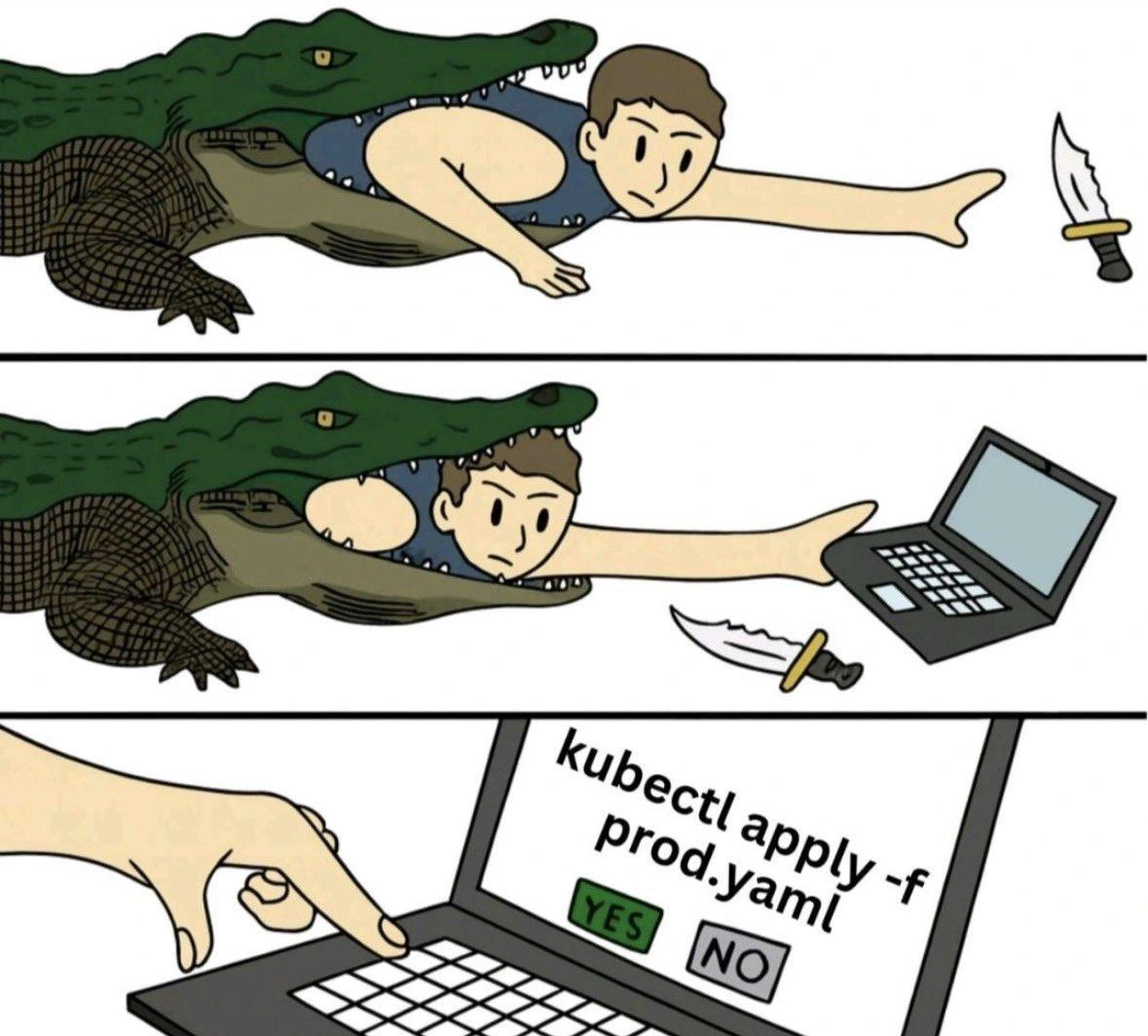
Junior dev sweating while senior dev blissfully enjoys lunch at production crash time
OnCall ProductionIssues Post #2271, on Nov 9, 2020 in TG

Junior dev sweating while senior dev blissfully enjoys lunch at production crash time

Why is this OnCall ProductionIssues meme funny?

Level 1: Broken Vase Anxiety

Imagine you’re a kid who was playing around and accidentally broke your mom’s favorite vase. 😨 You know you’re in trouble, and you feel really scared about telling her what happened. Now, picture that your mom is sitting in the kitchen calmly having lunch, completely unaware of the broken vase in the other room. You peek in, seeing her enjoying her meal, smiling and relaxed. Meanwhile, you’re in the doorway, sweating and nervous, waiting for the right moment to say, “Mom… I’m really sorry, but I broke something important.”

That’s exactly what’s going on in this meme, but with computer stuff. The junior developer is like the kid who broke the vase (except the “vase” is a big computer system that just went down). The senior developer is like the mom calmly having lunch, not knowing anything’s wrong yet. It’s funny because of the contrast: one person is totally at ease, and the other is freaking out inside about the bad news they have to share.

It’s a bit like if a kitchen is secretly on fire, and the kid knows it, but the parent is happily munching a sandwich thinking everything’s fine. The humor comes from us (the viewers) seeing both sides: we know something bad happened (the broken vase / crashed server), but the relaxed person doesn’t know yet. We can giggle at how the poor junior (the kid) is shaking in their boots, and the senior (the parent) is just peacefully oblivious, about to get a big surprise when they finally hear the news.

In simple terms: the meme is showing a funny but stressful moment – messing up something important and being afraid to tell the person in charge. It’s a feeling we can all understand, even outside of computers.

Level 2: The Production Panic

Now let’s break down the meme in simpler terms. It’s highlighting a scenario that many in software development recognize: a junior developer has accidentally broken the company’s production system, and a senior developer hasn’t found out yet. “Production” (or “prod”) is what we call the live environment serving real customers – the production server is where the real app or website runs. So a production server crash means the website or service is down or not working properly for everyone. This is a big deal – kind of like the main power going out in a building. Every minute of downtime might upset users or cost the business money. No wonder the junior dev is freaking out! 😅

In the meme image, we see two people:

  • The person on the left, labeled “SENIOR DEV,” looks calm, even smiling, with text “ENJOYING LUNCH.” This represents an experienced engineer casually taking a lunch break, unaware that something’s wrong. The senior isn’t panicking because they don’t yet know the site is down. They might also be off-duty or just assuming everything’s fine since no one has said otherwise. Blissful unawareness, indeed.

  • The person on the right, labeled “JUNIOR DEV,” is shorter, muscular, and leaning in with a tense expression. The text on them says “ME PATIENTLY WAITING TO MENTION I CRASHED THE PRODUCTION SERVER.” So this is the junior engineer, and they have some very bad news they need to share: namely, “Uh... I broke the site.” The junior looks anxious because they’re dreading that conversation.

Why is the junior so anxious? A few reasons:

  • Mistakes Feel Scary: If you’re new to the job (a junior), making a big mistake like crashing prod can feel like the end of the world. You worry you’ll be in huge trouble or that you’ll look incompetent. This leads to junior dev anxiety – the nervous feeling that you messed up and have to tell your boss or senior teammate.
  • Interrupting the Senior: The senior dev is enjoying lunch peacefully. The junior doesn’t want to be the bearer of bad news and ruin that peace. It’s an awkward dad-just-sat-down-with-his-coffee moment: “Oh no, I have to tell them something terrible right when they’re relaxed.”
  • Production Impact: The junior understands that a production issue affects real users. This isn’t a small bug you can quietly fix later – it’s a fire. They need the senior’s help to put it out (since seniors have more experience handling major outages, known as production firefighting skills). But asking for help means admitting they caused the fire in the first place. That’s tough on the ego and nerves.

Let’s clarify some terms and the typical process in such situations:

  • Production Bug/Incident: A bug is an error in the code. A production bug is an error that slipped through all the testing and is now causing trouble in the live system. For example, maybe the junior wrote code with a mistake that worked on their machine but in the real environment it triggers a crash. A simple typo or a missing check can sometimes overload the server or crash an app. It happens! When it does, we call it an incident or production outage.
  • On-Call Duty: Many tech teams have an on-call rotation – one engineer (often a senior) is designated to respond if something breaks, even if it’s late or lunchtime. They carry a pager or phone notification. Here, if the senior dev was on-call, ideally an alarm would notify them that the server’s down. Perhaps the meme assumes the junior noticed the problem first (maybe by user complaints or a personal check) and now has to inform the on-call person. Oncall life can be stressful; you never know when you’ll be pulled away from lunch or sleep to fix something.
  • Production Firefighting: This is a fun way to describe fixing production issues – like firefighters rushing to put out a blaze. When a server crashes, engineers have to act quickly:
    • They check monitoring dashboards or logs to identify what went wrong (like error messages or spikes in usage).
    • They might execute quick fixes, such as restarting the server or rolling back a recent code deployment (i.e., revert to an earlier version that was stable).
    • They patch the bug or apply a hotfix if possible.
    • Later, they’ll do a deeper analysis of why it happened and how to prevent it (this is often done in a post-mortem meeting, which is not as scary as it sounds – it’s about learning, not blaming).

In our scenario, the junior dev likely deployed new code or changed something moments ago, and it unexpectedly caused a crash. Maybe they didn’t fully test it, or there was an edge case (a situation they didn’t think of) that only shows up in production. For instance, a piece of code that works with small amounts of data might overload the database when real user data is huge. Or a bug that only appears under heavy traffic (lots of users at once) could take down the server. These are common production issues developers run into. That’s why seniors often advise juniors: “Test in staging (a production-like test environment) first!” or “Don’t deploy right before lunch or weekend.” 😅 Those bits of wisdom come from hard experience.

The humor in this meme comes from how relatable the situation is:

  • For developers: So many of us have been in the junior’s shoes – heart pounding because we made a mistake, and nervously approaching a mentor or team lead to confess. It’s practically a rite of passage in software development to accidentally break something big. The first time is terrifying, but you learn a lot from it. Seniors know this, which is why many will react calmly and help fix the problem rather than angrily exploding. (In fact, the calm senior in the meme might reflect an encouraging reality: a good senior dev expects accidents and will guide the junior through the fix with minimal drama.)
  • For onlookers: The image exaggerates the contrast: the senior’s totally relaxed posture vs. the junior’s stiff, anxious lean. It’s like a comedy scene where the audience knows something bad happened, but one character has no clue. You almost want to yell, “Turn around and listen to him, the server’s on fire!” It’s funny in the meme context because no real system is harmed – it’s just a joke. In real life though, that junior is feeling major stress.

In summary, the meme captures a “production crash” scenario with humor. The big, bold meme text makes it clear:

  • SENIOR DEV – Enjoying lunch” – the calm before the storm.
  • JUNIOR DEV – Me patiently waiting to mention I crashed the production server” – the storm brewing in that poor junior’s mind.

It’s a combination of relatable humor and a light cautionary tale. If you’re a junior dev, it implicitly advises: don’t be too scared to speak up when production is down. Trust that your senior has seen similar issues and will help (after all, they want to save the system, not finish their sandwich… well, maybe both 😜). And if you’re the senior dev, maybe check in on things even during lunch, or at least be kind when the junior comes with bad news – because not long ago, that was you.

Level 3: Lunchtime Crash Course

At the highest level, this meme riffs on the drama of on-call life and the brutal irony of production incidents striking at the worst possible moments. Here, a junior developer has just crashed the production server, and is sweating bullets waiting to tell the senior developer, who is blissfully unaware and happily enjoying lunch. This juxtaposition is painfully familiar in tech: critical outages love to happen exactly when the on-call senior steps away – call it Murphy’s Lunch Law of software engineering.

From an experienced engineer’s perspective, several layers of humor and truth unfold:

  • Outage Timing: Production servers have a twisted sense of humor. They often fail during a lunch break, late at night, or right before the weekend. (Seasoned devs joke: “Never deploy on Friday, unless you enjoy firefighting during happy hour.”) In this meme, lunchtime is the inconvenient outage window, a classic lunchtime interruption that feels all too real.

  • Senior’s Chill Demeanor: The senior dev isn’t freaking out – yet. She’s smiling, microphone in hand (in the image), labeled “ENJOYING LUNCH.” This reflects a truth: experienced engineers often develop a calm, almost zen-like reaction to production issues. Why? Because they’ve survived countless production firefighting episodes before. A battle-hardened senior knows that panicking won’t bring the site back any faster. They might even continue sipping their coffee until an alert explicitly says “ALL USERS CAN’T CHECK OUT – SEV1 incident.” It’s a darkly comedic form of Senior Engineer pain: being so accustomed to emergencies that you can stay relaxed (or numb) through the initial chaos.

  • Junior’s Anxiety: The junior dev is depicted as a shorter, muscle-tensing figure labeled “ME patiently waiting to mention I crashed the production server.” That patience is really paralyzing anxiety. This poor dev probably deployed a buggy update or ran a catastrophic command in production (maybe an "DELETE FROM users;" without a WHERE clause or a rogue rm -rf / 😱). Now everything’s on fire, users are impacted, error alerts flooding the dashboard – and the junior is holding their breath, trying to muster courage to confess. This captures junior dev anxiety: the fear of telling your team you accidentally took down the service that customers use. It’s a rite of passage in many dev careers – and hilariously horrifying to recall later.

  • Power Dynamics & Production Blame: The meme’s stage photo (with a tall, smiling person and a short, tense person) visually exaggerates the Junior vs Senior dynamic. The senior towers confidently (knowledge and authority), while the junior looks up in distress. In real incidents, juniors often feel “smaller” or guilty when a production bug slips through their code. The humor is that everyone in tech knows this scenario – it’s extremely relatable dev experience. Even the most chill senior was once that junior, heart pounding at the thought of admitting “I broke it.” And usually, the senior has blissful unawareness only until the moment of confession or the inevitable PagerDuty alert. After that, their calm might vanish: lunch is cut short, adrenaline kicks in, and it’s all hands on deck to fix the production incident.

  • On-Call Culture: This meme hints at on-call rotations and outage response protocols without explicitly naming them. In practice, companies have on-call engineers who carry a pager or phone to respond to production problems. If the senior in the meme is the on-call, they should be getting an alert about now – but maybe they silenced notifications to enjoy one peaceful meal. (Not best practice, but hey, we’ve all gambled on a quiet lunch 🙃.) Meanwhile, the junior likely discovered the issue first and is agonizing over how to break the news. It’s a comedic illustration of a real on-call nightmare: production server crash meets human hesitation.

  • Shared Trauma & Humor: Why do devs find this funny? Because it’s too real. It satirizes the shared trauma of production outages and the awkward moments before the firefight begins. The senior’s carefree look represents that sweet ignorant bliss before reality hits, and the junior’s posture embodies “Oh no, oh no, how do I say this?” Every senior can recall a “panic confession” from their early years, and every junior fears disappointing their mentor. The meme lets us laugh at that tension safely: this time it’s someone else on stage, not you.

Underneath the humor, there’s an implicit commentary on engineering culture: ideally, mistakes are treated as learning opportunities (blameless post-mortems, anyone?). The senior’s calm might also imply a healthy culture where admitting an error won’t get your head bitten off. (Alternatively, the senior might just be really hungry and figures the system can’t get more down than down, so might as well finish her sandwich…) It’s a wink and a nod to all the devs who’ve been there – juggling Bugs in Production with a side of cold lunch, and living to tell the tale.

Description

Meme formatted photo of two people on a blue-lit stage, both wearing purple outfits. The taller person on the left is holding a microphone and smiling; white impact-font text above and across them reads “SENIOR DEV” at the top and “ENJOYING LUNCH” across their torso. A shorter, muscular person on the right is leaning toward the senior, looking tense; the text over them reads “JUNIOR DEV” at head level and, stacked down their torso, “ME PATIENTLY WAITING TO MENTION I CRASHED THE PRODUCTION SERVER”. The juxtaposition humorously captures a common engineering scenario where a junior has taken production down while the senior is relaxed and unaware. The image riffs on production-outage anxiety, on-call culture, and the dynamic between junior and senior engineers when a critical bug slips through to live systems
Comments

13
Anonymous ★ Top Pick Real-world circuit breaker pattern: the senior’s noise-canceling AirPods at lunch gracefully preventing the junior’s “so… about that rm -rf I ran in prod” exception from propagating - at least until dessert
  1. Anonymous ★ Top Pick

    Real-world circuit breaker pattern: the senior’s noise-canceling AirPods at lunch gracefully preventing the junior’s “so… about that rm -rf I ran in prod” exception from propagating - at least until dessert

  2. Anonymous

    The senior dev already knows - they got the PagerDuty alert 10 minutes ago but decided to finish their salad first because they've learned that a well-fed engineer makes better rollback decisions than a hangry one

  3. Anonymous

    The junior's dilemma: Do you interrupt the senior's sacred lunch break to report the production outage, or wait and hope the monitoring alerts haven't reached their phone yet? Either way, this is why we have blameless postmortems - though the junior's face suggests they're expecting a very blame-full one. Pro tip: Next time, maybe don't deploy to prod right before lunch on a Friday

  4. Anonymous

    Seniority isn't about avoiding prod crashes - it's about ensuring juniors own the post-mortem while you finish your sandwich

  5. Anonymous

    Incident maturity test: when a Sev-1 waits for the senior's sandwich to reach eventual consistency, the bottleneck isn't Kubernetes - it's culture

  6. Anonymous

    Junior hovering at lunch isn’t small talk - it’s when you discover our “feature flag” is a compile-time constant and the migration wasn’t idempotent. Goodbye sandwich, goodbye error budget

  7. Deleted Account 5y

    Damn she looks so tall with Tyler. I bet she's 1.60m or taller

    1. @LionElJonson 5y

      Who's Tyler?

      1. @bit69tream 5y

        this guy

      2. Deleted Account 5y

        Tyler1

        1. @LionElJonson 5y

          Thanks

  8. @p4vook 5y

    that's some bayan here

  9. @Daler_XYZ 5y

    True, that's bayan and not only here

Use J and K for navigation