Skip to content
DevMeme
406 of 7435
The Project Manager's Handbook of Self-Deception
ProjectManagement Post #473, on Jul 10, 2019 in TG

The Project Manager's Handbook of Self-Deception

Why is this ProjectManagement meme funny?

Level 1: Chore Chart Comedy

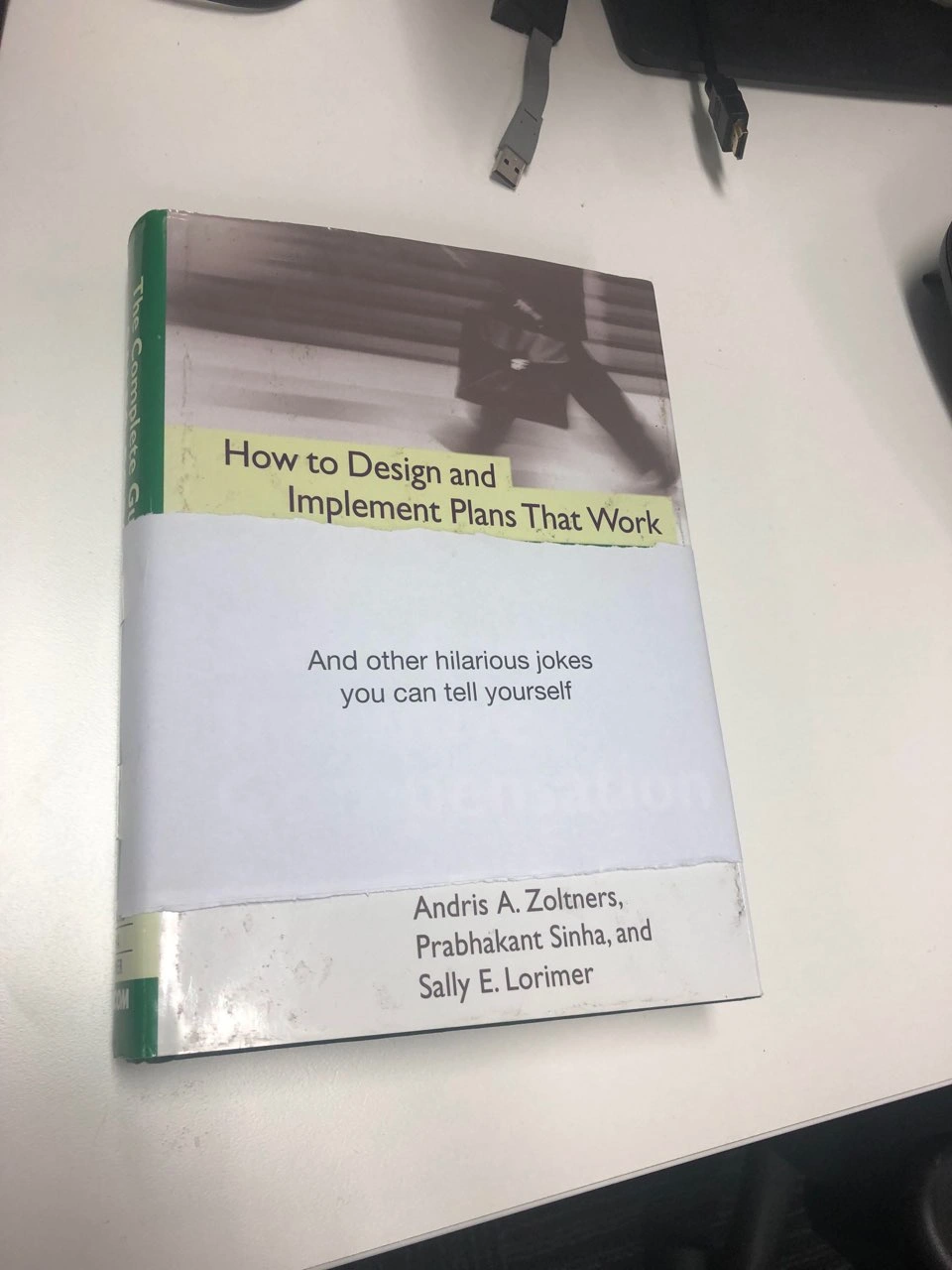
Imagine you made a big plan for your Saturday. In the morning, you drew a nice schedule on paper: 10 AM – clean my room, 11 AM – do homework, 1 PM – go to the park. You feel super organized, right? But then reality happens: you sleep late and skip the 10 AM cleaning. At 11 AM, a friend comes over to play video games, so homework gets pushed aside. Suddenly it’s 1 PM and not only is your room still messy, but homework isn’t done either. Your perfect plan for the day completely fell apart. In the evening, you look at your neat schedule and can’t help but laugh a little – it’s like the schedule was a funny story you told yourself in the morning, and nothing went as planned. This meme is joking about that exact feeling, but in the world of software projects. The fancy book title “How to make plans that work” is covered up by a line that basically says “planning a project is as funny as telling yourself a joke.” In simple terms: making a plan is easy, but life (or projects) often ignores the plan. It’s funny in the same way as when you promise your parents “I’ll do all my chores by noon,” and by noon you’ve done almost none – you kind of have to smile and say, “well, that plan didn’t work out!” The meme just takes that everyday oops and shows it as a big joke cover on a book, making us laugh because we all know that feeling when our plans turn into comedy.

Level 2: Planning vs. Reality

At its core, this meme highlights how project planning in software often clashes with what really happens. The photo shows a serious business book titled “How to Design and Implement Plans That Work.” Someone added a fake paper cover over it with the subtitle: “And other hilarious jokes you can tell yourself.” Basically, it’s saying that believing a plan will work out exactly as intended is as silly as telling yourself a joke. This is a common theme in ProjectManagementHumor: teams make careful plans with timelines and tasks, but things almost never go perfectly according to plan.

Let's break down the elements so newer developers or those outside the field can get the joke:

  • Project Plan: This is a detailed guide for a project – it lists what needs to be done, who will do it, and by when. For example, a plan might say “Feature X will be finished by March 10th, then testing will take 3 days, and the release will be March 15th.” In theory, if everyone follows the plan, the project finishes on time. The book’s real title suggests it’s about making plans that actually succeed.

  • “...and other hilarious jokes you can tell yourself”: This fake subtitle is pure sarcasm. It implies that the book’s promise (plans that work) is unrealistic – so much so that it belongs in a comedy routine. It’s like saying, “Yeah right, a plan that goes perfectly – what a joke!” The humor is in calling a serious promise a "joke."

  • Stand-up Comedy Routine: Normally in software teams, a “stand-up” is a quick daily meeting (everyone literally stands up to keep it short) where team members say what they did yesterday and what they will do today. However, stand-up comedy is a form of comedy show where a comedian tells jokes on stage. The meme’s title “project plan book turns into a stand-up comedy routine” is a play on words. It suggests that project planning has become a comedic performance – in other words, the plans are so unrealistic or constantly changing that it’s laughable, like a ManagementHumor skit.

  • Agile and Sprints: In modern software development, many teams use Agile methods. Instead of planning everything upfront for a long period, Agile breaks work into smaller cycles called sprints (often 1-2 weeks long). At the start of each sprint, the team plans which tasks (or user stories) they can complete in that time – this is sometimes called a sprint forecast or sprint commitment. The idea is to adapt quickly if things change. However, even in Agile, those short-term plans can get thrown off. For instance, you might plan 5 tasks for the sprint, but then a critical bug from production takes up time, or a sudden change is requested by the client, and you end up completing only 3 tasks. Newer developers quickly learn that flexibility is key because something unexpected almost always happens.

  • Gantt Chart: This is a project management tool (frequently used in more traditional, Waterfall-style projects). It’s basically a timeline chart with bars representing tasks. Each bar spans from a start date to an end date showing how long that task should take. For example, a Gantt chart might have a bar for “Database Setup: Jan 1 - Jan 7” and another for “Backend API Development: Jan 8 - Feb 1” and so on, all aligned on a calendar grid. Gantt charts look very orderly, and managers often love them to visualize the whole project schedule. The meme indirectly pokes fun at this because those perfectly drawn bars often don’t match reality – tasks get delayed, dependencies cause jams, or new tasks insert themselves. So a pristine Gantt chart can become useless pretty fast if the project encounters hiccups.

  • Changing Requirements: One big reason plans fail is change. In software projects, requirements (what the software is supposed to do) can change frequently. Maybe the client or your product manager comes up with a new idea halfway through development, or market pressures demand a different feature set. For a new developer, this can be baffling – “we had a plan, why aren’t we sticking to it?” But in practice, adapting to change is often necessary to build the right product. That said, it wreaks havoc on the original timeline. Imagine you planned to bake a cake, but halfway you’re told it needs to be a pie – your baking schedule is out the window. Similarly, if the project’s goals shift, the old plan becomes more of a rough sketch (or a joke, as the meme says) than reality.

  • Deadlines and Pressure: A deadline is a due date by which something needs to be finished. In the software world, deadlines can be set by business needs (for example, “We must launch before the holiday season” or “The client’s contract says it’s done by October 1st”). Especially early in your career, you might take these dates as immovable and the plan leading up to them as carefully calculated. What you learn is that often the dates were picked with optimism or even arbitrarily (“the boss wants it ASAP”), and the plan to meet them is very tight. The result? Teams rushing, working late, or cutting scope when reality doesn’t match the plan. The DeadlinePressure tag reflects that stress. Developers joke that managers think adding more pressure or Excel spreadsheets will magically make the work go faster – spoiler: it doesn’t.

Now, given these explanations, why is the meme funny? It exaggerates a truth every developer comes to realize: plans sound easy on paper, but real life is messy. The image of literally pasting “and other hilarious jokes” onto a book about making successful plans is saying, “Anyone who believes their plan will go perfectly is basically telling themselves a joke.” It’s humorous because it’s a playful jab at our own tendency (or our bosses’ tendency) to be overly optimistic. It’s the same kind of chuckle you get when you remember a time you made a perfect study schedule for exams – with every hour planned – but then ended up cramming last minute anyway. Reality has a way of upending plans.

For a junior developer or someone new to project management, this meme is a lighthearted warning. It says: Don’t be disheartened when your project doesn’t go exactly as planned – that’s normal! It doesn’t mean we shouldn’t plan at all (planning is useful), but it means you have to be ready to adjust. Agile methods were actually created for this reason: to handle change better. That’s why in Agile, there’s a principle of valuing “responding to change over following a plan.” The meme is basically that principle in joke form. It’s reminding everyone, especially those new to the industry, that misalignedExpectations are common – the trick is to expect the unexpected. And when things inevitably go sideways, sometimes all you can do is share a laugh, fix the issues, and learn for next time.

Also, note the setting of the meme: the book is on a white office desk with some loose USB and HDMI cables around. This little detail gives a tech workplace vibe. It’s like this book could be lying around in a software company’s project manager’s office. The stray cables suggest “real work happens here, not just planning on paper.” It subtly contrasts the tidy theory of the book with the messy reality of hardware and devices strewn about. It’s a visual way of saying, “We’re in the trenches of actual development, and this fancy plan book is just decor (or a joke gift).” The presence of those cables can remind a new dev that building products involves many moving parts that a pretty plan can’t fully capture.

In simpler terms, the meme is teaching us with humor: Plans are important, but they will change. So don’t be shocked when that happens. It’s practically a rite of passage in the tech world to see a project plan fail and to learn to adapt on the fly. The best thing to do is keep communicating, update the plan as you go, and maybe keep a sense of humor. After all, every time a plan goes off the rails, you get a new story to tell (or a new meme to share) about how “nothing went according to plan, haha.” It’s actually one reason agile teams do retrospectives – meetings after a sprint to discuss what went wrong or changed – because there’s always something. The meme just takes that common experience and boils it down into a one-liner joke on a book cover.

So if you’re a newcomer reading this meme, now you know: when developers see a book about “plans that work,” we can’t help but chuckle. It reminds us of every project that spiraled in unexpected ways. It doesn’t mean all planning is useless – it means you should plan with humility. Expect things to go differently and don’t take initial plans too seriously. Or as the meme implies, treat rigid plans as a good comedy – entertaining, but not reality.

Level 3: Scrum Stand-up Comedy

The meme riffs on the absurd gap between meticulous project plans and the chaotic reality of software development. We see a real hardcover business book titled “How to Design and Implement Plans That Work.” But someone has taped on a fake subtitle: “And other hilarious jokes you can tell yourself.” In other words, the very idea of a plan "that works" is treated as a punchline. For any senior developer, this hits home. We've all sat through optimistic roadmap meetings where a project manager (PM) confidently unveils a timeline – complete with colorful Gantt charts – claiming every feature will ship on schedule. Internally, the dev team is smirking, thinking “sure, and pigs will fly by Q4.” The humor comes from shared painful experience: those beautiful plans rarely survive first contact with Murphy’s Law (anything that can go wrong, will).

Real-world software projects are infamously unpredictable. Requirements change overnight, scope creep sneaks in, critical bugs pop up, team members get sick or pulled to other work – the list is endless. The meme perfectly captures the sarcasm developers feel when management treats the latest plan as gospel. It's basically saying, “Believing our plan will unfold perfectly? Ha! Good one.” This is why seasoned devs often joke that project planning sessions belong at a comedy club. In Agile circles, there’s even an aphorism straight from the Agile Manifesto: “Responding to change over following a plan.” In other words, flexibility is valued more than any fixed plan. The meme's fake subtitle (calling plans that work a “hilarious joke”) echoes this sentiment in a snarky way. It’s a roast of the rigid planning culture inherited from old-school Waterfall methodologies, which assumed you could predict every detail months in advance.

To illustrate the planning_vs_reality irony, consider how plans vs outcomes often look in tech projects:

The Plan (Expectation) The Reality (Outcome)
All features done by Friday Still debugging half of them the next week
Strict scope: no changes New requests and scope creep every sprint
Launch will be bug-free High-severity bug found hours before launch
Team capacity is 8 tasks/week Team hit by production fire, managed 4 tasks

Every row in that table is a scenario veteran engineers know too well. We promise a client that “Feature A will be ready in 2 days,” but a hidden integration bug turns those 2 days into a week. We sketch out a nice tidy scope at kickoff, but by mid-project new features get added (hello, marketing department!) and suddenly the original plan is obsolete. The plan said release on Friday and “no worries, it’s all green!” – yet come Friday, an unforeseen database glitch sets everything on fire and the whole team is scrambling over the weekend. 😩 In essence, the meme lampoons the misaligned expectations between management’s optimistic plans and the developer’s reality of shifting requirements, technical hurdles, and inevitable surprises.

There’s a darkly comic relief in this shared truth. The experienced folks aren’t laughing because it’s truly funny that projects derail; they’re laughing out of cynical solidarity. It’s the laugh of “here we go again.” The dust-jacket hack on the book cover is something you might actually see on a dev’s desk as an inside joke – a way to cope. It’s also a jab at those earnest management books full of process charts and planning frameworks. The original authors (Andris A. Zoltners, Prabhakant Sinha, Sally E. Lorimer) wrote that book in seriousness, but in practice even their advice can dissolve into farce when confronted with real life in a fast-paced dev team. It’s like the meme creator is saying: “Step 1: Make a plan. Step 2: Watch reality turn it into a joke.”

Why does this pattern persist? Partly because of deadlines and pressure from the top. Organizations crave predictability – higher-ups want to hear that the team can “for sure” deliver X features by Y date. In response, well-meaning managers craft detailed plans to provide that sense of control. Yet software is a creative endeavor; it’s not assembly-line work where every piece fits perfectly the first time. Estimation is hard – a seemingly simple feature might hide a complex rabbit hole in the codebase. As the cynical saying goes, “The first 90% of the code accounts for the first 90% of the development time. The remaining 10% of the code accounts for the other 90% of the development time.” 😅 In other words, everything takes longer than expected. (That’s a riff on Hofstadter’s Law: “It always takes longer than you expect, even when you take into account Hofstadter’s Law.”) Team velocity charts and sprint forecasts can’t fully capture unpredictable human factors or technical unknowns. But organizations often pretend they can, leading to almost farcical situations where a beautifully Agile “sprint commitment” turns into a sprint commotion.

This meme resonates especially with developers who have been through failed project plans and endless status meetings about “why are we behind schedule?”. It's a form of collective self-deprecation: we know our plans are frequently fantasy, but we make them anyway with fingers crossed. The image turning a serious book into a joke is essentially developers shaking their heads at all the Agile ceremonies, JIRA tickets, burn-down charts, and promises that “this time, we’ve thought of everything.” Spoiler: something unexpected always happens. The workplace becomes a stage where the sprint planning meeting’s confident commitments become the next sprint’s retrospective jokes.

In summary, at this senior level of understanding, the meme is funny because it’s ** painfully true**. It cleverly uses a book_cover_meme format to say: “Those grand project plans? They’re as reliable as a stand-up comic’s tall tales.” Every battle-worn dev and engineering manager laughs (maybe a bit bitterly) because they’ve lived that exact irony. No matter how many frameworks or methodologies we adopt – from Waterfall to Agile Scrum to Kanban – the universe finds a way to humble our plans. The smartest response is to plan for change and have a sense of humor about the rest. After all, if you don’t laugh at it, you might end up crying – or pulling all-nighters. And so, the project plan book becomes a stand-up comedy routine, and we’re all in the audience nodding along, laughing because it’s better than screaming.

Description

A photograph shows a business book lying on a white desk. The original title, partially visible, is 'How to Design and Implement Plans That Work'. A white piece of paper has been taped over the cover, adding a satirical subtitle in a simple black font: 'And other hilarious jokes you can tell yourself'. The names of the original authors, Andris A. Zoltners, Prabhakant Sinha, and Sally E. Lorimer, are visible at the bottom. The meme uses guerrilla book cover alteration to express deep-seated cynicism about corporate and project planning. For experienced developers, this resonates with the common experience of seeing meticulously crafted project plans, roadmaps, and Gantt charts inevitably fail when faced with the complexities of software development, changing requirements, and unforeseen technical challenges. It's a humorous nod to the idea that the only predictable thing about a software plan is its inaccuracy
Comments

7
Anonymous ★ Top Pick Our project plan is so detailed it has its own version control, a dedicated Slack channel for discussing deviations, and a JIRA ticket for when it eventually collides with reality. We call it 'Schrödinger's Gantt Chart' - it's both perfectly on track and hopelessly delayed until observed by a stakeholder
  1. Anonymous ★ Top Pick

    Our project plan is so detailed it has its own version control, a dedicated Slack channel for discussing deviations, and a JIRA ticket for when it eventually collides with reality. We call it 'Schrödinger's Gantt Chart' - it's both perfectly on track and hopelessly delayed until observed by a stakeholder

  2. Anonymous

    Project plans are like single-master databases: they look solid in the kickoff deck, then one network partition later they’re just humorous read-only artifacts

  3. Anonymous

    The only plan that survives first contact with production is the rollback plan you forgot to write

  4. Anonymous

    Every senior engineer knows that 'plans that work' is the ultimate oxymoron - right up there with 'production-ready on Friday' and 'just a quick refactor.' The real skill isn't designing plans that work; it's designing systems resilient enough to survive when those plans inevitably don't. After 15+ years, you learn that the best implementation plan is the one that acknowledges it will be obsolete by sprint 2, accounts for the three undocumented legacy systems you'll discover mid-project, and includes enough buffer time for when stakeholders 'just have one small change' that requires rewriting the entire data layer

  5. Anonymous

    Plans that work are just unit tests with mocked stakeholders; production is the integration test none of us wrote

  6. Anonymous

    The only plan that survives contact with prod is the one scripted for your next postmortem stand-up

  7. Anonymous

    In my org, plans are ACID during the review and BASE the moment a VP discovers a new KPI

Use J and K for navigation