OpenAI's Complicated Relationship Status with Sam Altman
Why is this AI ML meme funny?
Level 1: Chasing Your Own Tail
Imagine a dog chasing its own tail in circles. The dog thinks it’s after something new and exciting, but in reality it’s just going after a part of itself that it already had. In the end, the dog might stop, a bit dizzy, and realize nothing changed – it’s still holding the same tail. This meme is funny for the same reason. It’s like a person who breaks up with their friend, looks around for a new friend, and then ends up being friends with the same person again. All that running around and excitement, but they’re right back where they started. OpenAI basically did that with its CEO: they let Sam go and then decided, “Actually, we want Sam back.” Everyone watching couldn’t help but laugh a little, because it was a lot of drama with a very familiar ending – the same friend (or CEO) as before, just a bit shaken up.
Level 2: No-Op CEO Swap
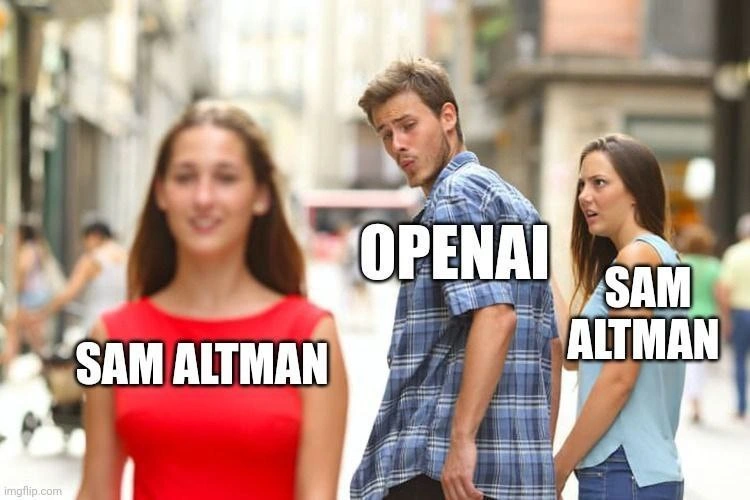
In this meme, OpenAI (the company famous for ChatGPT in the AI/ML world) is depicted as the distracted boyfriend. The woman he’s ignoring is labeled Sam Altman, and humorously, the new woman catching his eye is also Sam Altman. This twist on the classic distracted boyfriend meme format instantly signals that something absurd is happening: OpenAI is turning away from Sam Altman, only to be attracted to… Sam Altman again. It’s poking fun at the real-world openai_board_saga where OpenAI’s board fired Sam Altman as CEO and then, after massive backlash and startup_drama, ended up hiring him back. Essentially, the company did a big dramatic CEO swap that resulted in no actual change – a textbook no-op (no operation) in corporate terms.
To understand the programming joke here, recall what a pointer is: in low-level languages like C or C++, a pointer is a variable that holds the memory address of an object (some data or instance). If we say CEO *currentCEO = &samAltman;, we’re storing the address of the Sam Altman object in the currentCEO pointer. Now, reassigning a pointer means pointing it to a new object. Usually you do this to change which data you’re referencing. But if you reassign a pointer to the same object it was already pointing to, nothing really changes in terms of program state. It’s like writing currentCEO = samAltman when currentCEO was already set to samAltman – the program is essentially saying “our CEO is Sam… again.” In software, doing that is redundant at best. In some cases it might hint at a bug (maybe the code thought there was a new CEO object but accidentally used the old one again).
That’s exactly the humor here: OpenAI’s board acted as if they had a shiny new plan, but they ended up with the same CEO. The meme’s caption, “OpenAI’s CEO pointer keeps getting reassigned to the same object,” explicitly uses programming lingo. It frames Sam Altman as an object in memory and the CEO position as a pointer reference to that object. The CorporateHumor is that the organization went through turmoil only to return to the original state – much like a loop in code that ends up where it started. For a junior developer, think of it this way: imagine you have a variable currentCEO in your program that is set to "Sam Altman". If somewhere in your code you set currentCEO to "Sam Altman" again, you haven’t really done anything new, right? It’s equivalent to replacing something with itself. In the office world, swapping a CEO out and then back in is just like that: a lot of noise but no new outcome.
This organizational dysfunction translated into tech humor because it resembles a common scenario of a buggy update or a failed change in code deployment. Developers often joke about fixes that do nothing, or deploying code that ends up being rolled back to the original. Here, the meme is essentially saying: “OpenAI tried to yank out their leadership like a piece of code, then had to paste it right back in.” The distracted_boyfriend_meme format underlines how ridiculous it looks — OpenAI appears fickle, like someone who dumps their partner only to date a clone of that partner. In a well-run system (or company), you’d expect a new CEO if the old one is let go (like a pointer getting a truly new object), but here we got a ceo_hot_reload where the “new” CEO is literally the same person reloaded.
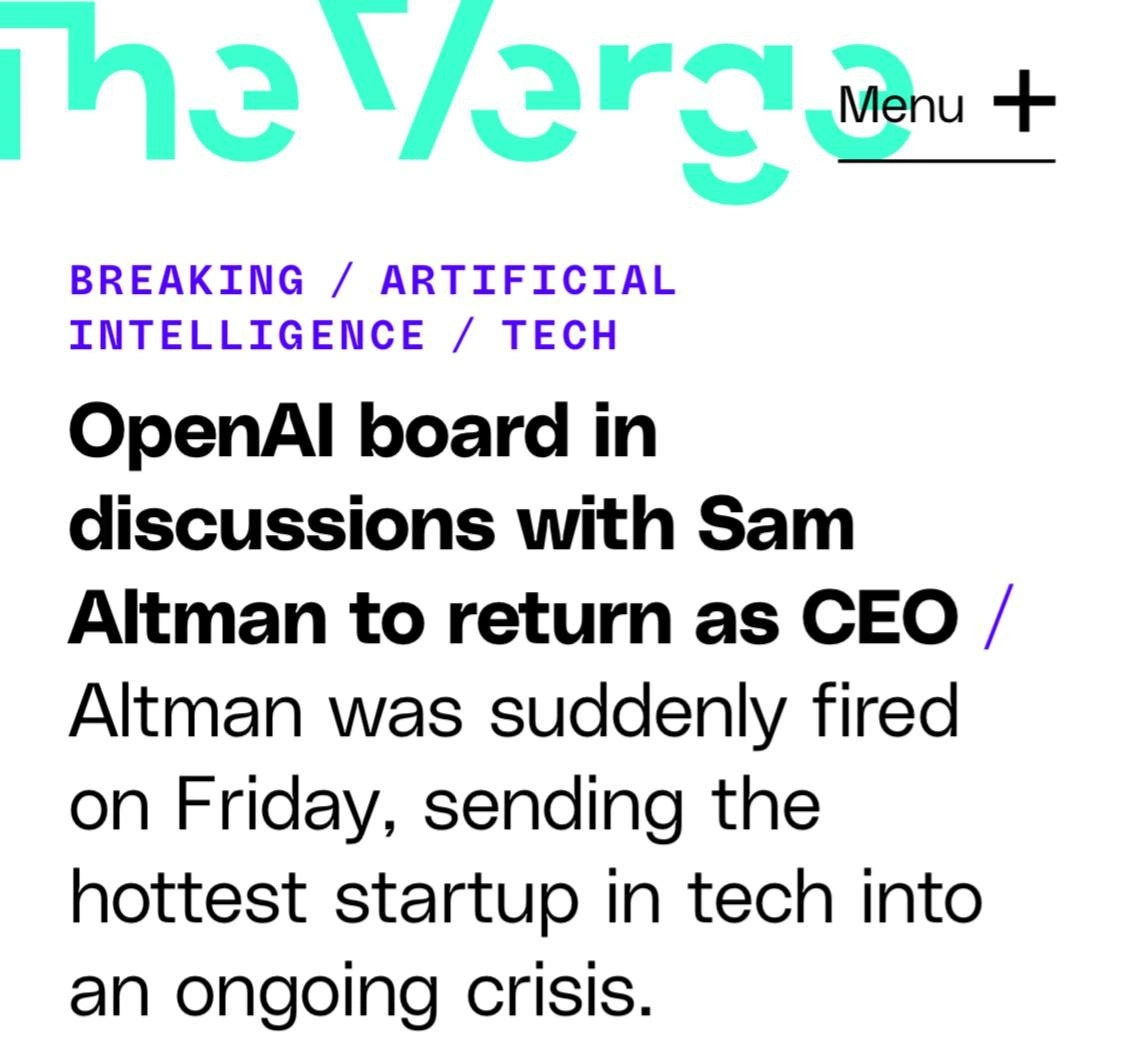
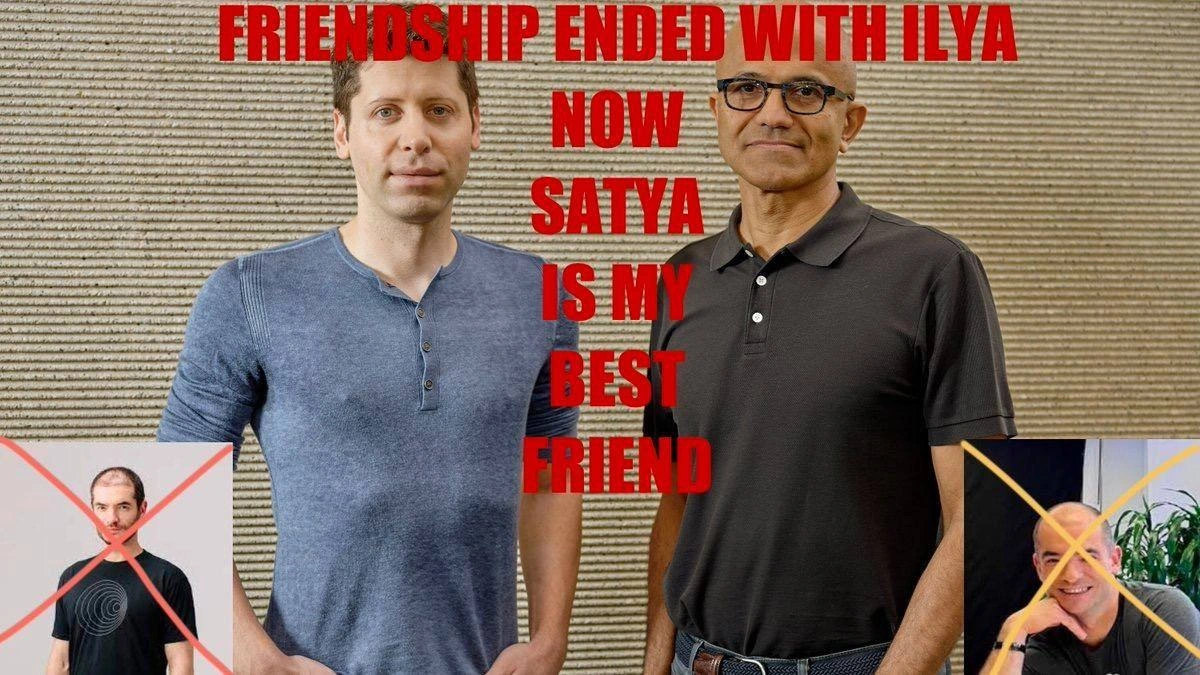
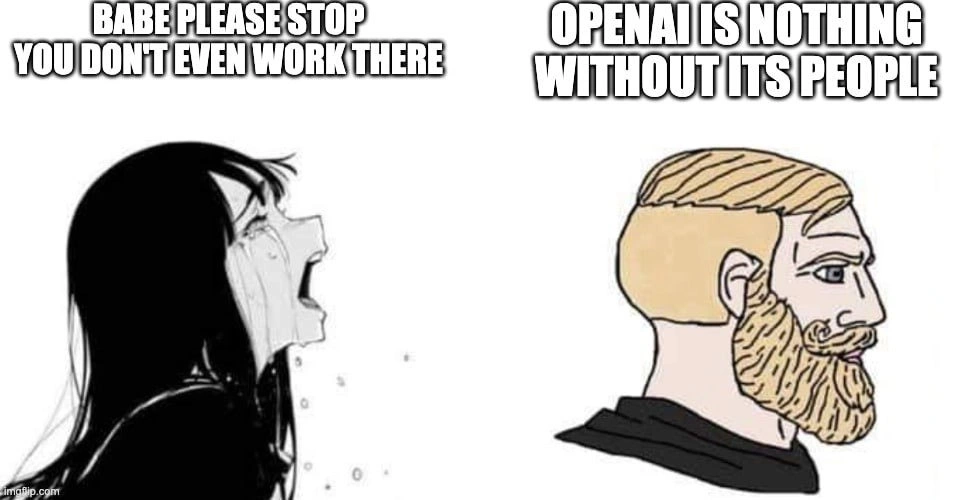
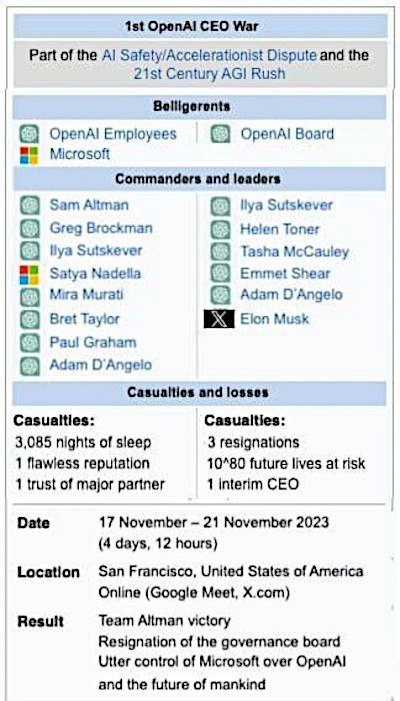
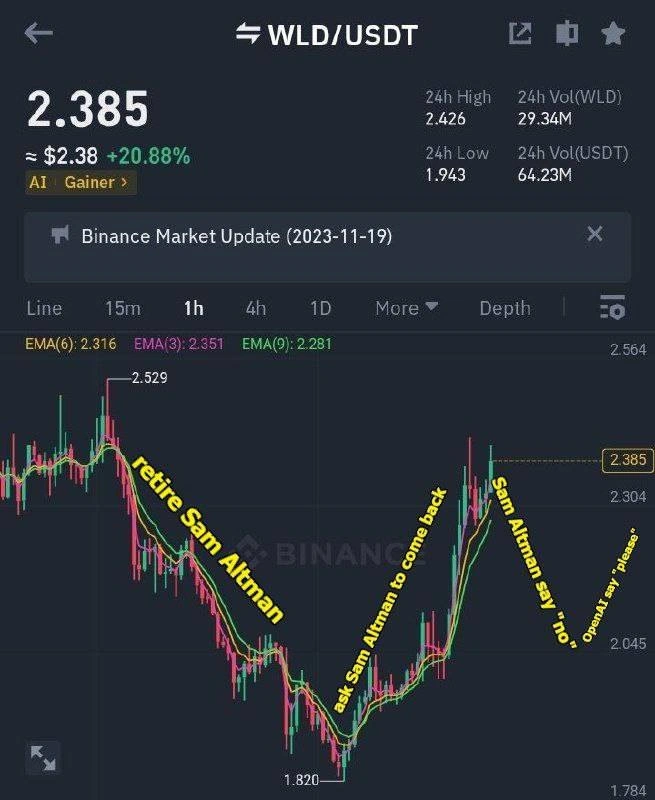
For context, Sam Altman is the co-founder and was (initially) the CEO of OpenAI. The board’s sudden decision to remove him caused an uproar among employees (over 700 threatened to quit – essentially the “users” of the system rejecting an update). Within days, the board reversed course and brought Sam back. So the meme is both industry news satire and a programming joke: OpenAI set its CEO variable to Sam, tried changing it, and then set it back to Sam. It’s a CorporateCulture punchline that even non-programmers found amusing, but if you are a developer, you appreciate the extra layer: it’s like watching someone call myVar = newValue; followed immediately by myVar = oldValue; – a pointless flip-flop. The caption’s phrasing “pointer keeps getting reassigned” also hints at a loop or repeated action: imagine a buggy function that keeps doing currentCEO = SamAltman in a loop, over and over. In a system, that would be terribly inefficient; in a company, it’s terribly chaotic.
So, in simpler dev terms: OpenAI had a pointer to Sam Altman as CEO. They changed that pointer (or so they thought) but ended up pointing it right back to Sam Altman. The meme uses that concept to lampoon the company’s very public, very bizarre CEO shuffle that ultimately changed nothing except to give everyone whiplash.
Level 3: Dangling CEO Pointer
OpenAI’s recent boardroom fiasco feels like debugging a dangling pointer in C at 3 AM. The company (OPENAI) abruptly “freed” its CEO object (SAM ALTMAN), only to reassign the CEO pointer back to the same object days later. In code, it’s as if:
CEO* currentCEO = &samAltman; // OpenAI initially pointing to Sam Altman
// ... board fires Sam Altman ...
currentCEO = &samAltman; // OpenAI ends up pointing to Sam Altman again
This no-op assignment is both a comedic and traumatizing sight to seasoned engineers. We’ve essentially witnessed a high-profile git revert on the organizational chart. The board tried swapping in a new CEO (maybe a null or a different struct), but the system quickly crashed – employees revolted, investors panicked – classic organizational dysfunction. Under pressure (think of a production outage with every engineer on high alert), they rolled back the change. Result: currentCEO points to Sam Altman again, just like before the chaos, except now the whole system (company) is in a weird state of eventual consistency after a split-brain incident.
From an industry perspective, this saga is tech industry humor gold. It highlights how even cutting-edge AI companies can suffer from CorporateCulture bugs. The meme labels the distracted boyfriend as “OpenAI” and both women as “Sam Altman” – a perfect visualization of a pointer chasing a value that it already has. It’s a reference to pointer aliasing: OpenAI looked away from Sam, only to eye the same Sam again, as if he were a shiny new hire. The joke lands because in software, reassigning a pointer to the same object is either a redundant exercise or a sign of a serious logic glitch. Here, it’s both: a startup drama of chasing the same solution while pretending it’s something new.
This fiasco also mirrors a distributed systems hiccup. Imagine a cluster of services electing a leader: one node (the board) declares a new leader, but a majority of other nodes (employees, Microsoft, public opinion) reject that state. The system experiences stale state and thrashes until consensus is restored. OpenAI’s leadership flip-flop was a real-life Raft algorithm failure – the cluster simply re-elected the original leader to resolve the inconsistency. In technical terms, the organization attempted a hot reload of its CEO, only to end up with the same code running. The whole ordeal became instant IndustrySatire: a cutting-edge AI firm undone by a basic management bug. Senior devs can’t help but smirk at how the board didn’t implement a simple sanity check:
if (newCEO == currentCEO) {
// Already the same object, avoid pointless churn
return;
}
In the end, OpenAI’s CEO pointer swap was a wild no-op that wasted cycles and nearly caused a system crash. It’s a cautionary tale that no amount of AI hype or valuation can bypass fundamental logic – whether in code or corporate strategy. Everyone knows OrganizationalDysfunction is the one bug even AI can’t fix, and this time it was on full display: a pointer that moved nowhere, and a company that learned (the hard way) that reassigning CEO to Sam Altman twice is not an upgrade, just an infinite loop.
Description
This image uses the popular 'Distracted Boyfriend' meme format to satirize the OpenAI leadership crisis of November 2023. The boyfriend, representing 'OPENAI', is walking with his current partner, labeled 'SAM ALTMAN'. He is looking over his shoulder with interest at another woman passing by, who is ironically also labeled 'SAM ALTMAN'. A small watermark for 'imgflip.com' is visible in the bottom left corner. The meme humorously captures the absurd situation where OpenAI's board fired its CEO, Sam Altman, only to almost immediately begin negotiations for his return. It portrays the company as being foolishly tempted by the very person it just pushed away, highlighting the chaotic and seemingly illogical decision-making process during the corporate drama
Comments
7Comment deleted
OpenAI's board tried to uninstall `sam_altman.dll` but then realized the entire OS had a hard dependency on it and tried to reinstall from a 'new' source
Apparently OpenAI’s leadership layer is running eventual consistency: every replica of Sam Altman eventually converges, but the read-model is downright distracting in the meantime
When your board implements a rollback strategy but forgets to test the failover first, and now production is somehow running both versions simultaneously
When your board tries to deprecate the CEO but forgets to check for breaking changes across 700+ dependent employees who threaten to fork the entire company to a competitor. Classic case of insufficient integration testing before pushing to production - turns out Sam Altman wasn't just a dependency, he was the entire runtime environment
OpenAI discovered the CAP theorem of org design: you can have Consistency, Availability, or Altman - choose two
OpenAI tried CEO failover without quorum - split-brain hit, and sticky sessions kept routing everything to the same leader
Sam Altman's merge strategy: 'git checkout ai-branch' while OpenAI repo burns in master