Skip to content
DevMeme
2219 of 7435
404 Error: Holiday Spirit Not Found
WebDev Post #2473, on Dec 19, 2020 in TG

404 Error: Holiday Spirit Not Found

Why is this WebDev meme funny?

Level 1: Where Are the Decorations?

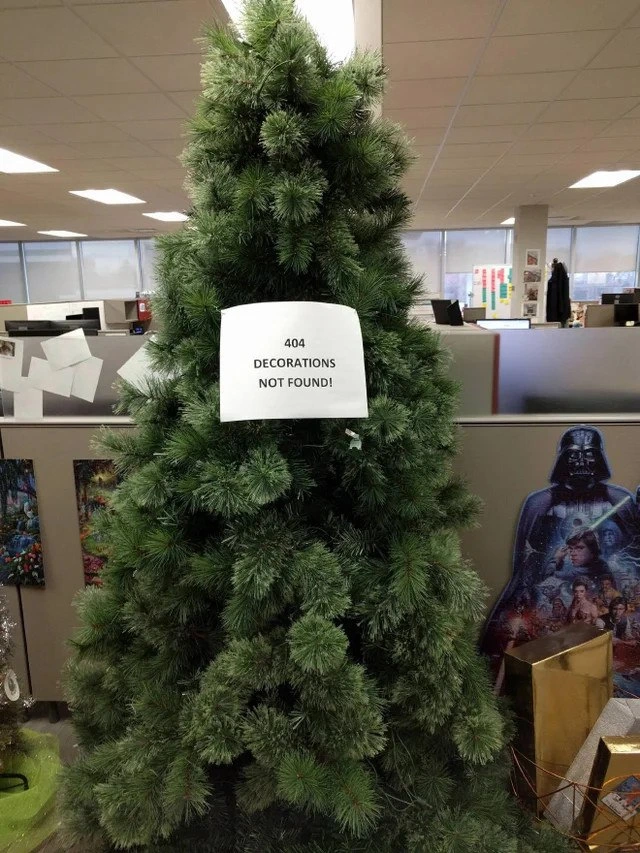
Imagine you come home expecting to see your Christmas tree all shiny with lights and ornaments, but instead you find it completely bare. In front of the empty tree, there's a little note that says, "Sorry, decorations not found!" It’s a funny way of saying "Oops, we have no decorations here." This meme does exactly that in an office setting. The Christmas tree in the office has no decorations on it, and someone joked about it by putting up a sign as if the tree tried to find its ornaments but couldn’t.

Think of it like this: you open a cookie jar hoping for cookies, but it's empty and there’s a note inside that reads, “404 Cookies Not Found!” You might not know what “404” means, but you’d understand the note is humorously saying there are no cookies. It’s the same idea here – the number 404 is a code that tech people know means something is missing. So by writing "404 Decorations Not Found," the person is treating the undecorated tree as if it’s a computer that looked for decorations and came up blank. It’s a playful office prank. Even if you don’t get the code part, you can laugh because the tree’s lack of ornaments is explained in such an overly formal, computer-error way.

At its heart, this joke is funny because it’s so literal. Normally, if a tree isn’t decorated, you’d just see it and go, “huh, no one decorated it.” But the sign makes it seem like the tree itself is announcing a problem: “I have no decorations!” It’s unexpected and silly. It's mixing something very human and festive (decorating for Christmas) with something very technical and dry (a not found error message). Even a child can giggle at a Christmas tree that basically says, "I can't find my ornaments!" The emotional core is the surprise of seeing a formal error-style note on something like a tree – it's like the tree tried to talk in computer language. That contrast is what makes it amusing. Essentially, the tree is playing pretend computer, saying in a fancy way that it has no decorations, and that little make-believe is what gets people to smile.

Level 2: HTTP 404 Unwrapped

This joke centers on the famous HTTP 404 error, which is a computer code for "Not Found." When you try to visit a webpage that isn't there (say, a broken link), the web server sends back a 404 status to your browser to tell you it can't find what you asked for. In plain terms, 404 = missing resource. Developers deal with this all the time in WebDevelopment: if a user requests an image or a file that doesn't exist on the server, a 404 error is returned. It's one of the first things you learn when working with websites or APIs. For instance, if you navigate to http://example.com/whatsnotthere, you'll likely see a message like "404 Not Found". It's a short, techy way of saying, "Sorry, nothing by that name lives here."

Now, imagine walking into a developer office around the holidays and seeing a big artificial Christmas tree with absolutely no decorations on it. Instead of ornaments, there's just a plain piece of paper taped to the tree that reads “404 DECORATIONS NOT FOUND!” 😄. This is a direct play on that HTTP error code. The decorations_not_found sign is basically treating the absence of decorations as if it were a missing webpage. It's as if the tree itself tried to load some ornaments but the "request" failed, so it's displaying an error message for everyone to see. This is classic OfficeHumor among tech folks — merging a work concept (web server errors) with a daily life scenario (a Christmas tree in the office).

Let's break it down a bit more for those new to the joke:

  • HTTP (HyperText Transfer Protocol) is the foundation of data communication for the web. It uses numeric status codes to indicate whether requests are successful or if something went wrong.
  • 404 Not Found is one of those status codes, meaning the client (browser) could connect to the server, but the server couldn’t find what was requested. Think of dialing a phone number that doesn't exist – the connection is made, but the person you’re calling isn’t there.
  • In this meme, the missing item is easy to spot: the tree should have shiny ornaments, but it’s bare. So, a developer with a sense of humor wrote that familiar error phrase to explain the situation: "Decorations not found." It's written exactly like a web error message, down to the number 404 in front, which instantly signals "not found" to anyone who's coded a webpage.

This kind of CodingHumor is common in tech circles. Developers often poke fun at everyday problems by expressing them in code or error terms. For example, if the office coffee machine is empty, someone might stick a note that says "418: I'm a teapot" (a joke error code from an old April Fools' RFC, meaning the machine refuses to brew coffee). Or if a coworker’s chair goes missing, a cheeky note might read "Error 410: Gone." These references turn normal situations into TechHumor punchlines, but you have to know the code meanings to get the joke. Here, everyone who knows about web development will get a little kick: the tree isn't decorated => that's a missing resource => the sign says "404 not found." It's simple and brilliant.

The setting highlights the joke too. In a typical open-plan tech office (with gray cubicles, fluorescent lights, maybe some Star Wars or video game posters in the background), seeing a lonely green tree with no ornaments is a bit sad. The sign flips it into a funny commentary — basically saying "resource not found" in a deadpan, computer-ish way. It implies the decorations were supposed to be here, but just like a broken link on a website, they didn't load in. It’s a christmas_tree_prank by a developer who couldn’t resist turning a holiday task into a programming joke. Co-workers in on the gag probably appreciated the reference immediately, groaning and laughing because they've seen that exact phrasing on their computer screens countless times.

For a junior web developer or someone new to coding, this is a perfect example of how tech concepts seep into humor. It shows how status codes like HTTP 404 aren't just dry technical stuff – they’ve become part of geek speak. When something is missing in real life, a dev might jokingly say "404" as shorthand for "can't find it." The phrase "decorations not found" is basically taking that shorthand and making it literal. It's also a gentle reminder (in a fun way) that "hey, maybe we should actually put some ornaments on this thing?" The prank doesn’t harm anything, and even managers usually chuckle once it's explained. After all, it's cheaper and faster than actually decorating the tree, right? (Just kidding – I'm sure the ornaments eventually went up, possibly after the joke ran its course.)

In summary, the sign on the tree is a server_response_joke: the tree is acting like a web server delivering an error code. To fully get it, you just need to know that 404 = not found, a concept virtually every programmer and many internet users are familiar with. It’s a fun, harmless way to blend holiday spirit with developer-centric wit, making the office a bit more entertaining for those who speak the language of code.

Level 3: HTTP Holiday Hijinks

In true WebDev style, an office prankster turned a bare Christmas tree into a geeky inside joke by slapping an HTTP 404 error on it. A 404 Not Found status is what a web server returns when it can't locate a file or page – in other words, a missing resource. Here the "resource" is holiday ornaments. The tree stands unadorned in the middle of a cubicle farm, effectively returning a "decorations not found" response to anyone expecting festive cheer. This mash-up of an error message with a neglected Christmas tree hits that sweet spot of DeveloperHumor: mixing everyday office life with coding culture references.

For seasoned developers, the humor runs deeper than the surface pun. We've all chased down missing files and broken links that lead to dreaded 404 errors on websites. Seeing a status code meme played out in physical form triggers a knowing chuckle. The sign taped to the tree – plain black text on white paper – resembles the default styling of a bare-bones error page. It’s practically the real-world equivalent of a minimal JSON response saying:

HTTP/1.1 404 Not Found
Content-Type: text/plain

{"error": "Decorations not found"}

The drab, undecorated tree is like a web page with missing assets: no images (baubles), no CSS styling (lights or tinsel) – just the raw HTML of a tree. In web development, when an image fails to load you might see an empty box or an alt text; here the empty Christmas tree has a literal placeholder sign explaining the absence of ornaments. It’s a server_response_joke come to life: the tree throws a 404 (in programmer lingo) instead of delivering the expected merriment. At least it's a 404 and not a 500 Internal Server Error – that would be like the tree catching fire (talk about a holiday_developer_humor dark twist)! The choice of a 404 is perfect: it's a benign, even humorous error in the tech world, essentially saying "what you wanted isn't here" without implying total disaster.

This prank also reflects that classic CodingHumor coping mechanism: when under pressure or lacking time, developers often inject humor in place of a proper solution. No time (or budget) to decorate the tree? Just give it an error code! It’s a tongue-in-cheek commentary on the office culture: instead of 404 fixing the issue (i.e., actually hanging ornaments), a clever dev patches it with a joke sign – a bit like writing a quick script to handle an error case with a funny message instead of a full fix. Everyone in the developer_office can appreciate the reference, bonding over a shared lexicon that turns frustration into a laugh. The sign “404 DECORATIONS NOT FOUND!” transforms procrastination into parody. In a way, the tree is an unadorned server, and the developer just documented its "bug" in classic style. Fellow coders walking by instantly recognize the status_code reference and get that warm, fuzzy feeling of being in on the joke. Non-tech coworkers might just see an empty tree with a weird sign – but to those fluent in HTTP status codes, it's a clever nod to our daily grind. This juxtaposition of a festive tradition with a nerdy ErrorMessages twist exemplifies tech office humor: a dry, computer-ish statement placed in a context where you'd expect flashy decorations, generating that absurdity we can’t help but laugh at.

// TODO: Actually add ornaments. Temporary fix:
throw new Error("404 Decorations Not Found");

Above is essentially what happened here, in code comment spirit. The developer conscience says, “we should really decorate... eventually,” but the inner mischievous coder opts to patch the situation with a one-liner gag. It's funny because it’s true: in coding, as in office decor, sometimes a quick workaround (even if it's just comedic) is the path of least resistance. The result? A status code Christmas tree that delivers a nerdy laugh along with a mild pang of yep, we really should've done that properly. This kind of TechHumor is a hallmark of developer culture – turning a failed expectation (no ornaments) into a lighthearted reference that only those in the know will fully appreciate. It’s the same energy as customizing a 404 page on your website to say, “Oops, looks like Santa misplaced this page!” except it's happening IRL in the middle of an open-plan office. The combination of holiday spirit and server humor makes this prank memorable: it's a witty error message in a place where error messages don’t usually belong, which is exactly why it provokes grins from every coder that passes by.

Description

A photograph taken in an office environment showing a large, undecorated artificial Christmas tree. Taped prominently to the front of the tree is a white piece of paper with black, all-caps text that reads '404 DECORATIONS NOT FOUND!'. The background consists of typical office cubicles, desks, and chairs. To the right of the tree, a large cardboard cutout of Darth Vader and other Star Wars characters is partially visible. The humor is a classic example of geek culture meeting the real world, applying the well-known HTTP 404 'Not Found' error status code - which indicates a requested web resource is unavailable - to the missing Christmas decorations. It's a witty, low-effort decoration that resonates with anyone in the tech industry

Comments

9
Anonymous ★ Top Pick I bet they just got a 402 Payment Required error from the finance department when they tried to requisition the decorations budget
  1. Anonymous ★ Top Pick

    I bet they just got a 402 Payment Required error from the finance department when they tried to requisition the decorations budget

  2. Anonymous

    Looks like the ornament deployment got orphaned when we split the decorator pattern into its own microservice - now the Christmas tree just returns 404 until someone reruns the pipeline

  3. Anonymous

    This tree's decoration service is clearly running on the same infrastructure as that legacy microservice everyone's afraid to touch - both return 404s, but at least the tree won't page you at 3 AM when someone tries to PUT an ornament

  4. Anonymous

    When your office's holiday decoration deployment pipeline fails in production and returns a 404, but management still expects the tree to be 'feature complete' by EOD. At least they didn't get a 500 Internal Server Error - that would've meant the tree caught fire

  5. Anonymous

    /ornaments returns 404 - product calls it minimalist, SRE relaxes because 4xx don’t burn the error budget, and design brands it our first headless Christmas

  6. Anonymous

    Shipped the MVP tree to prod without the ornaments bundle - classic case of missing static assets in the CDN

  7. Anonymous

    Holiday_theme shipped, but someone put ornaments in devDependencies - now the office tree is serving a perfect 404

  8. @qubert9 5y

    Lifehak for those who do not want to dress up a Christmas tree

    1. @kehlerr 5y

      But requires printing a paper😪

Use J and K for navigation