Romantic complaint triggers literal object-versus-struct joke from the programmer partner
Why is this Languages meme funny?
Level 1: Taken Literally
Imagine you tell your friend, “I don’t like being treated like a thing.” You’re upset because you feel ignored or disrespected, right? But instead of apologizing, your friend gets a goofy grin and asks, “Oh, do you want to be a different thing instead?” 😜. That’s basically what’s happening in this meme. The girlfriend is saying, “Please see me as a person, not an object,” and the programmer boyfriend responds with a nerdy play on words. He took the word “object” super literally (like how it’s used in computer talk) and joked about turning her into a “struct” (another computer term) as if that would help. It’s funny in a very silly way: he completely misses the point of her complaint just to make a joke. It’s like if someone said, “I feel invisible to you,” and you replied, “Should I get you a high-visibility jacket?” 🤦♂️ The humor comes from that big misunderstanding. One person is talking about feelings, and the other person replies with a totally off-the-wall, literal answer. We laugh because he’s being such a typical goofy nerd, choosing a computer joke over a serious response, and the poor girlfriend’s frustration is something anyone can understand.
Level 2: Object vs Struct Basics
Okay, let’s break down the joke for a newer programmer. In everyday language, an “object” just means a thing. When the woman says, “Don’t treat me like an object,” she means he’s treating her like a lifeless thing rather than a person (a common phrase when someone feels disrespected or ignored). But her programmer boyfriend is playing with the technical meaning of object. In coding, an object usually means an instance of a class in an OOP language – basically a bundle of data and functions that represent something, like a Car object or a User object in code. Objects in many languages (Java, C#, Python, etc.) are accessed by reference, meaning your variable doesn’t hold the actual data itself, but rather points to where the data is stored (kind of like having a contact card that leads you to the person, rather than the person themselves sitting in that variable).
Now, a struct (short for structure) is another way to package data in languages like C, C++, or C#. A struct is often a simpler container for data – think of it like a record or a form with fields. For example, you might have a struct for a 2D point that just holds an x and y coordinate. In many languages (like C#), a struct is a value type. This means when you assign it or pass it around, you’re making a full copy of that data, not just handing out a reference to it. In contrast, a class object is a reference type, so assignments/passings hand out a reference to the same object. This is a key point in the struct_vs_object distinction.
Let’s illustrate the difference with a quick example in C# syntax (a language where classes are reference types and structs are value types):
class Person { public string Name; }
struct Point { public int X; public int Y; }
// Using an object (class instance)
Person personA = new Person();
Person personB = personA; // personB references the same Person as personA
personA.Name = "Alice";
Console.WriteLine(personB.Name); // Outputs "Alice" because both refer to the *same object*
// Using a struct (value type)
Point pointA = new Point { X = 1, Y = 2 };
Point pointB = pointA; // pointB is a *copy* of pointA
pointB.X = 99;
Console.WriteLine(pointA.X); // Outputs "1" because pointA and pointB are independent copies
In the code above, assigning personA to personB doesn’t create a new Person; it just makes personB another name-tag pointing to the same Person object in memory. So when we change the Name via one reference, the other reference sees it too. That’s how objects/references work – like two people having the same shared Google Doc: update it in one place, everyone with the link sees the change.
But for the Point struct, pointB = pointA makes a brand new copy of all the data. Changing pointB.X doesn’t affect pointA at all. That’s like you sent your friend a copy of a file: now you each edit your own file, and those edits don’t sync. This is how value types behave.
So why is the meme funny? The woman isn’t talking about code at all; she’s expressing an emotional concern. But the guy responds as if she literally said “object” in the programming sense and jokes about “making her a struct instead.” In simpler terms, she said, “Don’t treat me like a thing,” and he replied, “Oh, so you want to be a different kind of thing (a struct)?”. It’s a type system pun. He’s deliberately misunderstanding her to make a nerdy joke. 🧑💻
This kind of humor is common among programmers – we often can’t resist a good pun or taking words literally if they have a technical meaning. The tags LanguageComparison and LanguageQuirks come into play because only someone familiar with programming languages would know about objects vs structs. Not all languages have this distinction (for example, Java has objects but no struct type for custom value types, while C has structs but no classes). C# and C++ developers, though, learn the nuance between a class (object) and a struct early on. The boyfriend’s reply, “Would you like to be a struct?”, is him geekily saying, “If you don’t want to be an object, we can try making you a struct instead” – as if she were a piece of code he could re-declare. It’s completely silly in a real conversation, which is why it’s funny. The poor woman in the meme looks understandably annoyed – his joke went over her head (or she’s just not amused), while programmer folks are chuckling at how he turned a serious comment into a nerdy one-liner. This contrast is the heart of the joke: the intersection of normal life and programmer brain logic.
In short, for a junior dev or someone new to CS: object and struct are programming terms for different kinds of data containers. The guy in the meme responds to a relationship complaint with a suggestion that only makes sense if you’re thinking about code, not feelings. It’s a prime example of DeveloperHumor where understanding the tech term is key to getting the punchline. And now you’re in on the joke, too: he treated her complaint like a bug report and tried to “fix” it by changing a data type. 🤓🔧
Level 3: Type Mismatch in Love
The humor here comes from a classic type system pun colliding with a relationship dispute. The girlfriend says, "I hate it when you treat me like an object," meaning she feels objectified (treated as a thing rather than a person). But her programmer partner only hears the word "object" in the context of Object-Oriented Programming – as in an instance of a class or a reference type. So he quips back, "Would you like to be a struct?" 😏
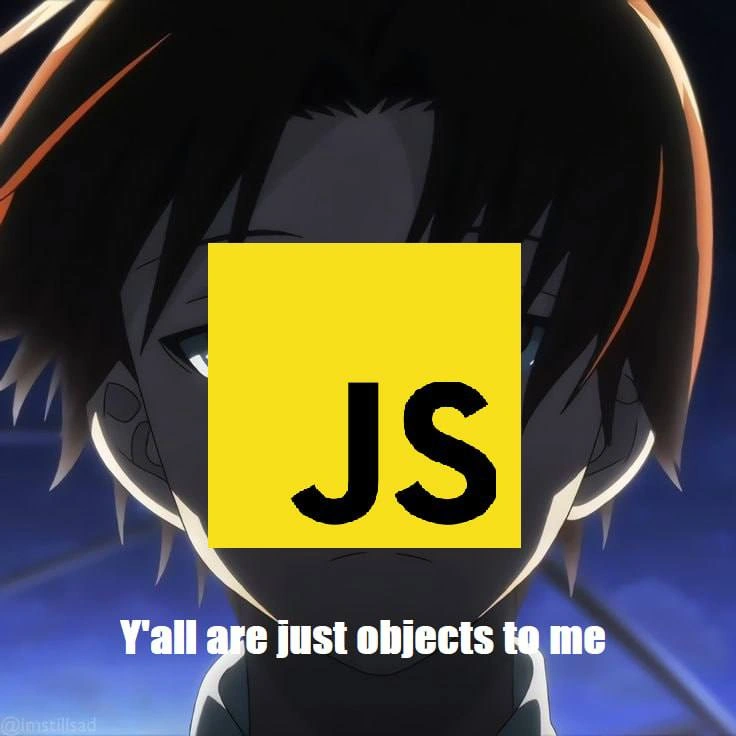
For seasoned developers, this line is hilarious because it literalizes the complaint in terms of programming language quirks. In many programming languages (think C++, C#, etc.), an object typically refers to a reference type (an entity accessed via a pointer or reference), whereas a struct usually implies a value type (a simpler data container stored directly). The boyfriend’s joke suggests changing her "data type" from an object to a struct – as if her feeling objectified could be solved by a different storage strategy! This absurd LanguageComparison twist is exactly what makes it DeveloperHumor gold.
Let’s unpack the tech: an object in programming often lives on the heap and is accessed through a reference (like a pointer or handle). It has identity – two variables can point to the same object. A struct (short for structure), on the other hand, is usually stored directly (on the stack or in-place) and copied by value, so each copy is independent. The meme mashes up this concept with the relationship context. Essentially, the programmer is nerd-sniping the word "object" and responding with an engineer’s solution: “Maybe we should make you a value type instead?” It’s a ridiculous non-sequitur anywhere outside programming circles.
To experienced eyes, this joke also pokes at opaqueness of reference types. A reference type (object) is like an opaque handle – you don’t directly see the data without following the reference. Perhaps metaphorically the girlfriend feels he’s not seeing her true self (treating her like an opaque reference). So the cheeky idea of making her a struct (value type) would mean all her internal state is right there, not hidden behind a reference. Of course, in real life you can’t solve relationship issues with a type-cast 😂. The incongruity — applying a nerdy ObjectOrientedProgramming fix to an emotional problem — is what cracks developers up.
This meme is a prime example of a relationship meme colliding with programming humor. The classic stock-photo argument setup makes it instantly relatable, then the punchline veers into coding territory. It’s the kind of joke that only lands if you know your CS fundamentals: the difference between an object and a struct. The seasoned devs laugh because they’ve internalized these concepts (and maybe remember heated debates about class vs struct usage). It’s so literal and so nerdy that it perfectly satirizes how programmers can sometimes misinterpret normal human language as code. The girlfriend’s annoyed face and folded arms sell the “not this again…” vibe, while the guy’s explanatory gesture is every engineer who over-explains a joke when no one asked. In short, it’s a LanguageQuirks inside-joke that turns a romantic complaint into a coding one-liner.
To summarize the tech in play, here’s how object vs struct usually breaks down in programming:
| Object (Class) | Struct (Value) |
|---|---|
| Reference type (points to data elsewhere) | Value type (contains data directly) |
| Often allocated on the heap | Often allocated on the stack |
| Variables store a pointer/reference | Variables store the actual value |
| Copies by reference (two refs = one item) | Copies by value (each copy independent) |
Example: a List in C# (class) |
Example: a Point in C# (struct) |
The meme banks on a coder instantly recognizing this table of differences in their head. The girlfriend said “object” (thinking human respect), the boyfriend heard “object” (thinking memory model) and jokingly offered the alternative. It’s ObjectOrientedProgramming meets love-life miscommunication. Senior devs chuckle because yep – we’ve all been guilty of thinking in code at the worst times. The mix-up is simultaneously facepalm and clever, and that’s why it resonates.
Description
A stock-photo style scene shows a couple sitting on a sofa in a modern living room. The woman on the left has her arms folded and looks annoyed; the man on the right leans forward, gesturing with one hand as if explaining something. Both faces are blurred for anonymity. White impact-font captions float above each person: at the top left it reads, "I HATE IT WHEN YOU TREAT ME LIKE AN OBJECT"; at the lower right, near the man, it reads, "WOULD YOU LIKE TO BE A STRUCT?". The humor relies on software terminology: in many programming languages an 'object' represents a reference type in object-oriented programming, while a 'struct' is often a value type, so the punchline twists a relationship complaint into a type-system pun familiar to seasoned engineers
Comments
17Comment deleted
Careful, man - turn her into a struct and every time you pass her feelings by value you’ll be debugging N identical copies of the argument
She wants less encapsulation but he's worried about losing access modifiers and inheritance - classic case of trying to refactor a relationship without breaking the interface
The classic compromise: 'Fine, you can be a struct - you'll live on the stack, have value semantics, and I promise no inheritance baggage. But don't come crying when you get copied around everywhere and can't share state with your friends.'
Value types make relationships easier - less aliasing, no surprise vtables, and when it gets volatile you can copy-on-write instead of sharing mutable state
Structs get passed by value - no shared mutable state drama in arguments
When she says “stop treating me like an object,” the architect proposes value semantics - no identity, no methods, just immutable state and copy-on-write emotions
getStringFromObject(); Comment deleted
Would you like to be a namespace? Comment deleted
Maybe she is only API Comment deleted
I'm gonna stick my json into her endpoint Comment deleted
That's why that called BackEnd Comment deleted
Estabilishment of websocket connection Comment deleted
Make her into a class, and get several instances of her Comment deleted
No, I’d like to be a tagged union. Comment deleted
She wanna be the only member of the array 'girlfriend' Comment deleted
© Everything is object Comment deleted
function Comment deleted