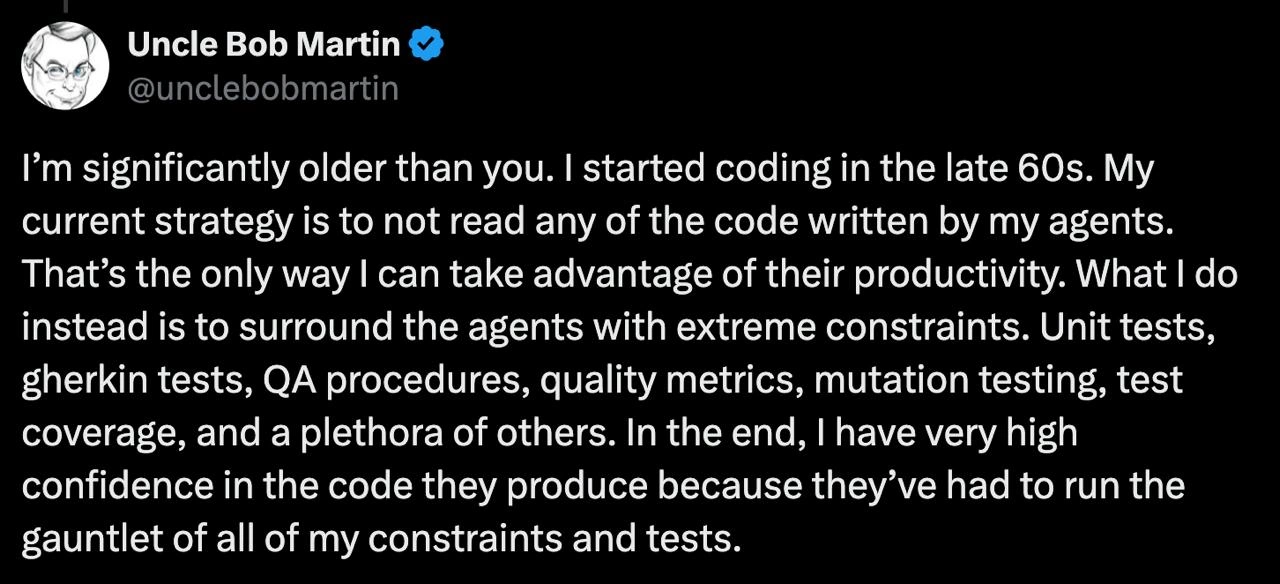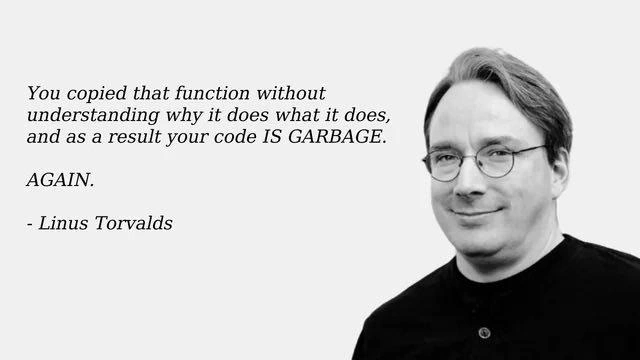
The Anxiety of Bad Code vs. The Reality of Production
Why is this CodeQuality meme funny?
Level 1: If It Ain't Broke...
Think of it like cleaning your room in a hurry. You have guests coming over, and your room is a disaster. Clothes, toys, and books are everywhere. Instead of properly folding clothes and arranging things, you quickly shove everything into the closet or under the bed. Now the room looks clean – the floor is clear, the bed is made. Your parents peek in, see everything looking neat, and say, “Great job!” They’re happy, the guests are impressed. From the outside, all is well.
But you and your siblings know the truth: the closet is about to burst, and under the bed is a jungle of junk. Right now, nobody is complaining because the room appears fine. This is exactly what “bad code but green dashboard” means in the meme. The bad code is like the mess stuffed under the bed – it’s hidden out of sight. The green KPI dashboard is like your parents seeing a tidy room – it’s the view that everything is okay. “If it ain’t broke, don’t fix it,” people say. In other words, if no one sees a problem (it ain’t broke), they won’t try to change anything.
The meme’s joke “See, nobody cares” is basically that situation: No one is worried about the hidden mess because, on the surface, things seem fine. Everyone relaxes. But you know that if you keep shoving messes out of sight, eventually you won’t be able to find your homework or something might start to smell. In a software team, if they keep ignoring messy code, one day it could cause the app to crash (that’s like the closet door finally popping open!). For now though, everything’s working, so… nobody cares. It’s funny and a little bit like a secret: just because all the lights are green doesn’t mean there isn’t a dinosaur-sized mess waiting behind the scenes.
Level 2: Shiny Dashboard, Messy Code
Let’s break this down in simpler terms. Imagine you’re a junior developer or just starting out. You’ve learned in school or bootcamp that code should be clean, well-structured, and free of obvious mistakes. Now you join a real software team and discover there’s something called “technical debt”. This is when the team takes shortcuts in the code – writing bad code that works, but isn’t pretty or optimal – in order to ship features faster. It’s like when you rush an assignment last-minute: you get it done, but you know it’s not your best work. In coding, those rushed, messy sections are considered debt because, sooner or later, developers will have to pay the price and fix them properly (often under even more pressure).
Now, companies track success using KPI dashboards. KPI stands for Key Performance Indicator – basically important metrics that show how well the product or business is doing. For a software product, a KPI might be “number of active users,” “error rate,” “uptime percentage,” or revenue. These dashboards have dials or charts that turn green when things are good. An OKR (Objective and Key Result) is similar – it’s a goal and a measurable result, like “Improve performance by 20%” or “Gain 1,000 new subscribers this month.” The key point: these indicators focus on outcomes (user happiness, sales, system stability), not on the state of the code itself. There’s no mainstream KPI for “code cleanliness” that a CEO checks every morning. So if the product is selling and the servers are up, all those metrics stay comfortably green.
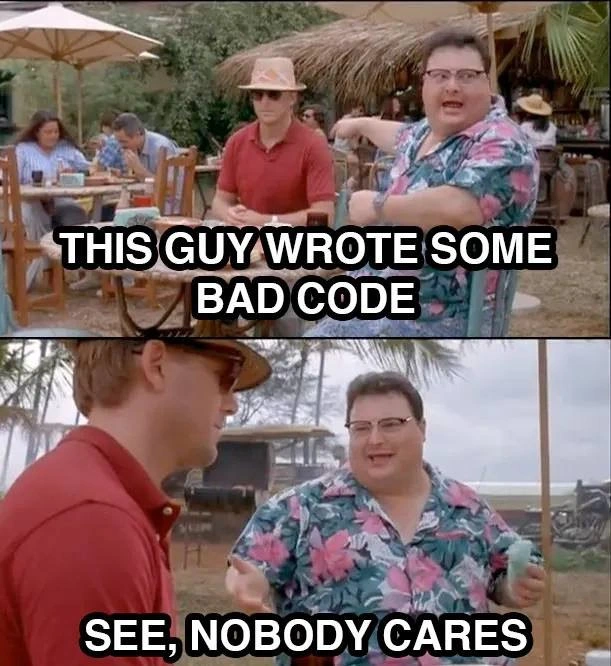
The meme uses a scene from Jurassic Park where one character, Dennis Nedry (in a flashy Hawaiian shirt), mocks how nobody cares about what he’s doing. The top text says “THIS GUY WROTE SOME BAD CODE,” and the bottom says “SEE, NOBODY CARES.” It’s a tongue-in-cheek way of saying: someone wrote really messy, poor-quality code, but look around – nobody in leadership or outside the dev team is alarmed. Why? Because from their perspective, nothing bad is happening. The app is still working and the KPI dashboard isn’t showing any fires. It’s all tropical smiles and umbrella drinks in management land (hence the island vibe in the meme background). This reflects a common developer experience: you, as a developer, might notice a nasty bug waiting to happen or a module that’s one push away from collapsing, but when you point it out, the response is a shrug – “Does it impact users right now? No? Then we’re fine.”
Let’s clarify some terms that appear in the tags and are relevant to this joke:
- Code Quality: This refers to how well-written and maintainable the code is. High code quality means the code is clean, understandable, and works reliably. Low code quality (what the meme calls “bad code”) might still function, but it’s brittle, confusing, or full of “hacks.” Think of code quality like the quality of construction in a house – good structure vs. shaky structure hidden behind drywall.
- Code Smells: No, it’s not about actual smell. A code smell is a programming term for any hint in the code that something might be wrong beneath the surface. For example, a super long function that does 50 things is a smell – it suggests poor design. The code might not be breaking now, but it “smells” funny, like it could cause trouble later. In our scenario, bad code has lots of these smells (duplicate code, weird tricks, lack of error handling), but if everything is currently working, those smells get ignored.
- Technical Debt: As mentioned, this is a metaphor comparing messy code to financial debt. Every time you choose a quick-and-dirty solution instead of a clean one, you incur “debt.” It’s not a problem immediately (just like swiping a credit card doesn’t hurt at the moment), but it accumulates. Eventually, someone has to pay that debt by spending time to fix or refactor the code. The more debt, the harder it is to change or add features later without things breaking. In the meme, technical debt has been incurred (bad code was written), yet everyone is acting like nothing’s wrong because the “bill” hasn’t come due yet.
- Spaghetti Code: This is a fun term for code that is so tangled and unstructured that following its logic is as hard as untangling a bowl of spaghetti. For instance, if a program’s flow jumps all over the place, or modules are highly interdependent in a confusing way, that’s spaghetti code. It usually happens from lots of quick fixes piled on top of each other. In a team that values speed over structure, you often end up with spaghetti code. It works (you can technically eat spaghetti), but try pulling on one noodle (making a change) and you’ll disturb something far away in the bowl. In our meme’s story, someone likely wrote spaghetti code to quickly deliver a feature – and now that messy code is sitting in the product.
- Refactoring: This is the process of improving code without changing what it does. It’s like reorganizing a cluttered room – you don’t add new furniture, you just tidy up what’s there so it’s more livable. Refactoring is how developers pay down technical debt. For example, after rushing to code a feature, a team might plan to come back and refactor it: break giant functions into smaller ones, add comments, handle errors properly, etc. The joke in the meme is that refactoring often gets continually postponed, because there’s always a new feature to work on or another KPI to chase instead.
- Code Review Apathy: In healthy software practice, when someone writes code, others review it to catch issues and suggest improvements. Code review apathy means reviewers are shrugging off problems – possibly because they feel raising concerns won’t matter. Maybe they’ve seen their critiques ignored due to deadlines (“we’ll fix it later, promise”), so they stop bothering. If the code “works” and there’s pressure to merge it, reviewers might reluctantly approve even if it’s bad. This leads to more bad code in the codebase. It’s an apathy born from a culture that doesn’t actually act on quality issues. So in the meme, “this guy wrote some bad code” could have been flagged in review, but likely everyone just said “eh, we need to release, so whatever.”
Put all this together: The developers feel anxious seeing the product held together by duct tape and chewing gum (metaphorically). They know these code smells and technical debt are going to bite them eventually. The leadership and non-technical stakeholders, on the other hand, see a steady stream of feature releases and happy users. Their KPI dashboards are all green lights, indicating everything is great. In meetings, upper management is celebrating the team’s velocity and maybe even asking for more features ASAP (since things appear so smooth). If a developer brings up, “Hey, our codebase is getting a bit unstable, we need time to clean it up,” they might get responses ranging from (“Is it causing any customer issues now?” to “We’ll schedule that later, but right now we have priorities.”). This is the “KPI over refactor” mentality boiled down. It’s not that managers are evil – it’s that they are focused on visible outcomes. If bad code hasn’t caused a visible problem, it doesn’t exist on their radar.
The meme is very much a relatable developer experience because lots of devs have lived this. You deliver a feature with a hacky solution because the deadline was tight. You cringe internally and even comment // TODO: improve this in the code. But the feature is out, users are using it, and everything seems fine externally. Weeks pass, new projects come, and nobody allows time to go back to that messy code. You might occasionally say, “We really should fix that before it scales,” and the reply is “Later, we have more pressing things.” It’s both frustrating and comedic in hindsight, which is exactly why this meme resonates. We laugh, but the laughter is a bit nervous. Everyone’s essentially waiting for the other shoe to drop – except those who only look at dashboards; they aren’t even aware there is another shoe.
In the Jurassic Park context, Dennis Nedry uses the line “See, nobody cares” when he’s doing something deeply problematic (stealing embryos, no less) but notices no one is reacting. In the coding context, writing bad code or leaving tech debt is the “wrongdoing,” but if no alarms go off and no immediate danger is seen, the organization collectively shrugs. Bad code indifference sets in. That’s the joke: a critical problem is brewing, and the only response is a casual, almost comic, “nobody cares.” It’s funny to developers because it’s a shared wink – we all know it’s a bad habit to ignore problems, but it happens all the time. This meme template, the “jurassic_park_meme_template”, is popular precisely for calling out situations where someone should care but doesn’t. Here it’s aimed at code quality vs. corporate metrics.
So, for a junior dev reading this meme:
- It’s highlighting a common real-world scenario: Feature delivery getting priority over code cleanliness.
- It teaches an implicit lesson: if you only judge success by immediate results (green KPIs), you risk letting technical debt spiral out of control.
- It’s also a bit of a warning wrapped in humor: try not to be the person who only cares about the dashboard. If you become a team lead or manager one day, remember that green lights on a dashboard can mask a messy codebase. Developers will appreciate leaders who care about internal quality, not just outward metrics.
And for now, as a junior, if you ever push some sloppy code under pressure and later feel guilty about it, you’re not alone. Just remember to eventually refactor – before you end up starring in the next “See, nobody cares” meme when things go awry!
Level 3: Green KPIs, Red Code
At the senior engineer’s altitude, this meme hits like bitter truth wrapped in humor. It’s poking fun at a corporate culture where outward metrics gleam green while the codebase rots underneath. On the surface, all the Key Performance Indicators (KPIs) and Objectives and Key Results (OKRs) are being met – user signups climbing, uptime at 99.9%, sales funnel looking healthy. The org’s KPI dashboard stays green, so leadership is all high-fives. Meanwhile, in the trenches, developers are wincing at the code quality (or lack thereof) but getting the message: “bad code, good revenue – carry on.” This juxtaposition is the core of the joke: a dev points out “This guy wrote some bad code,” and the response is basically “See? Nobody cares.”
Why is it funny? Because it’s painfully relatable. We’ve all seen a spaghetti code monstrosity get pushed to production in a rush. It might be full of clever hacks code smells (duplicated logic, mysterious variable names, giant functions that do too much). Every experienced dev on the team knows it’s a ticking time bomb. But as long as it doesn’t blow up immediately, the business folks couldn’t care less. The meme channels that infamous Jurassic Park scene – the guy in the loud Hawaiian shirt (Dennis Nedry, if you recall) shrugging off a bold act with “Nobody cares.” Here, bad code is the bold act, and management’s shrug is “It shipped and users are happy, so what’s the problem?”
This speaks to a broader pattern of technical debt accumulation. Technical debt is the idea that cutting corners in code (to ship faster) is like taking on a debt – it accrues interest in the form of harder maintenance and future bugs. In theory, teams should “pay down” that debt by refactoring and cleaning up. In practice? Feature after feature gets piled on instead. The codebase becomes a Jenga tower of quick fixes. Everyone vaguely senses that one day it’ll come crashing down (likely at 3 AM on a weekend, as the veteran cynic in us nods). But until an outage or major bug actually happens, there’s indifference to bad code from higher-ups. After all, refactoring doesn’t make the KPI dashboard flash any brighter green – it’s invisible to customers and execs.
This humor has an edge of truth trauma. It satirizes how developer culture often has to cope with the dissonance: we care deeply about code craftsmanship and code quality, but the enterprise cares about feature velocity and meeting quarterly goals. It’s a classic case of “KPI over refactor.” You’ll hear managers say, “We’ll clean it up in the next sprint,” but that next sprint never arrives because there’s always another shiny feature to chase or another KPI target to hit. The result? Code review apathy – reviewers might sigh at the ugliness of a hacky commit, but give it a thumbs-up anyway because the release train can’t stop. The meme nails this feeling: that resigned shrug of “Yeah the code’s awful… but no one outside the dev team gives a darn as long as users aren’t screaming.”
For senior engineers, the dark humor also lies in anticipating the inevitable fallout. We’ve seen it: that sloppy hotfix_final_FINAL_v2.js which everyone forgot about eventually causes a crash in production. Then suddenly the on-call phone is buzzing, dashboards flip red, and the very people who “didn’t care” are in panic mode. It’s the “I told you so” moment every battle-scarred dev both dreads and grimly validates. As the saying goes, “You can ignore technical debt, but it won’t ignore you.” Yet until that day of reckoning, the business slides by on a false sense of security. In fact, there’s even a known principle in the tech management world: Goodhart’s Law – “When a measure becomes a target, it ceases to be a good measure.” If all you chase are green metrics, people will game the system (consciously or not) to keep those metrics green, even if it means writing shoddy code or leaving code smells unchecked. The metric (say, feature release count or uptime) stays good, but the underlying quality suffers – exactly the dynamic this meme highlights.
A seasoned dev reading this meme might chuckle, then sigh. It’s funny because it’s true – too true. The Jurassic Park line “See, nobody cares” encapsulates that cynical reality: the technical debt ledger grows, the spaghetti code tangles further, and the only “red flags” are seen by the engineers, not on the management dashboard. And if you raise the issue one too many times, you might even hear something like:
Manager: “All the numbers look great this quarter. Why fix what isn’t broken?”
Senior Dev (under breath): “Because I’ll be the one fixing it at 3 AM when it finally breaks…”
This meme is a rallying cry (or perhaps a dark inside joke) among developers about the value of good code being ignored. It’s a bit of developer humor that draws on our shared frustration. We laugh, but it’s the kind of laughter you get at a stand-up show when the comedian describes an awkward truth about your life. We’ve all inherited a nightmare codebase that leadership wouldn’t prioritize fixing. Relatable developer experience? Absolutely. The meme’s popularity shows that this scenario isn’t one-off – it’s developer culture canon at this point. The next time someone says “This code is awful, we should refactor,” and gets blank stares because the app “works fine,” just remember that Hawaiian-shirt guy smugly saying “Nobody cares.” It’s a reminder that you’re not alone in that battle between code quality and the almighty green KPI dashboard.
And yes, the veteran in me must add: when that rickety code finally blows up, the KPI dashboard will definitely stop being green. By then, everyone will care – a lot. Until then? Ship it, metrics are good. Cue the meme: “See, nobody cares.”
# TODO: Remove this hack and handle properly after launch
if user_input == "":
user_input = "default" # quick fix just to avoid crash in demo
process(user_input)
Above: an example of the kind of quick-and-dirty code that sneaks into production under deadline pressure. It works (for now), keeps the demo smooth (KPI green!), but it’s blatantly fragile. Any senior dev can spot the technical debt here – someday “TODO” never gets done, and this code smell might cause a nasty bug. For now, though? It’s hidden under the shiny features – and nobody cares.
Description
A two-panel meme using the 'See, nobody cares' format from the movie Jurassic Park. The top panel shows the character Dennis Nedry (played by Wayne Knight) sitting at an outdoor restaurant, pointing dismissively over his shoulder at another man. The white text overlay reads, 'THIS GUY WROTE SOME BAD CODE'. The bottom panel is a closer shot of Nedry talking to the other man with a condescending smirk, gesturing with his hands. The text overlay on this panel says, 'SEE, NOBODY CARES'. The meme humorously captures the developer's internal anxiety about writing imperfect code. It contrasts this with the pragmatic reality of many professional environments, where as long as the software works and meets deadlines, minor code quality issues or accumulating technical debt are often ignored by the wider team or management, for better or worse
Comments
14Comment deleted
We tell juniors 'nobody cares' about their bad code to ease their anxiety. We know the truth: the only one who'll care is the on-call SRE, woken up at 3 AM by the legacy of that 'nobody cares' attitude
The real reason your cyclomatic-complexity spike never hits the dashboard: it’s not a ‘critical metric’ until the pager goes off at 3 a.m
The beautiful irony of using Nedry for this meme - the guy whose 'nobody cares' attitude about code quality literally caused dinosaurs to eat people. Every senior engineer has lived through at least one 'Nedry moment' where ignored code smells evolved into production-eating velociraptors at 3 AM
The brutal truth every senior engineer learns: you can spend three days refactoring that god-awful nested callback hell into elegant async/await with proper error boundaries, comprehensive unit tests, and immaculate documentation - but when the PM asks what shipped this sprint, 'I made the code not make me want to cry' doesn't move the needle. Meanwhile, the junior who duct-taped together a solution with seven levels of try-catch and a TODO comment from 2019 gets praised for 'velocity.' The code will outlive us all, quietly accruing interest on that technical debt, until one day at 3 AM when it finally matters - but by then, everyone who wrote it will have moved to a different company
Big O of code reviews in prod: O(nobody_cares) - maintainability optional, mai tais mandatory
“Nobody cares” is just org-speak for “our OKRs don’t price this debt yet” - right up until the error budget pages you into writing the postmortem
Bad code maximizes sprint velocity and CFO happiness - until the error budget hits production, MTTR explodes, and the ‘nobody cares’ becomes your 3am incident bridge
Single handedly ruined the guy's career Comment deleted
Who said that I wrote? I "borrowed" it Comment deleted
Nobody except your end users. But who cares about them, huh Comment deleted
Users don't care about code quality, only about how product works Comment deleted
Users liked it more the way It was before anyways Comment deleted
I care And I'm coming for you Comment deleted
Peer review care... Comment deleted