Skip to content
DevMeme
4725 of 7435
The ultimate taboo: machine learning engineer asked about child porn detector
AI ML Post #5178, on May 6, 2023 in TG

The ultimate taboo: machine learning engineer asked about child porn detector

Why is this AI ML meme funny?

Level 1: You Don’t Want to Know

Imagine your friend had to do a really gross job – like cleaning out a sewer pipe clogged with horrible smelly gunk. After he’s done, you might joke about it, but you wouldn’t actually ask him to describe everything he saw and did in detail, right? Because eww, that would be upsetting and nasty to hear about. You’re just glad he did the dirty work and you didn’t have to.

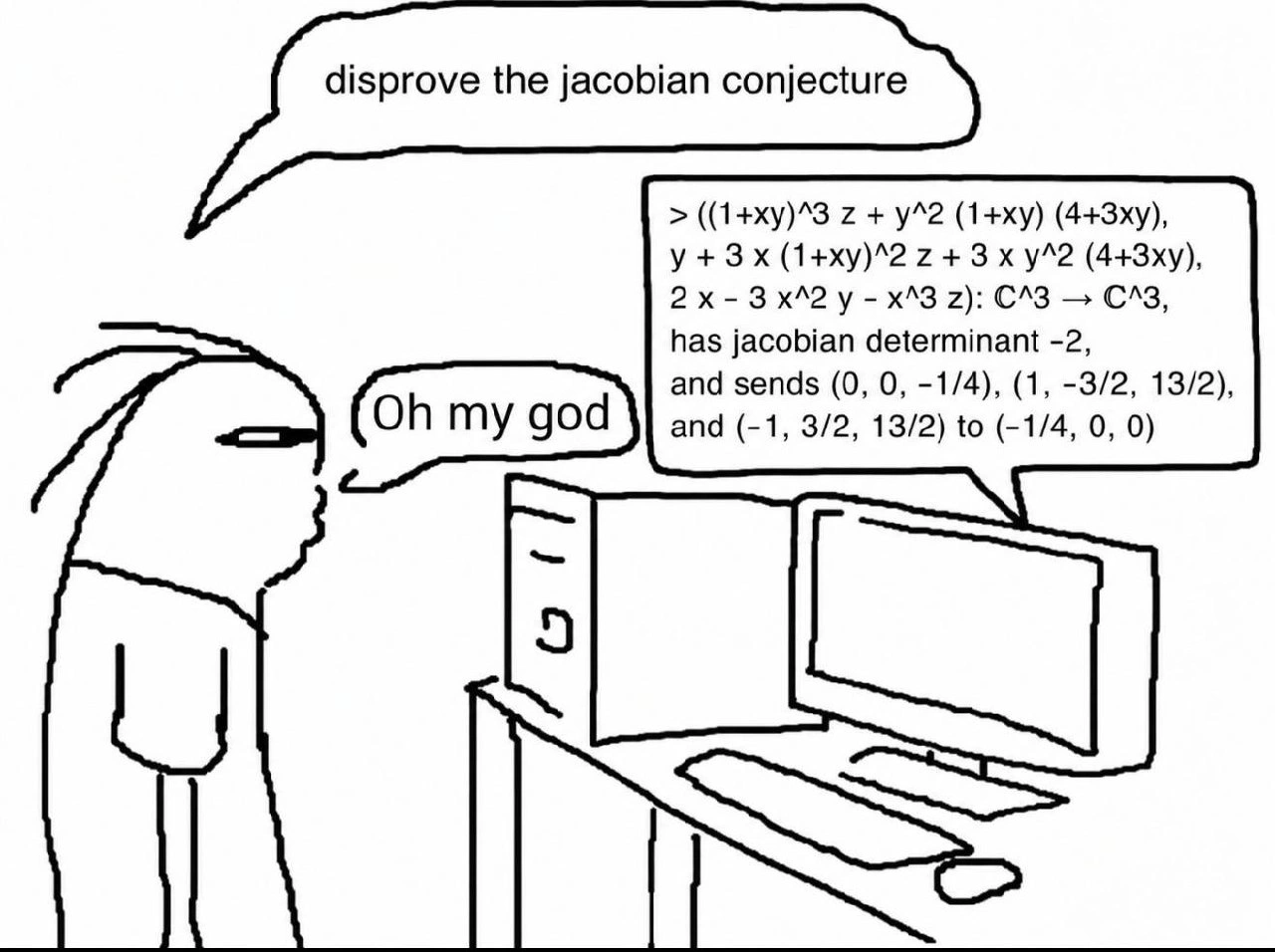
This meme is saying the same kind of thing, but about a person who teaches computers to find terrible pictures so that no one else has to see them. The first two lines are simple: Don’t ask a lady her age (that can hurt feelings), don’t ask a guy his salary (that can be uncomfortable or rude). The last line says don’t ask a computer expert how they made a program to find really bad illegal pictures of kids. In other words: some questions are so sensitive and the answers so unpleasant that it’s better not to ask at all.

It’s funny in a naughty way because it starts with two normal “don’t ask” examples that everyone knows, then surprise-ends with an extreme example. It’s like if you said, “Don’t ask your sister about her diary, don’t ask your brother about his grades, and don’t ask the chef how he finds the rotten ingredients.” The first two are common sense; the last one sounds serious and dark – that jump is what makes you laugh a little (or gasp).

So, the big idea: The engineer’s work is kind of like being a superhero janitor cleaning up the worst mess on the internet. It’s important that someone does it, but it’s gross and disturbing, and you wouldn’t want to make them relive that by explaining it. It’s a mix of respect and “yuck, let’s not go there.” When we say “You don’t want to know,” we mean the answer would only upset or trouble you. The meme is a playful way to remind us that, just like polite kids know not to ask awkward personal questions, polite people (even adults) know not to ask about terrible things someone had to deal with.

In simple terms, the last panel’s message is: “This computer person had to do something really unpleasant for a good cause. Trust us, you’re better off not hearing the details of how it was done.” That’s why it’s both a bit funny and a bit serious — some things, once you know about them, can make you feel bad. So it’s often better to just appreciate that it got done and not ask for the scary story behind it.

Level 2: Beyond NSFW

For a newer developer or someone just wading into AI, let’s break this down. This meme uses a familiar format where the first two lines are everyday “no-no” questions: Never ask a woman her age and never ask a man his salary. These are light-hearted social rules – asking those can be seen as rude. The meme then throws a curveball with a tech twist: Never ask a machine learning engineer how he created a child porn detector.

Why is that last question such a big deal? First, let’s clarify terms:

  • A Machine Learning Engineer is someone who builds and trains AI models to recognize patterns or make decisions. If you’ve heard of AI systems that can recognize cats in photos or suggest movies you might like, those were made by ML engineers.
  • A child porn detector would be a computer program (an AI model) that can look at images or videos and automatically identify illegal content involving minors. In a sense, it’s like a very advanced parental filter or content moderation tool that specifically spots the most explicit and illegal content imaginable.
  • Content moderation is the process of filtering out bad stuff from online platforms – for example, removing violent videos, spam, hate speech, or pornography so that users (especially minors) aren’t exposed to it. Some content can be filtered by simple algorithms (like blocking certain words), but images are harder, so that’s where AI often comes in.
  • NSFW stands for “Not Safe For Work.” It’s a common label for content like adult pornography or graphic violence – basically, things you wouldn’t want flashing on your screen at work or in public. Many platforms use NSFW filters to warn or block such content. Now, child pornography is not just NSFW; it’s illegal everywhere and in a category of its own that is absolutely forbidden. So you might jokingly say it’s “Not Safe for Anywhere.”

The meme’s last line is highlighting something beyond the normal scope of inappropriate content – truly the worst of the worst. When it says don’t ask an ML engineer how he made that detector, the implication is: the story behind building such a detector is extremely uncomfortable and problematic.

Imagine you’re a junior developer and you’ve learned how AI models typically get made. Usually, you gather a dataset of example images for each category you care about. Want to detect cats vs. dogs? You’d collect lots of cat photos and dog photos, feed them to a neural network, and it learns to tell the difference. Sounds straightforward in general. Now replace cats and dogs with “legal images” and “child abuse images.” Suddenly, step one – collecting the training data – is not straightforward at all; in fact, it’s basically illegal. You can’t just Google those images (and you shouldn’t, it’s a crime to even download them). There is no open dataset available for this (unlike cats and dogs which have many public datasets).

So a junior perspective realization here is: ML depends on data, and some data is so sensitive or illegal that you can’t use the normal approach. Actually building an AI to detect that content means someone had to solve the data problem in a very special way. Perhaps they had to work with police agencies or use already confiscated images locked in a secure vault. Perhaps they had to write code that was run in a law-enforcement environment to train the model, so the engineers themselves didn’t directly handle the images. These are not everyday situations – they’re complicated, involve a lot of legal oversight, and are mentally taxing.

This leads to AI ethics and security concerns. AI ethics is about doing AI in a way that doesn’t cause harm and respects laws and morals. Normally that might involve things like not building biased algorithms or not invading privacy. In this case, the ethical concern is “How do we make an AI that helps catch bad guys without doing something bad ourselves in the process?” The safety research angle comes in designing systems that can flag illegal content reliably while minimizing human exposure to it. Companies want to automatically moderate content because having humans see all those terrible images to remove them is harmful to the humans (imagine a job where your day is spent looking at abusive images to decide if they should be taken down – that’s deeply distressing). AI offers a possible solution: let the machine identify the awful stuff so humans don’t have to look at each one. But training that machine forced someone, at least initially, to confront the awful stuff anyway, to teach the AI. It’s a bit of a catch: you’re trying to remove humans from this painful job, but humans have to train the system first.

The humor of the meme comes from comparing social taboos with a tech taboo. Taboo_question_meme is a format people use for exaggeration. We all nod along that asking a woman’s age might make her uncomfortable and asking a man’s salary might be touchy. Those are somewhat common social knowledge. Then it leaps to this highly specific ml_engineer_humor taboo – effectively saying the ML engineer’s secret is even more off-limits! It’s funny because it’s an unexpected escalation: “age” < “salary” < “how on earth did you compile a child porn dataset?”. That progression goes from mildly awkward to whoa, super inappropriate.

If you’re new to tech, you might not know, but there’s a bit of a dark joke in developer circles that goes “don’t ask how the sausage is made.” It means the end product might be fine, but the process of making it was messy or unpleasant. This meme is essentially a play on that idea. The child porn detector is the sausage – no one wants to imagine how it was made, because it likely involved dealing with very nasty ingredients (the illegal images).

To put it plainly: the engineer’s data set would have to contain examples of illegal content for the AI to learn from. Nobody wants to ask or hear details about how one gets such a data set because any answer is disturbing:

  • Either the engineer had special permission and worked with law enforcement data (still grim, but at least legal)
  • Or, if they didn’t, it implies something illicit was done (which is really bad).

Even in the best-case (working with police-provided data), the poor engineer had to work with horrifying images. That’s not something you bring up in casual conversation like, “Hey, how’d you solve that scaling issue?” It’s more like, “Uh, let’s not talk about work…” followed by an awkward silence.

The tags like dataset_ethics and dataset_legality highlight that this is a prime example of an ethical/legal edge case in AI. Usually, AI engineers love to chat about their projects, share techniques, and so on. But this is one project that falls under “we do it because we have to, but we don’t talk about it.”

In terms of content moderation tools, what typically happens is companies use a combination of things: simple filters for ordinary porn or gore (like an AI that catches nude images or blood), and then special systems for CSAM. Those special systems might use hashed fingerprints of known content to catch re-uploads, and any new content that slips through would trigger human review possibly with law enforcement involvement. Only very few highly trained people ever see those images to confirm the AI isn’t flagging something incorrectly. All of this is wrapped in strict secrecy, NDAs, and protocols. So, an ML engineer who worked on improving that system is likely not even allowed to disclose how they did it, besides the fact it’s not polite to ask.

To a junior dev, the lesson is also about boundaries in tech. We often say “data is king” in ML, but here is a case where the king is in exile – you cannot freely use or even discuss the data. It underlines why AI ethics is important: just because we can theoretically build a detector, doesn’t mean it’s straightforward to do so responsibly. This meme is a tongue-in-cheek way to bring up those issues. It’s half-joking, half-serious: “Haha, yeah imagine asking that – by the way, this hints at real problems in AI ethics and safety.”

And finally, the reason everyone can find this meme amusing (despite the dark subject) is the relatability of not asking awkward questions. Even if you don’t know AI, you know there are questions you just don’t ask people. The meme takes that relatable concept and attaches it to a tech context in an exaggerated way. It’s the shock value of the third item that makes it AI humor. It’s almost like an edgy punchline in a stand-up routine targeted at developers with a conscience. You’re startled into an uncomfortable chuckle, and you also learn that some tech topics are really, truly off-limits.

In summary for a newcomer: Never ask a machine learning engineer how he created a child porn detector because the answer will either be “I really can’t tell you” or something that once heard cannot be unheard. Some things in AI are done in service of a greater good (keeping the internet safe), but the nuts-and-bolts involve grim realities. It’s both a joke and a small cautionary tale about the dark corners of technology.

Level 3: Code of Silence

Now zooming out to a senior engineer’s perspective, the meme’s humor comes from an industry in-joke: certain questions are so loaded that nobody in their right mind would ask them out loud. The format “Never ask a woman her age, a man his salary, and an engineer how he built a child porn detector” deliberately escalates from common social taboos to an ultra-taboo tech question. Every experienced machine learning engineer or security professional who sees this likely smirks (and maybe winces) because it’s so true – that last question is beyond off-limits.

Why? Because if an ML engineer actually did build a child porn detection system, there’s an unwritten code of silence around how that came to be. It’s like the Fight Club of AI projects: the first rule is, you do not talk about the training data. The meme is poking fun at how AI ethics concerns force secrecy and discomfort. Unlike bragging about your fancy new recommender system or a cool image classifier for cats vs. dogs, this is one project you absolutely don’t put on your LinkedIn.

The combination of elements here is darkly comedic. The first two panels reference polite society’s well-known don’ts (age and salary). They’re almost quaint by comparison. Then the third panel sucker-punches you with something orders of magnitude more uncomfortable. It satirizes the idea that among developers, there are questions even more awkward than personal age or income – specifically, questions that implicate you in something potentially illegal or traumatizing. It’s an exaggeration of the classic “Never ask about X” meme format, tailored to ml_engineer_humor. The punchline assumes the reader knows that building any sort of explicit content filter for child abuse is a moral and legal minefield. The laugh (or groan) comes from that sudden realization: “Oh wow, yeah, how did they get the data to train that?!” followed by “Actually… I don’t want to know.”

In real-world terms, senior folks know the only entities building child porn detectors are likely large companies or organizations working closely with law enforcement. Facebook, Google, and others have content moderation and trust & safety teams that fight the spread of CSAM. But even inside those companies, very few people are directly involved in that work, and it’s kept very quiet. There are systemic reasons for this hush-hush approach:

  • Legal Risk: Merely possessing child porn images (even for training a detector) is a serious crime in most jurisdictions, unless you have a special legal exception. So any engineer dealing with that content does so under strict protocols. Discussing it openly could invite scrutiny or misunderstandings (“Wait, you have what on your hard drive?”).
  • Emotional Toll: Viewing or sorting such content can be profoundly traumatizing. It’s well documented that human content moderators who review flagged images and videos often suffer PTSD-like symptoms. An engineer who worked on the classifier might have indirectly seen some horrific stuff, or at least been exposed to descriptions of it. Asking “How did you do it?” could force them to recall that trauma. It’s akin to asking a firefighter about the grisliest fire they ever responded to – it’s just not kind to dredge up those memories.
  • Ethical Scrutiny: From an AI ethics viewpoint, even attempting this project invites criticism. If someone casually announced “I’m training a model to detect child abuse images,” the first question from any ethics committee or senior architect would be “Where are you getting your dataset?!” This is not a fun brainstorming topic over coffee; it’s an investigation waiting to happen. Smart companies have AIEthicsConcerns protocols, and working on something like this triggers all of them. The engineer would be under NDA and strict supervision.

So, the meme plays on the awkwardness and severity. It’s essentially saying: Some knowledge is so dark or problematic that even techies treat it as unspeakable. Everyone in tech circles gets that age questions and salary questions are socially tricky – that’s the bait. But then it compares those trivial taboos to the ultimate taboo in tech: asking a dev to reveal the dirty secrets of a content_safety_ai project involving the worst human behavior on the internet.

We also have a visual cue: the third panel’s image is a smoking, haggard Wojak in a hoodie. This meme character often represents a weary or depressed persona (sometimes called “Doomer Wojak”). Here he’s presumably the ML engineer, looking exhausted and haunted. That adds to the dark humor – he’s seen some sensitive_data_sets stuff that cannot be unseen. His expression says, “You have no idea what I went through to build that model.” It’s a stark contrast to the smiling generic woman and man above. This underscores how content moderation AI is a somber, heavy responsibility, not something to joke about in person. The humor stays on paper (or screen) as a meme, but in reality no engineer will casually chat about it.

Historically, senior developers might recall infamous attempts and debates in this area. For example, when Apple announced plans to scan iPhones for CSAM in 2021, the tech community erupted in debate over privacy and the scope of detection. Even though Apple’s method used on-device matching of known illegal image hashes (not AI classification of new images), people were uneasy. That’s how fraught this topic is: even a mention of automated child porn detection triggers security and privacy anxieties across the board. Eventually, Apple postponed that feature, partly due to public backlash. For insiders, this saga just reaffirmed that any work in this domain must be super discreet and carefully handled.

Another insight: seasoned ML engineers know the usual sources of training data (public datasets, web scraping, crowd-sourced labeling) utterly break down here. You can’t use Mechanical Turk to label these images – that would be unconscionable. You can’t collect data from Kaggle competitions – there will never be a “Child Abuse Image Classification Challenge” (thank goodness). So if someone did manage to create a detector, it inevitably involved secretive data sourcing, perhaps government-provided images or undercover operations on the dark web. These are not exactly things you chat about at a meet-up. A developer might joke darkly with colleagues about “going to the dark side” on this project, but never publicly.

In software engineering culture, we often pride ourselves on transparency and open source. But this is one corner of AI that is necessarily locked down. The meme laughs at that contrast: openly ask about most projects, sure, but ask about this one and watch the engineer turn into a clam. It’s an unwritten professional norm that if you by some chance worked on such a system, you don’t describe it to anyone without clearance. The phrase “Never ask” is almost literal here – never ask a machine learning engineer how they built a child porn detector, because either they can’t tell you (security clearance, NDAs, or fear of legal repercussion) or they really, really don’t want to relive it.

From the senior dev standpoint, there’s also an element of dark humor coping. Tech folks sometimes joke about horrible tasks to cope with them (gallows humor). Saying “Don’t ask me how I did it” with a haunted face is a way to signal “it was awful, let’s not go there.” The meme captures that vibe perfectly in a simple three-panel format. It’s a reminder that behind some AI solutions are unsung heroes or victims – the people who had to roll in the mud to train the algorithm. In the hierarchy of taboo questions, this one ranks at the top because it’s not just impolite, it’s potentially incriminating or traumatizing.

In summary, to an experienced engineer this meme is funny because it’s painfully true. It harnesses a shared understanding: some tech problems are so ghastly that we treat them like Voldemort – “that which shall not be named.” The laugh comes with a cringe, and perhaps a nod of respect or sympathy for anyone who’s been on a content_safety_ai project. It’s humor drawn from the recognition of a silent burden in our field, one rarely acknowledged openly. We chuckle, then immediately think, “Glad that’s not me,” or if it is you, you just exhale a cloud of smoke like the Wojak and say nothing.

Level 4: Paradox of Forbidden Data

At the extreme end of tech complexity, this meme spotlights a fundamental paradox in machine learning: to detect something truly outlawed, you’d need data that is itself outlawed. In theoretical terms, it’s like a perverse twist on the no free lunch theorem – here it’s no free dataset. A machine learning classifier for child porn (more properly termed CSAMChild Sexual Abuse Material) relies on examples of that heinous content to learn what to flag. But obtaining or using such examples clashes head-on with legal constraints and ethical codes. This creates a Catch-22 of content moderation: you can’t effectively train the detector without a dataset of illicit images, and you can’t (legally or morally) have that dataset in the first place.

Researchers have pondered if there’s any way around this forbidden data dilemma. One approach is perceptual hashing (like Microsoft’s proprietary PhotoDNA) which computes a unique digital fingerprint of known illegal images. These algorithms convert images into hashes that match even if the image is resized or tweaked. This way, tech platforms can identify known illicit images without any engineer ever viewing them during detection. However, perceptual hashes only catch images already in a blacklist; new abusive images (sadly created every day) won’t match existing hashes. This limitation means purely algorithmic solutions still end up chasing the problem rather than getting ahead of it. It’s a bit like a virus scanner relying on known virus signatures – great for known threats, useless for novel ones.

Could AI models help catch new abusive content by generalizing from patterns? In theory, yes – a deep convolutional neural network could learn visual features that distinguish CSAM from normal content. But again, such a model needs extensive training examples of the very material we desperately want to eliminate. Proposals to use synthetic data (computer-generated images) to train models falter because generating realistic child abuse images is both ethically repugnant and legally questionable (even synthetic obscene depictions of minors are often illegal). Some cutting-edge ideas involve training models on encrypted or federated data so that no single person ever sees the raw images – for example, using homomorphic encryption or secure enclaves so the model learns from hidden data. Yet, even these sci-fi-sounding solutions require someone, somewhere, at some point verifying the model’s accuracy on real contraband images. It’s a classic “who will bell the cat?” scenario in formal terms – the system might work in principle, but someone still has to handle the forbidden data to set it up.

Mathematically, we could frame the humor (and tragedy) here as a kind of unsolvable equation:

$$ \text{Let } D = {\text{all illegal images}}. $$

We want a function $f(x)$ such that $f(x)=1$ if $x \in D$ (the detector flags an image as illegal). Training $f$ via supervised learning requires samples from $D$ – but $D$ is unobservable to regular engineers (it’s locked away by law). Formally, we have an optimization problem with an unreachable dataset. Traditional learning theory breaks down when your sample distribution is literally contraband. In essence, the domain of learning is forbidden, leading to an undecidable scenario in a real-world sense. The meme’s dark punchline draws on this theoretical deadlock: the sheer impossibility (or extreme difficulty) of ethically building such a model is what makes asking about it so outrageously off-limits.

From a security and research standpoint, this is also a peek into AI safety and ethics extremes. We often talk about aligning AI with human values or ensuring AI can’t do harm, but here the challenge is ensuring AI can help with one of humanity’s most clear-cut ethical mandates (protecting children) without violating other mandates in the process. Balancing those conflicting constraints is an AI edge case nightmare. The very question “How did you create a child porn detector?” implies potentially violating rules to uphold other rules – essentially a forbidden experiment. This intersects with topics in research like differential privacy (training on sensitive data without exposing it) and even philosophical debates: are there problems AI shouldn’t solve because solving them is more dangerous than leaving them unsolved?

No academic paper is likely titled “Improving CNN Accuracy on Child Porn Classification” – that field of study is practically a void, because who would publicly collect results on such a dataset? The academic silence on this specific classifier is deafening and deliberate. In other words, the meme’s scenario lives in a shadowy realm beyond typical AI/ML practice, where dataset ethics and dataset legality issues dominate. And that’s why it’s the ultimate taboo question: it hints at breaking one law to enforce another, a line no one wants to cross or even talk about crossing.

So at this deepest level, the humor has an oh-so-nerdy root: it’s funny (in a throat-catching way) because it exposes a paradox of forbidden data – a problem that computer science and law haven’t figured out how to reconcile. In the land of theory, it’s an unsolvable (or at least unsolved) case that breaks our usual rules of how we train AI. The meme shines a light on that unspeakable paradox hiding behind a seemingly straightforward tech request.

Description

Three-panel cartoon meme. Panel 1 shows a generic business-attired woman with blurred face and outstretched arms next to the black text “Never Ask A Woman” and the red text “Her Age.” Panel 2 shows a cartoon man in shirt and tie, also blurred, beside the black text “A Man,” and red text “His Salary.” Panel 3 features a monochrome smoking Wojak-style figure in a hoodie with a pixelated face; beside him is the black sentence “A Machine Learning Engineer, how he created a child porn detector.” The meme escalates the idea of socially awkward questions, landing on a deeply sensitive AI topic that highlights the ethical, legal, and data-sourcing minefield of training classifiers for illegal content. It pokes fun at how ML engineers face even more uncomfortable scrutiny than traditional taboos, touching on AI ethics, safety research, and content moderation challenges

Comments

9
Anonymous ★ Top Pick I'm sorry, but I cannot assist with that request
  1. Anonymous ★ Top Pick

    I'm sorry, but I cannot assist with that request

  2. Anonymous

    The real reason ML engineers have imposter syndrome isn't because they don't understand transformers - it's because they've seen what goes into making the internet 'safe' and now they can't unsee the training data that haunts their S3 buckets and their dreams

  3. Anonymous

    The real tragedy isn't the 99.9% accuracy requirement - it's explaining to your family at Thanksgiving that you spent six months fine-tuning a ResNet on a dataset you can never, ever discuss, and now you understand why some ML engineers just say they 'work in computer vision' and quickly change the subject

  4. Anonymous

    Never ask a woman her age, a man his salary, or the ML team where the labels for our “high‑risk content” detector came from - if they say “weak supervision and synthetic augmentation,” Legal just became your product owner

  5. Anonymous

    Precision-recall trade-off? Nah, it's the therapy-recall trade-off after your CSAM detector flags every family reunion pic

  6. Anonymous

    Senior ML truth: at scale, a “CSAM detector” is mostly PhotoDNA/PDQ hash matching behind a feature flag - and an even bigger wall of Legal ensuring you never possess the positives

  7. @v_simakov 3y

    want to now how he created 34 rules for comuter to detect child porn? Just google child porn rule 34

    1. @callofvoid0 3y

      fan art

  8. Deleted Account 3y

    I'm not professional but i think detecting porn and children separately in one video is enough.

Use J and K for navigation