Skip to content
DevMeme
151 of 7435
The Most Interesting Developer's Take on Agile
Agile Post #188, on Mar 1, 2019 in TG

The Most Interesting Developer's Take on Agile

Why is this Agile meme funny?

Level 1: New Rules, Same Game

Imagine a family announcing they're switching to a healthy diet — they buy the cookbook, hang a vegetable chart on the fridge, and rename dinner "nutrition time" — but still eat pizza every single night. That's the joke: companies love to say they've switched to a flexible, modern way of building software (called Agile), while actually still doing things the old rigid way (called Waterfall), just with new names for the meetings. The fancy man in the picture says it with total confidence, which is the funny part — he's proudly bragging about doing the new thing completely wrong.

Level 2: Methodologies, Decoded

The two terms doing battle here:

  • Waterfall: the sequential model — requirements → design → implementation → testing → deployment, each phase completed and signed off before the next begins. Predictable on paper; brittle in practice, because you discover your wrong assumptions only at the end, when changes are most expensive.
  • Agile: a family of iterative approaches (Scrum being the most common) built on short cycles, working software delivered every couple of weeks, and — crucially — changing the plan based on what you learn. Sprints, standups, retrospectives, and backlogs are Scrum's tooling for that.

The joke's contradiction: claiming to "do Agile like waterfall" is claiming to iterate without ever changing anything — like saying you exercise daily, by driving past the gym.

What a junior dev should watch for in the wild: a "sprint backlog" that was fully written for the next eight months; standups where everyone reports to the project manager instead of coordinating with each other; "story points" that get converted straight into calendar dates; retrospectives whose suggestions evaporate. None of these mean your team is evil — they usually mean the team adopted Agile's vocabulary faster than its decision-making. Knowing the difference early saves you from concluding that "Agile doesn't work" when what you actually experienced was waterfall wearing a Scrum costume.

Level 3: Water-Scrum-Fall, Aged in Oak

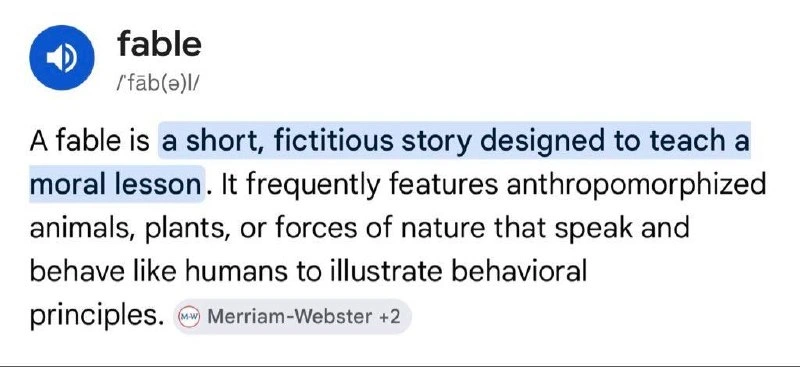
"I DON'T ALWAYS DO AGILE / BUT WHEN I DO, I DO IT LIKE WATERFALL"

The Most Interesting Man in the World — Dos Equis' grey-bearded aristocrat of confidence, green bottle at his elbow — delivers what is essentially a one-line postmortem of two decades of enterprise methodology adoption. The format matters: this meme template is reserved for statements made with total unearned swagger, which is precisely the energy of an organization announcing its "Agile transformation" while handing engineering a fixed-scope, fixed-deadline, fully pre-planned delivery schedule.

The anti-pattern has a name in the trade: Water-Scrum-Fall (or its cousin, ScrumBut — "we do Scrum, but..."). The mechanics are depressingly consistent. Requirements are gathered and frozen upfront by one group (waterfall phase one), a budget and end date are committed to executives (waterfall phase two), and then the development middle is chopped into two-week "sprints" — sprints that cannot change scope, cannot reprioritize, and whose retrospectives produce action items nobody is empowered to act on. The team performs the ceremonies — standups, story points, a board with swimlanes — while the actual control structure remains a Gantt chart in a steering-committee deck. Agile theater: all of the meetings, none of the feedback loops.

Why does this happen to smart organizations, repeatedly? Because the parts of Agile that are easy to adopt are the rituals, and the parts that deliver the value are the power transfers. Real iterative development requires letting evidence change the plan — which means admitting the original promise to the CFO was a guess. Most corporate incentive structures punish that admission harder than they punish a death-march project that fails "on schedule." So the org keeps the date, keeps the scope, adds the standups, and calls it transformation. The bitter punchline of the original waterfall story makes it richer: Winston Royce's 1970 paper that gave us the waterfall diagram presented the single-pass version as risky and invitating failure — the industry adopted the picture and skipped the warning, then spent thirty years re-discovering iteration and branding it Agile, then promptly waterfall-ized that too. The snake eats its own backlog.

The channel's caption — "Ask you PM on daily standup why this can be funny" — is its own trap, of course. If you have to ask, the standup is fifteen people giving status reports to a manager, which answers the question.

Description

This meme features 'The Most Interesting Man in the World,' a well-known internet meme format. The image shows a suave, gray-haired man in a black jacket, sitting at a table with a bottle of beer. The text, in a bold, white, impact font, is overlaid on the image, following the classic format. The top line reads, 'I DON'T ALWAYS DO AGILE,' and the bottom line concludes, 'BUT WHEN I DO, I DO IT LIKE WATERFALL.' The joke critiques a common dysfunction in the software industry where companies adopt the terminology and ceremonies of the Agile methodology (like sprints and stand-ups) but fail to embrace its core iterative and flexible principles. Instead, they continue to operate with a rigid, linear, and sequential mindset characteristic of the Waterfall model. This hybrid, often called 'Wagile' or 'Scrumfall,' is a source of frustration for many developers as it often combines the overhead of Agile with the inflexibility of Waterfall
Comments

8
Anonymous ★ Top Pick Our company does 'Agile.' We have a two-week sprint to build a detailed Gantt chart for the next six months of fixed-scope deliverables
  1. Anonymous ★ Top Pick

    Our company does 'Agile.' We have a two-week sprint to build a detailed Gantt chart for the next six months of fixed-scope deliverables

  2. Anonymous

    We’re so “Agile” we chopped the 18-month Waterfall roadmap into 36 sprints, ship once at the end, and call the post-mortem a retrospective

  3. Anonymous

    We renamed our sprints to "iterations" because calling them "waterfalls" would've been too honest about our six-month release cycles with fixed scope and change control boards

  4. Anonymous

    We're fully Agile: the requirements are frozen, the deadline is fixed, and the retrospective is scheduled for 2027

  5. Anonymous

    Ah yes, the classic 'Agile' implementation where you have six-month sprints, requirements locked down before sprint zero, a 200-page design document that must be approved by seven committees, and daily standups that somehow last 90 minutes. It's like watching someone insist they're doing microservices while deploying a single 50GB JAR file - technically you're using the buzzwords, but the spirit of the thing has left the building faster than developers after a Friday 4pm 'quick sync' meeting invite

  6. Anonymous

    Our “Agile” is Waterfall in a Scrum hat - phase gates renamed ceremonies, a Gantt chart stuffed into Jira, and integration deferred to “the last sprint.”

  7. Anonymous

    Enterprise Agile: Waterfall with standups, story points, and a retrospective to blame the velocity chart

  8. Anonymous

    Enterprise Agile: rename phases to sprints, move MS Project into Jira, keep stage gates - our burndown is just the Gantt chart rotated 90 degrees

Use J and K for navigation