Skip to content
DevMeme
5707 of 7435
AI Family Dinner: A Cautionary Tale of Overfitting
AI ML Post #6258, on Sep 22, 2024 in TG

AI Family Dinner: A Cautionary Tale of Overfitting

Why is this AI ML meme funny?

Level 1: Not Everything is a Cabbage

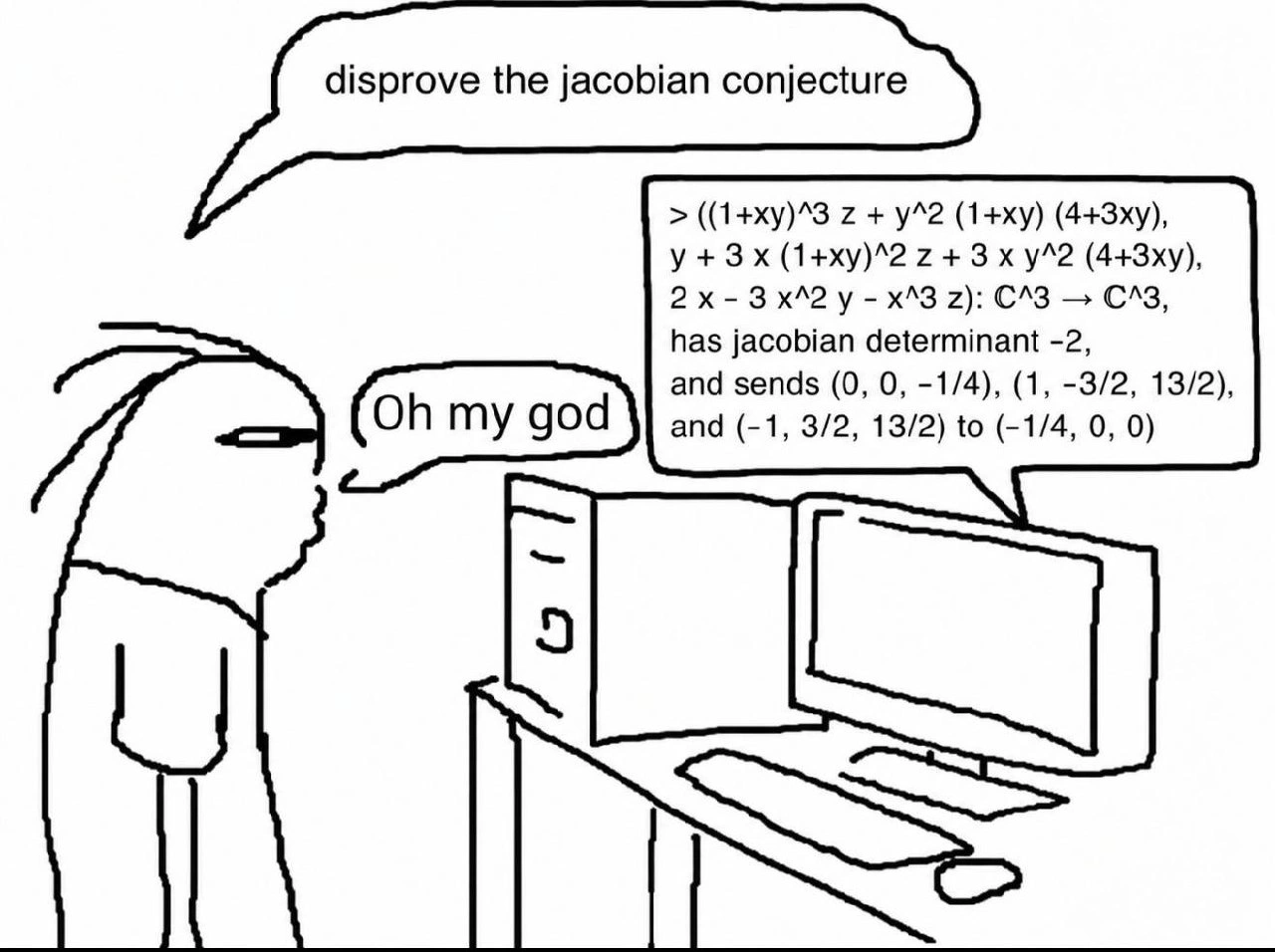
Imagine you have a friend who only ever ate one thing – let’s say cabbage soup – for every meal. If you showed them a carrot or a piece of pizza, they might frown and say, “Nah, that’s cabbage,” because cabbage is the only thing they know. Silly, right? That’s basically what’s happening in this funny comic! It’s like a dad telling his kid to try different foods so he can grow up big and strong and not end up like Grandpa, who ate only cabbages and now he thinks everything is a cabbage. In the picture, the “food” is actually pictures of meatloaf (a type of food) served on a plate, and the family members are computers (their heads are old TV screens). The dad is saying, “You need to finish your meatloaf dataset,” which is a goofy way of saying “eat your dinner (which is data for the little computer kid) so you can learn new things.” He’s warning the kid, “You don’t want to end up overfitting like Grandpa,” but in super simple terms, it’s just “don’t be like Grandpa who is stuck only knowing one thing.”

Grandpa is shown in a rocking chair saying “That’s a cabbage. That’s a cabbage. That’s a cabbage.” It’s funny because Grandpa clearly isn’t looking at cabbages – he’s just calling everything cabbage! It’s as if Grandpa only ever learned about cabbages, so now no matter what you show him, he yells out “cabbage!” The dad doesn’t want that for his son. He wants the kid to try meatloaf too (learn about different stuff) so the kid will know the difference between meatloaf, cabbage, and other things.

So, at its heart, this cartoon joke is like a parent telling a child to try a variety of foods, but it’s comparing that to a computer learning from a variety of pictures. It’s funny and cute because it mixes something very ordinary (a family dinner and a kid being picky about food) with something very techy (teaching an AI with data). Even if you don’t know anything about computers, you can giggle at Grandpa who’s so mixed-up that he calls a meatloaf a cabbage. And you understand the dad is just trying to help the kid not make the same silly mistake by being open-minded and well-fed. In short, the joke is saying: if you only ever learn or experience one thing, you’ll think everything is that one thing (which is pretty ridiculous – not everything is a cabbage!). So, you have to “eat your data” (learn new things) to grow smarter. It’s a playful way to show why learning from different experiences (or different examples, in computer terms) is important – told as if it were advice at the dinner table.

Level 2: Why Variety Prevents “Cabbage” Catastrophes

Let’s break down the technical lingo and imagery in simpler terms. This comic uses a family meal as an analogy for how an AI learns from data. In machine learning, a dataset is a collection of samples or examples we use to train a model. Here, the “samples” are represented by two photographs of meatloaf on the child’s plate. The child (with a computer monitor for a head) is essentially an AI model in training who’s supposed to “consume” those samples. Dad says, “You’ve hardly touched your meatloaf dataset!” In plain language, that means the kid hasn’t been training on the new data that’s been given to him. The father wants the young model to use more data so that it learns better. This is just like a real parent encouraging a child to eat a variety of foods to get nutrients – except here the nutrients are information from data.

Now, the father calls himself a “95%-accurate classifier.” A classifier is a type of machine learning model that categorizes things. For example, a classifier might look at a photo and decide if it’s a picture of a cat, a dog, or a cabbage. If he’s 95% accurate, that means when you give Dad-model 100 new pictures to classify, he’ll get about 95 of them correct. That’s a pretty good score in many AI tasks! He’s basically saying, “I’m a well-trained model, son.” This number (95%) is a result of model evaluation on a test set – a way to measure how good the model is on data it hasn’t seen before. By bragging about accuracy, Dad is implying he has generalized well beyond his training data (unlike poor Grandpa). It’s a boastful way of saying he’s a high-performing model, the pride of the family. In real life, data scientists use metrics like accuracy to evaluate models, and a 95% accuracy is something to be proud of (depending on the problem). The comic plays with that by turning it into a familial achievement, like a parent saying “I got straight A’s in school, you know.”

The core concept Dad is teaching is about overfitting. Overfitting happens when a model learns the training data too well – including all the random quirks or biases in it – and therefore doesn’t work well on new data. It’s like if you only ever practiced one type of math problem, you might memorize how to do those exact ones but struggle with a slightly different problem in the exam. In the comic, Grandpa is the embodiment of an overfitted model. We see in the last panel that Grandpa (another monitor-headed character in a rocking chair) keeps saying “That’s a cabbage. That’s a cabbage. That’s a cabbage.” Why cabbage? Well, imagine Grandpa’s “training data” in his younger days only had pictures of cabbages. If all he saw were cabbages, he’d get really good at identifying cabbages – maybe too good. Now if you show him anything else (be it a meatloaf, a carrot, or even a television), he still calls it a cabbage because his model never learned what other things are. He has essentially one label for everything. It’s funny and absurd – Grandpa sees the world and no matter what the question is, his answer is “cabbage!” In machine learning terms, Grandpa’s model has high bias (stuck on one idea) and zero flexibility, or perhaps extremely high variance because he never had enough data to form a general rule. In everyday terms: Grandpa never tried other foods or other data, so now he thinks everything tastes or looks like that one thing he knows.

The father is trying to prevent the child from going down that route. “You don’t want to end up overfitting like Grandpa, do you?” translates to “you don’t want to be so narrowly trained that you can’t cope with anything new.” This is a common piece of advice in ML (and a common pitfall for beginners): if you train on too little data or too narrow a slice, your model might seem to do well on that limited set but will fail in the real world. That’s why the dad says “you’ve got to try new data!” He’s essentially prescribing a more diverse training set. In practice, if we were building a classifier and we notice it’s calling everything the same (like always predicting “cabbage”), we’d go “Uh oh, we overfitted or we have a bias in our training data.” The remedy often is: gather more data, augment the data, or introduce different examples so the model can learn the true differences between classes. The comic nails this idea by likening new data to new food on a plate.

Let’s connect the dots with the help of a quick analogy table, comparing what the comic shows and the actual ML concept behind it:

Family Dinner Scenario ML Training Equivalent
Kid has to eat all his meatloaf (varied food). Model needs to train on the full dataset (varied data points).
Dad boasts about being strong with a balanced diet. Dad (model) boasts a 95% accuracy, thanks to training on diverse data and good model evaluation.
“Don’t be like Grandpa who ate only cabbage.” “Don’t be an overfitted model trained on one type of data (one class) or you’ll call everything cabbage!”

In simpler terms, the meatloaf dataset is part of a healthy data diet – perhaps the kid model has mostly seen veggies (cabbages) so far, and Dad is encouraging him to also learn from meatloaf, i.e., incorporate new classes or examples (maybe images of meatloaf) into his knowledge. TrainingDataBias is when your training data isn’t representative of the real world. Grandpa’s training data was all cabbage, so he’s heavily biased toward thinking “cabbage” is the answer to everything. The father doesn’t want the son to have that kind of tunnel vision.

Another detail: the father reading “AI NEWS” in panel 1 is a fun nod that he’s an AI who stays updated – likely implying he’s incorporating the latest data or techniques (which could be why he’s a high-performing 95% model). It’s a small joke for those in the know: staying current with AI research (reading AI news) is akin to a model updating its parameters or learning continuously from new data. Meanwhile, Grandpa in his rocking chair likely represents an old static model that hasn’t updated in ages (no new data since the old days, hence mentally stuck on cabbage).

For a junior developer or someone new to data science, the big takeaway from the comic’s technical side is: variety in training data is crucial, and overfitting is a trap to avoid. The meme humorously personifies this lesson. It’s normal in the ML world to caution, “Don’t test on your training data only” and “Make sure to get more data if your model is overfitting.” Here, those warnings come out as a father’s loving-yet-firm advice at dinner. It’s both cute and educational: you can almost hear a kindly ML engineer reminding, “Hey, try feeding your model more examples, or else it’ll end up like that one old project that thought every input was the same.” The AI_ML concepts of model training, accuracy, and overfitting have been translated into something as relatable as a kid refusing to eat dinner – making the complex ideas accessible and memorable.

Level 3: Balanced Data Diet at the Dinner Table

For experienced developers and data scientists, this meme hits a sweet spot by blending a classic family dinner scenario with ML model training wisdom. We have a family of CRT monitor-headed characters – a playful representation of an “AI family” – where the roles of parent, child, and grandparent are analogized to machine learning models of different generations. The father figure reading an “AI NEWS” newspaper is the seasoned senior model who keeps up with the latest algorithms (a witty detail: even at the breakfast table, he’s perusing AI news, showing he’s the classic tech dad staying cutting-edge). He proudly boasts about being a “95%-accurate classifier”, which is humorously akin to a dad bragging about his achievements to his kid (“When I was your age, I had to classify uphill both ways...”). In the tech world, a model that’s 95% accurate is pretty respectable – it suggests he’s a well-trained classifier that likely performs well on a test set. This is the “like your old man” brag: instead of bench-press or old sports trophies, an AI-dad flexes with performance metrics! It’s funny because data scientists and ML engineers often do take pride in their model’s accuracy scores (we’ve all heard someone tout “We got our model to 95%!” in a meeting). Here that professional pride is transposed into a domestic scene, making the absurdity apparent – a dad flexing accuracy to inspire his kid.

The child in the first panel has two photos of meatloaf on his plate, which are literally pieces of data served for dinner. This visual is pure gold for anyone in MachineLearning: we often talk about feeding data to our models, and the cartoon makes that phrase literal. The kid has “hardly touched his meatloaf dataset,” the dad observes. This is exactly like a real parent saying a kid hasn’t touched their veggies – the humor is that in this AI family, training data = food. The dad is basically saying, “How do you expect to learn (grow into a high-accuracy model) if you don’t consume your training data?” Seasoned ML folks recognize the scenario: a model or junior data scientist might be picky or neglectful about using all the data, perhaps focusing too narrowly. The father implies that to reach 95% accuracy, the young model must ingest a variety of examples (“try new data!” he says while flexing a monitor-arm muscle in panel 2). This plays on the idea of a balanced training set being like a balanced diet. A senior engineer might chuckle here, recalling countless times they’ve advised juniors to gather more data or not to ignore parts of the dataset. It’s a common refrain in real projects: “We need more data from different sources; you can’t just train on one type!” – said less cutely than in the comic, but essentially the same wisdom.

Then comes the warning in panel 3: “You don’t want to end up overfitting like Grandpa, do you?” Now, overfitting is a notorious concept in the field – it’s when a model performs well on training data but fails to generalize, often because it has essentially memorized the training set. The father figure here uses Grandpa as a cautionary tale, much like a parent might warn, “If you don’t eat right, you’ll end up weak and tired like old Grandpa.” But instead of physical frailty, Grandpa has model frailty: he’s so overfitted that he misidentifies everything. In panel 4, we see the Grandpa monitor in a rocking chair, muttering “That’s a cabbage. That’s a cabbage. That’s a cabbage.” This image cracks up anyone who has struggled with a stubborn model. It’s exaggerating the outcome of severe overfitting or possibly severe training data bias – Grandpa’s model has essentially one output for any input. This is a classic failure mode: imagine an image classifier that only ever saw pictures of cabbages during training. Of course, when you show it a picture of meatloaf (or anything else), it confidently declares it a cabbage, because that’s all it knows. It’s both a tech joke and an age joke rolled into one: in real life, we might joke that Grandpa calls every new gadget a “phone” or every new music genre “noise” because he’s from a different era. In the ML analogy, Grandpa is an old model stuck in its ways, perhaps never updated with new training data since the Cold War! The phrase “grandpa-level overfitting” encapsulates the idea of an outdated system that never learned to generalize beyond its limited early diet of data. It’s humor with a hint of truth – legacy models (or legacy developers set in old habits) can indeed be woefully miscalibrated to modern data if they never adapt.

This multi-panel joke also satirizes model evaluation attitudes across “generations” of AI. The father’s 95% accuracy claim suggests he values proper evaluation (maybe he’s referring to a validation set score, which a senior would insist on). Meanwhile, Grandpa might boast he was 100% accurate in his day – but only because, perhaps, nobody tested him on anything but cabbage. It’s a nod to how sometimes people (or poorly designed models) fool themselves with training performance. Seasoned data scientists have seen “grandpa” models in the wild: those classifiers that performed perfectly on old, narrow benchmarks but fall apart in real world scenarios. The comic gets an extra knowing chuckle here – it’s AI-humor highlighting that an algorithm is only as good as the data it’s trained on. We see the father literally encouraging exploration: “you’ve got to try new data!” This line resonates with anyone who’s ever done model training and realized they need more variety. It’s essentially parenting through an ML lens: expose the young model to new experiences so it grows robust, or else it’ll inherit the bias of the old generation.

Another subtle detail is the environment: the retro yellow wallpaper and CRT heads give a Tech Historian vibe, subtly implying that even though this family is composed of computers, they’re an old-school household. That makes Grandpa’s stuck-in-a-loop behavior even more fitting – he might literally be running on old hardware or algorithms (maybe a vintage expert system that only knew about cabbages!). The father, though old-fashioned in style (suspenders and newspaper), clearly stays current through “AI News,” suggesting he updated his training over time. There’s a hint of legacy vs modern AI here: Grandpa could represent early AI approaches that were brittle and easily overfit (like old decision trees or memorization-based systems), whereas Dad represents more recent machine learning models that emphasize generalization (95% accuracy implies he’s been through cross-validation and avoided overfitting). The child, presumably, is a new model in training, and Dad is trying to impart the hard-earned lessons of ML: use a diverse dataset, don’t be a one-label wonder, and keep learning – basically continuous learning as a family value.

All these layers land well with an experienced developer audience. We’ve all been both the child model (starting out, maybe underestimating the importance of more data) and the parent model (reminding others to not cherry-pick or get lazy with datasets). And we’ve certainly all dealt with at least one “Grandpa” in our careers: a piece of code or model that someone refuses to update, which now incorrectly assumes everything is the one scenario it was built for. The shared trauma of debugging models that shout one thing for every input (“everything’s a nail to this hammer!” or “That’s a cabbage!”) makes this scenario DataScienceHumor gold. It’s essentially using family dinner table logic to encapsulate best practices in ML. The senior perspective appreciates how on-point the analogy is – a balanced data diet really does lead to a healthier model, just like a balanced food diet leads to a healthier human. And the comic delivers that message in the form of a dad joke (literally a dad’s advice), which is the perfect vessel for an AI joke among devs.

Level 4: No Free Meatloaf Theorem

At the most theoretical level, this comic riffs on fundamental machine learning principles like generalization and the dangers of overfitting. In machine learning theory, a model’s goal is to capture the true underlying patterns in data rather than just memorizing the training examples. This is often formalized through the lens of the bias-variance tradeoff and concepts like VC dimension (a measure of model complexity) or the ominously named No Free Lunch Theorem. That theorem essentially states that no one model works best for every dataset – in other words, if you train an algorithm on a very narrow or unvarying dataset (only one “dish”), it won’t magically perform well on a broad range of new data. The dad in the comic is hinting at this truth: you can’t get something (robust 95% accuracy) for nothing (without diverse training data) – there’s literally no free lunch in ML, or in this case, no free meatloaf.

From a mathematical perspective, overfitting occurs when a model’s complexity is too high relative to the information in the training data. The model then begins memorizing noise or incidental details instead of learning the general rule. Imagine a classifier with millions of parameters trained on just a few family recipes – it could achieve near-perfect accuracy on those known recipes (like grandpa’s 100% identification of cabbage when all he’s ever seen is cabbage) but utterly fail on any new dish. This resonates with the comic’s grandpa character, who is effectively a degenerate classifier: his output function Grandpa(x) = "cabbage" likely had zero error on the training set he was exposed to (perhaps he grew up on a cabbage farm of data!), but his generalization error is huge – he calls everything cabbage, misclassifying meatloaf or anything else put in front of him.

In academic ML terms, Grandpa’s condition is like an extreme case of a model with high variance and zero regularization. He has effectively memorized one label. Such a model has a trivial decision boundary (or no meaningful boundary at all – it’s as if his decision function doesn’t even look at the input features!). This tickles seasoned ML researchers because it’s a comical personification of a common overfitting scenario: a classifier that has effectively become a constant function, outputting the dominant training class regardless of input. The father’s advice – “try new data” – aligns with textbook solutions to overfitting: increase the training set size, broaden the domain, or introduce regularization so the model can’t cling to one narrow solution. In fact, adding more diverse data is one of the simplest, most powerful ways to improve a model’s generalization performance. It’s as if the dad is enforcing a kind of informal regularization via diet, making sure the young model (his son) sees enough variety (meatloaf tonight, maybe broccoli dataset tomorrow) to avoid the fate of grandpa’s one-track cabbage classifier mind.

Under the hood, the 95% accuracy the father touts suggests a model that likely balanced bias and variance well – perhaps through cross-validation or careful tuning – since it’s high but not a suspicious 100%. This implies the father-model left some capacity to generalize to unseen evaluation data. Meanwhile, Grandpa’s repetitive “That’s a cabbage” mantra is a cautionary echo of what happens if you over-optimize on training data alone: you might end up with a model that performs perfectly on what it’s seen (cabbage) but is hilariously wrong elsewhere. The humor at this deep level comes from recognizing these core ML constraints – the comic distills complex ideas (like the need for diverse, representative data distributions and the perils of high-variance learners) into a homey dinner-table scene. Even the phrase “meatloaf dataset” and the notion of “finishing it” evokes the concept of complete training: you can’t skip out on parts of the data or your model’s “diet” will be imbalanced, much like a child who only eats candy and ends up malnourished in knowledge. It’s a clever nod that behind this silly family tableau lies the unyielding truth of machine learning theory: a well-fed model (with varied data) is a healthy model, and there are no shortcuts – not even Grandpa’s decades of “experience” can defy the math if all he ever consumed was one type of data.

Description

A four-panel comic by 'THEJENKINSCOMIC' depicting a family of anthropomorphic computers. In the first panel, a parent figure with a monitor for a head reads a newspaper titled 'AI NEWS' at a dinner table, asking their child, 'What's the matter, boy? You've hardly touched your meatloaf dataset!'. The child, also a computer, looks at a plate with various images of meatloaf. In the second panel, the parent advises, 'If you want to be a 95%-accurate classifier like your old man, you've got to try new data!'. The third panel continues with the parent warning, 'You don't want to end up overfitting like Grandpa, do you?'. The final panel shows an elderly computer character in a rocking chair, looking around a living room and repeatedly saying in a speech bubble, 'That's a cabbage That's a cabbage That's a cabbage', implying he is misclassifying everything. This comic serves as a clever allegory for the machine learning concept of overfitting, where a model is trained too well on a specific dataset and loses its ability to generalize to new, unseen data, leading to inaccurate predictions

Comments

7
Anonymous ★ Top Pick Some models are overfitted on their training data. Others are overfitted on Stack Overflow answers from 2012 and will insist on using jQuery for everything
  1. Anonymous ★ Top Pick

    Some models are overfitted on their training data. Others are overfitted on Stack Overflow answers from 2012 and will insist on using jQuery for everything

  2. Anonymous

    Why budget for fresh training samples when marketing can just rename meatloaf to ‘cabbage-as-a-service’ and call it zero-shot domain adaptation?

  3. Anonymous

    The real tragedy isn't Grandpa calling everything a cabbage - it's that he probably achieved 99.9% accuracy on the validation set of his 1987 vegetable dataset and management still considers him the gold standard for production deployment

  4. Anonymous

    Every ML engineer has met that 'Grandpa model' in production - trained exclusively on last quarter's data, now confidently classifying every edge case as the one thing it knows. The real tragedy isn't the 95% accuracy on training data; it's watching it achieve 12% on anything that doesn't look exactly like meatloaf. Remember: your model's confidence interval and your stakeholder's expectations have an inverse relationship

  5. Anonymous

    Grandpa's model: 100% cabbage accuracy on train, zero transfer to prod meatloaf - classic overfitting inheritance

  6. Anonymous

    Ship the meatloaf-trained classifier if you want Grandpa’s KPI - 100% precision on the kitchen table, 0% recall in produce

  7. Anonymous

    Every family boasts 95% accuracy until Grandpa ships a constant function to production and spends retirement confidently labeling the entire world “cabbage.”

Use J and K for navigation