The Seductive Path of Writing a Custom ORM
Why is this Dependencies meme funny?
Level 1: Candy Over Medicine
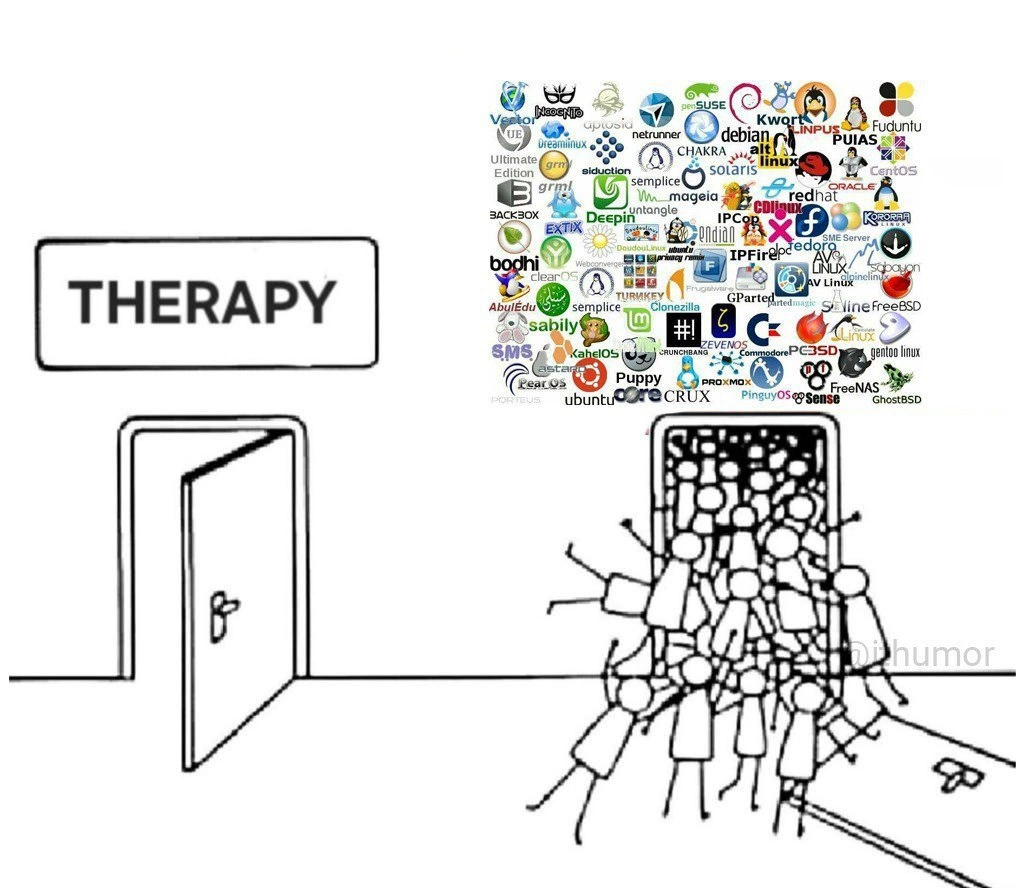
Imagine you have two doors in front of you. One door leads to something healthy but maybe not so fun – like going to the doctor or talking about your feelings (that’s like the therapy door). The other door leads to something exciting and enjoyable for you – let’s say it’s a room full of all your favorite toys and games (in the meme, this fun door is full of Linux logos, which for tech folks are like favorite toys 🧩). Now, even though you might really need the doctor or the help (maybe you have a tummy ache or you’re feeling sad), you see all your friends rushing into the fun room with toys and candy. They’re yelling and laughing, having a grand time. The doctor’s room is open and empty, and no one’s going in. It’s easy to guess which door most people (especially kids… or developers!) want to run into, right? Everyone piles into the fun door, completely ignoring the doctor door.
This is funny because it’s a lot like real life, just exaggerated. Often, when we have a problem that’s hard or uncomfortable to fix (like feeling stressed or sick), we avoid it and do something entertaining instead. It’s like when a kid should take medicine or see a dentist, but they’d rather argue with their friends about the best video game or eat another piece of candy to feel better momentarily. We know deep down the medicine or doctor would actually help fix the real issue, but the candy and games are so much more tempting right now. In the picture, “therapy” is like the medicine — it could really help if someone’s feeling burned out or sad — and “arguing over Linux distros” is like the candy — it’s the fun, absorbing activity that’s used as an excuse or escape. The joke is showing this very clearly: the helpful door is empty (nobody wants the serious solution) and the fun-but-not-really-solving-anything door is overloaded (everyone wants the quick thrill). We laugh because we recognize ourselves in it a bit: it’s pointing out in a lighthearted way how people often choose the easy or fun thing over the important thing, even when the important thing is right there waiting. It’s like seeing a bunch of kids cram into a candy store while the free health clinic next door is deserted — a silly scene that makes you chuckle and think, “Yep, that figures!”
Level 2: Distro-Hopping Detour
Let’s break down the scene and the joke in simpler terms. The meme shows a simple drawing with two doorways side by side. The door on the left has a big sign that says “THERAPY” over it. That door is open wide, inviting, but notably no one is going through it. The door on the right, in contrast, doesn’t have a normal sign with text – instead, it’s hilariously covered with a huge collage of Linux and BSD distribution logos. Think of logos like Ubuntu’s orange circle, the Arch Linux blue swoosh, Debian’s spiral, Fedora’s “f” swirl, the Gentoo “G” stone, the dragon mascot of FreeBSD, and dozens more all jumbled together. This cloud of icons is effectively labeling that doorway as “the Linux/Unix distro door.” Now, here’s the funny bit: that right-hand door frame is so overcrowded with little stick-figure people that it’s absolute chaos. There’s a swarm of developers (represented as stick figures) who are squeezing, shoving, and piling over each other to get in through the distro door. Some are literally falling over because it’s jam-packed. Meanwhile, the left door to therapy is wide open and completely empty. Not a soul. The stark contrast is both amusing and telling.
So what’s it trying to say? The meme is highlighting a common trope in the tech world: developers will eagerly skip doing something healthy (like therapy or addressing their mental well-being) and instead dive into something nerdy and familiar (like arguing about or trying out yet another Linux distribution). In other words, personal MentalHealth gets ignored while the energy is spent on OperatingSystems debates. The left door labeled “Therapy” symbolizes taking care of your mental health – for example, talking to a therapist about stress, anxiety, or burnout. The right door with all those logos symbolizes the almost endless variety of Linux (and Unix-like) operating systems out there, often called distros (short for distributions). The stick figures crowding that door represent developers who are much more interested in tinkering with their systems or joining yet another distro debate than dealing with personal issues. It’s a funny exaggeration of something that does happen: instead of, say, addressing burnout or work-life balance, some devs distract themselves by obsessing over technical preferences.
Let’s unpack a few terms here for clarity. Linux distribution refers to a packaged version of the Linux operating system. Unlike Windows or macOS, which are each controlled by a single company, Linux is open-source and anyone can create their own flavor of it. Think of Linux like a base engine, and a distribution is like a car built around that engine with different features and style. For example, Ubuntu is a popular Linux distro that’s known for being user-friendly and “just works” out of the box. Arch Linux, on the other hand, is a distro known for being minimalist and highly customizable (you more or less build your system from scratch with Arch, which tech enthusiasts enjoy because it gives them ultimate control over how their OS is set up). Fedora is another distro, often used by those who like having the latest software; it’s kind of a testing ground for new Linux tech. Debian is a very stable, conservative distro – it emphasizes reliability over cutting-edge, and in fact Ubuntu is based off Debian. Gentoo is an example of a hardcore distro where you even compile all your software from source code for maximum optimization – it’s like the extreme sport of Linux usage. There are many others (SUSE, Mint, Elementary, Pop!_OS, etc.), plus the meme even shows some BSD logos (like FreeBSD, which is actually not Linux but a different Unix-like OS). The presence of both Linux and BSD logos in that door sign basically covers the whole UnixCulture universe – it implies “every possible nerdy OS variant you can think of is through this door.”
Now, distro-hopping is a term used in the Linux community to describe when someone frequently switches their Linux distribution. It’s like they can’t settle on one – they install Ubuntu one week, then get curious and install Manjaro the next, then maybe try Fedora after that, and so on. Why do people do this? Often it’s out of curiosity and the constant hope that maybe the next distro will be even better for their needs or more satisfying to use. There’s a bit of a running joke that some folks spend more time installing and configuring operating systems than actually using them for productive work. This habit can become a form of escapism – focusing on the “fun” challenge of setting up a new system instead of maybe dealing with something else they’re avoiding. In a similar vein, developers love to tweak their setup with configuration files, often called dotfiles (because the filenames start with a dot, e.g., ~/.bashrc or ~/.vimrc). Tweaking dotfiles can change how your terminal looks or how your editor behaves – it’s a very absorbing hobby for some. Tweaking and tuning the OS environment can feel rewarding (you get a personalized, slick setup out of it), and it’s a common part of DeveloperExperience_DX culture – having a dev environment that fits you like a glove. But it’s easy to use these tweaks and endless customizations as a distraction. For example, if a developer is feeling frustrated with a project or with life, they might decide “I’ll blow away my setup and try a new distro, that will be a nice refresh!” – which is fun and gives a temporary sense of accomplishment, but it doesn’t really solve the original frustration.
The mental health angle here is important. In the tech industry, topics like burnout, anxiety, and stress are increasingly being talked about under the umbrella of MentalHealthInTech, but historically, a lot of developers didn’t really address these issues openly. The meme uses the empty therapy door to represent that: seeking therapy (or any kind of help for stress and emotional struggles) is something many should do but often don’t. Therapy can be uncomfortable or have a stigma, whereas arguing about which Linux distro is best is comfortable within the tech community – it’s almost a badge of honor to have strong opinions on these things. The joke exaggerates it: obviously not every developer literally skips therapy to debate Ubuntu vs Arch, but it’s making a point about priorities. We’ve seen situations where, say, a dev team might neglect work-life balance or personal well-being, yet spend hours bike-shedding (that means arguing endlessly over minor details) about whether to use this tool or that tool. It’s easier to focus on a technical problem than a personal one.
This meme also taps into meme culture within tech. The imagery of one door being ignored and the other overcrowded is a popular format used to compare “what people should do vs what people actually do.” It’s funny because it’s true: humans often chase quick fixes or engaging distractions over difficult, important tasks. In everyday tech meme terms, it’s like those jokes about “I’ll refactor the entire project at 3 AM instead of getting 8 hours of sleep.” Here the humor specifically targets the therapy vs distro choice scenario, which is very niche to developer life. But you don’t have to know all the specific logos to get it – you can see those are tech logos, and you see a crowd. Essentially, it says: developers will crowd into anything tech-branded (even if it’s chaotic), and avoid the clearly beneficial option labeled therapy. That’s the heart of the joke.
To a junior developer or someone new to this: don’t worry if you haven’t experienced this firsthand! It’s not literally saying you must choose between Linux and therapy 😅. It’s using exaggeration to point out a tendency. Many of us in tech find it comforting to solve technical problems – it gives a sense of accomplishment. On the flip side, solving personal problems (like dealing with stress or anxiety) isn’t as straightforward and can feel daunting. So sometimes people procrastinate on the personal stuff by diving into a technical rabbit hole. This meme just uses the LinuxDistributions argument as a perfect example of a technical rabbit hole that can absorb a lot of time and energy. After all, debates about the “best distro” are almost a trope in IT circles – there’s never a truly best one for everyone, but it’s fun to argue and each camp thinks they have the superior setup. It’s an OperatingSystems fandom thing: akin to gamers arguing PlayStation vs Xbox, but here it’s Debian vs Fedora, etc. And indeed, it can get so involved that people treat it like a hobby (or even religion).
In short, this meme is painting a humorous picture of developer experience priorities gone awry: an empty therapy room on one side, and on the other side an overstuffed club meeting where they’re probably yelling “Vi is better!” “No, Emacs forever!” or “BTW, have you tried the new Arch-based distro? It’s life-changing!” The fact that the therapy door is open (meaning help is accessible) yet empty, while the other is overcrowded, drives home the joke. It resonates especially in tech communities where there’s growing awareness that, hey, maybe we should pay as much attention to our mental health as we do to our choice of text editor or OS. The meme delivers that message with a laugh: it’s poking fun at us (“Haha, we really do be like that sometimes”) but also hinting – perhaps unintentionally – that maybe the therapy door doesn’t have to stay empty. But the primary goal here is humor through contrast. Even if you don’t catch every distro logo, the idea is clear and comical: a bunch of nerdy folks swarming the fun tech thing, and not a single one opting for the serious help thing. That’s the distro-hopping detour in action – taking a detour from the tough path (self-care) into the familiar path (tech tinkering and debates).
Level 3: Forking from Feelings
Ironically, arguing over Linux distributions seems to be the geek-approved substitute for actual self-care. In this meme’s stark stick figure door cartoon, a wide-open door labeled THERAPY sits completely empty, while the door on the right – plastered with a chaotic cloud of Linux/BSD logos – is jam-packed with people. The visual punchline: developers will stampede into an overcrowded “Which distro is best?” debate, yet won’t take a single step towards therapy. It’s a perfect satire of our UnixCulture priorities. We have an endless fragmentation of Operating Systems (Ubuntu, Arch, Fedora, Debian, Gentoo, FreeBSD, you name it) each vying for attention, and power users endlessly distro-hopping in search of the perfect environment. The meme exaggerates this phenomenon to highlight a real irony: tweaking your tech stack is much more comforting (and ego-affirming) than dealing with your mental stack. In other words, why unpack your feelings when you can configure yet another window manager?
Seasoned engineers recognize this humor from experience. Picture a grizzled developer at 3 AM: instead of sleeping or reflecting on burnout, they’re sudo-ing their way through a tricky Arch Linux install for the third time this month. We’ve all seen colleagues (or ourselves) obsess over .bashrc and vim color schemes as a form of escapism via custom OS tuning. This meme nails that escapism_via_custom_os — the crowd of devs literally diving headfirst into the overcrowded distro door — while the healthy choice (the therapy door) collects dust. It’s funny because it’s true: in tech circles, there’s almost a MemeCulture rite-of-passage in arguing about LinuxDistributions. Each distro has its die-hard fans and its own “holy war” merits. For example, the collage shows Ubuntu (user-friendly staple), Arch Linux (“I built it my way” bragging rights), Gentoo (compile-everything wizardry for the truly masochistic), Fedora (bleeding-edge adopters), old-school Slackware (Unix purist nostalgia), even a nod to FreeBSD (Linux’s Unix cousin). Every logo is there. These are the banners under which countless forum flame wars and Reddit threads have been fought. The meme piles them on to say: look at the absurd variety we pour our passion into. Each new distro or release is a seductive promise – maybe this one will finally feel just right. Spoiler: there’s always another tweak around the corner.
Why is this so relatable (and hilarious) to seasoned devs? Because chasing the “perfect” setup is an endless loop many of us know too well. It’s a DeveloperExperience (DX) trap: fiddling with configurations provides quick dopamine hits and a sense of control, whereas life’s bigger issues (stress, burnout, imposter syndrome) are messy and have no neat sudo-fix. The meme’s dark comedy comes from that contrast. We recognize that fixing a server bug or upgrading your OS at 2 AM feels easier than fixing your own burnout. There’s a shared understanding that heavy debates on, say, whether systemd is the devil or a savior can distract from confronting personal devils. In the industry, we jokingly call these technical rabbit holes “yak shaving” – doing lots of irrelevant tasks (shaving the yak) to avoid the real, hairy problem. Here the yak is our mental health, and we’re busy shaving it by reinstalling Linux for the umpteenth time. The MentalHealth subtext isn’t even that sub–tle: Perhaps closing bugs is easier than opening up about feelings.
The meme also touches on the age-old “holy war” pattern among engineers. Fighting over the best distro is like the OS version of the vi vs Emacs editor wars – endless, passionate, and largely unwinnable. It’s humorously depicted by the overcrowded_distro_fans jam: dozens of stick figures squeezing into a single door frame, some even trampled, symbolizing how ridiculously over-subscribed these arguments are. Meanwhile, the therapy door (the rational solution to developer anxiety or exhaustion) stands wide open with zero takers. This imbalance highlights a truth: tech folks often pride themselves on being rational problem-solvers, yet we can be irrational about our own well-being. We’ll eagerly troubleshoot a kernel panic but panic at the thought of a therapy session. The seasoned perspective here is a mix of knowing chuckle and weary sigh – we recognize the therapy_vs_distro_choice situation as a coping mechanism. It’s the operational irony where we keep patching and upgrading things in our computers (chasing that “stable release” of a flawless dev environment) instead of doing a root cause analysis on our personal issues. Just like a team might endlessly apply hotfixes to a buggy system without ever addressing the flawed architecture, developers might install yet another OS hoping to feel renewed, rather than address why they felt frustrated or stuck to begin with. MentalHealthInTech has historically been an overlooked topic; for a long time, the culture rewarded all-nighters and sysadmin heroics but stayed quiet about therapy or burnout. That’s changing slowly, but memes like this poke fun at the old habit of seeking solace in code and configs.
In summary, the humor lands because it exposes a collective quirk: many developers would rather engage in a UnixCulture flame war or customize a prompt for hours than tackle emotional burdens. It’s a gentle roast of our priorities. The OperatingSystems argument door offers an endless puzzle we know how to solve (or at least argue about), giving us that illusion of progress. The therapy door represents introspection and vulnerability, which—let’s face it—often has a much higher activation energy for folks who are used to solving problems in logical, controlled ways. The cynical reality (which the veteran in us half-laughs, half-cringes at) is that diving into yet another distro is procrastination with a purpose. It feels productive, it’s socially validated in our circles (“Haha, you run Arch? You must be elite!”), and it avoids the discomfort of real self-improvement work. The escapism is nearly poetic. As a battle-scarred engineer might quip, “my code runs on Linux, but my problems run from therapy.” We laugh, a bit sadly, because we’ve been there. And maybe, just maybe, some part of us knows that no matter how many times we apt-get our way to a new setup, we can’t apt-get install happiness. In code form, it’s something like:
while (mentalHealth.isNeglected()) {
installNewDistro();
tweakDotfiles();
// ... underlying issues persist, so the loop continues
if (decideToSeekHelp) {
break; // (unreachable?) finally exiting the cycle
}
}
This pseudo-code loop captures the joke: as long as personal issues are ignored, the developer keeps cycling through distro-hopping and .config tweaking. The condition to actually seek help is treated as an unlikely break in the loop. It’s a tongue-in-cheek way of saying we often don’t call the therapy() function until things really crash. The meme’s dark punchline is clear: we’ve got an infinite for loop of avoidance running, and the exit condition (stepping into that empty therapy room) barely ever gets triggered. It’s funny, it’s a bit tragic, and it absolutely resonates with anyone who’s found themselves reinstalling an OS at dawn thinking “this will fix something, right?” News flash: customizing your kernel parameters won’t resolve emotional overload. But that’s exactly why this meme is great – it uses our own tech obsessions to reflect a truth back at us. We laugh because it’s easier than crying… or, you know, going through that therapy door.
Description
A two-panel meme using the 'For the Better, Right?' format from the Star Wars prequel movies. The top panel features Anakin Skywalker looking earnestly at Padmé Amidala, with the caption: 'I'm writing a custom ORM to reduce the number of dependencies'. Anakin represents an optimistic, perhaps naive, developer embarking on a project with noble intentions. The bottom panel shows Padmé's face, her expression a perfect blend of concern and skepticism, as she replies with the caption: 'To reduce the number of dependencies, right?'. Her look embodies the wisdom of a seasoned senior engineer who has witnessed this exact scenario before and knows the likely outcome. The meme humorously captures the classic developer pitfall of 'reinventing the wheel'. While the goal of reducing dependencies is admirable, writing a custom Object-Relational Mapper (ORM) is a monumental task, often leading to a buggy, incomplete, and high-maintenance piece of software that creates far more problems than the dependency it was meant to replace. It's a joke about the 'Not Invented Here' syndrome and the tendency to underestimate the complexity of established, battle-tested libraries

Comments
41Comment deleted
A custom ORM is the 'hello world' of creating technical debt. It starts with a simple goal and ends with a multi-year project to poorly reimplement a fraction of what SQLAlchemy already does
Sure, your .bashrc has 2,000 lines of hand-tuned aliases, but have you tried a breakpoint in your coping mechanisms?
Every distro swears they've finally solved package management, but they're all here because deep down they know they just created another incompatible format that'll need its own converter tool in six months
After 15 years in the industry, I've realized distro hopping is just dependency injection for your entire operating system - you keep swapping implementations hoping the next one will finally resolve all your architectural regrets, but deep down you know the real issue is your unwillingness to commit to a stable interface
Every time life segfaults, we resolve it by switching package managers - apt to pacman to dnf - the closest thing to incident response for emotions
Incident response, senior edition: instead of therapy, nuke-and-pave to NixOS with flakes, migrate dotfiles, argue systemd vs. OpenRC - and call it a resilience exercise
Therapists unpack childhood trauma; we unpack JAR hell with a perfectly timed Reddit thread
Me, who's using Ubuntu: "You know, I'm something of a therapist myself" Comment deleted
No my favorite distro. Booooooo👎 Comment deleted
Can't tell if this is satire Comment deleted
Joke with a grain of truth Comment deleted
Btw i use NixOS Comment deleted
Based Nix bro Comment deleted
Where's arch? Comment deleted
Those are some vintage logos Comment deleted
That's because the things in the right picture work. With bugs, lags, errors... but they work. And the left one is a pure scam. Comment deleted
that ain't a right or wrong choice, you are just selecting which poison to drink Comment deleted
Every choice depends on your goal. If your goal is simply to waste time and boost your ego, either option works Comment deleted
bold of you to assume I ever had a choice Comment deleted
who hurt you? Comment deleted
No one. Why? Comment deleted
cause that was very weird reaction to a meme Comment deleted
Every meme is just a topic for discussion. That's why we have comments Comment deleted
Prove Comment deleted
hannah montana linux where 😡 Comment deleted
Maybe if therapy didn’t cost a zillion dollars more people (in the US) would go 🤷 Also taking time off to go to therapy is a fireable offense. Not legally, of course, but if you start missing a day a week to get your brain to work right, the boss will find *something* to fire you over. Like a cop taking a car to watch for them not using their turn signal or go over the speed limit or whatever Comment deleted
yeh. went to therapy last week. got myself a diagnosis for transgenderness in 50min and 70€. Austria, baby 😎 (to be fair, I got a surprisingly good deal. normally a session costs 100-120€ and such a diagnosis doesn't always happen within the first session but my point stands: not a zillion dollars) Comment deleted
(not a zillion euro either) Comment deleted
Sure, but that’s still a significant chunk of change, and I don’t know how it works in Austria, but in the US you need regular appointments *and* you still need to be able to pay rent and buy groceries. With zero federally mandated days off per year. When your weekly savings is negative because groceries cost so much, €70 might as well be a zillion. It sucks in the US. I’m genuinely happy for you that €70 isn’t a life ruining amount of money 🤝 Comment deleted
- you don't need to make regular appointments - groceries, while very high compared to the rest of the EU, are still affordable compared to US - depending on circumstances, you can get some money back from your insurance I wish you all the best. living in the US is hard and it's gonna get harder soon 🫂 Comment deleted
(oh yeah and we have strong and large unions, which set very nice minimum wages per-union, sick leave is unlimited as long as you're not obviously abusing it, and you get 2 weeks off per year minimum) Comment deleted
what I'm saying is austria is a good place to immigrate to :P we always need more people, even if … certain politicians don't agree Comment deleted
Ah yeah the sick leave where a gf of me was in terrible shape and she got fired after she ended her sick leave. She is currently fighting with Arbeiter Kammer🗿 Comment deleted
where did she work? Comment deleted
Billa Comment deleted
oh yeah, they try that shit sometimes. she can get some money out of them for unlawfully firing her Comment deleted
Therapy only works for girls Comment deleted
skill issue Comment deleted
gender issue maybe? Comment deleted
something something forcefem the world :P Comment deleted
That’s what she said Comment deleted