Skip to content
DevMeme
2104 of 7435
The Evolution of Ops: From Sysadmin to Evangelist
SystemsAdministration Post #2352, on Nov 23, 2020 in TG

The Evolution of Ops: From Sysadmin to Evangelist

Why is this SystemsAdministration meme funny?

Level 1: The Pilot and the Poser

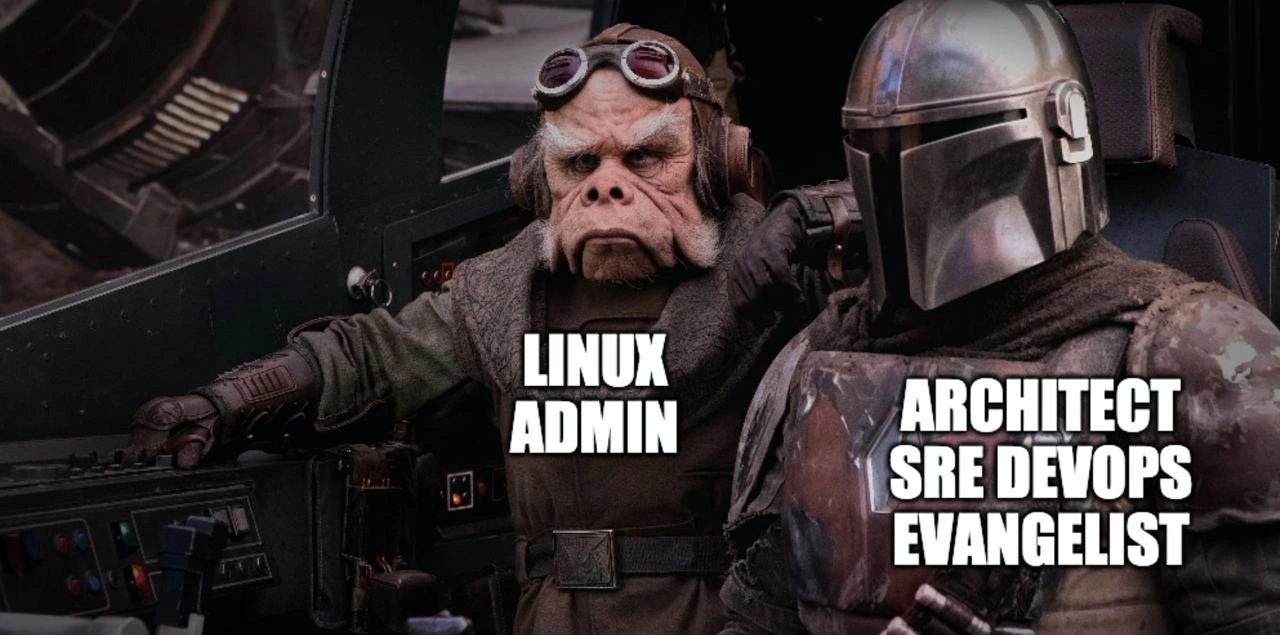
Imagine you and a friend are playing with a spaceship. You’re in the cockpit pushing all the buttons, steering the ship, and making sure it doesn’t crash. You’re the one actually flying the spaceship. Now your friend is standing behind you wearing a shiny space suit and a big helmet. He isn’t touching any controls, but he’s telling all the other kids how he’s the great space captain who planned this whole mission. When the pretend flight goes well, your friend in the shiny outfit smiles and soaks up all the praise, saying, “Yes, I led us through space!” Meanwhile, you’re the one who did all the hard work piloting. Sounds unfair, right? That’s exactly the joke here: the person with the fancy costume and long title is taking credit, while the person pushing the buttons quietly does the real work. It’s funny because we can see who’s actually flying the ship (and it’s not the bragging “captain”!). In simple terms, it’s making fun of how sometimes one person does the work and another person just shows off.

Level 2: Title Inflation 101

Let’s break down the roles and jargon in this meme and why they’re juxtaposed. On the left, we have “Linux Admin” (short for Linux System Administrator). This is a classic IT role. A Linux admin is someone who manages servers that run the Linux operating system. They do things like installing updates, editing configuration files (maybe using vim on /etc/ configs), setting up user accounts, and ensuring the server is up and running. They might use Bash scripts (Bash is the default Linux shell, basically a command-line interface) to automate tasks. If something breaks – say the website goes down – the Linux admin is typically the one who logs in, checks logs (tail -f /var/log/syslog anyone?), restarts services (like sudo systemctl restart nginx), and fixes the issue. It’s a very hands-on job, often involving deep knowledge of how the system works. Think of them as the mechanic of the computer world, keeping the engine running smoothly.

On the right, the meme labels the armored character with “Architect SRE DevOps Evangelist.” That’s a mouthful! Let’s decode it piece by piece:

  • Architect: In tech, an Architect usually means a systems architect or software architect – someone who designs the overall structure of a system. They make high-level decisions about how all the parts of a project or infrastructure fit together. For example, a Cloud Architect might decide “we’ll use these five servers behind a load balancer, with a database cluster for storage, and a CDN for static files.” They create the blueprint, like an architect designing a house, but they might not lay the bricks themselves. In a job title, “Architect” implies a senior position focused on planning and design rather than day-to-day coding or server tweaks.

  • SRE (Site Reliability Engineer): This term comes from Google originally. It’s basically an evolution of the sysadmin role that emphasizes software engineering and automation to manage operations. An SRE’s goal is to keep sites and services reliable. They do a lot of what a traditional ops or sysadmin does (monitor systems, respond to incidents), but they also write code to automate tasks and improve reliability. For example, instead of manually restarting a service every time it crashes, an SRE might write a script or use orchestration tools so it auto-restarts and pages someone only if things really go haywire. SREs introduce concepts like SLOs (Service Level Objectives) and error budgets – basically measuring reliability and deciding how much downtime is acceptable. It’s a specialized role that’s very hands-on but also involves strategic thinking about reliability. Many companies rebranded their ops teams as SRE teams to adopt these principles.

  • DevOps: This one is actually a bit tricky because DevOps isn’t originally a job title – it’s a culture or methodology. The word comes from “Development + Operations”. It emerged around 2009 as a movement to break down the wall between software developers and operations (sysadmins). The idea: instead of developers throwing code “over the wall” to ops to deploy and maintain, the two should work together closely, often even as a single combined team, automating the deployment pipeline (like using CI/CD – Continuous Integration/Continuous Deployment tools). In practice today, many companies do hire “DevOps Engineers”. That usually means someone who knows a bit of both worlds: they can write scripts or code, and also manage infrastructure. They build tools to help with things like automated testing, deployment, monitoring – essentially making it easier and faster to go from code to running application. DevOps culture also emphasizes tools like Docker (containers), Kubernetes (orchestrating lots of containers), and configuration management (like Chef, Puppet, Ansible). So a DevOps Engineer might containerize an app or set up a Jenkins pipeline. But again, originally DevOps was about culture change, not a job title – hence some humor when you see “DevOps” in someone’s formal title, as if one person can be “the DevOps” of the company.

  • Evangelist: In a tech context, an “evangelist” is someone who promotes a technology or practice. For example, large tech companies have “Developer Evangelists” or “Developer Advocates” who go out and speak at conferences, write blog posts, and help people learn their platform. Internally, a DevOps Evangelist would be a person encouraging and spreading DevOps practices within the organization. They might hold workshops, create best practice guides, and basically cheerlead the move to DevOps. The term “evangelist” implies they are champions or advocates, rather than implementers. They’re usually very good communicators and strategists. This role might not involve writing code or configuring servers day-to-day; it’s more about influencing others to adopt a certain approach or toolset.

Now, putting it all together: a job title that reads “Architect SRE DevOps Evangelist” sounds over-the-top because it’s cramming multiple distinct roles into one. If I saw that on someone’s LinkedIn, I’d wonder, are they designing the system (Architect), ensuring reliability (SRE), doing hands-on automation (DevOps Engineer), AND also going around giving pep talks about it (Evangelist)? That’s a lot for one person! More likely, it’s satire – pointing out how companies sometimes list every buzzword in a title to either inflate the role or attract attention. This is what we call title inflation or buzzword stacking. It often happens in job postings: e.g. “Looking for a Rockstar Ninja Guru who is a Scrum Master Agile DevOps CI/CD Cloud Architect.” It can confuse newcomers because the titles become buzzword soup rather than a clear role. In reality, a person with that title might simply be a senior operations manager or lead SRE, but with extra buzzwords tacked on.

In the meme, the Linux admin vs. DevOps evangelist contrast also reflects a bit of a generation gap or culture gap. The Linux admin is representative of the traditional way: one expert logging into servers and tweaking things manually, knowledgeable about the OS (perhaps they can recite Bash one-liners and remember obscure iptables flags). The DevOps/SRE evangelist represents the newer approach: use software and processes to manage a fleet of servers, talk about infrastructure as code, measure reliability, etc., and also the corporate trend of giving people titles that encompass these new ideas. There can be some friction: for instance, an old-school admin might joke that “DevOps is just the latest name for what we’ve been doing all along, but with more YAML.” On the other side, a DevOps proponent might feel that classic sysadmins need to modernize and stop doing things manually. Ideally, in practice, they learn from each other: the sysadmin brings deep system knowledge, the DevOps/SRE brings automation tools and new practices. But the meme is focusing on a comedic worst-case: the “evangelist” just talks and collects kudos, while the admin acts.

For someone early in their career, the key takeaway is: Don’t be intimidated by long titles. Break them down to see what the actual work is. Here, the actual work is systems administration on Linux (that’s what the left character is doing). The fancy title on the right basically includes some management/architecting (big-picture planning), some site reliability engineering (keeping systems stable via engineering), some DevOps (bridging dev and ops with automation), and evangelism (promoting these practices). It’s humorous because it’s unlikely one person can literally do all of that alone – usually it’s a team effort. If you’re looking at this and wondering “what on earth do I call myself if I manage Linux servers and also do some automation?” – well, your title might vary by company. Some will call you Systems Engineer, some DevOps Engineer, some SRE, and smaller companies might still just say SysAdmin. The work might be very similar, but titles can be hype-driven. This meme is a cheeky reminder not to get too caught up in titles and buzzwords – at the end of the day, what matters is who can actually get the job done (keep the ship flying).

Also, notice this scene is from The Mandalorian (a Star Wars series). Using a pop culture reference makes the joke accessible. If you know the show, the little alien on the left (named Kuiil) is known for being a skilled, no-nonsense workforce (he literally says “I have spoken” after he’s done with a task, no discussion). The Mandalorian (Din Djarin) is the titular hero, often getting credit for big deeds. By labeling Kuiil as “Linux Admin,” the meme creator is saying the sysadmin is the real unsung hero doing the technical flying. Labeling Mando as “Architect SRE DevOps Evangelist” implies he’s the face with all the glory and titles. It’s a playful way to depict the hands-on vs. hands-off contrast. For a junior dev or someone new: whenever you hear a bunch of buzzwords in someone’s title, just remember this picture – it might be one person driving and another person with sunglasses on taking the selfie. 😅 (That’s an emoji for a little extra humor, since this is a joke after all).

Level 3: Bash vs Buzzwords

This meme perfectly captures a DevOpsCulture satire: the battle-hardened Linux admin (left, the goggled alien pilot in the cockpit) is furiously flipping switches and pressing buttons – i.e., doing the real work – while the Architect SRE DevOps Evangelist (right, the Mandalorian in shiny armor) rests a hand on his shoulder, basking in glory. It’s a scene dripping with irony that any seasoned ops veteran can appreciate. The Linux sysadmin is essentially the one keeping the ship (or server) afloat, akin to manually editing config files, running sudo commands, and debugging in the trenches. Meanwhile, our multi-titled hero with the fancy buzzwords is posing as if he’s the mastermind, likely spouting phrases about "cloud-native transformation" in meetings or presenting status updates to management.

This highlights a widespread industry pattern often joked about in SysAdminHumor and SREHumor circles: title inflation and buzzword culture. Over the past decade, companies have trended towards giving operations folks ever fancier titles. The humble System Administrator became a DevOps Engineer, then an SRE, and sometimes picks up grand prefixes like Architect or Principal, and even suffixes like Evangelist if they’re expected to promote new methods. Individually, each role (Architect, SRE, DevOps) has a legit meaning, but stacking them all together on one person’s business card? That’s classic BuzzwordBingo material. It's as if someone took all the trendy terms from a tech conference and glued them into one mega-title. The meme lampoons this by literally labeling the Mandalorian with every buzzword imaginable, while the actual hands-on guy just gets "Linux Admin."

Why is this funny (and a bit painful) for experienced folks? Because it rings true. In many orgs, there’s that one person who evangelizes DevOps practices – talking CI/CD, container orchestration, “Infrastructure as Code”, site reliability metrics – and they often get credit for modernizing the team. But behind the scenes, it’s the grizzled Linux admin (who maybe doesn’t have a flashy title, or might now be called “DevOps Engineer” but still doing the same job) who actually implements these ideas: writing the Ansible playbooks, restarting the crashed Apache server at 3 AM, or frantically troubleshooting why the new pipeline broke production. The meme uses a Star Wars reference (the Mandalorian cockpit) to exaggerate this dynamic. The Mandalorian (with all his armor and renown) represents the rockstar "DevOps Architect" figure – high-profile, idolized, a thought leader. The little Ugnaught alien (Kuiil, famous in The Mandalorian for his line “I have spoken”) represents the old-school admin, skilled and hands-on but not seeking the spotlight. He’s literally piloting the spaceship while the Mandalorian just assumes the pose of commander.

This resonates as DevOpsHumor because a lot of veteran ops people feel that despite all the new methodologies, someone still has to do the gritty work. The fancy-titled evangelist often means well – they might be pushing for automation and modern tools which is good – but the joke is that sometimes they’re more about talking than doing. They might get credit for “architecting a robust cloud solution” in a presentation, whereas the Linux admin quietly prevented an outage by fixing a misconfigured /etc/fstab. It’s a common frustration: the people maintaining legacy systems or underlying infrastructure feel overshadowed by newcomers who rebrand their work with flashy terms.

The IndustryTrends_Hype aspect is strong here. In the 2000s, you simply had “System Administrators” who managed servers. By the mid-2010s, DevOps became the hot new approach – originally a cultural shift to break silos between dev and ops. Companies started creating DevOps teams and hiring “DevOps Engineers.” Then came SRE (Site Reliability Engineering) as popularized by Google – a rigorous approach to operations with software engineering practices. Everyone suddenly wanted SREs to show they care about reliability like Google. And on top of that, roles like “DevOps Evangelist” or “DevOps Advocate” emerged – folks whose job is to promote DevOps practices internally or publicly. It got to a point where job listings or LinkedIn profiles sometimes read like a string of buzzwords: “Cloud DevOps Automation Guru”, which insiders can’t help but chuckle at. The meme exaggerates it to Architect SRE DevOps Evangelist, implying this person has every trendy title except maybe “Cloud Native Ninja” (they ran out of space!). It’s poking fun at how over-the-top and hype-driven the tech industry can be with titles.

From a cynical veteran’s perspective, there’s also an element of “the more titles, the less actual work you do”. The armor-clad Mandalorian might symbolize someone who swoops in for big decisions or presentations, but isn’t the one pulling all-nighters on the console. Meanwhile, the Linux admin (the one with hands on the controls) is the unsung hero keeping things running. In many real incidents, when a critical server goes down in flames, it’s the quiet sysadmin who knows the quirks of the system that saves the day – while the DevOps Architect might be drafting a postmortem slide. The shoulder pat in the image even suggests a kind of patronizing “good job, buddy” from the evangelist to the admin, which is hilariously true to life – the higher-ups praising the ground crew after the crisis, then taking the limelight when reporting success to upper management.

In summary, at this senior level the meme is a commentary on how DevOps and SRE hype sometimes overshadows the gritty, essential work of classic Systems Administration. It’s funny because it’s true: the person with four fancy words in their title often relies on the one person with “Linux” in their title to make sure all those grand DevOps visions actually work in practice. As Kuill the Ugnaught might say after rebooting the server for the tenth time while the architect talks about “cloud strategy”: “I have spoken.” (Meaning: problem solved, despite the buzzwords.)

Description

A meme using a still image from the TV series 'The Mandalorian'. The scene shows the character Kuiil, an Ugnaught, in the cockpit of a vehicle, looking experienced and focused. He is labeled with the text 'LINUX ADMIN'. Beside him stands the Mandalorian in his full beskar armor, looking stoic and modern. The Mandalorian is labeled with a stack of modern IT job titles: 'ARCHITECT SRE DEVOPS EVANGELIST'. The meme humorously contrasts the traditional, foundational role of a Linux System Administrator with the newer, often more abstract and buzzword-heavy roles that have emerged in the tech industry. It plays on the stereotype of the grizzled, hands-on admin (Kuiil) versus the highly-titled, modern engineer (The Mandalorian), suggesting that the core responsibilities might be similar, just rebranded
Comments

8
Anonymous ★ Top Pick The guy on the right designs the cloud. The guy on the left is the one who knows which kernel parameter to tweak when the cloud actually stops working. I have spoken
  1. Anonymous ★ Top Pick

    The guy on the right designs the cloud. The guy on the left is the one who knows which kernel parameter to tweak when the cloud actually stops working. I have spoken

  2. Anonymous

    Incident bridge, 03:47 AM: the Linux admin is SSH-tunneling through three jump boxes to kill a runaway fork bomb, while the Architect/SRE/DevOps Evangelist is updating the keynote slide titled “Our Infrastructure is Fully Automated.”

  3. Anonymous

    The Linux admin who's been keeping prod running since kernel 2.4 watching the 'DevOps Evangelist' discover that kubectl apply isn't magic and you still need to understand networking, storage, and why that OOM killer just nuked their perfectly orchestrated microservice

  4. Anonymous

    The Linux admin has survived decades of kernel panics, dependency hell, and 3 AM pages about disk space - while the 'Architect SRE DevOps Evangelist' is still trying to figure out why their Kubernetes cluster costs more than the admin's entire annual budget, and why 'it works on my machine' doesn't translate to production when you have 47 microservices and a service mesh that nobody fully understands

  5. Anonymous

    Architect/SRE/DevOps is the helmet; uptime is the Linux admin who can strace a 3am outage faster than your dashboards can load

  6. Anonymous

    Rebrand it “Architect/SRE/DevOps Evangelist” all you want - the ship only lifts when the Linux admin ssh’s in, tweaks ulimit/sysctl, and restarts systemd

  7. Anonymous

    Linux admin: 'sudo reboot'. Architect SRE DevOps Evangelist: 'We need a GitOps pipeline with Istio service mesh for that.'

  8. @coffeeandtv_00 5y

    This is the way

Use J and K for navigation