Stakeholder's 'Simple' Request vs. Engineering Reality
Why is this Stakeholders Clients meme funny?
Level 1: A Silly Dog Story
Imagine your friend tells you a really silly story. They say, “I was going to a big test at school, but I saw a hungry puppy on the way. I stopped to feed the puppy and missed the test. The next day, the teacher called me back to take the test anyway. And guess what? When I got there, the puppy was actually the teacher!” You would probably laugh and know they made that up, right? Because puppies can’t be teachers, and missing a test usually means you just fail it.
This meme is funny for the same reason. It’s pretending someone on a work website (LinkedIn is like a place where adults talk about their jobs and interviews) told a crazy made-up story: they helped a dog and then the dog turned out to be the person interviewing them for a job. It’s so ridiculous that we all know it’s not true. It’s like a fairy tale or a cartoon rather than real life. People find it funny because sometimes, in real life, folks do tell exaggerated stories to make themselves look good or to teach a lesson. This meme is just showing one that is obviously a joke.
At its heart, the joke is saying: “Some stories people share online are as silly as saying a dog became my boss!” It makes us laugh because it’s taking a simple idea – be kind and good things will happen – and pushing it to a crazy extreme. So even if you’re not a computer person or haven’t seen LinkedIn, you can laugh because it’s clearly a goofy make-believe story. It reminds us of when someone brags or lies in an over-the-top way, and we all just smile because we know real life doesn’t work like that.
Level 2: Tall Tales on LinkedIn
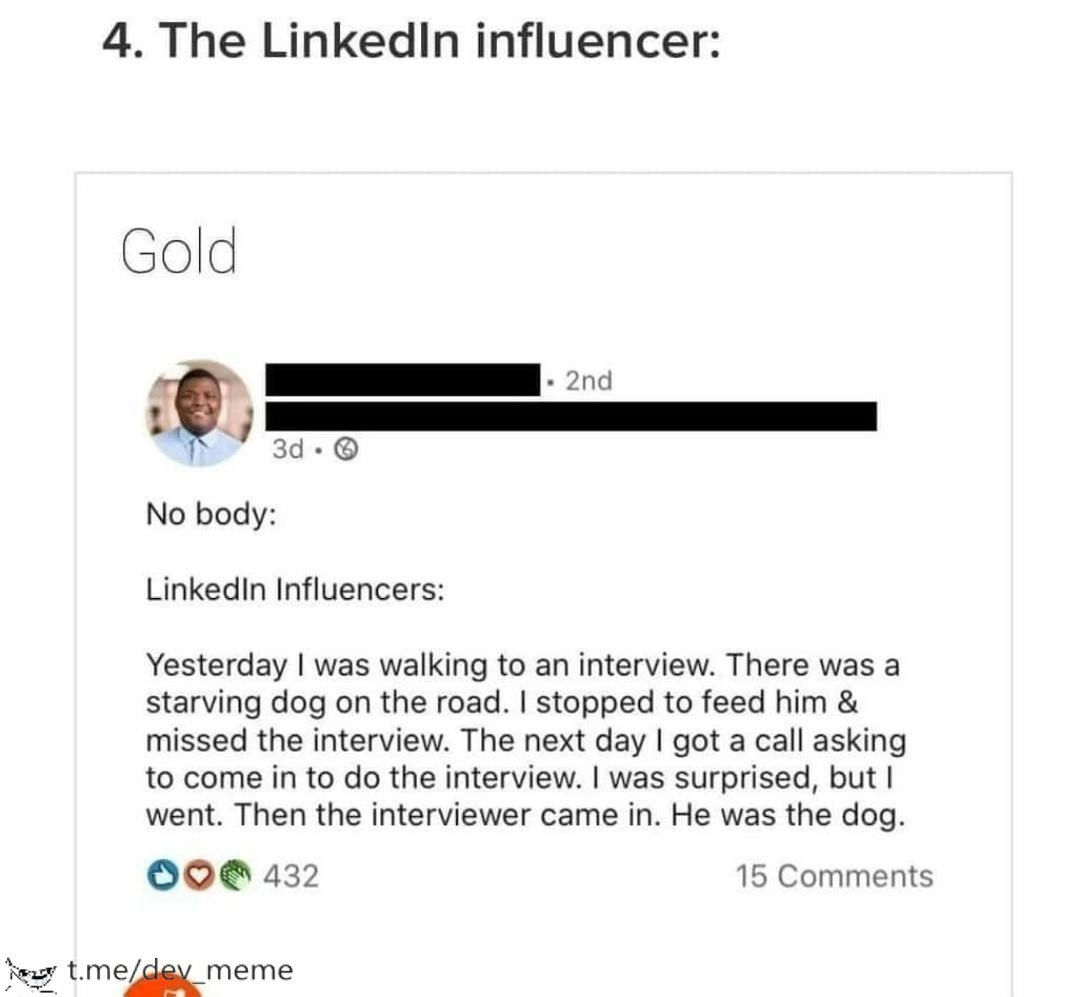
LinkedIn is basically a social network for work and careers – think Facebook, but where people post about their jobs, not their vacation photos. On LinkedIn you have folks known as “influencers” who try to inspire others with personal stories or advice. This meme is making fun of those LinkedIn influencers who tell tall tales to get attention. It shows a fake post where someone describes going to a job interview and supposedly encountering a starving dog on the way. The person chooses to stop and feed the dog, even though it means missing the interview. Miraculously, the company calls them the next day to reschedule. When they show up, surprise – the interviewer walks in and it’s the very same dog they helped! 🐶 Wait...what? Clearly, this didn’t actually happen; it’s a comically exaggerated parody of the feel-good stories people share on LinkedIn.
The meme uses the setup “No body: LinkedIn Influencers:”. In internet slang, “Nobody:” (or “No body:”) means literally nobody said or asked anything – it’s a way to joke that what follows is completely unsolicited. So here it implies no one asked for this story, but LinkedIn influencers will tell it anyway. It’s a wink at how these grandiose posts often come out of nowhere on your feed. Then it launches into the faux inspirational tale. By the end, when we read “He was the dog,” it’s so absurd that it drives home the joke: LinkedIn stories can be ridiculously unbelievable.
For a junior developer or someone new to this humor, let’s break down why this is funny. Interviews are usually serious business – you prepare, you show up on time, you answer technical questions. Missing an interview because you fed a stray dog would normally cost you the opportunity. And of course, real interviewers are humans, not dogs in disguise! In a normal Career_HR scenario, if you skip an interview (even for a good deed), you probably wouldn’t get a callback. That’s why this post’s outcome is so clearly made-up. It’s taking an everyday situation (going to an interview) and stretching it into a fairy tale. The humor comes from that contrast: real life versus this silly make-believe.
The meme is labeled as inspirational_post_parody because it mimics those motivational stories but in a mocking way. The storytelling style in the image – a humble-brag about doing the right thing and then being magically rewarded – is something we often see on LinkedIn. People sometimes share stories like, “I gave up my seat on the train to a tired stranger, and it turned out they were the interviewer for the job I wanted!” Most of the time, these posts are written to get a lot of likes and comments, meaning they are a form of “engagement bait.” (Engagement just means people interacting with the post – liking, commenting, etc.) They’re essentially corporate linkbait, trying to lure in professionals with a heartwarming tale.
Now, about the cringe_storytelling aspect: “cringe” is a slang term for something so forced or awkward that it makes you cringe a little out of embarrassment. A lot of developers find these LinkedIn hero stories cringe-worthy because they feel fake or exaggerated. It’s the kind of content that might make you roll your eyes rather than clap your hands. In developer communities, especially among more experienced folks, there’s a running joke about how ridiculous some LinkedIn posts can be. They pass these memes around to share a laugh and say, “Can you believe this nonsense?” – this is what we mean by an inside joke or CommunityInJokes. You kind of have to be part of that world (using LinkedIn, seeing the posts) to fully get why it’s funny, but once you are, it’s extremely relatable humor.
Every element in the meme is crafted to look like a real LinkedIn post: there’s a profile picture (blurred to be anonymous), the “2nd” label (meaning the person isn’t directly connected to you but is a friend-of-a-friend in LinkedIn terms), and even the “3d · 🌐” to show it was posted 3 days ago to a public audience. The word “Gold” at the top likely references LinkedIn’s premium membership icon or just a tongue-in-cheek way to label the content as “golden” (as in prime material). We also see the reaction icons (LinkedIn’s version of likes: 👍 “Like”, 👏 “Celebrate”, ❤️ “Love”, etc.) with a count of 432, and “15 Comments”. These details hammer home that posts like this get tons of engagement. Part of the joke is exactly that – sometimes a cringey story will rack up hundreds of likes from people who perhaps don’t realize it’s exaggerated, or who just enjoy a positive-feeling story.
So in summary at this level: The meme jokes about a LinkedIn influencer who posts an unbelievable interview story (with a dog as an interviewer) to farm reactions. It’s InterviewHumor mixed with SocialMedia satire. If you’re a newcomer to tech or professional networks, it’s a light reminder not to take every inspirational post at face value. And for those who have been around a bit longer, it’s a funny reminder of the kind of over-the-top content we’ve all seen while scrolling between recruiter messages. After all, the tech world loves a good laugh at itself, and this meme is exactly that – the tech community poking fun at the oddly dramatic career advice that pops up online.
Level 3: Feeding the Algorithm
On LinkedIn, a certain breed of SocialMedia user has perfected the art of the contrived hero narrative. This meme skewers those so-called linkedin_influencer stories that flood our feeds with improbably uplifting tales. The image shows a fake LinkedIn post where the author spins an over-the-top inspirational saga culminating in an absurd punchline: “Then the interviewer came in. He was the dog.” This is classic TechSatire poking fun at cringe_storytelling in professional circles.
For seasoned engineers, the humor cuts deep because we’ve all seen these posts. It’s blending InterviewHumor with an eye-roll at CorporateCulture clichés. The structure itself is a meme: “No body:<br>LinkedIn Influencers:” – a sardonic format meaning nobody asked for this, yet here it is. The influencer in question launches into a too-perfect parable: they miss an interview to feed a starving dog (virtue signaling much?), magically get a second chance, and discover the dog was actually the interviewer. It’s a wild dog_interviewer_twist that parodies how LinkedIn “thought leaders” often give their stories a ridiculous, moral-heavy ending.
This tall tale hits all the engagement-bait tropes: a selfless act at personal cost (🐕 dog rescue > job opportunity), a miraculous payoff (company calls back despite a missed interview), and a punchy twist reveal. It’s essentially a literal shaggy dog story – in comedy, that’s a long-winded anecdote with a silly twist, and here it actually involves a shaggy dog! The fact that the interviewer was a dog is so over-the-top it spotlights the DeveloperIrony at play: real interviews are rigorous and technical, not fairy tales where kindness unlocks job offers. By amplifying the absurdity, the meme lampoons how some LinkedIn posts feel completely detached from reality.
Why is this so relatable to developers? First, SharedExperience: most devs maintain a LinkedIn profile for job hunting or networking, so we’ve scrolled past these saccharine “I almost lost everything but then success!” posts. They often read like offbeat Grimm’s fairy tales set in a Career_HR context. We chuckle (or cringe) because we recognize the pattern. It’s the same feeling as encountering an obvious code anti-pattern – you can predict exactly where it’s going. Yesterday I helped X and sacrificed Y, but then Z magical opportunity happened. Every senior engineer has seen that formula, just usually with a CEO or hiring manager instead of a literal dog. This meme simply cranks the dial to 11 for comedic effect.
There’s also an underlying commentary on InternetCulture and platform algorithms. LinkedIn’s feed algorithm rewards posts that generate engagement (likes, comments, shares). Over time, savvy users learned that inspirational_post_parody or not, a dramatic personal story with a wholesome lesson is like catnip for the algorithm. Think of it as an implicit growth hack: craft a narrative that makes people react with “👏” or “❤️.” The meme’s inclusion of “432 💚🤗👏 15 Comments” isn’t random – it mirrors real posts where hundreds of reactions validate even the most contrived story. It’s highlighting that this corporate linkbait works; the outrageous dog-as-interviewer fable is a sarcastic stand-in for all those suspiciously neat LinkedIn fables that somehow get tons of engagement.
From a DevCommunities standpoint, this image is an inside joke – a bit of tribal knowledge among tech folks that LinkedIn can be cringe. The watermark t.me/dev_meme suggests it came from a developer meme channel, meaning the community actively shares and pokes fun at these trends. It’s a way for engineers to bond over CareerHumor: “Ugh, saw another post where a junior dev fixed a production bug by remembering a lesson from his dying grandmother… 🙄.” By exaggerating the scenario to literal absurdity (a dog interviewer with a phone scheduling callbacks!), the meme lets us laugh at what might otherwise be aggravating.
In short, this level dives into why the meme is too real and hilarious for experienced devs. It’s riffing on the gap between genuine professional advice and the performative, storybook-style posts that get traction on LinkedIn. The cynical subtext – fitting a Cynical Veteran outlook – is that we all know life usually doesn’t work like this, and anyone with enough time in the industry has the BS-filter to prove it. The meme is our wry reminder not to take everything on LinkedIn at face value, wrapped in a joke only a community fatigued by recruiter spam and motivational fluff would create. 🐕💼
Description
This meme uses the 'Woman Yelling at a Cat' format. The yelling woman, labeled 'Product Manager,' is screaming: 'It's a simple feature, just add a button!' The confused cat, labeled 'The dev team,' is sitting at a table in front of a plate of salad, representing the innocent engineering team that knows this 'simple' request will require refactoring the entire legacy authentication module. This meme brilliantly captures the disconnect between non-technical stakeholders and the engineering team, where the perceived simplicity of a request masks a mountain of underlying technical complexity. For senior engineers, it is a painful and hilarious depiction of scope creep and the daily struggle of managing expectations
Comments
7Comment deleted
The fastest way to give a principal engineer an aneurysm is to preface a feature request with the phrase, 'It should be a quick one...'
If the dog actually *was* the hiring manager, odds are the next sprint review will be nothing but chew-toys and everyone still afraid to ask for a salary bump larger than a Milk-Bone
The same people who write "Agree? Thoughts?" under their LinkedIn posts are the ones who'd mark their own code reviews as approved if GitHub let them
LinkedIn influencers have mastered the art of schema-less storytelling - no foreign key constraints to reality, no referential integrity checks, just pure NoSQL fiction optimized for engagement metrics. Their posts follow a well-documented anti-pattern: fabricate an improbable scenario, inject a moral lesson with the subtlety of a SQL injection attack, and watch the engagement counters increment. It's content-as-a-service, but the service level agreement explicitly excludes truthfulness
Finally, a hiring pipeline where empathy for strays outranks system design - beats any 5-round FAANG gauntlet
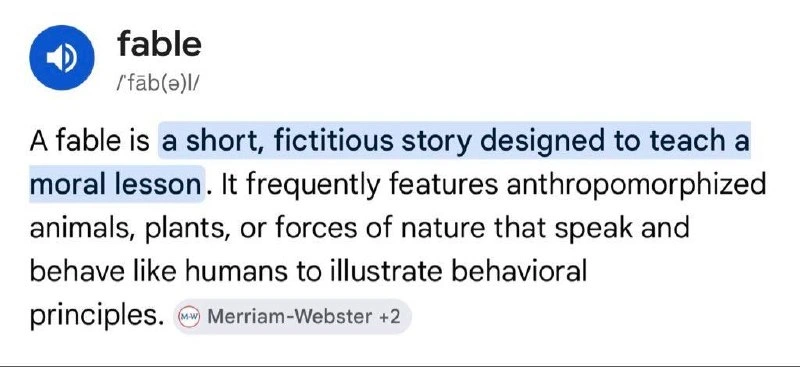
LinkedIn fables are BASE-compliant: Basically Available, Soft-emotion state, Eventually the interviewer is the dog
LinkedIn optimizes for engagement, not signal - if your interviewer turns out to be the dog, your content pipeline is A/B-tested for reactions while the hiring pipeline starves for evidence