Skip to content
DevMeme
3082 of 7435
The Deceptively Simple Friday Afternoon Task
Bugs Post #3397, on Jul 9, 2021 in TG

The Deceptively Simple Friday Afternoon Task

Why is this Bugs meme funny?

Level 1: Bigger Than It Looks

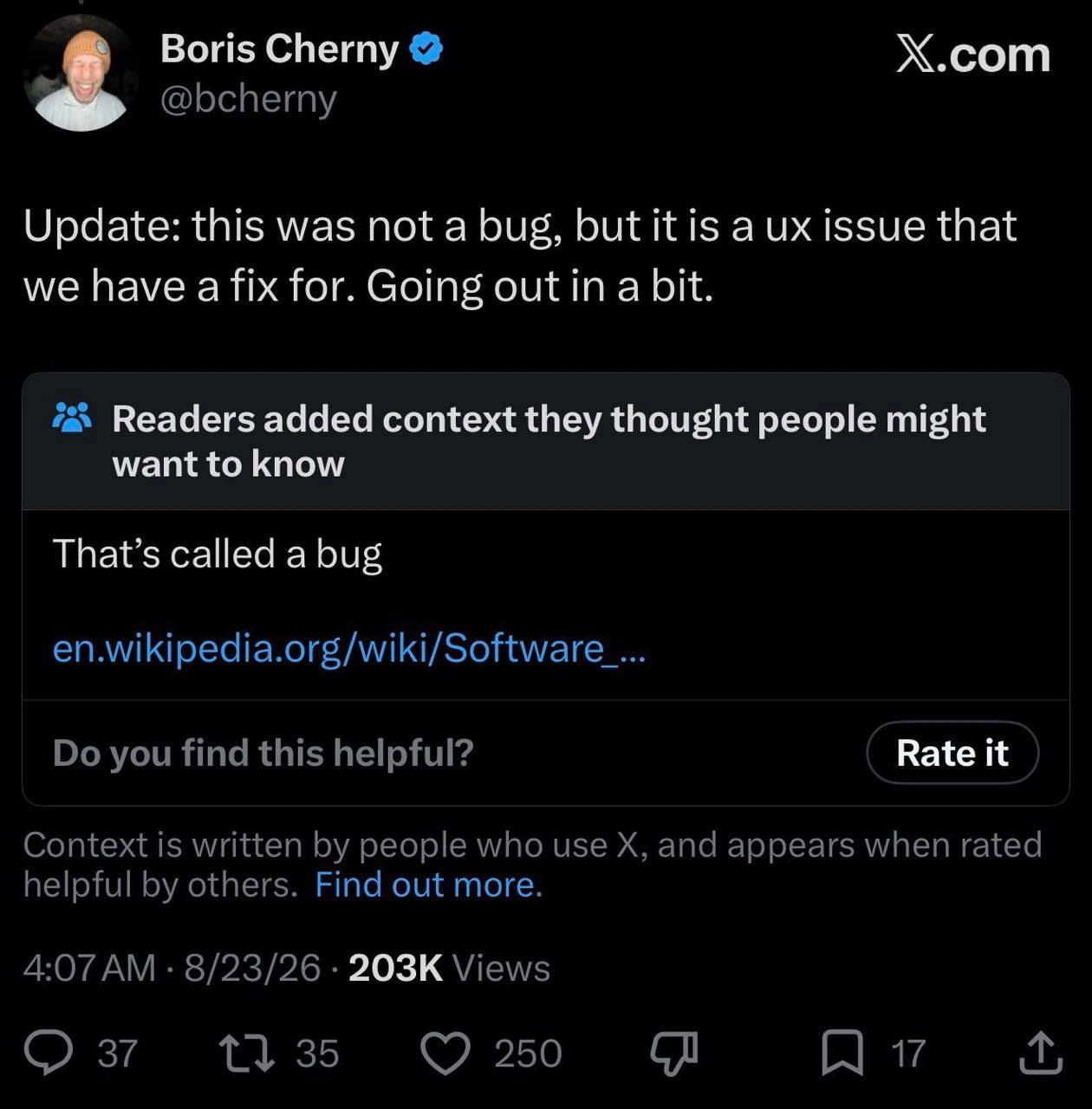
Imagine you’re about to do a simple chore that you think will take just a minute, like picking up a little toy from the floor. But when you grab the toy, you discover it was covering a huge mess – maybe a whole pile of toys hidden under a blanket! Suddenly, that tiny cleanup becomes a big job and takes a lot longer. This cartoon is funny for the same reason: the programmer thought he had a tiny problem (a little bug to fix) right before the weekend, but it turned out to hide a much bigger problem. It’s like thinking you saw a small friendly fish, but actually it was the fin of a giant sea monster. The surprise of something being way bigger than it first appeared – and happening at the worst time – makes us laugh because we know how frustrating and unexpected that feeling can be.

Level 2: Small Task, Big Bug

On a simpler level, this meme is using an iceberg metaphor to warn about hidden problems in software. The little green bug the developer is about to grab looks small and easy to fix. In software, a “bug” means a mistake or error in the code that causes things to go wrong. The surprise is that under the water there’s a huge smiling bug monster – meaning there’s actually a much bigger issue hiding beneath the tiny symptom. The text “LAST TASK BEFORE THE WEEKEND” sets the scene: the programmer thought this was a quick job to finish up before relaxing. This is a familiar situation in programming: a ticket (task) that seems simple at first can end up uncovering a much larger problem.

Let’s break down the key ideas and terms so newer developers can relate:

  • Bug: In coding, a bug is a flaw or error that makes the software behave in an unexpected way. Here it's drawn as a cute green creature. The small bug on the surface represents a minor glitch – for example, a button that doesn’t work or a small error message popping up.
  • Hidden Bug: The huge green monster underwater is the hidden bug or the root cause. Often, what you see (like a small error) is caused by something deeper in the system. Maybe a tiny bug in the interface is actually due to a big flaw in the database or an entire module misbehaving. The meme shows this visually – a small bug up top, a giant bug below. This suggests the problem’s scope (extent) was much larger than it appeared.
  • Last Task Before Weekend: Many developers try to wrap up their work by Friday evening. The phrase implies a bit of deadline pressure – you want to finish everything before the weekend. A deceptively_small_ticket is a task that looks easy so you take it on at the last minute. Here the dev assumes “I’ll just squash this bug real quick before I log off.” It’s a situation most of us in tech have attempted, sometimes to our regret.
  • Debugging: This is the process of investigating and fixing bugs. A simple debugging session can turn into a long hunt if the bug is complex. In the meme, the act of reaching for the bug is like starting to debug the issue. The surprise monster means the debugging process suddenly got a lot more complicated. Think of it like pulling on what you think is a small thread, and it unravels an entire sweater.
  • Overtime: If a quick fix turns into a big problem, developers might have to work later than planned, sometimes even on the weekend. The term weekend_overtime from the tags means exactly that – you expected to be done, but now you’re spending your free time fixing the mess. This is a big source of DeveloperFrustration (frustration for developers) and why the meme is both funny and painfully true.

For a junior developer, the lesson in this humor is: always be prepared for the unexpected. A task that appears tiny might hide complexities. Maybe you change one part of the code and it causes an issue in a completely different part (because they were connected in ways you didn’t realize). Or that one “small” bug was actually preventing a larger bug from showing up, and once you fixed the small one, the bigger issue came to the surface. It’s like lifting a rock and finding a whole colony of ants underneath. 🐜

Here’s how the expectation vs reality plays out for our poor developer in the meme:

  • Expectation: “This is a quick 10-minute fix. I’ll be done and start my weekend on time.” The bug looks isolated and minor.
  • Reality: “Oh no... fixing this revealed a serious error elsewhere!” That one fix leads to discovering a major problem in the code. It ends up taking hours of debugging.
  • Outcome: Instead of leaving work early or relaxing, the developer is stuck troubleshooting and might even call teammates or delay the weekend plans. The simple task turned into a big Debugging_Troubleshooting session.

In short, the meme uses a clear visual metaphor (a small bug with a huge one beneath it) to show a lesson every programmer learns: small software issues can hide big problems. It’s funny because it’s true — and almost every developer has experienced a “small task, big bug” situation that taught them to be a bit more cautious next time, especially on a Friday!

Level 3: Friday Fix Fiasco

This meme nails a classic DeveloperPainPoint: the deceptively small ticket that turns into a colossal debugging nightmare under DeadlinePressure. The stick-figure developer is innocently reaching for a tiny green bug (a minor issue) as his last task before the weekend. But lurking beneath the water is a hidden scope monster – a gigantic smiling bug waiting to blow up. It’s a humorous take on how a supposedly minor end-of-week fix can hide a massive tangle of problems beneath the surface. Seasoned developers chuckle (perhaps nervously) because they’ve all been there. This scenario combines BugsInSoftware with unfortunate timing, illustrating why many teams half-jokingly enforce a “no code changes on Friday” rule.

Why is this funny to experienced engineers? It’s basically the software equivalent of finding out a small leak is just the tip of a massive iceberg. That innocent-looking bug might be just a symptom of a deeper architectural issue or technical debt lurking in the codebase. When you touch it, everything underneath comes crashing out. The humor is darkly relatable: famous last words in programming include “It’s a simple fix, I’ll do it right now,” especially late on a Friday. We all know what often follows: weekend_overtime and a flurry of emergency patches. The big green monster grinning under the water is basically the code saying, “Surprise! You’re not going home early today.”

Under the hood (or rather, below the waterline), several real-world factors make this meme painfully accurate:

  • Submerged Complexity: Software systems often have hidden connections. That one-line fix can have ripple effects through code you didn’t anticipate. The bug was small, but the underlying system complexity or coupled components make the fix hard. It’s like a small tug on a rug that flips over an entire room of furniture.
  • Technical Debt Iceberg: Over time, quick-and-dirty code fixes (technical debt) accumulate beneath the surface. The code might be brittle or outdated. Touch one part and decades of legacy code issues bubble up. The developer in the meme likely stumbled on a part of the system that hadn’t been touched in ages – and it falls apart spectacularly when disturbed.
  • Edge Case Unleashed: That little bug might be an indicator of a rare edge case. Maybe it never appeared in tests, but fixing the “small” bug activated a scenario nobody considered. Suddenly you’re facing a chain reaction of failures. The monster’s grin could be seen as all those dormant issues waking up at the worst time.
  • Timing and Hubris: There’s a Murphy’s Law for programmers: if something can go wrong, it will go wrong when you’re about to log off for the weekend. Late Friday changes are riskier because fewer teammates are around to help, and you’re likely rushing. The meme emphasizes hubris – assuming a task is trivial under time pressure – and getting bitten for it. The DeveloperFrustration is real: instead of relaxing Friday evening, you’re knee-deep in error logs because of that “tiny” change.

To illustrate in code form, it’s almost like the system knows to save its biggest surprises for when you’re least prepared:

# Pseudo-code illustrating the Friday bug surprise
if current_day == 'Friday' and task.size == 'tiny':
    print("Deploying the tiny fix... What could possibly go wrong? 🤞")
    # Oops, that small bug fix woke up a huge monster bug:
    raise WeekendRuinedError("Giant hidden bug emerged from the depths!")

In other words, the last_task_before_weekend often turns into the first task of your weekend. It’s funny in that painful way only developers understand: the contrast between expectation and reality. We expect a quick win and an early start to the weekend; we get a long battle with a swamp monster of a bug instead. The meme’s giant green smiling bug perfectly personifies that feeling – as if the code itself is cheekily saying “Gotcha!”

Everyone who’s spent time in software has a war story like this. It might be a Friday deploy that took down production because of one missed semicolon, or a “harmless” UI bug that revealed a database meltdown. This shared experience is why the meme resonates. It’s both a cautionary tale (“Don’t trust a deceptively small task”) and communal commiseration. In the end, it’s DeveloperHumor born from DeveloperFrustration: laughing so we don’t cry about the times a tiny bug dragged us into overtime, much like a monster pulling us into the deep end of debugging.

Description

This is a cartoon meme that illustrates a classic developer scenario. A small stick figure is shown on a riverbank, about to catch a small, innocent-looking green bug with a net. The caption above reads, 'LAST TASK BEFORE THE WEEKEND'. The punchline is revealed below the water's surface, where a massive, monstrous version of the same bug lurks with a smug smile. The image serves as a powerful metaphor for underestimating the complexity of a task, especially one undertaken on a Friday. For experienced engineers, this is a deeply relatable scenario: what appears to be a minor bug fix or a 'quick change' is often just the visible symptom of a much larger, more complicated underlying problem (like technical debt or a design flaw) that can quickly consume the entire weekend

Comments

10
Anonymous ★ Top Pick That 'five-minute' bug fix on a Friday is how you learn the entire history of the company's architectural decisions, all while on a Sev-1 bridge call
  1. Anonymous ★ Top Pick

    That 'five-minute' bug fix on a Friday is how you learn the entire history of the company's architectural decisions, all while on a Sev-1 bridge call

  2. Anonymous

    Friday 4:58 PM: “Just change this constant, they said.” Five recursive git-greps later I’m knee-deep in reflection hell, discovering that magic string props up three legacy services, the billing cron, and half the CEO’s weekend demo

  3. Anonymous

    "Just updating a config flag" always awakens the ancient race condition that's been dormant since the last architect who understood it left in 2019

  4. Anonymous

    Every senior engineer knows the cardinal rule: never deploy on Friday. Yet here we are, confidently sprinting toward that 'quick config change' at 4:45 PM, blissfully unaware that beneath the surface lurks a distributed transaction deadlock, a cache invalidation cascade, and three undocumented service dependencies that only the engineer who quit six months ago understood. The real kicker? The rollback script was never tested in production, and your deployment window just became your entire weekend. This is why we have change advisory boards - not because we enjoy bureaucracy, but because we've all been that stick figure, and we've all met that green blob

  5. Anonymous

    A 'last quick task' on Friday is basically a lazily evaluated two-phase commit - phase one merges to main, phase two commits your weekend to PagerDuty

  6. Anonymous

    Last task before the weekend: “Just rename an enum.” Underneath: 37 services share the proto, cache keys shift, Kafka replays avalanche, and your pager teaches backwards compatibility at 2 a.m

  7. Anonymous

    Bury the caterpillar deep - wouldn't want it butterfly-ing into a Monday prod outage across 17 microservices

  8. @unexpiredmilk 5y

    Red stripes lover

    1. @vulpes_br 5y

      Nah, just an average Saddam Hussein meme enjoyer

      1. @unexpiredmilk 5y

        Oh shit. Didn't recognize him. It's lit!

Use J and K for navigation