Skip to content
DevMeme
2622 of 7435
The Accelerated Aging of an InfoSec Professional
Security Post #2901, on Apr 6, 2021 in TG

The Accelerated Aging of an InfoSec Professional

Why is this Security meme funny?

Level 1: Old Before Your Time

Imagine you started a new job where every day feels like an emergency. You’re like a firefighter, but for computers – always jumping up to put out a “fire” (a big problem) at any time, even late at night. Now, you’ve only been doing this job for three years, which isn’t very long, right? But because it’s so stressful and busy, you feel like you’ve been doing it for decades. It’s as if you were a young person when you began, and just a few years later you feel as tired as a grandparent.

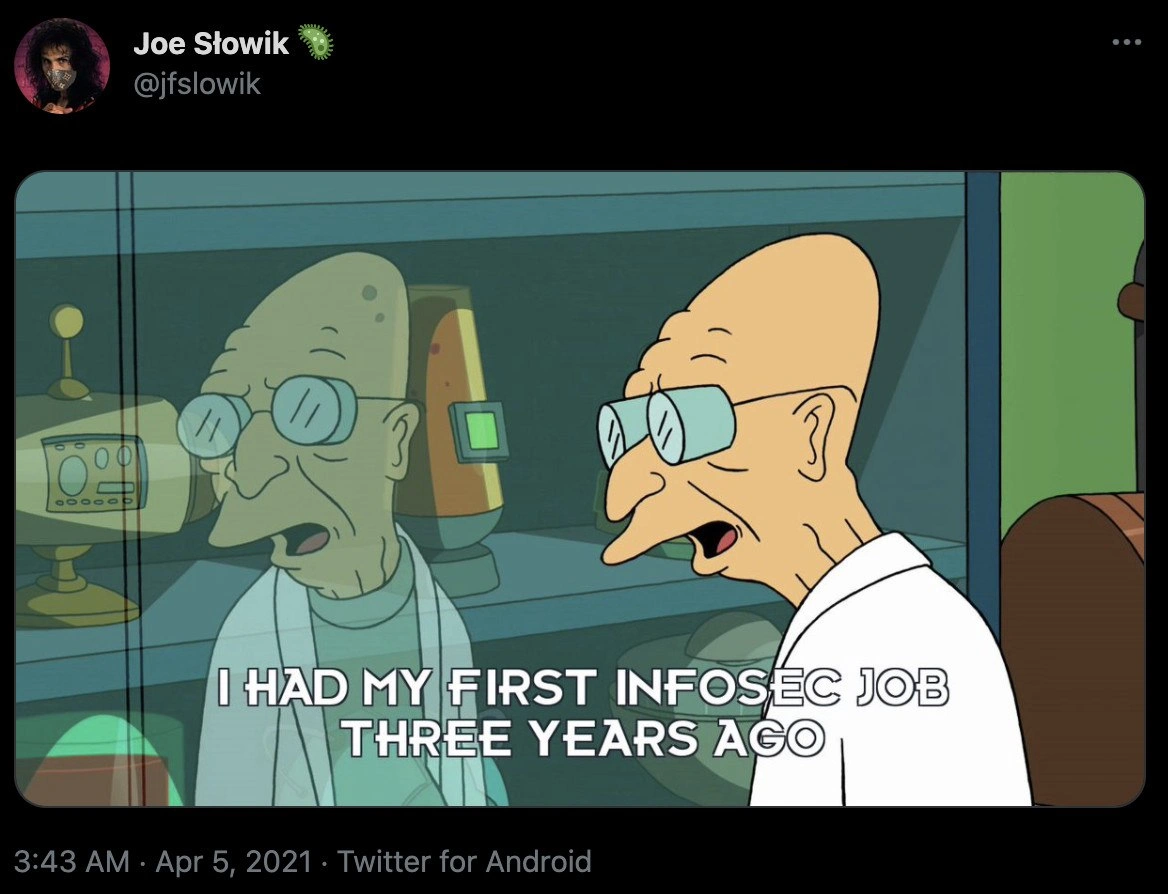
In the picture from the meme, there’s a cartoon scientist (Professor Farnsworth from Futurama) who is super old. He’s looking in a mirror and basically saying, “I only started three years ago… why do I feel so old already?” It’s a funny way to show that his job aged him quickly. Think of it like dog years: a dog that is 3 years old is considered middle-aged in dog life. Similarly, this job is so tough that three normal years feel like many more years went by. The emotional core of the joke is feeling worn out way too soon. It’s funny because three years is not a long time at all, yet he’s acting like it’s been forever. Anyone who’s ever had a super tiring week at school or a busy weekend might relate – sometimes a short time can feel really long when you’re stressed. In short, the meme is saying: “This cybersecurity job is so intense, it made me feel old really fast!”

Level 2: Three Years Feels Like Thirty

For someone early in their tech career, let’s break down why three years in infosec (short for information security, the field focused on protecting computer systems and data) might feel like decades:

  • InfoSec = High Alert All the Time: Unlike some programming jobs where you might build features at a steady pace, security work is often about constant vigilance. Think of it like being a night watchperson for the internet: you’re always scanning for danger. Incident response is a common duty – that’s when a security team reacts to a breach or attack. Even a “quiet” week can be stressful, because you’re bracing for the next threat. This nonstop pressure can make time drag and stress accumulate quickly. A single year packed with on-call duty, emergency patching, and 2 AM alarm bells can age you (or at least make you feel older) more than a calm five-year desk job would.

  • Technology Moves Fast: In cybersecurity, the tools, threats, and best practices update almost every day. New vulnerabilities (weaknesses in software that bad guys can exploit) are discovered constantly – each is catalogued as a CVE (Common Vulnerability and Exposure) with its own ID. Part of the job is staying on top of all these and fixing them before attackers strike. It’s like a game of Whac-A-Mole with serious consequences. Because you have to learn so much so quickly, you might feel like a rusty old-timer even when you’re relatively new. A common joke is that one year working security is like seven years of experience elsewhere – similar to how dog years work (dogs age about seven times faster than humans, so a 3-year-old dog is roughly like a 21-year-old human). So if you’ve been in infosec for three years, it feels like maybe twenty or more in terms of how much has happened and how tired you are!

  • Burnout and Mental Health: Burnout means severe exhaustion from chronic workplace stress, and it’s unfortunately common in tech (hence tags like MentalHealthInTech and DeveloperBurnout). In security roles, burnout can hit especially fast. People talk about feeling like a zombie or a ghost of themselves after too many long weeks. You might start a security job bright-eyed, but after a few years of firefighting problems non-stop, you end up relating to old Professor Farnsworth muttering “Good news, everyone… I’m tired.” The meme shows Farnsworth’s face reflected back at him looking greenish and extra old – that’s a cartoon way to say “I’ve turned into an aged, tired version of myself.” It’s funny in the comic, but any security engineer who’s pulled back-to-back all-nighters will nod and say, “yep, I feel that.”

  • Visual Metaphor – Futurama’s Professor: Professor Hubert Farnsworth from the show Futurama is a character famous for being extremely old (and a bit emotionally drained) while still working in a lab. By using Farnsworth’s image with the caption about a first infosec job three years ago, the meme compares the person to Farnsworth. It’s like saying, “I’m not actually old, but this job makes me feel old and cranky like Farnsworth.” The reflection in the glass adds emphasis: he sees himself almost like a ghost or relic in a museum display. It’s a playful way to show rapid aging – as if the stress aged him so fast that when he looks in the mirror, an ancient version of him is staring back. This visual gag falls into the category of rapid aging memes, where a short amount of real time is joked to cause a huge jump in perceived age.

In simpler career terms, three years feels like forever in a tough security job because of the sheer intensity and volume of what you deal with. Many folks in the security field share this kind of career humor to bond over the experience. It’s half-joking, half-serious: they find it funny, but they’re also coping with real stress. So, if you’re a junior developer or just starting out in cybersecurity, don’t be surprised when colleagues joke that you’ve “leveled up to grizzled veteran” by year three. It’s a heads-up that the field can be rough on you. And if you ever feel burned out or much older than your age, know that it’s a common sentiment – one worth addressing with better work-life balance and support (seriously!). But at least you’re in on the joke now: in infosec, time is a thief, and it’ll steal your youthful energy faster than you expect, Futurama style.

Level 3: Infosec Dog Years

In the information security world, time doesn’t flow normally – it warps. This meme nails that feeling. The tweet’s author jokes, “I had my first infosec job three years ago,” while showing Futurama’s Professor Farnsworth looking into a glass cabinet at his own ghostly reflection. Farnsworth is a 160-year-old mad scientist in the show (ancient by any measure), and here he’s a stand-in for a security engineer who’s only been in the field for a few years yet feels extremely old and weary. It’s a comical exaggeration with a grain of truth: three years in cybersecurity can feel like thirty anywhere else.

Why would a mere 36 months in security age someone so badly? Let’s unpack the dark humor:

  • Never-Ending On-Call Emergencies: In infosec (information security), you’re perpetually on high alert. Critical vulnerabilities drop without warning, and major incidents (breaches, ransomware outbreaks, zero-day exploits) often erupt at ungodly hours. Notably, this tweet was posted at 3:43 AM – prime time for an incident responder to be awake investigating an intrusion. That late-night timestamp isn’t just a coincidence; it hints that the author might literally have been up dealing with an emergency or pager alert. Seasoned security folks joke that their job turns them into nocturnal creatures. At 3 AM, while others sleep, the security engineer might be staring bleary-eyed at logs because someone yelled “we’re breached!”. Do that a few times and you’ll feel like Farnsworth on a bad day.

  • Accelerated Change (“Dog Years” Effect): Technology and threats evolve so insanely fast that a year in security feels like seven (hence “dog years”). New CVEs (Common Vulnerabilities and Exposures) – basically ID numbers for known security holes – pop up daily. Each week might bring a novel attack technique or a high-profile hack. In other domains, a framework or tool might stay relevant for a decade, but in security you’re already obsolete if you ignore the latest ransomware variant for a month. This rapid pace means you’re constantly learning under pressure, which is as exhausting as it is exhilarating. The meme’s core joke is that the “time dilation” in a security career makes you feel ancient before your time.

  • High Stress and Burnout: Incident response and vulnerability management are not laid-back 9-to-5 tasks; they’re high-stakes, adrenaline-fueled sprints that can last for days or weeks. Imagine spending 48 hours straight combing through server memory for malware artifacts, surviving on stale coffee and panic. By the end, you’re not just tired – you feel like a wrung-out husk of a human. The meme captures that burnout visually: Farnsworth’s face in the reflection is greenish and ghost-like, as if his soul has left his body. It’s a funny-cartoon way to depict what many security professionals know all too well: constant firefighting drains your vitality. Mental health in tech – especially in security – is a serious concern hiding behind this humor. Countless CyberSecurityMemes joke about exhaustion precisely because burnout is so widespread (laughing about it is a coping mechanism).

  • Ever-Present Threat of Disaster: In most developer jobs, a bad day might mean a bug in production. In infosec, a bad day can mean a full-blown security breach splashed on the news. The always-on pressure to prevent the worst (and clean up when it inevitably happens) creates what I’d call “security career time dilation.” You pack so many intense experiences into each year that your hair might gray early – literally or figuratively. Three years on a SOC (Security Operations Center) team might include forensic investigations of data leaks, sleepless nights chasing hackers through logs, frantic scramble to patch critical systems (remember Heartbleed? how about SolarWinds Orion?), and endless “war room” conference calls. Each major incident adds a few more “years” to how old you feel. No wonder even relatively junior infosec folks quip about feeling like retirees. A common gallows-humor refrain in security teams is “Another day, another breach – I’m too old for this… and I’m only 25!”

Given all that, the meme brilliantly uses Professor Farnsworth (the epitome of old age and scientific burnout) as a visual metaphor. Farnsworth is literally a genius who’s seen everything in the future world of Futurama, much like how even a few years in cybersecurity can expose you to an absurd range of crises. The dual image – Farnsworth and his older reflection – suggests “I’ve aged so much I don’t recognize myself” or even “I see my future, and it’s a tired old me.” It’s a reflection of both rapid aging and maybe a hint of out-of-body experience from extreme fatigue. Many burned-out developers and analysts joke about “feeling like a ghost” after consecutive all-nighters. Here it’s literally illustrated.

To a seasoned developer or security engineer, this meme prompts a knowing, if wry, chuckle. Career humor in tech often sounds exaggerated, but it’s rooted in real shared experiences. Being only a few years into a security career yet feeling ancient is a badge of (dis)honor – it means you’ve been through the wringer. It highlights the mental health in tech angle: the industry moves so fast and expects so much that even newcomers get prematurely jaded. Security work, in particular, has a reputation for burning people out quickly – it’s practically a trope that security years count double.

In summary, the humor lands because it’s absurd yet true. It pokes fun at the “time flies” cliché by flipping it: time drags heavily in infosec, each year laden with so many incidents and late-night adrenaline jolts that you emerge feeling decades older. Professor Farnsworth’s “ancient scientist” persona is a perfect avatar for a 3-year infosec veteran who’s seen too much, too quickly. It’s a bit sarcastic and a bit bittersweet – the kind of joke a cynical veteran might crack to cope with the relentless grind of keeping systems safe.

Description

A screenshot of a tweet from user Joe Slowik (@jfslowik). The image is a meme from the animated TV show Futurama, featuring the elderly Professor Farnsworth. He is depicted looking weary and aged, staring at his reflection which appears even more ancient and decrepit. A large, bold caption is superimposed over the image, reading: 'I HAD MY FIRST INFOSEC JOB THREE YEARS AGO'. The humor stems from the dramatic visual exaggeration. It powerfully conveys the immense stress and rapid burnout experienced in the Information Security (InfoSec) field. The joke is that a mere three years in this high-stakes career can feel like decades, aging a professional prematurely due to the constant pressure of threat detection, incident response, and staying ahead of attackers. This sentiment deeply resonates with senior practitioners who understand the relentless pace and mental toll of cybersecurity

Comments

9
Anonymous ★ Top Pick In InfoSec, you measure experience in CVEs, not years. After three years, you've aged through about five Log4j-level events and your soul is now a legacy system with multiple unpatched vulnerabilities
  1. Anonymous ★ Top Pick

    In InfoSec, you measure experience in CVEs, not years. After three years, you've aged through about five Log4j-level events and your soul is now a legacy system with multiple unpatched vulnerabilities

  2. Anonymous

    Three years in infosec and I already feel like SHA-1 - deprecated, collision-prone, and only still here because nobody scheduled the migration meeting

  3. Anonymous

    Three years in InfoSec is like dog years, except instead of multiplying by seven, you multiply by the number of zero-days you've had to patch on a Friday afternoon

  4. Anonymous

    In infosec, 'three years ago' is basically the Cambrian explosion - you're simultaneously a grizzled veteran who remembers the before-times and a dinosaur whose threat models are now museum pieces. The half-life of security knowledge is so short that by the time you've mastered defending against one APT group's TTPs, three new nation-state actors have emerged, your entire detection stack has been replatformed twice, and someone's already written a blog post calling your approach 'legacy.' It's the only field where you can legitimately claim decades of experience while also feeling like you started yesterday, because yesterday's zero-day is today's CVE and tomorrow's compliance checkbox

  5. Anonymous

    Infosec measures time in pager‑years: three calendar years, twelve SEV‑1s, and your “temporary” allowlist has become the architecture

  6. Anonymous

    Three years in infosec? That's legacy status - now audit your own supply chain for zero-days

  7. Anonymous

    In security, time is measured in alerts‑per‑minute; after three years you’ve rotated more pagers than keys in the KMS

  8. @roter_schnee 5y

    нужна пояснительная бригада

    1. @chupasaurus 5y

      Обрати внимание на омоложение, отличное зрение и пышную шевелюру. Батискаф мне!

Use J and K for navigation