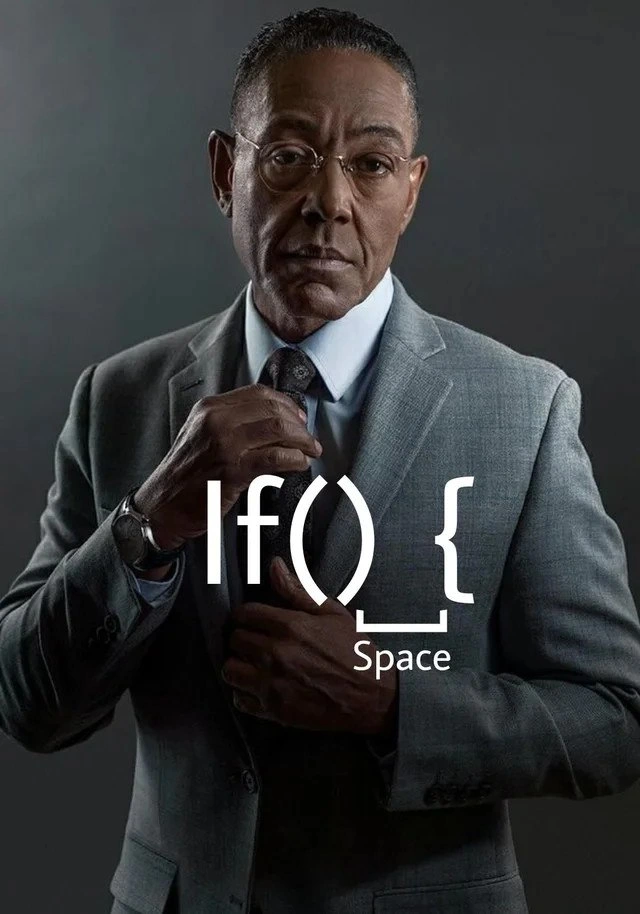
Suiting up once you add a space between ) and { in if statements
Why is this CodeQuality meme funny?
Level 1: Feeling Fancy
Imagine you’re getting ready for a school picture day or a fancy party. You put on your best outfit, maybe a nice suit or a beautiful dress, and you make sure every little detail is just right – you feel really proud and fancy. Now, think of a programmer writing instructions for a computer (that’s what code is). Adding a tiny space in their writing is kind of like straightening their tie or smoothing out their dress. It doesn’t change what they’re saying to the computer (just like wearing a tie doesn’t change who you are), but it makes the code look neat and well-dressed. This meme is funny because it’s showing that when a programmer’s code is neatly formatted – even with just a small extra space – the programmer feels as confident and polished as a person in a nice suit adjusting their tie. In simple terms, it’s joking that even a little cleanup can make you feel like a million bucks. The code works the same, but it looks so tidy that the person who wrote it feels super proud and professional, just like dressing up for a special occasion.
Level 2: Polishing the Code
Let’s break down the joke in simpler terms. In programming, an if statement is a basic control flow construct that executes some code only if a condition is true – kind of like “if it’s raining, then open an umbrella.” Different programming languages share similar syntax for if statements. For example, in C, C++, Java, or JavaScript, you might write it like:
if(condition){
doSomething();
}
This works just fine – the computer will run doSomething() only if condition is true. However, notice there’s no space between ) and { in that snippet. Many programmers and style guides prefer it with a little breathing room, like:
if (condition) {
doSomething();
}
See the subtle difference? In the second version, there’s a space after the closing parenthesis ) and before the curly brace {. Technically, both versions do exactly the same thing; the computer doesn’t care about that space. The program’s behavior is identical. The difference is purely about code formatting – how the code looks to human readers.
Now, why would such a small detail matter? This comes down to code style guides and personal/team preferences. A style guide is basically a set of rules for how your code should look. For instance, Python’s style guide (called PEP 8) has a bunch of recommendations about whitespace, like suggesting you put spaces around operators (x = 5 not x=5) and other little niceties. In C++ or Java, style guides (such as the Google C++ Style Guide) often specify things like: always put a space before the curly brace in an if statement. Following these rules makes code consistent. When every developer on a team writes code in the same style, it becomes much easier to read each other’s code. You’re not distracted by odd spacing or different brace placements, so you can focus on what the code is doing, not how it’s formatted. This consistency is a part of good CodeQuality and improves the DeveloperExperience for everyone working on the code. It’s like everyone agreeing to write in the same handwriting style for clarity.
For a newer developer (or anyone just learning), it might be surprising that engineers care so much about a tiny space or whether there’s a blank line here or a tab there. But it’s a well-known part of programmer culture. In fact, there’s a running joke about the Tabs vs Spaces debate – which is basically an endless argument over whether to indent code using the tab character or using a few space characters. It sounds trivial, but people have very strong opinions! These kinds of debates are often called syntax wars or holy wars in programming because they’re about personal preference and style rather than something that objectively changes the program’s output. The if() { versus if () { spacing issue in the meme is one of those classic stylistic choices.
So in the meme, when a programmer adds that space between ) and { in an if statement, they’re following a style rule. How does that relate to the man in the suit? The image is metaphorical: writing code with immaculate formatting (following all the style rules to a T) makes a developer feel as proud and polished as someone wearing a perfectly tailored suit. In real life, when you dress up in formal attire, you might stand a little taller and feel more confident. Similarly, when a coder sees their code perfectly formatted – no squiggly red lines from the linter complaining about spacing, every brace in the right place – they feel a little surge of pride and confidence in their work. It’s a funny exaggeration, of course; adding one space is not a huge accomplishment! But emotionally, it’s oddly satisfying to see clean code.
Many development teams use linting tools or auto-formatters to enforce these style rules. A linter is a tool that reviews your code for potential errors or style deviations. For example, ESLint for JavaScript or pylint/flake8 for Python can be configured with strict rules. If your code doesn’t follow the convention – say you wrote if(condition){ without a space – the linter might show a warning or error like “Expected space before {.” Some projects even set their linter to a strict mode where your code won’t pass code review or the build process until those issues are fixed. It’s a bit like having a very strict teacher or editor who won’t accept your paper until you fix all the formatting. So developers often run tools that auto-fix these issues (for instance, a tool might automatically insert that missing space for you). Over time, you get used to writing code in that polished style from the start.
The joke here is also about the feeling of doing something professionally. Even though adding a space is a tiny, almost insignificant correction, it can feel like you’ve cleaned up nicely. Think of it as making your work look as good as it functions. There’s a popular concept called clean code principles, which basically encourages writing code that’s easy to read and maintain. Consistent spacing and formatting is one of the first steps toward clean code. When your codebase is clean and consistent, onboarding new developers is easier and there are fewer misunderstandings. So developers take pride in these small details. It’s a bit tongue-in-cheek – we know it’s just a space – but we also kind of mean it. A well-formatted if statement is like a little trophy of diligence. 🏆 (Yes, we programmers sometimes celebrate silly things like this!)
In summary, the meme is using humor to highlight how developers can be perfectionists about formatting. Adding a single space in an if-statement doesn’t change the code’s logic at all, but it satisfies the style requirements that many of us treat almost like a “dress code” for code. And following that dress code makes us absurdly happy. It’s developer humor because we’re essentially laughing at ourselves – at how something so small can make us feel so fancy in the realm of code.
Level 3: The Code Dress Code
At first glance, this meme humorously elevates a tiny formatting tweak to the level of sartorial elegance. It shows a man in a sharp grey suit adjusting his tie, juxtaposed with the code snippet if() { where a space is deliberately inserted between the ) and {. The implied joke is that adding that single space in your if statement is like putting on a suit and tie – suddenly your code feels refined and professional. This tickles developers because it satirizes how much pride and importance we place on code style guides and formatting rules. It’s poking fun at the notion that adhering to something as minor as a whitespace convention can make a programmer feel like they’ve “suited up” their code.
From a seasoned developer’s perspective, this meme hits on long-running syntax wars over code formatting. In terms of pure functionality, writing if(condition){...} versus if (condition) { ... } makes no difference to the computer – most compilers and interpreters completely ignore that extra space. It's purely a stylistic choice. But oh, what a choice it is! Teams and projects often adopt strict code style guidelines (like the famous Google C++ Style Guide or Python’s PEP 8 for whitespace) that mandate these details. In many C/C++/Java style guides, the rule is to always put a space before the curly brace in control structures. So if(condition) { is “properly dressed” code, whereas if(condition){ (with no space) looks like it rolled out of bed in a wrinkled T-shirt. The meme exaggerates how linting rules strict about spacing can make a developer feel as dapper as the suited man once the code is formatted just right.
This resonates strongly with experienced developers because we've all been through those code review nitpicks or CI pipeline failures complaining about a missing space or misaligned indent. Picture a continuous integration bot sternly pointing out: “Lint error: expected space before {.” It’s the coding equivalent of a fashion police citing you for a crooked tie. After you fix it, you feel a disproportionate sense of accomplishment – the build passes, the code looks clean, and you imagine yourself adjusting your tie like the meme. This speaks to DeveloperExperience_DX: clean, consistently formatted code is easier (and more pleasant) to read and maintain. Senior engineers know that a well-formatted codebase reduces mental overhead. Each little consistency – even a space character – helps avoid misunderstandings. It’s a subtle form of CodeQuality improvement; not in how the program executes, but in how clearly the intent is communicated to human readers. As the saying goes in Clean Code principles, “code is read far more often than it is written,” so style and readability matter. That space is like a tiny investment in future maintainability.
Importantly, this meme also taps into the almost comical intensity of developer TabsVsSpacesDebate and similar holy wars. Arguing over a single whitespace might seem absurd to an outsider, but inside the tech world it’s a running joke how these trivial differences can ignite passionate debate. Here are a few classic syntax style battles that veteran devs know all too well:
- Tabs vs Spaces – The legendary indentation battle. (Entire sitcom scenes have been devoted to this!)
- Brace Positioning – Allman style (brace on a new line) vs. K&R style (brace on the same line) – the meme’s
if() {is showing a flavor of K&R with a space, sometimes nicknamed the One True Brace Style. - Spacing Around Operators – e.g.
x=5;versusx = 5;. Some linters will insist on spaces for clarity (x = 5;looks cleaner). - Naming Conventions –
camelCasevssnake_casefor variables and functions. Not whitespace, but another source of endless style debates.
These might seem minor, but they become a big part of team conventions. The meme specifically zeroes in on the space_before_curly_brace in an if statement – a tiny thing, yet many style guides demand it. Following such rules can feel like obeying a dress code. When an engineer adds that space, they’re essentially saying, “I respect the team’s style guide; look how well-groomed my code is!” And honestly, there’s a bit of tongue-in-cheek pride in that. We’ve all seen code that’s sloppy or inconsistent, and it feels messy, like someone wearing mismatched socks to a board meeting. In contrast, uniformly formatted code gives off a code_style_elegance – it’s aesthetically pleasing in a way only a developer can truly appreciate.
The humor also comes from the idea that developers treat code formatting with almost zealous reverence. We use tools like eslint, clang-format, or prettier as our digital tailors, automatically linting and re-formatting our code to meet the highest standard of style. Strict linting_rules will underline even a single rogue space in angry red. The moment you fix it, it’s like adjusting your pocket square to the perfect angle – suddenly the error underline disappears, your code passes the style check, and you feel immensely satisfied. This is developer humor at its finest: recognizing that feeling overly proud of such a mundane fix is delightfully silly, yet completely relatable.
In essence, the meme is satirizing the culture of CleanCodePrinciples and formatting pedantry in a loving way. It acknowledges that yes, we programmers obsess over things like an extra space, but doing so gives us a sense of mastery and polish. Much like a well-tailored suit doesn’t change who you are but changes how you present yourself, well-formatted code doesn’t change the program’s output but profoundly changes the code’s presentation. Seasoned devs grin at this meme because they’ve been on both sides: the newbie who wonders “why does an empty space matter at all?”, and the veteran who knows that in a collaborative codebase every little consistency matters. Seeing that “if () {” with the highlighted gap feels like a secret handshake among programmers who’ve sat through endless syntax discussions. It’s a way of saying, “I’ve been there – I’ve fussed over a single space and felt oddly proud of my pristine if statement.” And frankly, who doesn’t enjoy the image of a programmer feeling as suave as James Bond just because their braces are in the right place? It’s a perfect blend of DeveloperHumor and genuine insight: clean code and confidence often go hand-in-hand, one space at a time.
Description
A well-dressed man in a grey suit adjusts his tie against a dark studio backdrop; his face is blurred for privacy. Centered over his torso is large white code-style text that reads “if() {” with a noticeable visual gap between the closing parenthesis and the opening curly brace. An underline beneath that gap is labeled “Space,” visually calling out the blank character. The meme humorously equates meticulous whitespace in control-flow syntax with the polish of formal attire, poking fun at how developers feel refined when they follow style-guide rules and linting requirements. It speaks to long-running coding‐style debates and the pride some engineers take in clean, consistent formatting
Comments
6Comment deleted
The CI lets me spin up a multi-AZ Kafka cluster with one terraform apply, but it’ll veto the PR if my if() skips the single-space tuxedo before the {. Couture-driven development is real
The same engineer who insists on spaces after if statements will happily ship a monolith with 47 different formatting styles across the codebase because "we'll fix it in the linter migration next quarter."
When your tech lead reviews your PR and notices you put the opening brace on a new line instead of the same line as the if statement, suddenly every code review becomes a scene from Breaking Bad. 'We have standards, Mr. White.' The real question isn't whether your code works - it's whether you respect the .editorconfig enough to avoid this conversation for the 47th time this quarter
Asked for more space, PM approved headcount; CI just wanted one between ) and {
Adding one 0x20 before '{' saves 200 PR comments - until you touch a Makefile and remember who’s really in charge
The empty if that conquered prod: proving whitespace isn't debt - it's the load-bearing strut in our architectural cathedral