The First Words of a Programmer: Hello, World
Why is this CS Fundamentals meme funny?
Level 1: Cradle Coder
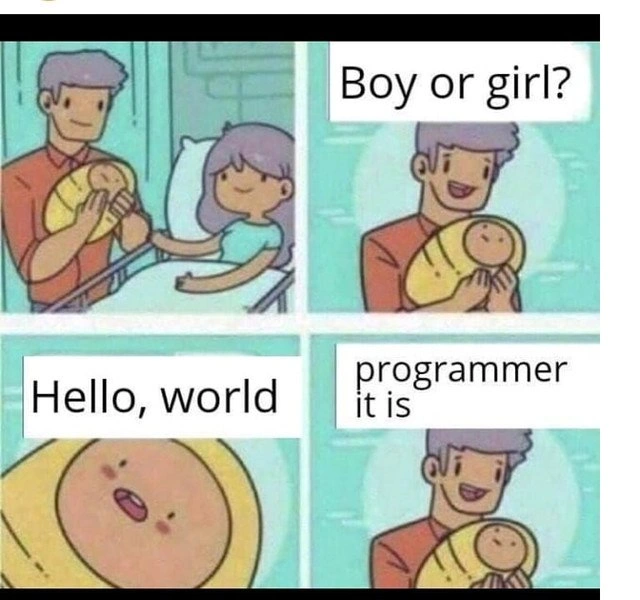
Imagine a baby doing something that only grown-up experts usually do – it would surprise anyone! For example, if a tiny baby suddenly blurted out “abracadabra” (a magic word) instead of “Mama” or “Dada,” everyone would chuckle and say, “Haha, looks like we have a little magician here!” In this meme, the newborn baby says “Hello, world,” which is a phrase people normally learn when they start computer programming. It’s so unexpected and out-of-place that it becomes really funny. The dad plays along with the joke: since the baby greeted everyone like a computer program would, the father happily declares, “I guess the baby is a programmer!” The humor comes from the proud parents treating a completely impossible moment (a baby speaking code right at birth) as if it’s perfectly logical. It’s a cute, silly twist: the baby says hello in tech language, so the parents instantly imagine a future where their child is a coding whiz. No one actually expects a real newborn to talk or choose a career, of course – that’s why it makes us smile!
Level 2: First Words in Code
Let’s break down why this scenario is funny for anyone just getting into coding. In the programming world, “Hello, world” is the very first message you traditionally learn to make a computer display. It’s the default starter example in almost every language’s tutorial. For instance, if you’re learning Python you might write a line of code like print("Hello, world!") and run it to see the computer output Hello, world. This simple exercise confirms that your coding environment works and that you know how to run a basic program. It’s a little victory that every programmer remembers – the moment you see those words appear on the screen, you know “Yes, I made the computer do something!” So Hello, world has become a symbol of beginning to learn programming.
Now, in the meme, a newborn baby in the hospital actually says “Hello, world” out loud as its first words. Of course, that’s impossible in real life – newborns can’t speak, and certainly not in full English sentences! The meme is intentionally silly. The baby is personifying a freshly written program by greeting the world. This is a huge wink to anyone who codes: a baby wouldn’t know those words unless it somehow already learned to program. So when the father hears that, he immediately takes it as a sign. Usually, a parent or doctor announces “It’s a boy” or “It’s a girl” when a baby is born. Here the dad jokes, “programmer it is,” as if the baby bypassed the whole boy/girl question and identified as a coder from minute one. In other words, the dad decides the baby’s “future job” on the spot because of those unusual first words. He’s basically saying: “Never mind boy or girl – my kid is a programmer!”
Let’s unpack some terms: A programmer (also called a coder or developer) is someone who writes instructions in a computer language to create software, websites, apps, and so on. And a Hello World program is typically the first example of those instructions you learn; it’s often just one line of code that makes the computer show the phrase “Hello, world.” It’s used as a friendly introduction to any programming language because it’s simple and it verifies that everything is set up correctly. In developer communities, people bond over these little milestones. That’s why you’ll find a lot of coding humor and developer memes about the Hello, world example – it’s a shared experience nearly all coders have, whether they wrote it in Java, JavaScript, C, or Python. It’s relatable humor if you’ve gone through it yourself. So, seeing a baby spontaneously perform this geeky rite of passage is cute and funny, especially to folks learning to code. It mixes a real-life “first” (a baby’s first word) with a coder’s “first” (the first working program). For a junior developer or a student, it’s easy to smile at the exaggeration: wouldn’t it be wild if our coding skills came that naturally? This meme playfully says that from day one, this kid was destined to join the coder community.
Level 3: It's a Programmer!
Experienced developers can’t help but grin at this absurdly sweet scenario. A newborn’s first utterance isn’t a cry or babble – it’s “Hello, world”. In programming culture, Hello, world is more than a greeting; it’s the iconic output of the simplest program in countless languages, essentially the secret handshake of software development. By mashing up this coding tradition with the classic birth moment question “Boy or girl?”, the meme delivers a punchline that resonates deeply in dev circles. The father’s response, “programmer it is,” lands as a nerdy twist on “It’s a boy!” or “It’s a girl!” – implying that being a programmer is an identity as fundamental as any gender (at least in our geeky hearts). For any seasoned coder, the idea of a baby immediately identifying with the HelloWorld rite-of-passage is hilariously relatable and oddly heart-warming. It’s like this kid was literally born to code (barely out of the womb and already printing output!).
This joke taps into decades of programming lore. Nearly every developer’s learning journey starts with a Hello, world program, a tradition dating back to the 1970s when the classic K&R C book used it as the first example. Over time, “Hello, world” became a universal entry point and a beloved in-joke across all DevCommunities. From C to Python to JavaScript, printing that friendly phrase is the inaugural victory lap for beginners. In fact, the moment any coder sees or hears “Hello, world” in an odd context, we immediately get the reference. It’s a common thread between generations of programmers. This meme plays on that communal nostalgia: we recognize the baby’s “Hello, world” as the hallmark of a newbie coder, and the absurdity that it’s happening at birth makes it CodingHumor gold. The father’s instant understanding (smiling proudly instead of looking confused) suggests he’s in on the joke – likely a developer himself. He treats the baby’s words as undeniable proof of a coding destiny. Who cares about pink or blue blankets when your kid just executed the canonical first program verbally? The proud dad effectively announces, “We have a little coder!”
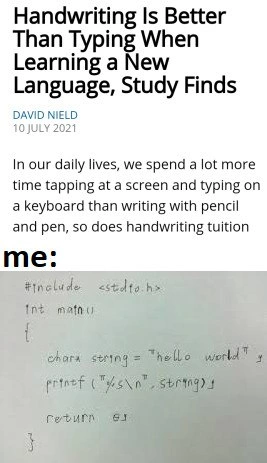
To a veteran engineer, there’s extra laugh-out-loud charm in how flawlessly the baby pulled this off. Printing Hello, world is usually the first test to confirm your tools are set up and your code runs. Whether you write:
print("Hello, world!")
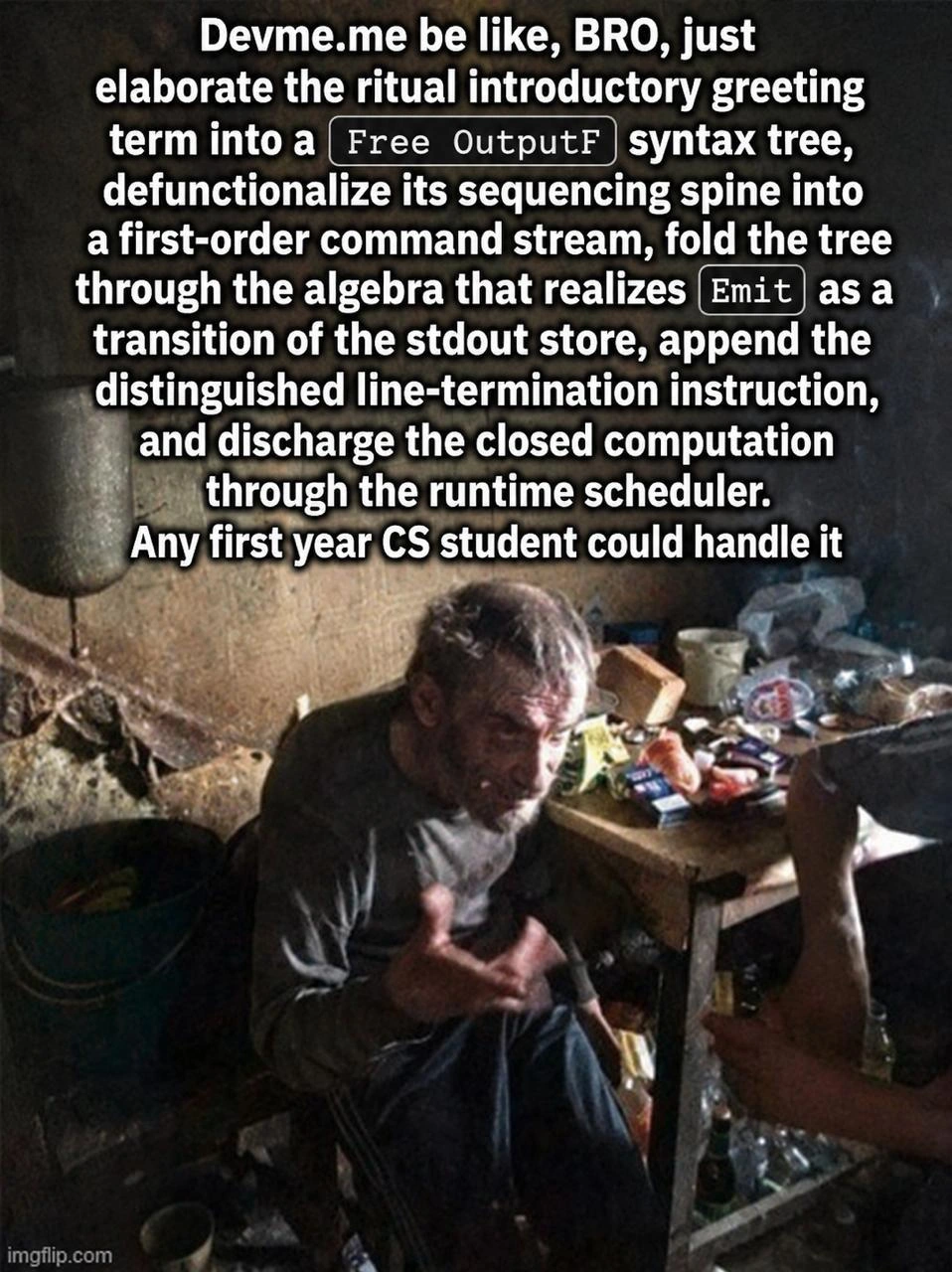
in a high-level language, or slog through a dozen lines in C or Java to get the same output, that simple message means Success! No compiler errors, no runtime exceptions. Here our newborn apparently passed the “it works!” test at first try – an achievement that took many of us, ahem, a few frustrating attempts. (Remember missing a semicolon or mis-configuring the environment? We’ve all been there.) The baby’s first words come out perfectly formatted – capital H, comma, lowercase w, exclamation mark – as if nature itself installed the developer toolkit. It’s an inside joke of DeveloperHumor: obviously real babies can’t do this, but the meme imagines the ultimate prodigy who writes a working program with their first breath. The humor is equal parts ridiculous (newborns don’t talk in any language, let alone in code) and wish fulfillment for geeky parents. In fact, this comic belongs to a family of developer memes that fantasize about infants born with programming superpowers (the baby programmer trope). And as a sly bonus, it parodies those over-the-top gender reveal moments – swapping pink vs. blue for a cheeky gender reveal code joke. Instead of announcing a gender, the dad announces a discipline: programmer. It’s the kind of lighthearted, nerdy twist that makes programmers chuckle and think, “Haha, if only it were that easy to spot a future coder!”
Description
A four-panel comic meme depicting the birth of a baby. In the first panel, a happy couple is in a hospital room with their newborn. In the second panel, the father holds the baby and asks, 'Boy or girl?'. The third panel is a close-up of the baby, who utters its first words: 'Hello, world'. In the final panel, the father, looking pleased, declares, 'programmer it is'. This meme is a lighthearted joke about the most iconic introductory program that nearly every developer writes when learning a new programming language. The 'Hello, World!' program is a universal rite of passage in the coding community. The meme humorously suggests that a baby's first words being this phrase is an undeniable sign of a future programmer, celebrating this shared cultural touchstone of the developer world
Comments
9Comment deleted
The baby's first dependency was the hospital's Wi-Fi, and its first pull request was for a bottle
Baby’s first words were “Hello, world” - great, I’ve already inherited a green-field project that’ll become legacy before v1.0 of sleep ever ships
After 20 years in tech, you realize 'Hello, World' is actually the most bug-free code you'll ever write - it's all downhill from there, just like raising a junior developer who thinks they can refactor your legacy codebase on day one
The real question is whether the baby will grow up to argue that 'Hello, World!' should be 'Hello World' (no comma, no exclamation) or spend their career debugging why their first words compiled but the production deployment said 'Helo, wrld' due to a character encoding issue inherited from the hospital's legacy system
First words: “Hello, world” - programmer confirmed; next milestone is learning that “hello” needs an API gateway, RBAC, and a 400-line Helm chart to reach “world.”
First stdout reads 'Hello, world'; from here on it's an unversioned API with breaking changes at 3 a.m
Baby's 'Hello, worlld' proves even origin code ships with tech debt - no refactoring before the first deploy
Very funny laughed twice Comment deleted
Oi Lord you stewpheed , i laughed with my ankle Jimmy 5 times at list innit Comment deleted