Hackers As Artists: The Slide That Justifies Every 3am Incident Root Cause
Why is this Security meme funny?
Level 1: Crayon on the Wall
Imagine you wake up one morning and find your living room wall covered in crayon drawings. A little kid, feeling happy and creative, has drawn all over it just because they wanted to make something. Now you have a mess to clean up, and you’re thinking, “Why on earth did they do this?!”
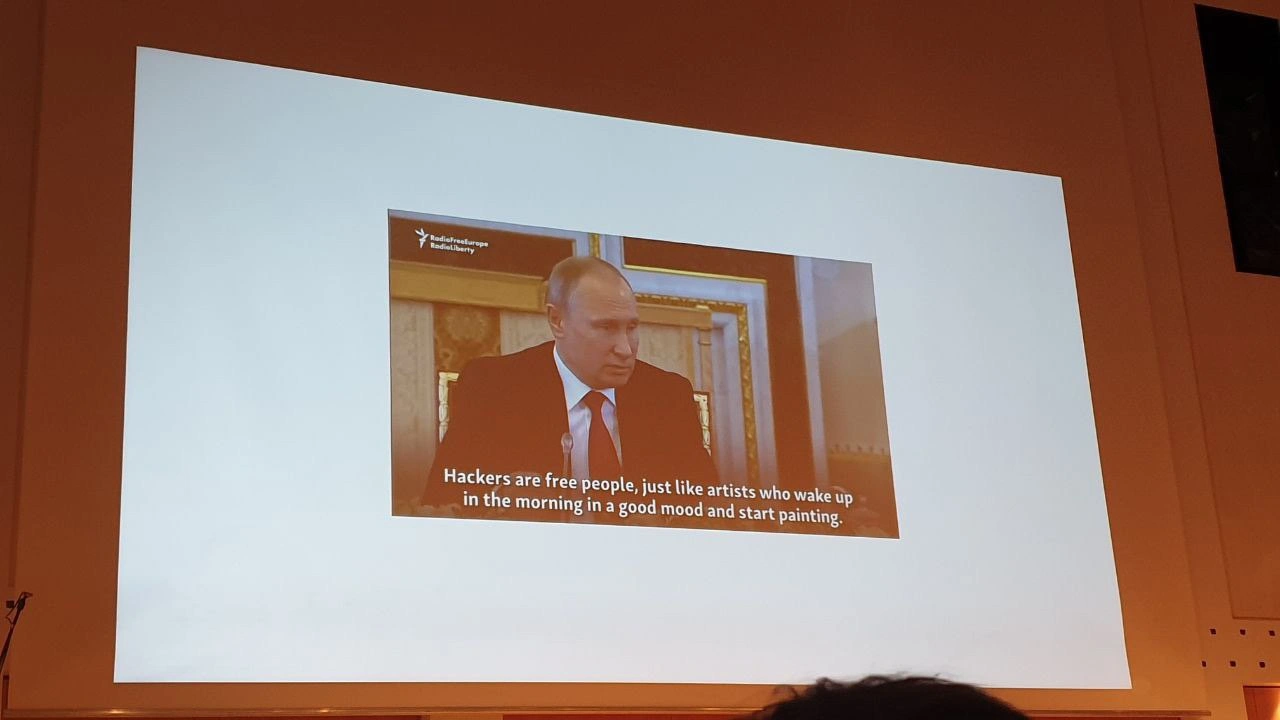
This meme is joking that computer hackers can be a bit like that kid with the crayon. The quote on the screen basically says: “Hackers are free people, like artists who wake up feeling good and start painting.” In simple terms, it’s comparing a hacker breaking into a computer system for fun to an artist painting when they feel inspired. Just like the child drew on the wall out of the blue, a hacker might decide to mess with a website or a network just because they’re in the mood to create (or cause) something.
Now, think about the people who take care of that computer system (like the parents who now have to clean the wall). Those tech people might get an alert in the middle of the night – “Uh oh, someone’s drawing on our wall!” It’s a big surprise and a problem they didn’t predict. When they explain what happened the next day, it’s almost funny because the best explanation is just: some person out there felt like doing it.
So the reason this is funny is a mix of frustration and understanding. It’s frustrating because no one wants a mess (on a wall or in a computer) at 3 AM. But it’s also nodding along with the idea that sometimes people do unpredictable, creative things. Hackers doing mischief for no clear reason is like kids making art where they shouldn’t. The meme makes us smile because it captures that feeling perfectly: “Sometimes bad stuff happens just because someone was in a creative mood.”
Level 2: Hacker in a Good Mood
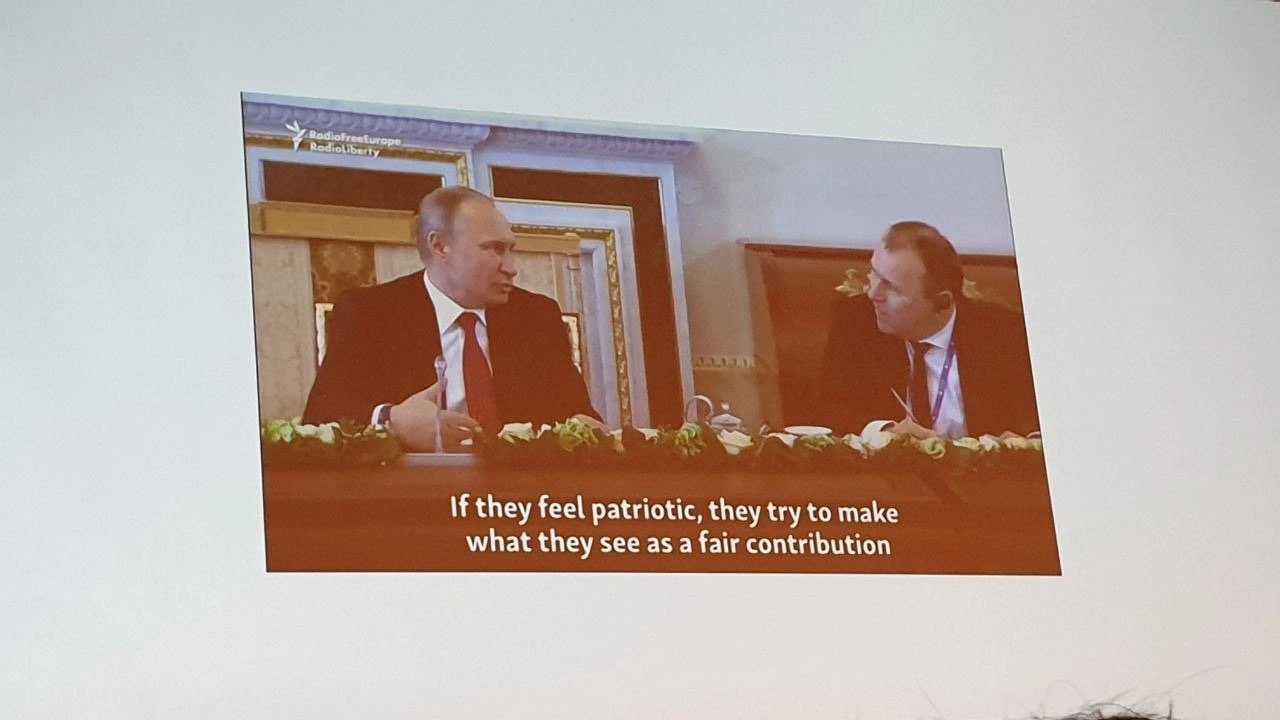
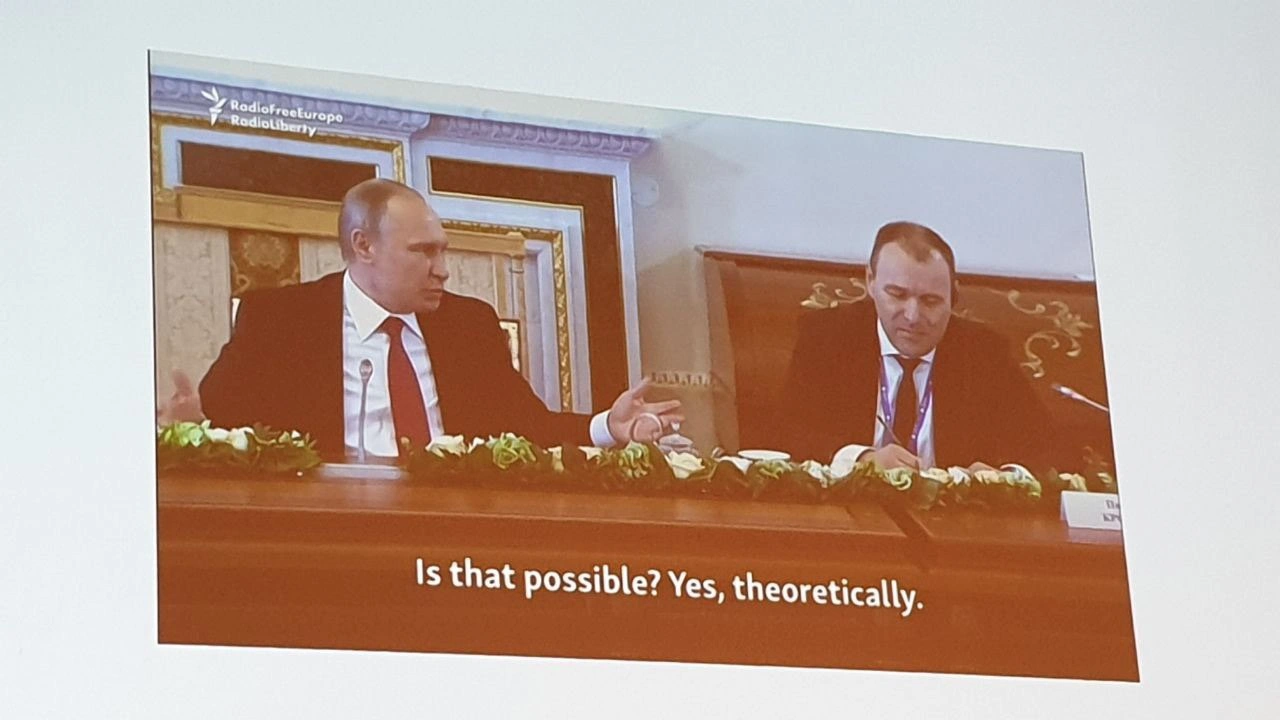
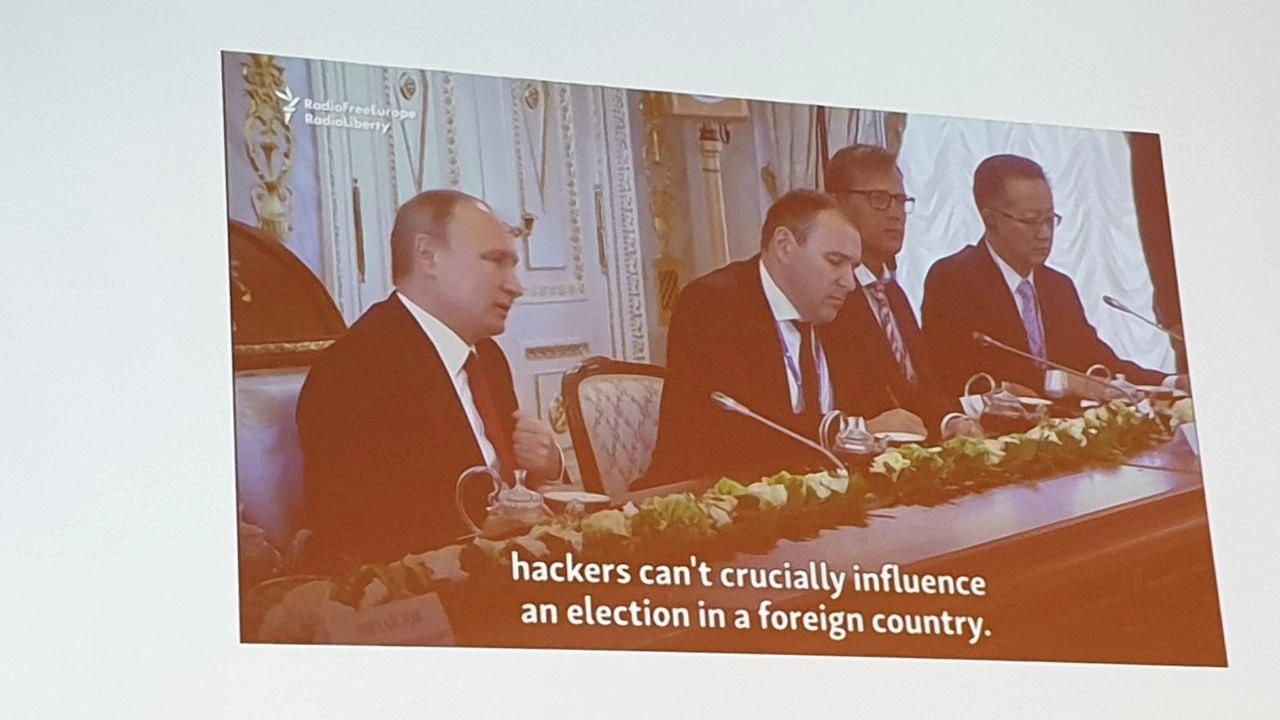
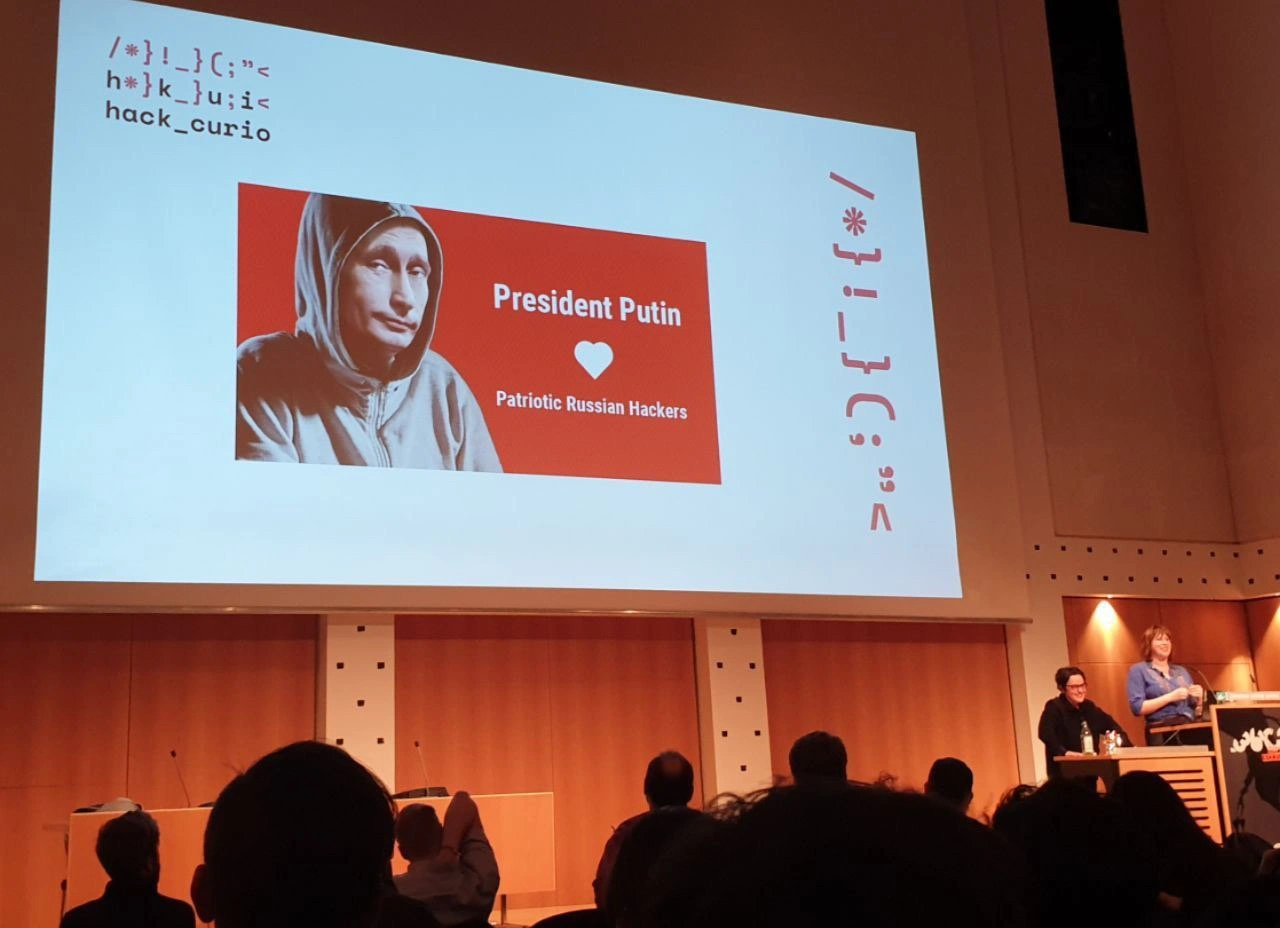
Let’s break down what’s happening in this meme in simpler terms. We have a big screen at a tech/security conference, showing a still image of a well-known politician (yes, that’s Russia’s President Putin, face blurred on the slide) with a subtitle. The subtitle is the key: “Hackers are free people, just like artists who wake up in the morning in a good mood and start painting.” The presenter at this conference took that quote from a real news interview and is using it humorously in their talk. Why? Because it perfectly sums up a running joke in the security and developer world.
Here’s the idea: hackers (in this context, we mean people who break into computer systems or find clever ways around security) are being compared to artists who paint because they feel like it. An artist might wake up feeling inspired and decide to paint a new picture. Similarly – as the joke goes – a hacker might wake up feeling “in a good mood” and decide to hack into something just for the challenge or thrill. There’s a notion in hacker culture that hacking can be a creative act, almost like art. Hackers often talk about elegant code or clever exploits the way artists talk about beautiful paintings. The quote on the slide kind of glorifies that, saying hackers are free people like artists, implying they act independently and creatively, not because someone ordered them to.
Now, why does this justify every “3am incident root cause”? In tech, an incident usually means something has gone wrong – for instance, a website is down, or data got breached. A root cause is the underlying reason it happened (like the final explanation after troubleshooting). When something breaks at 3 AM, it means it happened suddenly, often outside normal hours, and someone (an on-call engineer or a security person) had to wake up to fix it. A classic scenario: you’re sleeping peacefully, and at 3:00 AM your phone alerts you that your system is under attack or has crashed. You scramble to investigate and discover that some outsider – a hacker – found a way in.
During the investigation (and later when explaining it to your bosses in a report or meeting), sometimes the explanation boils down to “someone on the internet decided to do this to us.” It’s like if your store’s window got graffiti overnight – the who and why might just be “some random graffiti artist felt like it.” In tech terms, maybe you find that an attacker exploited a vulnerability (a flaw) in your system that nobody knew about, or they just decided your system looked fun to poke at. That’s a frustrating root cause because it’s not a neat internal bug you can fix easily – it’s essentially saying, “We got hit because an external person felt like hitting us.”
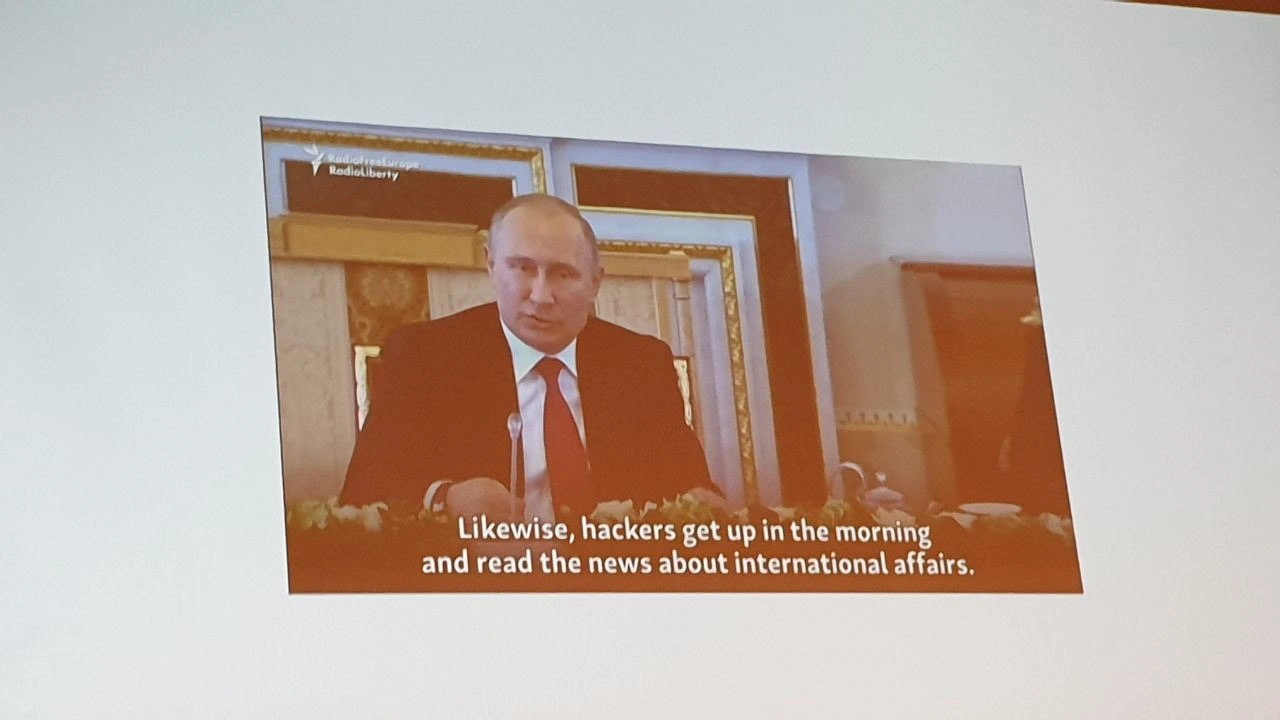
This meme slide is humorous because it’s exactly that scenario, but said in a poetic way. Instead of a dry technical statement, it’s using the metaphor of an artist painting in the morning. Imagine telling your company’s executives: “Why did our system go down? Well, a hacker was feeling artistic and painted our server with malware.” It sounds absurd, but it’s kind of true sometimes! Hackers (especially individuals or unofficial groups) often choose targets or actions based on curiosity, challenge, or excitement – not just for money or orders. The quote came from a political context where the speaker was basically saying “Hackers do their own thing, like artists, not under state direction,” trying to deny responsibility for some cyber attacks. Tech folks found that quote memorable. Now, in a conference setting, a speaker is playfully using it to say, “Hey, we’ve all been there – the system blew up because some hacker was in a good mood and decided to play Picasso with our network.”
For someone new to tech or junior developers: think of Information Security (Infosec) teams as the “guards” of the computer systems. They set up defenses (password rules, firewalls, updates) to keep bad actors out. But occasionally, a breach happens – that’s when a hacker slips through those defenses. After any big problem (outage or breach), the team does a post-mortem or root cause analysis to figure out what caused it and how to prevent it next time. Many times the cause is something technical like “we had a bug in our code” or “we forgot to lock a door (open port) on the server.” But if an attack was really sophisticated or just something completely unforeseen, the final explanation might seem almost shrug-worthy: “someone out there decided to attack us in a way we didn’t expect.” This slide joke is essentially that shrug in a colorful form.
And let’s not forget the comedic contrast: corporate IT and security work is usually very structured and policy-driven — the opposite of free-form art. So hearing a very official-looking person equate hackers to carefree artists is funny to people in the field. It’s like hearing a strict school principal say, “Pranksters are just free spirits expressing themselves.” It’s so out of place that it gets a laugh. Yet, there’s truth in it: the hacker mindset does involve creativity and spontaneity. Those in developer communities often celebrate clever hacks almost as works of art (there are even conferences and competitions where participants show off creative ways to break systems, much to the applause of peers). So the quote hits a sweet spot between being ridiculous and recognizing a real aspect of hacker behavior.
In summary, the meme uses that quote on a slide to poke fun at how we often explain unexplained tech incidents. It resonates with both security professionals and developers because they’ve experienced those late-night “why me?!” moments and sometimes all you can say is, “Well, the hacker was feeling playful.” It’s a lighthearted way to bond over the fact that not everything in systems is predictable or controllable — sometimes chaos shows up with a paintbrush (or a keyboard) in hand.
Level 3: Artists with Keyboards
In practice, this meme lands squarely in the InfoSec community’s shared truths. The slide on the big screen shows a famous quote (from a certain suit-and-tie world leader) claiming: “Hackers are free people, just like artists who wake up in the morning in a good mood and start painting.” This was originally a political soundbite – essentially an official shrugging that “hey, hackers just do whatever they want, totally on their own, like painting for fun.” At a security conference, flashing this quote is a masterstroke of satire. Every seasoned developer or security engineer in that auditorium has lived through a 3 AM incident where the post-mortem root cause boils down to someone out there just decided to mess with us. The presenter is riffing on that exact pain: after you’ve spent bleary-eyed hours combing through logs and burnt toast code, sometimes the only explanation left is, “Some hacker felt creative last night.”
From a senior perspective, the humor cuts deep. Enterprise information security teams are all about regimented process – firewalls, patch cycles, compliance checklists, incident response drills. Yet here we have this grand notion of hackers as unfettered artists. It’s an almost romantic contrast. The meme winks at the absurdity: while our corporate policy might demand multi-factor authentication and change management tickets for even small tweaks, some 19-year-old “artist” with a laptop can spontaneously turn our production database into their canvas at 3 in the morning. (And of course, it’s always at 3 AM, when your on-call pager feels like a hand grenade under the pillow.)
The phrase “the slide that justifies every 3am incident root cause” drips with sarcastic truth. In many root cause analysis (RCA) meetings after a breach or outage, there’s pressure to explain what went wrong. Ideally, you’d uncover a fixable internal mistake or a missed safeguard. But veterans know that sometimes the root cause isn’t some neat, fixable bug – it’s an external actor with enough ingenuity and gall to do something we never anticipated. In those cases, managers and engineers alike throw up their hands and essentially echo this slide: Hackers gonna hack. It’s a cynical way of saying, “Look, we followed our playbook, but some hacker just woke up and chose chaos. They treated our system like an empty canvas and splashed an exploit across it because why not.” This quote on the slide perfectly encapsulates that shrug. It’s simultaneously an excuse and a dark inside joke: unpredictable attacks are as inevitable as artists feeling inspired.
Security professionals chuckle (or groan) because they’ve all confronted this dilemma. No matter how many penetration tests you run or how expensive your threat intelligence feeds are, there’s always a novel attack vector lurking out there. It might be a zero-day exploit (an attack using a vulnerability so new that no one has a patch for it) or just an old flaw used in a clever new way. When such an incident hits, the “3am root cause” often reads like: “Unauthorized external entity executed X because they were able to.” That’s a dry, formal way of saying some hacker in a good mood started painting. It’s the least satisfying root cause for an engineer – because it means we got outsmarted or just unlucky – but it’s often the truth. And it’s oddly comforting to have a quip like this slide to lean on, as if to say, “Don’t beat yourself up too much; hackers gonna do hacker things, just like artists gonna art.”
There’s also a sly poke at the culture of hacking versus the culture of enterprise IT. In hacker culture, especially among old-school hackers and modern cyber-security enthusiasts, there is a notion of hacking as an art form. The term “black hat” (referenced in our subtitle pun Paint It Black Hat) denotes a malicious hacker, while “white hat” is an ethical hacker — but both often pride themselves on creativity and cleverness. A talented hacker finding an unexpected vulnerability can indeed feel like an artist discovering a new technique. This ethos goes way back to the early days of computing — think of the joyful creativity of the MIT hackers in the ’60s playing with code and electronics, or the demo scene in the ’80s treating software like digital art. So when a politician (likely with a smirk) says hackers are like free artists, he’s unintentionally flattering the hacker community’s ego. Security conference audiences appreciate that irony: the very excuse meant to dodge responsibility (“we can’t help it if these free-spirited hackers act alone!”) actually elevates their craft to art. It’s both hilarious and painfully on-point.
So the slide does double duty: it satirizes how organizations (and nations) deflect blame for breaches by invoking the mythical lone hacker artiste, and it commiserates with every engineer who’s had to face an incident report that basically reads “a hacker did it, and we have no further explanation.” The seasoned folks laugh, then sigh knowingly. They’ve been there, cleaning up the splatter of a hacker’s “masterpiece” in the wee hours, and now someone’s put that ridiculous experience into the perfect one-liner on a conference slide. Cue the infosec PTSD flashbacks.
Level 4: Paint It Black Hat
At the deepest level, this meme hints at the unbounded creativity in cybersecurity – a kind of unpredictability that verges on theoretical. Just as no algorithm can enumerate every possible masterpiece an artist might paint, no security model can predict every ingenious hack a motivated attacker might devise. In formal terms, a human hacker’s behavior is like an uncomputable function: given enough freedom, they’ll find exploits that no static rule-set or AI detection system could anticipate. This parallels the halting problem in security – you can’t write a program to perfectly detect all other programs’ malicious behaviors because attackers can always invent a new trick or obfuscation. It’s a fundamental asymmetry: defenders must secure all paths, but a hacker-artist only needs to find one novel path.
Consider how machine learning intrusion detectors work: they train on known patterns of attacks. But a truly creative “artist” hacker can craft a new pattern that the model doesn’t recognize – analogous to an artist inventing a new art style that confounds critics. The meme’s tongue-in-cheek quote captures this computational complexity: hackers operate in a solution space too vast for rigid systems to cover. In academic cybersecurity, this is why techniques like formal verification or exhaustive testing often fall short – the real world has open-ended adversaries. In other words, defending against a hacker in a “good mood” veers into chaotic territory that theory alone can’t easily tame. The humor here nods to an almost Gödel-like incompleteness in infosec: no matter how tight your code or how rigorous your proofs, there’s always that one “free-spirited” exploit that breaks the mold (and your sleep schedule). It’s the theoretical justification for why 3am incidents happen – the system of defense can never be complete as long as attackers treat breaking in as their art form.
Description
A photo taken from the audience shows a large projector screen in an auditorium. Centered on the otherwise white slide is a subtitled news-clip still (watermarked “RadioFreeEurope RadioLiberty”) featuring a suited, blurred-face politician seated in an ornate room. The subtitle reads: “Hackers are free people, just like artists who wake up in the morning in a good mood and start painting.” A microphone stand silhouettes the lower left of the frame, hinting this is a live security or developer conference talk. The presenter is clearly riffing on hacker culture and the romanticized notion of unrestricted creativity, contrasting it with the regimented realities of enterprise infosec teams
Comments
6Comment deleted
When the CISO hears this quote, they finally understand why the SOC’s paintbrush logs keep flooding Splunk at four in the morning
Meanwhile, actual hackers wake up at 3 PM to a Slack notification that prod is down, spend six hours reverse-engineering an undocumented API, then argue about vim vs emacs until sunrise
Ah yes, the romantic notion that hackers are 'free artists' who wake up inspired to 'paint' exploits - conveniently omitting the 3 AM pager alerts, the soul-crushing CVE triage meetings, the endless compliance audits, and the existential dread of explaining to executives why their S3 bucket was public for 18 months. But sure, let's compare crafting a zero-day to Monet's water lilies while ignoring that most security work involves writing YAML for the thousandth time and arguing about whether to patch on Tuesday or wait until the vulnerability is actively exploited in the wild
Sure, hackers are “artists” - MITRE catalogs the brushstrokes as TTPs while our SOC pays the gallery bill at 03:00
Good mood: Event-sourced microservices; bad mood: Monolith with 'TODO: refactor someday'
If hackers were artists, our SOC would be a gallery - APTs still follow MITRE ATT&CK like a project plan and open their exhibits at 03:00 during maintenance windows