Error Handling in Go: This Is The Way
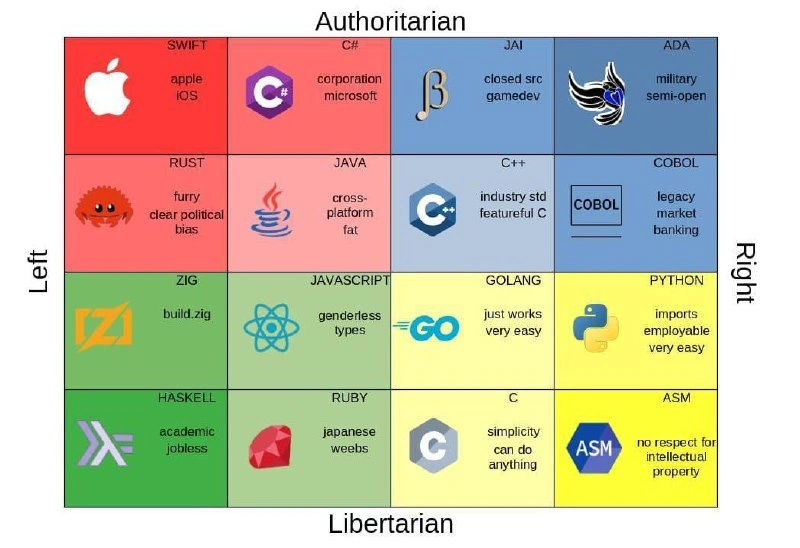
Why is this Languages meme funny?
Level 1: Always Buckle Up
Imagine you have a rule you never ever break, like always wearing your seatbelt in a car. You do it every time, no questions asked, because it’s safe and important. For Go programmers, checking for errors in their code is just like that – a safety step they do every single time. The meme joke says “errors are part of my religion,” which is a funny way to say “I treat handling errors as something sacred that I will always do.” Just like buckling up before driving, a Go developer will always handle errors when coding – it’s simply the way they do things, no exceptions.
Level 2: No Exceptions Allowed
For a newer developer, it helps to break down what’s special about Go’s error handling. In programming, error handling is how we deal with things going wrong: maybe a file isn’t found, a network call fails, or some data is invalid. Different languages tackle this differently. Many languages use exceptions – special events that are “thrown” when something bad happens and can be “caught” by dedicated code (for example, a try/catch block in Java or JavaScript). But Go doesn’t do it that way. Go makes you handle errors explicitly. Functions in Go often return an extra value of type error along with the real result. You’re expected to check that error every time. If the error isn’t “nil” (nil in Go means no value, kind of like “no error”), you handle it or return it up the chain.
So, a typical Go function call looks like this: you call a function and get two results back: a useful result and an error. Immediately, you write code to see if that error is not nil. It usually goes like: if err != nil { return err }. This line means “if there was an error, stop what we’re doing and propagate the error upward (or deal with it now).” This is why people say Go encourages explicit error returns – you literally return the error to your caller. You might see something like:
response, err := makeNetworkRequest(url)
if err != nil {
// handle the error, for example:
return fmt.Errorf("failed to fetch data: %w", err)
}
// else, carry on because err was nil (no error)
process(response)
In a Go code file, you’ll see many blocks like that. It can feel repetitive (“We just keep checking errors every other line!”), especially if you’re coming from a language that would automagically throw an exception. But there’s a reason for it. By checking err each time, developers ensure nothing gets ignored. It’s like constantly asking, “Did that step go okay? If not, I won’t pretend everything is fine.” This leads to very reliable and predictable code flow. There are no surprise jumps to error handlers – everything is laid out.
The meme uses the line “errors are part of my religion” as a comedic exaggeration of this Go language quirk. It’s saying: Go programmers treat handling errors as a sacred rule – not optional, not to be forgotten. In Go’s developer experience (DX), you quickly learn that ignoring an error is one of the cardinal sins! In fact, linters and the compiler will warn you if you try to ignore an error without explicitly doing something with it. The Mandalorian imagery just adds a fun pop-culture twist: the Mandalorian never takes off his helmet because of his creed, and a Go coder never shirks error handling because of their “creed.” There’s even a popular Go phrase: “Don’t panic.” It reminds developers to use proper error returns instead of panics (Go’s version of exceptions) in most cases. In short, Go has no exceptions allowed (literally no exception objects, and no exceptions to the rule of checking errors), and the community embraces that rule religiously.
Level 3: This Is The Way
In Go, handling errors isn’t just an afterthought – it’s a deliberate design choice and a cultural cornerstone. The meme humorously compares Go’s error-handling practice to the Mandalorian creed. In The Mandalorian, the bounty hunter famously says, “Weapons are part of my religion,” to insist he never gives up his tools. By swapping in “errors” for weapons, the meme implies that Go developers are just as devout about managing errors. They practically live by the mantra of always checking and handling errors. When someone asks about error handling in Go, an experienced Gopher might as well respond with a stoic, “errors are part of my religion. This is the way.”
At a senior engineering level, this joke lands because it riffs on Go’s well-known explicit error handling pattern. Unlike languages that use exceptions (like Java’s try/catch or Python’s try/except blocks), Go functions return errors as ordinary values. This leads to idiomatic code where almost every other line is an if err != nil check. Seasoned Go developers have written so many of these checks that it becomes second nature – a habitual ritual in their coding routine. It’s funny because it’s true: in a non-trivial Go codebase, you’ll find error handling everywhere, as pervasive as a religious practice.
Why did Go choose this path? Partly for clarity and simplicity. By returning errors and forcing the caller to handle them, Go avoids hidden control flow. Nothing magically jumps to a catch block; instead, you see every step. This can improve code quality and make debugging more straightforward – you always know which function returned an error and how it’s dealt with. It’s a bit like a safety net woven through the code. However, it also means Go developers write a lot of boilerplate. The meme plays on that tension: Gophers embrace the boilerplate with pride (or at least grim acceptance), like a creed. They joke about how many times they’ve typed if err != nil in their career. In fact, it’s so ingrained that some devs jest about adding a dedicated “err check” key on their keyboard. The Mandalorian reference, “errors are part of my religion,” perfectly captures this fanatical dedication with a wink. Go veterans chuckle because they’ve been there – treating error handling not as a mere chore, but as the Way to write robust Go code.
Description
The image is a meme based on a still of the title character from the Star Wars series 'The Mandalorian'. The top of the image has white text that reads, 'When someone asks about error handling in Go'. The bottom of the image shows the Mandalorian with a subtitle that has been edited to say, 'errors are part of my religion.' The word 'errors' is distinctly placed in a black box to show it's an alteration of the original quote, 'Weapons are part of my religion.' The meme humorously critiques or, depending on perspective, celebrates the error handling philosophy of the Go programming language. Go eschews traditional try-catch exception handling in favor of explicitly returning error values from functions. This leads to a ubiquitous 'if err != nil' pattern that developers must handle constantly, making error checking a core, almost ritualistic, part of writing Go code, hence the 'religion' analogy
Comments
22Comment deleted
Go's approach to error handling is simple: if err != nil, return err. Repeat this enough times and you achieve enlightenment, or at least a call stack so deep you can see the kernel
Every ‘if err != nil { return fmt.Errorf("%w: %v", err, ctx) }’ is just another bead on the Go rosary - we’re not handling errors, we’re saying Our Fathers so future SREs don’t page us at 3 a.m
After 15 years of advocating for proper error handling across multiple languages, I've come to appreciate Go's approach - it's like pair programming with a paranoid QA engineer who questions every single line of code. Sure, your codebase is 40% error checks, but at least you know exactly where that nil pointer came from at 3 AM in production
Go developers checking 'if err != nil' after every function call isn't defensive programming - it's a religious practice. While other languages hide their sins behind try-catch blocks and let exceptions bubble up like technical debt, Gophers face their errors head-on with the stoic determination of a Mandalorian. Sure, your codebase might look like a vertical accordion of error checks, but at least you'll never wonder where that panic came from at 3 AM. This is the way... to production stability, even if it means your error handling code is longer than your business logic
In Go, errors aren't exceptions - they're values you salute before propagating, lest panic enforces the creed
In Go, exceptions are heresy; the faithful return (value, err), chant “if err != nil,” and argue %w vs sentinel like a doctrine committee
In Go, “this is the way” compiles to: if err != nil { return fmt.Errorf("%w", err) } - repeated for every call in the stack
Сложна, реквестую Помощь зала! Comment deleted
В го функции могут возвращать несколько значений, соответственно ошибки принято передавать как одно из значений, а потом проверять ифом Comment deleted
Спасибо, друг) Comment deleted
Ээ э э ты зачем аватарку спиздил Comment deleted
Это сильно отличается от хендлинга ошибок в других языках, но мне нравится Comment deleted
Смотря каких. В Rust похожий принцип с Result вариантом, который они позаимствовали у Ocaml-а, который в свою очередь позаимствовал это у Haskell с его Either Monad. А тот скорее всего еще у кого-то) Comment deleted
В Го нету исключений, поэтому ошибка это одно из возвращаемых значений функции Comment deleted
Типа как опционалы (nullable) в других языках? Comment deleted
Примерно так: f, err := os.Open("path to file") if err != nil { panic(err) } Comment deleted
В C++ кстати тоже такое хотят завезти через std::expected Comment deleted
https://www.youtube.com/watch?v=kaI4R0Ng4E8 кто хотел у Александреску уже сам срисовал)) Comment deleted
No Comment deleted
Мой краб Comment deleted
Верни краба Comment deleted
Не верну, у меня он уже давно живёт :₽ Comment deleted