The Convoluted History of Google Payments
Why is this Google meme funny?
Level 1: New Name, Same Thing
Imagine you have a friend who keeps changing their nickname every few months. One season they want to be called Sam, then suddenly they say, “No, call me Alex now,” and a little later, “Actually, I go by Jo.” It would be pretty confusing to keep track, right? You’d probably laugh and say, “Make up your mind already!”
This meme is joking that Google has a bit of that silly habit – but with the name of their money app. Google kept renaming its app that you use to pay for things: it was like the same toy getting a new name tag over and over. Just when people got used to one name, Google would change it to something else. It’s funny in a goofy way: picture a store changing its sign every year – one year it’s “Google Checkout Mart,” then it’s “Google Wallet Shop,” then “Android Pay Store,” and back to “Google Wallet.” Customers would be like, “Is this still the same store I used to go to?!”
So the big joke is that Google’s payment app went through an identity crisis, constantly re-introducing itself with a new name and logo. It’s like playing a game of “guess what we’re called this year.” The meme shows a little family tree of all those names to make us laugh and say, “Wow, they really did change it that many times!” Even if you don’t know the technical details, you can feel the silliness: Google just couldn’t stick with one name, and that’s both kind of annoying and kind of hilarious, just like a friend who keeps inventing new nicknames for themselves.
Level 2: Payment Name Maze 101
This meme shows a timeline of Google’s ever-changing payment app names, which is both a tech history lesson and a running joke. For a newer developer or observer, let’s break down the key names and what they were:
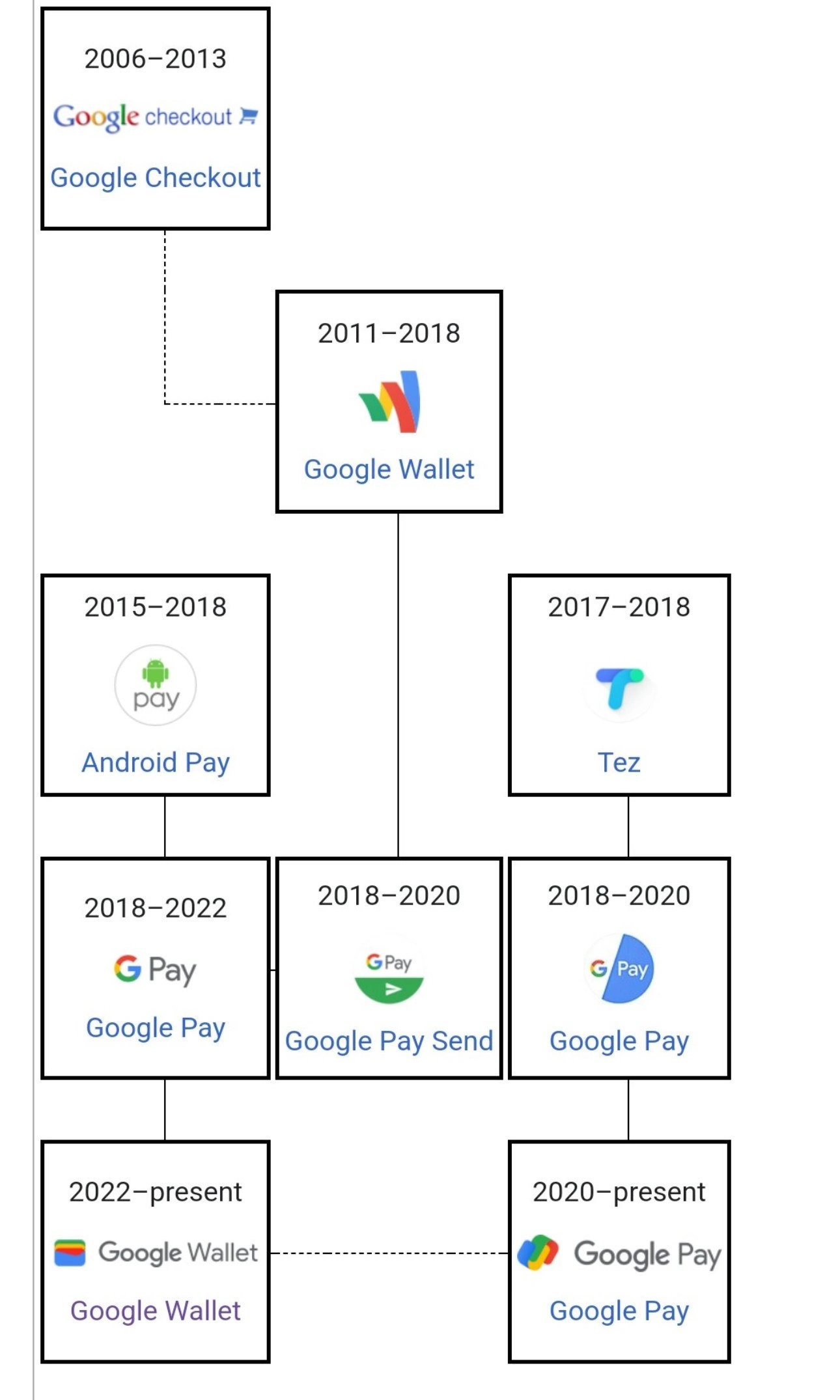
- Google Checkout (2006–2013): This was Google’s first major payment service. Think of it like Google’s version of PayPal back in the day. It let you pay for things online through your Google account. After a while, Google phased this out in favor of a more ambitious idea: a digital wallet.
- Google Wallet (2011–2018): Google Wallet started as an app for mobile payments. It let users store credit cards on their phone and pay at stores by tapping the phone (using NFC technology), and also send money to each other via email. It was an early FinTech app, basically turning your phone into your wallet. Over time, “Google Wallet” did a bit of everything: online checkout, in-store tap payments, and peer-to-peer money transfers. But Google’s branding didn’t stick; they had new ideas brewing.
- Android Pay (2015–2018): Enter Android Pay. Google introduced this to focus on tap-to-pay on Android devices. Why a new name? Likely to make it clear it was built into Android phones (and maybe to match Apple’s “Pay” branding). Android Pay was pretty much Google Wallet’s tap-to-pay feature under a different name. For a few years, if you had an Android phone, you’d use Android Pay at stores for contactless payments, while “Google Wallet” was still around mainly for sending money to friends. This split was confusing, and Google noticed.
- Tez (2017–2018): This one might be unfamiliar unless you followed Google’s products in India. Tez (which means “fast” in Hindi) was a separate app Google launched specifically in India. It connected with India’s popular UPI bank-to-bank payment system. It had a distinct blue-green “T” logo and brand. Essentially, Tez was Google’s tailor-made payment app for the Indian market. However, it lived a short life under that name: Google decided to bring it under the Google Pay brand not long after.
- Google Pay (2018–2020 era): In 2018, Google tried to end the confusion by unifying these services under one brand: Google Pay. They basically said, “Enough with multiple names—let’s make everything Google Pay.” So Android Pay was rebranded to Google Pay, and the Google Wallet peer-to-peer features were also supposed to become Google Pay. During this transition, there were actually a couple of Google Pay versions floating around:
- The main Google Pay app (2018–2022) with Google’s colorful “G Pay” logo – this became the standard app for in-store payments and online payments.
- Google Pay Send (2018–2020) – this was briefly the name for the standalone peer-to-peer payment app (essentially the old Google Wallet’s money-sending feature, spun off). It had a G Pay logo with a little arrow hint. Google Pay Send was basically like Google’s version of Venmo or Zelle, used for sending money to friends, and it kept running separately for a bit.
- A Google Pay (blue logo) variant (2018–2020) – Google had another app version (with a half blue-colored logo as shown in the meme) that was used in some countries (for example, the app that originated from Tez in India initially kept a slightly different branding). This shows how even under “Google Pay”, there were multiple apps or logos at the same time. It’s no wonder people were a bit confused which Google Pay was which!
- Google Pay (2020–present): In 2020, Google gave Google Pay app a major overhaul (especially in the US). They launched a completely redesigned Google Pay app with a new multi-color icon (interlocking shapes in Google’s signature blue, red, yellow, and green). This was not just a simple update – it was almost a new product with added features (like personal finance insights, deals, etc.). So if you hear “Google Pay” today, it’s this newer app and service that combines many features. The meme shows this as the 2020–present Google Pay with the multi-colored logo.
- Google Wallet (2022–present): Yes, they brought Google Wallet back! In 2022, Google decided to reintroduce the Google Wallet name for a new app. Now, Google Wallet (2022) is an app meant to store your digital cards – things like payment cards, transit passes, event tickets, vaccination cards, etc. – basically anything you’d keep in a real wallet. This happened because Google wanted to separate the “payment” function (Google Pay) from the broader “store all my cards” function (Google Wallet), similar to how Apple has Apple Pay (to pay) and Apple Wallet (to store cards). The new Google Wallet has a shiny rainbow-colored card stack logo. Depending on your country, you might use the Google Wallet app to pay in stores (in some regions Google Wallet and Google Pay functionality are combined or separate, which even today is a bit confusing!).
So, that’s a lot of name changes! In summary, Google’s one line of products had many rebrands:
- Started with Google Checkout for online purchases.
- Evolved to Google Wallet to do mobile and peer-to-peer payments.
- Split into Android Pay (for phone tap payments) and Wallet (for peer-to-peer) and also launched Tez in India.
- Merged into one Google Pay brand to unify everything (with some hiccups like Google Pay Send and regional app differences).
- Then split a bit again: a new Google Pay app experience, and later a resurrected Google Wallet for digital cards.
For a junior developer, why does this matter or what’s the experience? Well, imagine you’re working with Google’s payment APIs. An API (Application Programming Interface) is like a contract or set of tools for building on top of a service. Each time Google changed the product name, often the SDK (Software Development Kit) and API would change too — maybe new endpoints, new library names, or at least new documentation. “Deprecation” is a term for when an old API or service is being phased out. Google Wallet’s API was deprecated when Android Pay came, then Android Pay’s API was deprecated/renamed in favor of Google Pay, and so on. As a developer, you might have to update your app frequently just to keep things working and named correctly. It’s a bit like if you learned a library called GoogleCheckoutAPI, then had to switch to WalletAPI, then to GooglePayAPI… keeping track was a headache!
From a Product Management and marketing perspective, these changes were attempts to find a brand that clicks with users and to keep up with IndustryTrends. But from an engineering perspective, it feels like unnecessary churn. LegacyVsModern is a tag here because “legacy” code (the old integration you wrote for Google Wallet) quickly became “legacy” when the new Google Pay came out, and you had to write “modern” code for that — only for that to become legacy a couple of years later when the next rename happened.
The visual of the meme is basically a brand lifecycle diagram or a little org chart of product names. Each box is a product name with the years it was active and its logo, and lines show how one led to or split into another. It’s humorous because usually family trees show generations of people over centuries — here we have generations of product names over just a few years! For a junior dev or anyone new to tech, it shows how fast things change in the tech world, especially at a company like Google. Today’s “hot new platform” can be rebranded or replaced in a short time. If you ever feel confused hearing someone mention “Google Wallet” versus “Google Pay” in a discussion, don’t worry — even professionals have to pause and verify which version or year it refers to.
In essence, Google’s payment platform went through an identity crisis. The meme captures that naming churn in one picture. It’s funny in a “wow, really? they changed it again?” kind of way. Early in your career you might not have lived through all these changes, but trust that many of your mentors did — and they likely still have old code or documents referencing these bygone names. If you ever maintain an older codebase, don’t be surprised if you find variables or functions named walletClient or androidPayService in code written just a few years ago — that’s a direct artifact of this rapid rebranding cycle. Keeping up with the name-of-the-day was practically a part-time job! This meme’s joke is basically: even Google can’t make up its mind, and everyone building on their stuff had to just buckle up for the ride.
Level 3: The Rebrand Hydra
In the world of FinTech, stability is king—yet Google’s payment platforms have undergone so many name changes that it feels like battling a mythological Hydra. Cut off one head (retire one name) and two new names sprout in its place. The meme’s family-tree diagram charts a google_wallet_timeline of constant naming_churn: from Google Checkout to Google Wallet, then branching into Android Pay and an India-specific Tez, which all merged (briefly) into Google Pay—only for Google Wallet to resurrect years later. It’s a product_rebranding_frenzy emblematic of tech’s BrandingInTech madness.
Seasoned engineers see the humor because they’ve lived it. Naming things is hard, as the old joke goes (cache invalidation and naming are the two hardest problems in computer science), and Google’s real-life struggle proves it. Each rebrand meant API endpoints and SDK class names flipping like a deck of cards. One quarter you’re integrating GoogleWalletService, next quarter it’s AndroidPayAPI, then GooglePayAPI—all for essentially the same underlying payments service. The meme jokingly notes the branding sprint lasted longer than any dev sprint: in Agile development a “sprint” is two weeks of coding, but Google’s marketing team sprinted through names for over a decade. It often felt like the devs were always one step behind: by the time they refactored code to replace “Wallet” with “AndroidPay”, the ProductManagement team had already moved to “Google Pay”.
Why does this combination of boxes and logos tickle industry veterans? It satirizes a painful IndustryTrends reality. Big tech companies frequently chase the TechHypeCycle. A new competitor or trend emerges—say, Apple launches Apple Pay in 2014—and Google reacts: Android Pay appears in 2015 to ride the mobile payments hype. Then there’s a push for one unified brand (cue the 2018 Google Pay unification), followed by another pivot to align with consumer expectations (relaunch Google Wallet in 2022 because “wallet” is back in vogue, thanks to Apple Wallet). It’s a textbook case of MarketingTech overdrive, where branding decisions outpace the technology itself. Internally, each rename likely came with reorganizations and grand promises (“This will be the ultimate payment platform!”) — only for another new executive to reboot the strategy a year later.
There’s an element of dark humor in how these names coexist and cannibalize each other. For example, in 2018 Android Pay and Google Wallet were both retired to form Google Pay, yet Google simultaneously ran Google Pay Send (for peer-to-peer payments) and even had a second Google Pay app variant (with a different blue icon) in certain regions. It’s as if the left hand and right hand of the org chart each launched their own “Google Pay” without perfect coordination. Engineers responsible for platform_consistency_issues had nightmares: which Google Pay SDK does our app use? The meme’s dashed and merging lines visualize that chaos brilliantly. That dashed line from the 2020 Google Pay to the 2022 Google Wallet? It’s effectively saying, “Surprise! We brought the old name back for a new app.” It’s a twist so absurd only tech history could produce it — the kind of irony that makes TechHumor out of developers’ groans.
Ultimately, this meme lands because it’s TechHistory repeating itself as farce. Google’s payments brand lifecycle diagram looks more complicated than some legacy codebases. It’s a shared joke about LegacyVsModern maintenance: maintaining code that calls a payments API feels like supporting a legacy and modern system at the same time, simply due to name changes. Everyone who’s updated documentation, re-trained users (“No, it’s not Google Wallet anymore, it’s Google Pay… actually now it’s Wallet again”), or migrated data between these services will smirk at this. The branding sprint truly outpaced the dev sprints — and the resulting confusion is both comic and cautionary. After all, if even Google can’t decide what to call their product, what hope do the rest of us have?
Description
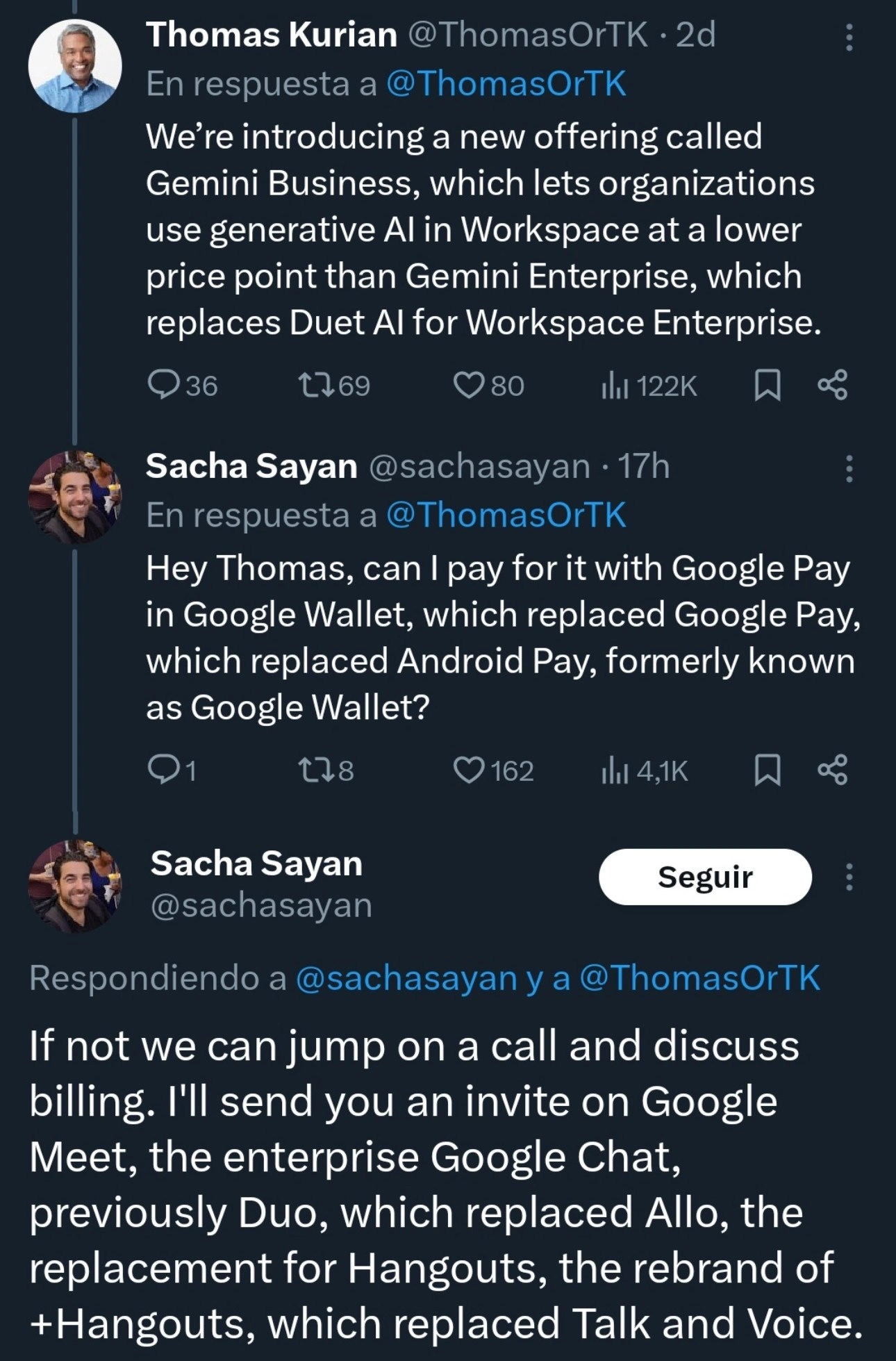
This image is a flowchart diagram that visually maps out the complex and confusing evolution of Google's payment services from 2006 to the present. It starts with 'Google Checkout' (2006-2013) and shows how it, along with other services, evolved through various rebrands and mergers. The chart includes 'Google Wallet' (2011-2018), 'Android Pay' (2015-2018), and 'Tez' (2017-2018), all of which were eventually consolidated into different versions of 'Google Pay' and 'Google Pay Send' between 2018 and 2020. The final state shows a split again, with both 'Google Wallet' (2022-present) and 'Google Pay' (2020-present) coexisting. This diagram serves as a powerful visual critique of Google's notoriously chaotic product strategy, illustrating a real-world example of the brand confusion that frustrates users and developers alike. It's the punchline to the preceding Twitter thread, providing the evidence for the satirical commentary
Comments
7Comment deleted
Google's product strategy for payments looks less like a roadmap and more like a git history after a dozen developers tried to merge their feature branches at once without a rebase
If Google payments were a microservice, their Swagger file would hit the 1,000-line mark just tracking aliases
Somewhere at Google there's a principal engineer who's been maintaining the same payment processing backend through seven rebrandings, watching PMs rediscover "wallet" as a revolutionary concept every five years
Google's payment product strategy is the perfect example of eventual consistency - eventually, they'll figure out what to call it. This flowchart looks suspiciously like a microservices architecture diagram where each service was independently deployed without anyone checking if similar services already existed. At this point, Google's payment products have gone through more rebrandings than a legacy codebase has had 'final_final_v2_ACTUAL' commits. The real question is: do they have a feature flag system for product names, or is this just aggressive A/B testing at the organizational level?
Only Google could run two‑phase commit on a logo: prepare(Android Pay), commit(GPay), rollback(Wallet) - leaving our OAuth scopes in zombie state until the next rebrand
Nothing says “stable payments platform” like a family tree that reads like git rebase --force: every rename meant new OAuth scopes, SDK coordinates, and another PCI audit spreadsheet
Google payments: The canonical excuse to bolt on yet another adapter layer in your fintech monolith