Skip to content
DevMeme
6583 of 7435
FastAPI Disappointment: Look Inside and Find No Fast
Frameworks Post #7216, on Oct 5, 2025 in TG

FastAPI Disappointment: Look Inside and Find No Fast

Why is this Frameworks meme funny?

Level 1: Where’s the Fast?

Imagine you have a toy car that’s sold in a box labeled “Super Speedy Car 🚗💨.” You’re super excited, thinking it’s going to be the fastest toy ever. But when you open the box, inside you just find a regular toy car that moves at an ordinary speed. You’d probably make a confused face, right? You might even peek back in the box as if you missed something, wondering, “Hey, where’s the ‘super speedy’ part?”

That’s exactly what this joke is about, but with a software thing called FastAPI. The name “FastAPI” sounds like it should be really fast, just like the box that said “Super Speedy Car.” But when developers actually use it and look inside its parts, they sometimes feel like the special fast part is missing. It’s as if the toy car’s speed booster was taken out.

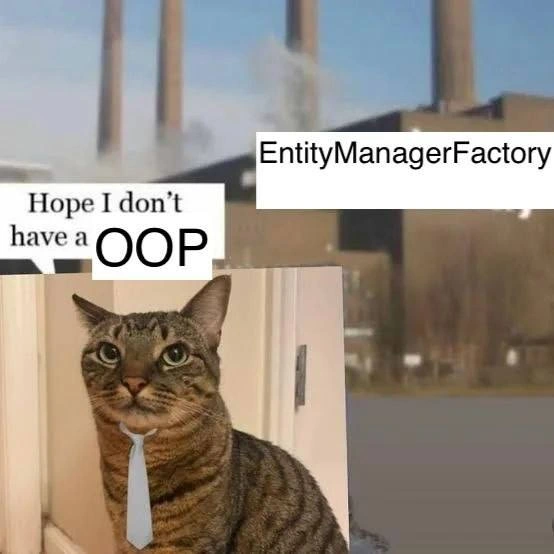
In the meme’s picture, there’s a cat with a very puzzled look, peeking around as if searching for something. The cat is basically acting like the person who opened the box (or looked into FastAPI) and is thinking, “Huh? I expected fast, but I don’t see any fast!” It’s a funny way to show surprise and a little disappointment when something doesn’t live up to its name.

So, the joke is comparing FastAPI to that not-so-speedy “Super Speedy” toy. The cat’s big eyes and confused face make it extra funny, because anyone can recognize that “Where is it?!” expression. Even if you don’t know the technical details, it’s like naming a turtle “Lightning” – a silly, ironic joke because turtles are slow. The meme basically says: Sometimes things that say they’re fast… aren’t really that fast! And that’s what makes it humorous.

Level 2: Under the Hood: Not So Fast

Let’s break down the joke in simpler terms. FastAPI is a popular Python framework for building web APIs (Application Programming Interfaces). An API is like a menu for applications — it defines how other programs can request data or actions. FastAPI got its name because it’s meant to be fast and efficient, particularly by using Python’s modern features. It’s built on async technology (the asyncio library) which enables a single server process to handle many requests at once (as long as those requests involve a lot of waiting, like waiting for database or network responses). FastAPI also uses a library called Pydantic to automatically validate and convert incoming data to Python types, which makes developers’ lives easier and fewer mistakes in parsing data. Given all this, newcomers often hear “FastAPI” and assume their web app will be lightning quick out-of-the-box.

The meme text > fastapi, > look inside, > no fast is portrayed like terminal commands or steps someone is taking. It humorously suggests a developer literally inspecting the FastAPI framework’s internals (as if FastAPI were a box or a file folder). The result of that inspection: “no fast”. In plainer words, “I looked inside FastAPI’s code, and I couldn’t find anything that actually makes it fast!” This is a tongue-in-cheek way to say that FastAPI might not be doing anything especially magical to justify the name "Fast". It’s like an expectation mismatch joke.

Why would someone feel FastAPI isn’t actually fast? Let’s explain a few key points the meme hints at:

  • “Fast” vs reality: FastAPI is named for speed, but in real-world usage, it has similar limitations as other Python frameworks. The meme jokes that the name might be more of a wish than a guarantee. (This is a framework misnomer, where a tool’s name promises more than it delivers 100% of the time.)

  • Pydantic data validation: FastAPI automatically checks incoming request data (like JSON from a client) against defined schemas using Pydantic. For example, if your API expects a JSON like {"age": 21, "name": "Alice"}, FastAPI will use Pydantic to ensure age is an integer and maybe convert it to an int if it was a string, etc. This is super handy (it catches errors, ensures your code gets the right types), but it does add overhead. Overhead means extra work that takes time. Every request goes through this checking. Think of it like at an airport security line: it’s necessary to check everyone’s luggage (for safety, or in this case, data correctness), but it does slow things down a bit compared to just letting everyone through. The meme implies that this overhead might be cutting into the speed that “Fast”API promises.

  • Asyncio and context switching: FastAPI’s performance edge comes from using Python’s asynchronous capabilities. When a request is waiting on something (like a database query), the framework can switch to handling another request in the meantime. This is like a chef cooking multiple dishes by using the waiting time of one dish (say, something in the oven) to chop vegetables for another dish. That’s efficient! However, flipping between tasks (context switching) has a small cost — kind of like the chef taking a moment to change aprons or pick up a new recipe card. If the tasks switch too frequently or there’s a lot of them, those small costs add up. In Python, asynchronous code still runs on a single main thread (due to the GIL – a mechanism in CPython that allows only one thread to execute Python code at a time). This means that although FastAPI can juggle many tasks, it’s still ultimately doing one thing at any given micro-moment and just trading off between them. If one task is slow because it’s doing heavy computation, the juggling doesn’t help much — that heavy task will block the line. The meme’s “no fast” joke nods to the fact that Python’s async isn’t a silver bullet; it doesn’t suddenly make Python as fast as low-level languages, especially for CPU-heavy work.

  • Uvicorn and worker processes: Uvicorn is the ASGI server that actually runs your FastAPI app. Think of Uvicorn as the waiter that takes HTTP requests (orders) from the internet and hands them to your FastAPI application (the kitchen) to prepare a response. By default, when you start Uvicorn, it runs a single process (one kitchen). If you have a multi-core machine, one kitchen (one CPU core) can only handle so much at once. The way to serve more simultaneous requests is often to have multiple kitchens (multiple worker processes). FastAPI (via Uvicorn) gives you the option to start multiple workers, but you have to configure that. If a newcomer forgets to do so, they might unknowingly be using just a fraction of their server’s capacity – and their Fast API will appear slower under load because it’s bottlenecked by that single worker. On the flip side, running too many workers can have diminishing returns (since each one uses memory and there’s overhead coordinating them). The meme suggests that maybe the real speed boost in FastAPI isn’t automatically there; you need to tune things like number of workers to actually unlock performance. That might be surprising if you assumed the framework’s name “Fast” meant it’s automatically tuned for speed.

  • “Fast commented out” (the literal joke): In programming, when something is commented out, it’s basically turned off — the code exists but is not active. The title joke here was peeking inside FastAPI to find the “fast” is commented out. Of course, FastAPI doesn’t literally have a line in code that says, # fast_mode = True (turned off with a #). This is a metaphor. It humorously implies that if you scan the source code of FastAPI, you won’t just find an obvious setting or special trick labelled “fast” that makes it blazing fast. It’s an ordinary framework using known techniques, not some secret engine. So the frustrated dev (with the cat’s confused face) is basically saying, “Hey, I went looking for what makes FastAPI so fast, and guess what? There’s nothing blatantly there – maybe the devs accidentally disabled the speed!” It’s a sarcastic way to point out that the name might be overselling it.

Overall, this meme is developer humor that’s very relatable to anyone who has tried to optimize a Python web service. The tags like PerformanceOptimization and PerformanceIssues are relevant because the joke revolves around the actual performance pitfalls. Backend developers often joke about these things once they learn the hard way. For example, you might excitedly adopt FastAPI for a new project because benchmarks said it was super fast, but later you discover your app is slow due to a database bottleneck or Pydantic processing large payloads. The meme captures that little moment of “Huh, I expected faster…” in a funny way. And of course, adding a cat meme (the image of a cat peeking with wide eyes) amplifies the humor – cats are often used to represent our reactions in a comical, universally understandable way. The cat’s expression basically says: “Wait, what? There’s supposed to be fast here, but I don’t see it!” – which is exactly what the text is saying, in a more cute visual form.

So in summary, FastAPI is a great tool, but it’s not magic. The meme lightly pokes fun at the contrast between the name/expectation (“Fast!” 🚀) and the reality (it has overhead and needs proper setup, so not always so fast in practice). It’s the kind of joke an API developer might chuckle at after a long day of tweaking their app’s performance, while explaining to a junior dev that “fast” is never guaranteed without understanding what’s under the hood.

Level 3: Fast in Name Only

FastAPI might wear a speedster’s name tag, but seasoned backend engineers know better than to trust a framework’s marketing at face value. This meme humorously imagines running pseudo-shell commands:

> fastapi  
> look inside  
> no fast

It’s like a developer popped open the hood of the FastAPI framework expecting to see a turbocharger, only to find a regular engine with some extra weight. The punchline “no fast” suggests that the supposed speed boost of FastAPI is nowhere to be found — as if the “fast” is literally commented out in the code. (In code, a commented out section means it’s disabled with a #, so the meme jokes the fast part of FastAPI isn’t even running!)

This strikes a chord in the API development community, especially for those focused on performance. Many of us have chased that next “fast” framework, hoping it lives up to its name. FastAPI gained popularity by promising high-performance I/O using Python’s modern async features, but in real-world production, the framework’s latency can creep up. Why? Because under the shiny hood, there are unavoidable overheads:

  • Pydantic validation costs: FastAPI uses Pydantic models to validate and parse request data. Every time a request comes in, FastAPI meticulously checks types and converts data (for example, ensuring a field user_id is an int, or that a sub-object matches a schema). This is great for catching errors and providing a robust API contract, but it’s essentially doing a ton of runtime work. It’s like a toll booth on every request – ensuring everything is in order, but adding a delay. The meme’s “no fast” quip hints that all this careful checking (parsing JSON into Pydantic models, validating each field) is eating up the time that was supposed to make the framework fast. Senior devs recognize this as the Pydantic tax on throughput: you trade a bit of performance for clarity and safety. When you’re pushing thousands of requests per second, those data validation steps become a real speed limiter.

  • Python async IO overhead: FastAPI is built on Starlette (an ASGI framework) using Python’s asyncio for concurrency. Async I/O in Python allows one worker process to handle many simultaneous connections by rapidly switching between tasks during awaitable operations (like DB queries or network calls). But context-switching isn’t free. Every time your code awaits, the event loop has to juggle tasks – a bit like a single waiter handling many tables, switching attention back and forth. If each request does a lot of small awaits (e.g., reading chunks of a request, calling multiple microservices), the context-switch overhead accumulates. In theory, async should be fast for I/O-bound workloads, but in practice, the coordination has a cost. Python’s GIL (Global Interpreter Lock) also means only one thread executes Python bytecode at a time, so you’re not doing two things truly in parallel on multiple CPU cores – you’re just very quickly taking turns on one core. The meme’s joke “look inside, no fast” resonates because an engineer might inspect FastAPI’s internals hoping to find some rocket-science optimization (like zero-copy data path or magic parallelization), but they’ll mostly find an event loop doing the same old context switching and waiting. FastAPI isn’t doing heavy lifting in C or breaking physics; it’s bound by Python’s normal rules. In other words, no secret sauce labeled “fast” in there, just careful async code and the inherent limits of Python performance.

  • Uvicorn workers and configuration: Out of the box, if you run uvicorn myapp:app (the typical way to launch a FastAPI app), by default it uses a single process (one worker) and one event loop to handle requests. On a machine with, say, 8 CPU cores, one Uvicorn worker isn’t going to use all that parallel potential. Experienced devs know to use --workers option or gunicorn with multiple worker processes to scale across cores. But this introduces its own complexity: If you spawn, say, 8 workers, you can handle more requests in parallel (good!), yet you also consume 8× memory and have inter-process overhead. There’s a Goldilocks zone to find — misconfigure it and you either underutilize your server or overwhelm it with process overhead. The meme implies that some of the “fastness” might be locked behind such configurations. A senior engineer chuckles because they’ve seen newbies proudly run FastAPI on defaults and then scratch their head why their API isn’t any faster than old Flask. The truth is, FastAPI’s advertised speed often assumes you’re using it optimally (proper number of workers, uvloop, etc.), otherwise the “fast” part might as well be commented out.

  • Framework misnomer and micro-benchmarks: The cat’s confused face perfectly embodies the senior-dev skepticism: Is this really as fast as the name implies? It’s a gentle roast of how frameworks get named. “FastAPI” suggests blazing speed, just like how we have libraries with names like QuickThis or TurboThat. But often those names reflect best-case scenarios or only certain aspects of performance. In trivial benchmarks (like returning “Hello world” or echoing a small JSON), FastAPI can demonstrate impressive throughput and low latency, outpacing some older frameworks. That’s the theoretical micro-benchmark glory the description mentions. But seasoned developers know those results can be very context-dependent. Start adding real-world weight — complex database queries, larger payloads, multiple dependencies per request — and the fancy framework still has to do the work, often not much differently than any other. The name “FastAPI” sets high expectations, so it’s ironically funny (and a bit painful) when you “look inside” and realize it’s subject to the same performance laws as everything else. There’s no hidden cheat code making Python magically as fast as C or Go for web serving. The meme pokes fun at that gap between naming optimism and latency reality.

In essence, the humor lands because every experienced backend developer has chased performance at some point and discovered “there is no free lunch.” FastAPI is indeed a modern, efficient framework – and for many I/O-heavy scenarios, it can be quite speedy – but it isn’t a silver bullet that defies the constraints of its environment. The cat looking perplexed mirrors that moment you dig through logs and profiles, expecting to pinpoint a slow part, and realize the slowness is just the sum of many small, inherent costs. The “fast” wasn’t a toggle or a single culprit you can uncomment; it was more of a marketing highlight of using async Python, which still has overhead.

So, the meme is a bit of backend humor and a reality check rolled into one. It’s a relatable developer experience: the face you make when you run a profiler on your FastAPI app, hoping to find a stupid mistake to fix, but all you see are those normal things (validation, I/O waits) taking time. The confused cat is basically us developers peeking into the framework’s internals, meowing “Where’s the fast? I can’t find the fast!” 😹. It’s funny because we’ve been there — the grand promise of FastAPI tempered by the practical performance issues we still have to optimize. In short, FastAPI isn’t slow, but this meme playfully ribs it by implying the “Fast” part might as well be a comment in the code if you don’t account for all those real-world overheads.

Description

A meme featuring a close-up photo of a grey and white cat staring directly at the camera with wide, disappointed eyes. The greentext-style text above reads: '> fastapi / > look inside / > no fast'. The joke plays on the name 'FastAPI' (the popular Python web framework) and the disappointment of discovering it isn't actually 'fast' in the absolute sense -- it's fast for Python, but still Python. The cat's bewildered expression perfectly captures the developer's realization

Comments

27
Anonymous ★ Top Pick FastAPI: the 'fast' refers to development speed, not runtime speed. It's like calling a Honda Civic 'FastCar' because you bought it quickly at the dealership
  1. Anonymous ★ Top Pick

    FastAPI: the 'fast' refers to development speed, not runtime speed. It's like calling a Honda Civic 'FastCar' because you bought it quickly at the dealership

  2. Anonymous

    FastAPI is fast until your ORM makes a synchronous call in the middle of an async route. Then it's just an API with extra steps

  3. Anonymous

    FastAPI is like that consultant résumé with ‘10x’ in the headline - you only discover the multiplier applies to response time once it’s in prod

  4. Anonymous

    After 15 years of optimizing microservices, you realize FastAPI's 'fast' is like MongoDB's 'web scale' - technically true if you squint hard enough and ignore the 500ms of Pydantic validation on your deeply nested DTOs while your k8s cluster autoscales into bankruptcy

  5. Anonymous

    After years of optimizing database queries, implementing caching layers, and fine-tuning connection pools, the senior architect finally discovered the real bottleneck: the framework literally named 'Fast' was just really good at marketing. Turns out 'FastAPI' refers to how quickly you can write the code, not how quickly it runs in production - a distinction that becomes painfully clear around 3 AM during a load test incident

  6. Anonymous

    FastAPI: Blazing benchmarks on idle, 'no fast' once Pydantic chews through your nested schemas

  7. Anonymous

    Open the repo: FastAPI behind Gunicorn sync workers, async def routes calling requests, SQLAlchemy doing N+1, Pydantic v1 models - congrats, you shipped WSGI with better type hints

  8. Anonymous

    FastAPI isn’t slow - our stack is: async routes calling a sync ORM, one uvicorn worker behind an Nginx that kills keep‑alives, stdlib json dumps, and zero profiling; the only fast thing was the naming meeting

  9. @nyxiereal 9mo

    It is fast tho

  10. Deleted Account 9mo

    slowapi

  11. @tonko22 9mo

    Its fast outside too (fast prototyping)

  12. @pooyabehravesh 9mo

    It is fast in not responding

  13. @deadgnom32 9mo

    yeees. python slow. have you seen how slow a loop in a loop in a loop in python compared to C++ is? and that's exactly what we do in every our program, that means it's a proper metric, right? right?

    1. @chupasaurus 9mo

      in CPython*, PyPy would show you a very different performance

      1. @deadgnom32 9mo

        from my experience I've never had any performance improvements from PyPy, only the opposite, despite the promises of improvement 🤷‍♂️

        1. @chupasaurus 9mo

          As with anything, it depends on the code. Enterprise-ready®™ code would crawl with it, for sure.

          1. @deadgnom32 9mo

            I try it from time to time. but only get lower performance and library incompatibilities

        2. @rush_iam 9mo

          In competitive programming, PyPy (as opposed to Python) is often the only way to ensure your algorithm meets the time limit with large input sets. I also got a 3-4x boost in the performance after switching to PyPy for my game bot, which was bottlenecking on BFS for pathfinding.

  14. @dsmagikswsa 9mo

    Fast to build

  15. @phoetik 9mo

    It's fast for slow programmers 👍

  16. @evmyshkin 9mo

    is that quote from the dev team of fastapi?

    1. @NaNmber 9mo

      nah random redditor, but it sounds

  17. アレックス 9mo

    Didn’t “Fast” refer to dev time?

  18. dev_meme 9mo

    Now we got granian to have it running even faster, python is slowly becoming rust (but at least we don't shoot ourselves in the leg unless we actually really really want to)😌

    1. @RiedleroD 9mo

      python has plenty of footguns too

  19. @chupasaurus 9mo

    It's an interpreter written in RPython (subset of Python), compiler of which was written in Python. And it uses similar to CPython bytecode. And yeah, it might be a Monty Python reference

  20. @zexUlt 9mo

    I mean, at least it has API in it

Use J and K for navigation