Stock Photo Absurdity: Fixing an iMac with a Soldering Iron Powered by a Hard Drive
Why is this Hardware meme funny?
Level 1: Using a Fridge to Cook
Imagine you want to heat up your food, but instead of using a stove or microwave, you try to use a refrigerator to do it. š„¶ That sounds pretty silly, right? A fridge is meant to keep things cold, not make them hot! This meme is joking about a similar kind of silly mix-up, but with computer parts.
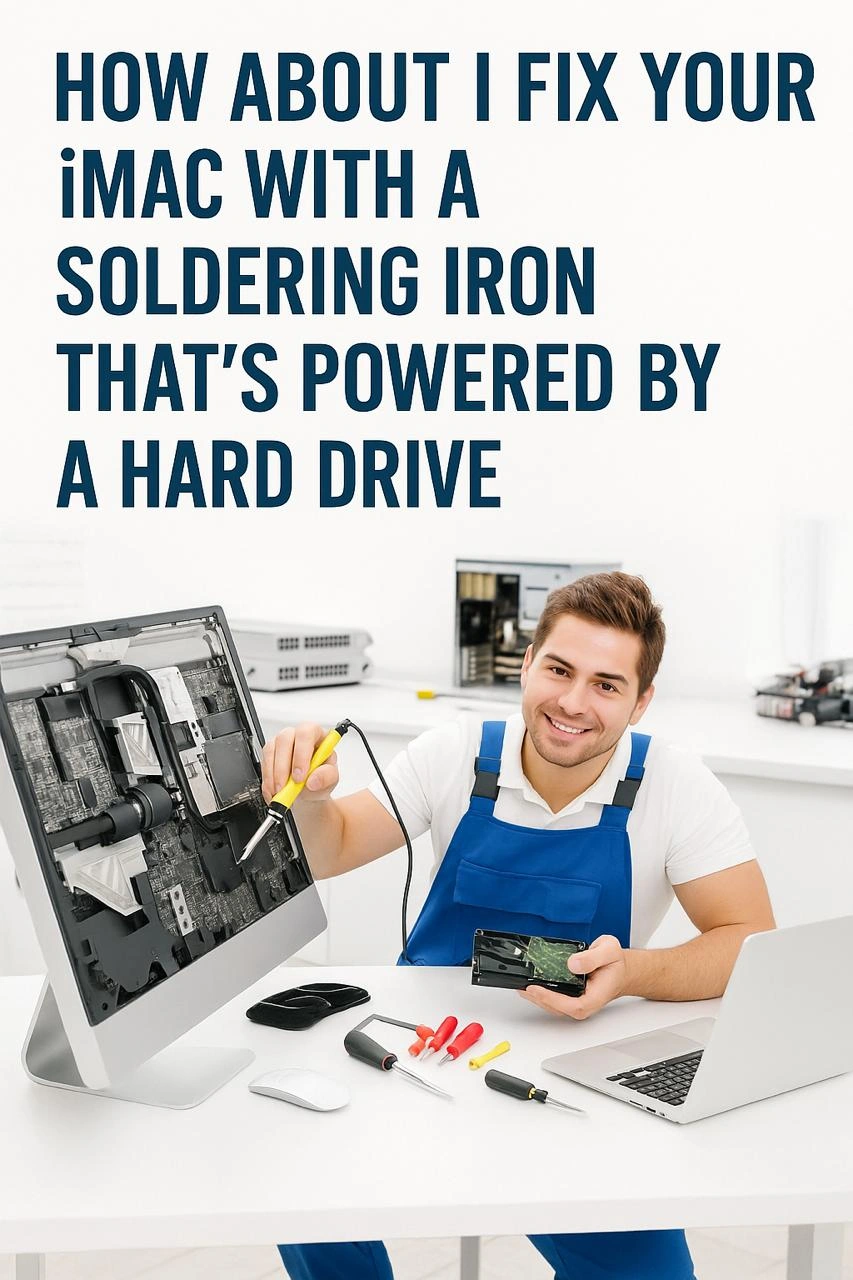
In the picture, a guy is trying to fix a broken Apple computer (an iMac) using a tool that needs to get very hot ā a soldering iron (like a tiny super-hot pen for fixing electronics). But hereās the funny part: instead of plugging that tool into the wall to get electricity, heās trying to get power from a hard drive. A hard drive is a part of a computer that stores all your information (like your photos, games, or homework files). Itās not something that gives off power or heat ā itās more like a library for data.
So whatās happening? Itās as if heās saying, āIāll use this data box (hard drive) as a battery to heat my repair tool.ā That makes about as much sense as using a book to charge your phone, or yes, using a fridge to cook dinner. It just wonāt work, and it looks completely goofy. š He might as well be trying to toast bread by sticking it in the freezer! Itās the wrong tool for the job, and anyone watching can see itās a bad idea.
Why is it funny? Because itās a big, obvious mistake and heās doing it with a confident grin, as if itās a brilliant plan. Itās like watching a cartoon where a character uses a banana as a phone ā you laugh because you know bananas canāt actually make calls. Here, using a hard drive to power a soldering iron is such a bad idea that itās laughable. It tickles that part of us that recognizes when something is absurdly out of place. Even if you donāt know much about computers, you likely know you plug tools into an outlet for power, not into another random gadget.
Another layer to the joke is that Apple iMacs are known to be a bit of a pain to fix ā kind of like a toy thatās really hard to open. People who fix these computers sometimes get frustrated because Apple doesnāt make it easy. So the meme is exaggerating that frustration: the repair guy is so fed up or confused that heās doing something crazy. Itās a way to laugh at how fixing things can go terribly wrong when you donāt have the right tools.
So, at a simple level:
- The man is trying to fix a computer with a tool that needs electricity (heat).
- He should plug that tool into the wall, but instead heās plugging it into a computer part that canāt give electricity.
- Itās a silly, funny mistake ā like putting batteries in backwards or trying to hammer a nail with a noodle. You just know itās not going to work!
The emotion behind it is a mix of frustration and humor. Weāve all had moments where we used the wrong thing and failed (like stirring paint with a pencil ā oops). This meme takes that feeling and makes it extreme and funny. Itās basically saying: fixing stuff can be hard, and sometimes people come up with ridiculously bad ideas when theyāre desperate. And all you can do is laugh, because itās so clearly the wrong way to do it.
In the end, the meme is a light-hearted reminder: use the right tool for the job (and maybe donāt let a hard drive near your soldering iron!). It makes us smile because it shows someone confidently doing something wacky, and we all understand the simple truth: a fridge wonāt cook your dinner, and a hard drive wonāt power your fix-it tool. š³š«š§
Level 2: A Hard Drive is Not a Battery
Letās step back and explain why this scenario is so ridiculous to anyone newer to hardware or Apple repairs. In the photo, a repair technician has an iMac opened up on the desk. An iMac is Appleās all-in-one desktop computer ā basically a screen with a computer built into it. They can be tricky to open and fix, because Apple often uses glue and special screws to keep everything sealed (Apple doesnāt really want users poking around inside). On the desk we see tools like screwdrivers and tweezers, which are normal for electronics repair. So far, so good.
Now, hereās where things go crazy: the technician is holding a soldering iron in one hand, and a 3.5-inch SATA hard drive in the other hand, with a cord connecting them. A soldering iron is a tool that gets very hot at the tip, so you can melt solder ā thatās the metal glue that attaches electronic components to a circuit board. Soldering irons typically get power by plugging into an electrical outlet or a special power unit. Some high-end ones have temperature controls and proper insulation. In other words, they need a reliable electricity source to heat up.
A hard drive, on the other hand, is completely different. Itās a data storage device. That 3.5-inch hard drive (common in desktop computers) has metal disks inside that spin really fast, and a little arm with a tiny magnet head that reads and writes data on those disks. To do this, the hard drive itself has to be plugged into a power cable from the computer. In modern PCs, thatās usually a SATA power cable that provides it with +5 volt and +12 volt power lines. The hard drive uses that power to spin its motor and move the arm ā it consumes power; it doesnāt generate power. Itās not a battery or a generator. If you unplug a hard drive from power, it stops spinning and goes completely inert. You canāt just attach a device to the hard drive and expect the hard drive to magically power it ā electronics donāt work like that.
So the phrase āsoldering iron thatās powered by a hard driveā is highlighting a fundamental mismatch. Itās like saying āa flashlight powered by a chocolate barā ā the two items donāt connect in any logical way. The reason this is funny to tech folks is because we all know the soldering iron needs electricity, and we know a hard drive canāt provide that. The image shows the tech literally holding the hard drive as if itās a power brick or battery pack for the iron. Heās smiling, which suggests maybe this is intentionally a joke or heās blissfully unaware that what heās doing makes no sense.
Now consider the context: repairing an iMac. iMacs often have very tight, intricate interiors. Sometimes to fix something on the logic board (the main board with all the chips), you might need to do soldering ā for example, resolder a loose connector or replace a bad capacitor. Thatās delicate work; youād normally use a fine-tipped soldering iron, maybe even a microscope for guidance, and definitely a stable power source. In the image, the iMacās logic board is exposed (you can see the array of chips and circuits inside the open casing). That means the tech has already done an iMac teardown ā taken the machine apart. Usually, youād disconnect power completely when doing this (you donāt want live electricity running through the device as you work, because you could short something out or shock yourself). So the iMac here is likely off and safe to work on. The proper way to proceed would be to use a separate soldering tool plugged into the wall or a lab station. But what do we see? The tech is not using a normal power cord for the iron. Instead, a cable from the iron goes to the SATA hard drive heās holding.
To someone learning hardware, a big lesson is: use the right tool for the job. A hard drive is absolutely the wrong tool to power a soldering iron. Thereās no hidden battery in there. If anything, if you tried to draw power through a hard driveās connector without the rest of the computer, youād get nothing ā possibly you could even damage the hard driveās circuitry because itās being used improperly. Itās like plugging an appliance into another appliance that isnāt designed to pass power along. This is why the meme is tagged with things like hardware humor, soldering_iron_misuse, and absurd_hardware_repair. Itās emphasizing a misuse of hardware thatās so wrong itās comical.
The meme also plays on Appleās reputation for being hard to repair (tag imac_teardown and MaintenancePain). Apple devices like the iMac historically have limited repairability. For example, many iMac models glue the display to the frame, so you need special suction cups and adhesive strips just to open it. They use uncommon screw heads (pentalobe screws on iPhones, for instance) and often solder or bond components that other manufacturers might make modular. Thereās an entire community (like iFixit) devoted to showing people how to open Apple devices and fix them, because Apple officially doesnāt encourage it. So, an iMac repair can be frustrating. The meme exaggerates this frustration by suggesting the tech has resorted to a ridiculous hack out of sheer desperation or lack of proper equipment. Itās highlighting the overengineering concept ā sometimes people create an unnecessarily complex or ill-suited solution instead of the simple correct one. In reality, no competent technician would try to power an iron with a hard drive; theyād get an actual power source. But in humor, we imagine someone doing it to poke fun at bad ideas.
Think of it from a junior techās perspective: maybe you once had a wild idea that didnāt pan out because you misunderstood how things work. Perhaps you tried to plug something in the wrong port, or use a cable incorrectly, and a senior engineer chuckled and corrected you. This meme is that scenario blown up to extreme proportions. Itās as if a newbie said, āI donāt have a soldering station, but I do have this spare hard disk ā canāt I use that somehow?ā and instead of correcting him, we freeze-frame at that moment and turn it into a joke. Itās obvious to anyone with experience that it wonāt work, but if youāre new, you might not immediately see why itās so silly ā and thatās okay! Part of learning hardware is making mistakes and then laughing about them later. Here, the mistake is so big and bold that weāre all laughing preemptively.
In summary, at Level 2 we understand the components and why they donāt fit:
- Soldering Iron ā needs a real power source (electricity from outlet or battery pack).
- Hard Drive ā a storage device that requires power and cannot give power to other devices.
- iMac Repair ā a situation thatās already tricky, made worse by using a completely wrong method.
- Over-engineering ā solving a problem in a complicated, impractical way (like using an unrelated gadget instead of the correct solution).
The humor of the meme comes from knowing these basics and seeing them flagrantly violated. Itās like seeing someone try to use a tool or part in a way it was never meant to be used, and doing so with a confident smile. You donāt need to be an expert to giggle at the goofiness once you know what each item normally does.
Level 3: Soldering Irony
In the world of Apple hardware, this scenario is both absurd and weirdly familiar. Weāve got an opened iMac on a pristine repair bench, and a technician whoās apparently MacGyvering his way through a logic board fix. How? By holding a yellow-handled soldering iron in one hand and a 3.5-inch hard drive in the other ā as if the hard drive were a power supply for the iron. Itās the boldest, worst idea imaginable for iMac repairs, and thatās exactly why itās hilarious to seasoned engineers.
First off, a soldering iron normally plugs into a proper power source (like a wall outlet or a dedicated bench supply). You never power a soldering iron with a hard drive, of all things. A hard drive is a data storage device; it draws power from the computerās PSU (Power Supply Unit) to spin its platters and move its read/write heads. It canāt provide power ā unless you count frying its circuitry as a form of energy output. The memeās giant text ā āHOW ABOUT I FIX YOUR iMAC WITH A SOLDERING IRON THATāS POWERED BY A HARD DRIVEā ā perfectly captures that overconfident, over-engineered proposal that makes every experienced hardware engineer cringe and laugh at the same time. Itās soldering irony: using the wrong tool in such a cocky way that it circles back to comedy.
Now, why drag an innocent hard drive into this? This is textbook overengineering (or maybe mis-engineering). Imagine it's late on a Friday (weāve all been there). The iMacās logic board needs a quick solder fix, the proper equipment isnāt around, and everyoneās eager to wrap up for the weekend. Thatās when some bright soul suggests a wild hack: āHey, I found this old SATA hard disk ā maybe we can use it to power the iron!ā Itās the kind of misguided hardware repair idea that pops up when people are desperate (or delirious from too much caffeine and not enough weekend). Senior engineers have seen similarly crazy suggestions under pressure, which is why this meme hits home. We recognize the gallows humor of a last-ditch, totally ill-conceived fix. Itās funny because itās a terrible idea born out of frustration.
Thereās also a sly jab at Apple here. Appleās devices ā especially an iMac ā are famously finicky to repair. Apple uses proprietary screws, adhesive strips, and tightly integrated components that make disassembly a nightmare. Seasoned techs swap horror stories of iMac teardowns: cracking open the display (often literally), carefully disconnecting booby-trapped cables, praying you donāt shatter any glass or sever some ribbon in the process. Apple would prefer you take it to an authorized Genius Bar, pay a small fortune, and never dare to DIY. In fact, Appleās official repair playbook would never include āgrab an old hard drive and improvise.ā This meme exaggerates that contrast for comedic effect: facing Appleās repair-hostile design, our intrepid (or insane) technician resorts to a method so absurd itās basically a hardware Rube Goldberg machine. Itās not in any iFixit guide, that's for sure ā itās an engineerās fever dream gone wrong. The idea of using a hard drive as a power source is like using a carās airbag as an engine ā it just doesnāt make sense, and thatās the joke.
Letās break down the hardware logic (or lack thereof). A typical soldering iron draws significant current to heat up (often 30-60 watts of power). A SATA hard drive has a power connector with +5V and +12V pins, but those are meant to be supplied by the computerās PSU. The hard drive itself is a power consumer, not a provider ā it spins magnetic platters to store data. Unless you magically spin the driveās motor by hand fast enough to turn it into a generator (not happening here), the drive canāt send out power on its own. And even if you tried to route the iMacās PSU output through the drive somehow, youād be introducing all kinds of noise and risk. Best-case scenario, nothing happens (the iron stays cold). Worst-case, you short something out and poof ā youāve cooked the driveās electronics or even the iMacās board. Itās hardware humor at its finest: mocking the kind of kludge that would likely trigger smoke (and tears).
The image shows the technician smiling like this is a brilliant innovation. That grin is part of the joke ā itās the overconfident āIāve got this!ā face right before a disaster. Any veteran engineer watching would be thinking, āOh no, heās really going through with it.ā Itās the same energy as someone proudly saying, āI wrote a custom memory allocator last night to fix our bug,ā when the bug was a missing semicolon. The maintenance pain here is real: when youāre stuck fixing something with inadequate tools, you either cry or laugh. This meme chooses laughter through absurdity. It exaggerates a common refrain in repair and dev ops culture: if somethingās broken and youāre desperate enough, you start considering solutions that would otherwise sound insane. Itās also poking fun at that overzealous colleague (we all know one) who proposes bold but terrible ideas with full confidence. Sure, itās a āboldā idea to use a hard disk as a power source ā bold, asinine, and guaranteed to void your warranty in a spectacular fashion.
To a senior developer or hardware engineer, the elements of this joke all hit home: Appleās difficult hardware (been there), the over-engineered fix that makes things worse (done that), and the late-Friday āI just want this doneā mentality (survived that). Itās break-fix gallows humor: we laugh because the alternative is to recall the times we faced something almost as ridiculous for real. And letās be honest, any time you hear āHow about I fix it with _____ā at 5 PM on a Friday, the blank is rarely filled with a sane solution. In this meme, that blank is a hard-drive-powered soldering iron, which perfectly encapsulates the madness. Appleās design ethos famously says āit just works,ā while this technicianās approach screams āthis just... might catch fire.ā The clash is comedy gold for those in the know.
For a quick visual summary of the insanity:
| Problem to Solve | Proper Solution š ļø | This Memeās āSolutionā š¤¦āāļø |
|---|---|---|
| Soldering iron needs power | Plug into a real power source (wall outlet or lab supply) | |
| iMac logic board repair | Use correct tools: anti-static gear, proper solder station | Poke board with iron while holding random HDD as power |
| Apple-approved method? | Nope. Apple would replace the whole board (or entire iMac) | Definitely Nope. Voids warranty, breaks rules, defies logic |
| Chances of success | High (with right tools and skills) | Near-zero (unless by miracle or dark magic) |
Every row highlights that gap between what you should do and what this guy is actually doing. We, the battle-scarred techies, find it funny because weāve seen well-intentioned folks attempt similarly off-the-wall fixes. It never ends well, but hey, it makes for a great story on Monday.
Description
A stock photo style image of a smiling technician in blue overalls holding a soldering iron in one hand and a hard drive in the other, sitting in front of an opened iMac. The overlay text reads: 'HOW ABOUT I FIX YOUR iMAC WITH A SOLDERING IRON THAT'S POWERED BY A HARD DRIVE.' The image satirizes nonsensical stock photos of 'IT professionals' that look plausible at first glance but contain technically absurd details -- a soldering iron cannot be powered by a hard drive, and the overall repair scenario makes no hardware sense. The technician's confident smile makes it funnier
Comments
13Comment deleted
This technician's repair method is the hardware equivalent of 'npm install soldering-iron --power-source=hard-drive' -- it'll resolve dependencies somehow, and nobody will question why it works
This must be the new 'serverless' soldering iron I've heard about. It runs on pure, unallocated confidence
Finally, a way to convert 15 ms seek latency directly into 40 W of pure board-scorching heat - storage-driven DevOps at its finest
Ah yes, the classic enterprise solution: when your iMac's T2 chip throws a tantrum, just bypass it entirely with a hard drive-powered soldering iron. It's like solving a race condition by adding more sleep() calls - technically it involves the right tools, but you're fundamentally misunderstanding the problem domain
This perfectly captures the classic bootstrap problem in hardware repair: you need working components to fix broken components. It's the physical manifestation of 'I need to install the driver to make the network card work, but I need the network card to work to download the driver' - except now someone's proposing to power their soldering iron with the very hard drive that probably needs the soldering iron to be fixed. At least in software we can usually break circular dependencies with dependency injection; in hardware, you just need a second computer
The hardware bootstrap: using yesterday's dead drive to solder tomorrow's even deader logic board
Powering a soldering iron from a hard drive is the hardware version of hotfixing prod over SSH on the primary DB - technically it emits heat, practically it burns your SLA
Turning storage into a power supply is the hardware version of shipping a hotfix - I/O becomes thermal throughput, and the warranty becomes a dangling pointer
Stock images be like Comment deleted
Is that what AGI humor feels like? Comment deleted
Looks more like "How about I solder that HDD to you iMac so that it could become even less repairable?" Comment deleted
Does that "iMac" have a driveshaft? Comment deleted
that one ā yes Comment deleted