Even the Computer Hates It
Why is this CodeQuality meme funny?
Level 1: The Toy Complains
This is like building something out of blocks, and then the blocks themselves say, "Wow, this is messy." The funny part is that a computer usually just follows instructions, but the meme imagines it being so offended by the code that it has to speak up.
Level 2: Awful But Valid
Code quality describes how easy code is to read, understand, change, test, and debug. Code can be technically correct but still low quality if it is confusing or fragile.
Code smells are warning signs that code may be harder to maintain than it should be. Examples include huge functions, repeated logic, unclear names, too many nested conditions, and hidden dependencies between unrelated parts of the program.
Technical debt is the future cost of shortcuts. A shortcut might be reasonable during an emergency, but if it stays in the codebase, future work becomes slower and riskier. Refactoring means improving the structure of code without changing what it does for users.
For a newer programmer, the meme captures a common feeling: you finally make the program work, then you look back and realize it is ugly. That does not mean you failed. It means you reached the next stage of learning: noticing the difference between "the computer accepted it" and "another human can safely maintain it."
Level 3: Runtime With Standards
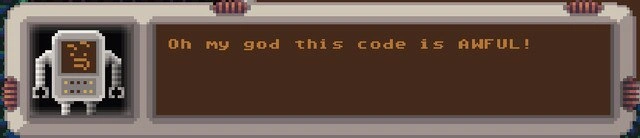
The entire meme is a tiny pixel-art dialogue box where a retro computer says:
Oh my god this code is AWFUL!
The post frames it as "Your computer when you program," which turns the machine from a passive executor into a disappointed code reviewer. That is the joke: computers do not care whether code is elegant, maintainable, or emotionally damaging. They will run whatever valid instructions you give them, right up until the maintenance bill arrives. The meme imagines the computer gaining taste and immediately using it to complain.
The humor lands because developers know code quality has a delayed feedback problem. Bad code often works today. The compiler accepts it. The tests pass because nobody wrote the painful test. The app launches. The feature ships. Then six months later, someone tries to add a small change and discovers a knot of global state, duplicated conditionals, inconsistent naming, hidden side effects, and a function that appears to be both a parser and a confession.
That is why the computer's line feels like a fantasy. Developers want a machine that can say, at the moment of creation, "please do not do this to future maintainers." Linters, type checkers, formatters, static analyzers, and code review bots try to approximate that voice, but they usually catch symptoms rather than intent. They can complain about unused variables or complexity thresholds; they cannot always tell you that the abstraction is lying, the responsibility boundaries are collapsing, or the module has become a junk drawer with imports.
The pixel-art style also matters. A little old-school machine judging modern code gives the meme a timeless quality. Spaghetti code, technical debt, and refactoring are not new problems. Every generation of developers invents a cleaner architecture, then slowly discovers new ways to make a mess inside it. The runtime may be faster, the editor prettier, and the deployment pipeline more expensive, but someone still named a variable data2 and called it a day.
Description
A narrow pixel-art dialogue box shows a small retro computer or robot avatar on the left and a brown text panel on the right. The visible message says, "Oh my god this code is AWFUL!" The metadata caption frames it as "Your computer when you program," making the joke a self-deprecating fantasy that even the machine running the code is judging the programmer's style and maintainability.
Comments
4Comment deleted
When the runtime becomes sentient, its first feature request is a refactor.
yes, no coding in workplace! just code in your home toilet Comment deleted
I love coding in the toilet :) Comment deleted
Ssh is awesome Comment deleted