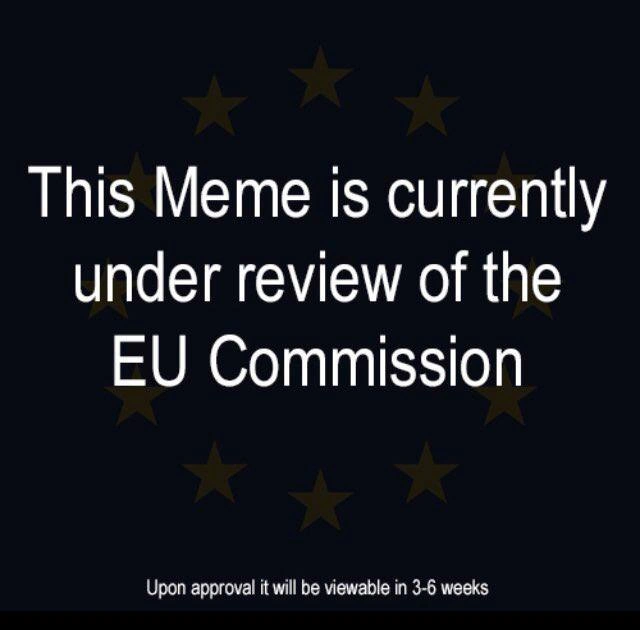
This Meme Is Currently Under Review of the EU Commission
Why is this DataPrivacy meme funny?
Level 1: Permission Slip for a Joke
Imagine you want to tell your friends a funny joke during recess. But before you can share it, the teacher says you need to get a permission slip signed by the principal, and maybe even checked by the school board, just in case the joke isn’t okay. You fill out a form explaining why the joke is safe and not mean, then wait… and wait. By the time you get the official “okay” (maybe a month later!), the joke isn’t that funny anymore and everyone’s moved on. You’d be pretty annoyed, right?
That’s exactly the feeling this meme pokes fun at. It’s like someone saying, “Hey, you can’t see this funny picture yet because we’re making sure it follows all the rules. Check back in a few weeks!” It’s silly because usually jokes and memes are quick and light, not something you’d treat so seriously. But sometimes grown-ups (or big organizations) have lots of rules to protect people, and it can take a long time to double-check everything. The meme jokes that even a simple goofy picture has to go through this long, serious approval process. It makes us laugh because waiting forever for something simple – like a joke – feels over-the-top and frustrating, kind of like having to get a permission slip just to tell a knock-knock joke.
Level 2: Why All the Paperwork?
Let’s break down the basics behind this joke. GDPR stands for General Data Protection Regulation. It’s a major DataPrivacyRegulations law in the EU that came into effect in 2018, designed to protect people’s personal data. Ever wonder why every website suddenly started asking you about cookies and privacy policies? That was largely because of GDPR. Companies worldwide had to change how they handle user information – or face big penalties. Under GDPR, if you’re launching something new that uses personal data (like users’ names, emails, or any info about them), you often need to do a DPIA, which means Data Protection Impact Assessment. Think of a DPIA as a very thorough checklist and risk report. You fill out forms explaining what data you collect, why you need it, how you’re protecting it (encryption, anonymity, etc.), and how you’ll avoid harming users’ privacy. It’s like writing an essay justifying that your app isn’t going to misuse anyone’s data. A privacy_impact_assessment is the same idea – double-checking that what you built won’t violate privacy laws. It’s not the most fun part of coding, but it’s become necessary homework when releasing features in big companies, especially ones operating in Europe.
Now, why would a silly meme image need all that? Of course, normally it wouldn’t. A meme (an image with a funny caption) usually doesn’t process personal user data at all, so it wouldn’t require a formal GDPR review. That’s why the meme is funny: it’s pretending that even a harmless joke image has to go through regulatory_gatekeeping by the “EU Commission” before we can see it. The EU Commission is the executive body of the European Union – they help write and enforce the rules like GDPR. In reality, they’re not literally reviewing memes one by one. But from a developer’s viewpoint, it can feel like that when you’re stuck waiting for approvals. The text “Upon approval it will be viewable in 3-6 weeks” is exactly the kind of delay developers dread when dealing with compliance. It’s exaggeration: normally, maybe your company’s legal department or a privacy officer would review your project, not the actual EU government. But the joke is comparing the internal wait to something as slow as an official government process.
This relates to CorporateCulture in tech companies: apart from writing code, developers often have to collaborate with legal and compliance teams. For example, imagine you finish a new feature that lets users upload profile pictures. Before you hit release, someone might ask: “Did we run this by the privacy team? Do we need to update our Terms of Service or do a DPIA?” Suddenly, you have to pause and fill out forms or wait for an email from Legal saying “all clear.” This can introduce delays, sometimes weeks long, especially if multiple departments or even outside regulators need to weigh in. That’s where the DeadlinePressure comes in. Developers have timelines and launch dates, but those can slip if compliance checks aren’t completed. A newcomer to a big company might be surprised that writing the code was only half the battle – the other half is making sure everything obeys laws and regulations. It can be a bit frustrating: you’re done with your part, but you can’t show the world until the paperwork catches up.
There’s also a nod to something known as the "Article 13 meme ban". A few years back, the EU had a proposal (Article 13 of a copyright directive) that many people worried would force platforms like Reddit or Twitter to filter user uploads. The fear was that memes (which often re-use copyrighted images or video clips) might get automatically blocked if the rules were enforced strictly. People joked that the EU was “banning memes.” While that worst-case scenario didn’t exactly come true, the meme here riffs on that idea – as if the EU put such tight controls that even posting a meme requires waiting for official permission. It’s a playful exaggeration of eu_bureaucracy – the stereotype that the EU has a rule and a form for everything.
For a junior dev or someone new to this world, here are the key takeaways:
- GDPR is about protecting user data privacy; it’s why companies have a lot of consent pop-ups and data rules now.
- DPIA (Data Protection Impact Assessment) is a formal process to check a new project for privacy risks. It’s basically paperwork and review meetings that happen before launch if needed.
- Big organizations often won’t let you release new features, or sometimes even publish a blog or a meme on official channels, without getting necessary approvals. This is the regulatory_gatekeeping the meme jokes about. It’s done for good reason (to avoid breaking laws and to protect users), but it means developers must sometimes swap their coding hat for a compliance hat and be patient.
- DeadlinePressure is something you’ll feel when your code is ready to go, but you’re held back waiting on others – it teaches you that software development isn’t just solo work; it’s a team sport that includes non-engineers too.
So, this meme is basically an inside joke among developers: our code might run at gigahertz speed, but the legal checks move at glacial speed. It reminds everyone starting out that in the real world, understanding laws and working with regulators is part of delivering software, especially anything to do with user data or content. It’s not all fun and memes… well, unless the meme is about the not-fun parts!
Level 3: Bureaucracy by Default
Seasoned developers recognize the dark humor here: the real work isn’t coding the feature – it’s navigating the GDPR compliance maze afterwards. The meme slaps us with the European Union (EU) flag and a mock “review by the EU Commission” notice, which exaggerates a familiar scenario in enterprise teams. Under GDPR (the EU’s stringent DataPrivacy law), even seemingly trivial releases can trigger a full Data Protection Impact Assessment (DPIA) if there’s personal data involved. A DPIA is basically a detailed privacy risk report mandated by Article 35 of GDPR for anything potentially high-risk. It’s the ultimate paperwork gauntlet: dozens of questions about data flows, encryption, retention policies, third-party sharing – all before you can ship your code.
Why is this funny? Because it’s painfully real. In a corporate setting, you might spend 2 days writing code for a new feature, then 2 months waiting on legal and compliance to bless it. The meme exaggerates that reality to absurdity: even a meme image needs EU Commission approval now. It’s poking fun at regulatory gatekeeping – the feeling that eu_bureaucracy has a stranglehold on release schedules. The footer “viewable in 3-6 weeks” is a cheeky jab at how slow these processes feel. Veteran devs have war stories of release deadlines blown because the compliance or legal team took ages to review a change. By the time you get the green light, the code is old and the meme isn’t even funny anymore. It’s like deploying code to production, only to have it sit behind a feature flag waiting for a lawyer’s nod.
This humor also echoes the infamous "Article 13 meme ban" panic from a few years back. Article 13 (now Article 17 of the EU Copyright Directive) was dubbed a meme ban because people feared it would force platforms to filter or block memes until confirmed legal. The meme’s “EU Commission review” sign slyly references that nightmare scenario of content content_moderation_delay. In reality, the EU Commission isn’t literally previewing every meme, but to a dev dealing with red tape, it sure feels like it. We’ve all refreshed a backlog Jira ticket titled “Awaiting Privacy Approval” for weeks on end.
From a senior dev perspective, this image nails the CorporateCulture clash: Agile development meets government-grade bureaucracy. On one side, dev teams tout “move fast and break things”; on the other, regulators (and the company’s Data Protection Officer and lawyers) insist “move carefully and document things.” The result? You move as fast as the slowest approval. This cultural friction often means that writing the code is the easiest part of a project – the harder part is getting the paperwork signed in triplicate. ComplianceHumor like this originates from real frustrations: companies fear GDPR fines (up to 4% of global revenue!), so they impose heavy processes. Developers end up doing a dance of forms and meetings just to avoid a privacy violation. It’s a satirical way to say: “My code is ready, but now I’m waiting for bureaucracy to catch up.”
Let’s be clear, privacy and compliance are important – nobody wants to leak user data and get hit with breaches or fines. But the meme wryly points out the imbalance: the DeadlinePressure from business vs. the slow pace of regulatory compliance. It’s a shared industry joke now that sometimes “it’s not done until legal says it’s done.” When you see those twelve EU stars ghosted behind the warning text, you can practically hear a chorus of devs groaning. It’s the too real reminder that even the funniest code or content isn’t immune to a legal review cycle measured in weeks.
DevOps Maxim, Revised: “It works on my machine... but does it comply with GDPR on my machine?”
In summary, at the senior level this meme lands because it dramatises a truth: modern software delivery involves regulatory_gatekeeping steps that feel hilariously disproportionate at times. The EU Commission imagery embodies that towering external authority every dev has to respect. It’s a high-fidelity in-joke: you thought deploying a meme was easy? Welcome to compliance hell, please take a number. You’ll get your punchline in a month or so, if you’re lucky.
Description
Dark background featuring the EU flag stars (golden stars in a circle) with large white text reading 'This Meme is currently under review of the EU Commission' and a smaller line at the bottom stating 'Upon approval it will be viewable in 3-6 weeks.' The meme satirizes the EU's aggressive regulation of digital content, particularly referencing the Digital Services Act and various content moderation regulations that have been criticized for being overly bureaucratic and slow
Comments
12Comment deleted
EU regulation pipeline: receive meme -> classify as potential misinformation -> run through 47 compliance checks -> assign to committee -> wait 3-6 weeks -> meme is no longer relevant -> approve
Our latest feature deployment is currently blocked. The ticket is waiting on two approvals: one from the lead architect, and one from the entire European Commission
New sprint goal: ship the feature *and* convince the EU that our reaction GIF qualifies as "legitimate interest"
The real latency issue isn't in your microservices architecture - it's waiting for legal to approve your 'Hello World' example because it might constitute unlicensed creative expression under Article 17
When your CI/CD pipeline has a 3-6 week approval gate and you realize the EU Commission's meme review process has better SLAs than your enterprise change management board. At least they're transparent about the bureaucratic overhead - most organizations just call it 'governance' and pretend the delay adds value
Enterprise rendering mode: await DPIA -> CAB -> legal_signoff; p95 latency 3-6 weeks, retries if the payload contains 'cookies'
Bureaucracy: the only force that makes a Kubernetes rollout feel like a sprint
Our continuous delivery turns into contiguous bureaucracy once the EU Commission is a required approver - nothing says agile like a manual gate with a 3 - 6 week SLA
Only 3-6 weeks? Are you in priority list or something? Comment deleted
Yeah Sounds unrealistic to me either Comment deleted
3-6 years Comment deleted
Only 3 to 6 weeks? That would be a record! Comment deleted