The Bug That Effortlessly Dodges the Debugger
Why is this Bugs meme funny?
Level 1: Swatting a Fly
Imagine you're trying to swat a pesky fly in your room. Every time you swing your flyswatter (or rolled-up newspaper), the fly darts away at the last second, and you hit nothing but air. You swing once – whoosh – miss... try again – whoosh – miss again. It's frustrating, right? You start getting annoyed that this tiny fly is outsmarting you and dodging every attempt.
This meme is saying a tricky software bug can feel just like that fly. The developer keeps trying different ways to fix the bug (like you trying different swings to hit the fly), but the bug keeps escaping at the last moment. It's funny because you can picture how exaggerated it is – like a movie scene where the hero just can't hit the ultra-fast villain. The core feeling is frustration mixed with a bit of wow, is this for real? In simple terms, the poor developer is thinking, "Why won't this darn bug just stay still and get fixed already?!" – kind of like you'd yell, "Why won't this fly land so I can swat it?!" Anyone who's ever tried and tried to solve a problem, only to have it slip away, can understand that feeling. That's why developers find this meme both funny and painfully true at the same time.
Level 2: Elusive Bug 101
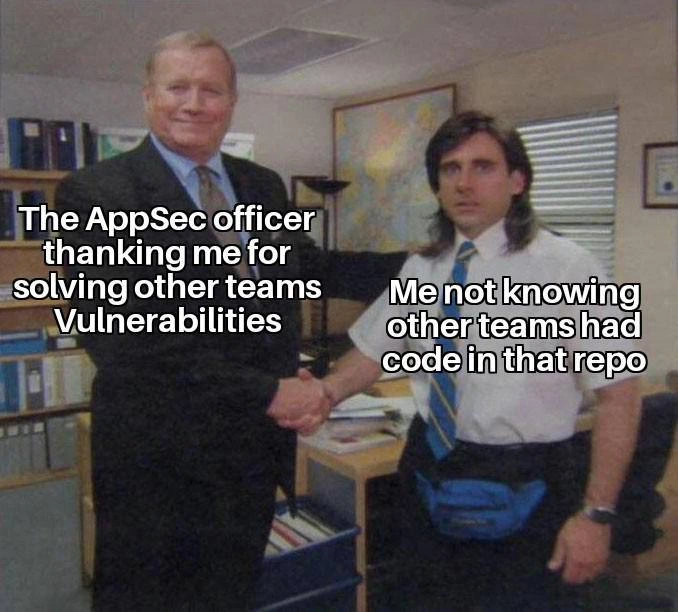
Let's break down the meme and the coding scenario behind it. In software development, a bug is a mistake or error in the code that causes the program to do something wrong or unexpected. When programmers find a bug, they create a small code fix called a patch (like patching a hole in a tire or a piece of cloth). In this meme, the top image shows "ME" (the developer) pointing a gun, symbolizing the developer "firing" off a patch to try to hit (fix) the bug. The bottom image shows "BUG" as a suited figure bent backwards, dodging bullets in mid-air. This is a direct reference to a famous scene from The Matrix movie where an agent literally evades bullets by moving super-fast. Here it's a visual gag: the bug is so good at escaping that every fix shot at it misses!
Now, why is this funny to people who code? Because it's a relatable situation in debugging. Sometimes you run into a persistent bug that just won't go away, even after multiple fix attempts. You think you've nailed the problem with a patch, but then you run the program and... the issue is still there (or comes back in a slightly different way). It's like the bug said "Nope!" and sidestepped your fix. This causes a lot of frustration during troubleshooting. Imagine spending hours trying one solution after another, and the bug is still popping up — it sure feels like it's dodging all your efforts.
For example, let's say your app keeps crashing when a user's name is blank. You (the developer) add a check: if the name is blank, use a default name instead. You test it and think, "Great, fixed!" But later, you discover it crashes when the name field has just a single space character (an edge case you didn't consider). The bug essentially dodged your initial patch by coming from a slightly different angle. So, you patch it again to handle the space. A really stubborn bug might even have another surprise after that. Each patch you fire is addressing one scenario, but the bug finds another unhandled scenario – just like dodging one bullet only to face another.
There's even a special nickname for bugs that are hard to catch: the Heisenbug. It's named after physicist Werner Heisenberg (of "uncertainty principle" fame) because of the idea that observing something can change it. A Heisenbug is a bug that seems to disappear or change behavior when you try to investigate it. For instance, you might run your program with a debugger (a tool that lets you pause and inspect code) or add extra print statements to see what's happening, and suddenly the bug won't happen while you're watching. But when you run the program normally (no debugger, no extra prints), the bug shows up again. It's almost like the bug knows you're looking and decides to hide. This playful term highlights how sneaky some bugs can be, making debugging extra tricky – you can't fix what you can't even catch in the act!
Overall, this meme is poking fun at the challenge of a bug that manages to evade every fix you throw at it. It's a form of tech humor among programmers. The labels "ME" and "BUG" make it clear who is who: we've all been that developer unloading fixes, and we've all dealt with a bug so evasive it might as well be doing kung-fu. Even if you're new to coding, you'll quickly learn that debugging is sometimes a repeating process of trial and error. A stubborn bug can turn into a bit of a wild goose chase. The Matrix reference just adds some over-the-top drama to it. The good news is, in real life, persistence and systematic debugging usually pay off. Eventually, you'll track down the real issue and squash that bug for good. And when you do, it feels pretty amazing – like finally hitting that evasive target after tons of tries!
Level 3: Bullet Time Bug
A developer versus a stubborn bug can feel like a scene straight out of The Matrix. Here, the meme casts the coder as the frustrated hero emptying a clip of fixes, and the bug as the agent of chaos effortlessly dodging every shot. The humor cuts deep because this is a relatable developer experience: you've tried patch after patch — quick code changes deployed in rapid succession — yet that persistent issue simply refuses to be hit. Each "bullet" (fix) whizzes past the bug, just like in the movie’s iconic slow-motion dodge, and you’re left slack-jawed, wondering how your perfectly logical solution missed again.
This scenario is a hallmark of real-world debugging & troubleshooting. In theory, once you identify a bug's cause, a patch should fix it. In practice, bugs love to play cat-and-mouse. Perhaps your initial fix only addressed one symptom, but the underlying cause was something else entirely, so the bug resurfaces in a new form. It's like plugging one leak in a dam only to see water spurting out somewhere else. Seasoned devs half-jokingly call this whack-a-mole approach shotgun debugging: blasting code changes in all directions without a sure target, hoping one will hit the mark. As the meme suggests, the bug is doing a slow-motion backbend around each of those pellets.
Why do our patches often miss? A few painful possibilities:
- Misdiagnosis: You aimed at the wrong culprit. Maybe the real bug wasn’t in the function you suspected at all, but two modules over. Your patch flew harmlessly by, while the true defect remained untouched.
- Incomplete Fix: You addressed part of the problem but not the whole thing. For instance, you fixed the error for small inputs, but the bug dodged by reappearing when inputs got large or weird. Each patch closes one loophole, and the bug finds another.
- Environment Differences: "Works on my machine!" – we’ve all been there. Your fix appeared to kill the bug in your dev environment, but in production (with different data, load, or timing) the bug slips past the patch. It’s the bane of on-call engineers at 2 AM, discovering the issue survived like an Agent Smith clone after you thought you got it.
At this point, most developers also recognize the specter of a Heisenbug lurking in the background. That’s the breed of bug that defies normal logic: as soon as you try to observe it or run the program with a debugger, the bug vanishes or behaves differently (hiding like Neo dodging those bullets). You add some logging to pinpoint it, and suddenly the bug decides not to show up — effectively dodging your attempt to catch it in the act. It’s enough to make a battle-hardened engineer let out a groan and mutter, “Of course it had to be a Heisenbug...”.
In the face of such an apparently unstoppable bug, the developer often escalates their tactics. They might sprinkle print statements or use a step-by-step debugger, each time hoping “this bullet will land.” Yet the meme captures that sinking feeling when none of it works. It's funny because it's true: we've all felt like that hero yelling "Dodge this!" only to have the bug slip away unharmed.
To illustrate the futility, imagine a sequence of quick fixes:
# Patch attempt 1: target a suspected cause
if data is None:
data = default_value # apply a fix for 'None' input
# Bug dodges: issue still occurs for data = [] (empty list case not handled)
# Patch attempt 2: broaden the fix
if not data: # covers None, empty, False equivalently
data = default_value
# Bug dodges again: now it fails when data is an unexpected type (not covered here)
Each patch should have nailed it, but the bug keeps maneuvering around them. By the third or fourth attempt, you’re either pulling your hair out or embracing gallows humor ("Maybe the bug is a feature now?"). The meme exaggerates it with Matrix-style flair, but honestly, when you're deep in bug fixing, it feels exactly like this. The code is practically taunting you, Neo-vs-Agent style, and all you can do is double down, get smarter with your aim, or call for backup (a teammate's fresh perspective) to finally take that bug down. At least we can all laugh about it together – a bit of shared debugging frustration therapy among developers.
Level 4: The Heisenbug Principle
For the most hardened engineers, this meme evokes the dreaded Heisenbug – the bug that literally changes its behavior or vanishes when you try to observe or fix it. It's akin to the observer effect in debugging: the very act of instrumenting or stepping through the code alters the timing or memory layout just enough that the elusive bug sidesteps your patch. In the Matrix-themed metaphor, the bug is basically running its own thread on bullet time, effortlessly outpacing each fix as if it knows exactly what's coming.
Under the hood, these bullet-dodging bugs are often rooted in complex, nondeterministic problems. Think race conditions in multi-threaded code, where adding a simple print() (which acquires a lock or slows execution) can inadvertently make a timing bug disappear. Or consider an undefined behavior in C/C++: compile with optimizations off (like in a debug build) and memory is initialized predictably – the bug hides; compile normally and the bug is back in full force, laughing at you. These issues are inherently tied to the low-level details of how programs run:
- The CPU’s execution timing and reordering might change when a debugger is attached, altering the sequence of events.
- Memory addresses and alignment differ between runs, so a wild pointer might hit a harmless location when you're watching, then strike vital data when you’re not.
- JIT compilers and optimizers might skip or include certain operations only in production mode, causing a bug to manifest only when you aren’t actively looking for it.
Each attempted patch changes the software's state ever so slightly – a new build, a different memory layout, a small delay – and one of those changes might unknowingly give the bug an escape route. Veteran debuggers have learned this the hard way. It's no surprise we've borrowed terms from quantum physics: Schrödinger's bug (visible only when unobserved) and the Heisenberg-inspired Heisenbug, which seems to exist only when you’re not measuring it. It’s a cruel paradox: the more desperate you get to catch the bug in action, the more it eludes you, contorting around each theoretical "silver bullet" fix you fire. By now, many of us have accepted that some issues are fundamentally unhittable until you change your approach to something more atomic and sneaky.
Catching such phantoms often requires equally sophisticated tactics. You might deploy instrumentation that logs state to an external buffer with minimal interference, akin to setting a trap the bug can't sense. Or capture a core dump at the exact crash moment – essentially freezing the program mid-dodge to inspect its state after the fact. In extreme cases, developers resort to full-on time-travel debugging (record/replay systems) to step through the execution after it ran, finally pinning down the elusive culprit. Until you get to that root cause, though, every patch feels like another bullet whizzing by harmlessly. This meme nails that high-level truth: some bugs feel like they're playing Neo in the codebase, untouchable and one step ahead, until you outsmart them with deeper debugging wizardry.
Description
A two-panel meme based on the iconic bullet-dodging scene from the movie 'The Matrix'. In the top panel, a woman resembling the character Trinity is pointing a handgun with an intense, yelling expression, representing the developer's determined effort. This panel is labeled 'ME'. The bottom panel shows a figure in a suit, similar to an Agent from the movie, bending and twisting to evade an attack. This figure, labeled 'BUG', has its head replaced with the face of a blurry, vibrating white cat, a popular internet meme in itself, adding a layer of chaotic humor. The entire scene has the signature green tint of the film. The meme humorously illustrates the profound frustration of trying to fix an elusive bug in a system. The bug seems to have a life of its own, deftly avoiding every attempt at being fixed ('dodging bullets'), a scenario all too familiar to senior engineers dealing with intermittent issues, race conditions, or heisenbugs that vanish the moment a debugger is attached
Comments
8Comment deleted
That moment when a bug isn't just a bug; it's a sentient entity that has read your Jira ticket, understands your intentions, and is actively choosing chaos to mock your entire career
I keep firing hotfixes, but that Heisenbug was compiled with -O3 - attach the debugger and it slips into bullet-time, leaving nothing but “stack frame optimized away.”
Just like in The Matrix, you think you've got the bug cornered with your debugger pointed right at it, but then it starts dodging your breakpoints like Neo dodging bullets - turns out it only manifests in production with specific user data on Tuesdays during a full moon
When you finally track down that race condition that's been haunting production for three weeks at 2 AM, and the only appropriate response is full John Wick mode. No mercy for bugs that make it past staging - especially the ones that only reproduce in prod with real user traffic. The bug didn't just break the build; it broke the social contract
Peak senior moment: a race condition reproducible only under -O3 behind the CDN - attach a debugger and it goes bullet-time, turning every log into a miss animation
I attach the profiler to catch the race; the heisenbug goes bullet-time - JIT warms, cache lines shift, and the repro vanishes
When the Heisenbug survives your debugger but not John Wick-level profiling
https://youtu.be/ggFKLxAQBbc?t=60 Comment deleted