When the Client's Demands Defy Logic
Why is this Stakeholders Clients meme funny?
Level 1: All the Toys at Once
Imagine you’re helping your friend build a LEGO city. At first, you both agree to make a simple LEGO house. But then your friend keeps coming up with new ideas: “Let’s add a tower! And a swimming pool! And a rocket ship! And a dragon on top!” She wants everything in this one little house. Being excited, you say “Sure, I can add that!” to each idea. Pretty soon, your simple house is piled with so many extra pieces and crazy additions that it starts looking like a big messy blob of LEGO instead of a nice house. It might even collapse because there’s too much going on.
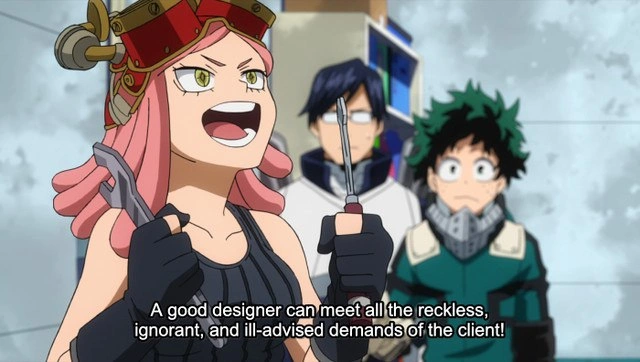
This is exactly what the meme is joking about. The girl in the picture is basically saying she can obey every wild request a client makes, like a kid saying “yes” to adding all the toys at once. She’s super confident, like a cartoon hero with a magic wrench, claiming nothing is too much. That’s funny because in real life, adding too many things usually makes a project fall apart or turn out bad. It’s like making a pizza and throwing every single topping on it because someone asked – you’d get a weird pizza that probably doesn’t taste good. The meme makes us laugh because we know a good designer (or builder, or cook) will tell you that sometimes less is more. Even if a client (or friend) wants a million things, you can’t just stack them all together and expect a great result. The over-the-top anime girl shouting “No problem!” is a silly reminder that saying “yes” to everything is a recipe for chaos, not success.
Level 2: Feature Overload 101
Let’s break down the scene and why it’s funny for those newer to the industry. In the image, a super-enthusiastic mechanic girl with pink hair and big goggles is proudly declaring that any and all client requests can be fulfilled by a “good designer.” She’s holding an oversized wrench like she can fix anything on the spot. Behind her, two classmates look shocked and blurry-faced, which emphasizes how wild her claim is. This is an anime meme using a character from My Hero Academia, a show where students have superpowers (called “Quirks”) and train to be heroes. The pink-haired character, Mei Hatsume, doesn’t have a combat power – her quirk is being an inventor. She’s known for crazy gadgets and unshakable confidence in her inventions. In the show, that makes her charming and effective. In the meme’s context, though, her confidence is applied to real-world UX design and project management in a tongue-in-cheek way.
So what’s actually happening in software terms? The meme is referencing the painful reality of scope creep. Scope means the set of features and goals a project is supposed to achieve. Scope creep is when that set of features keeps expanding uncontrolled – like creeping vines growing all over a plan – usually because stakeholders (clients, bosses) keep adding “just one more thing.” Here, the character is basically endorsing scope creep as if it’s no big deal: “Sure, we can build everything the client asks for!”
Now, why are those demands called reckless, ignorant, and ill-advised? Because often clients or non-technical stakeholders don’t understand the trade-offs involved. For example, a client might insist on adding a flashy animation on every page without realizing it could slow down load times (hurting user experience). Or they might request a complete layout change two weeks before launch, ignoring how much rework that creates. These requests can be ignorant (the client just doesn’t know how complex their ask is) or ill-advised (perhaps going against good design principles or best practices). When the meme says a “good designer” can meet all those demands, it’s highlighting a misconception. In truth, good UX/UI designers balance what the client wants with what the end-users need and what the tech can support. Sometimes the right response from a professional designer is to say, “We can do that, but here are the consequences,” or even, “That request is outside the project’s scope and will hurt the product.”
For a junior developer or designer, it might feel like you’re supposed to say “yes” to every feature request – after all, you want to be seen as capable and keep the client happy. Early in your career, you might not yet feel confident pushing back, so you end up trying to cram in every idea. I remember my first group project where our client (in that case a professor) kept suggesting new features (“Can we also add a chat? How about a dark mode?”) and we naively nodded along. The result? We pulled all-nighters to deliver a half-baked product that technically had those features but barely worked. That’s the trap this meme is joking about. Stakeholder pressure can make newcomers think overloading the project is just part of the job.
Communication is key here. Good communication with stakeholders means educating them about design trade-offs and realistic timelines. For instance, a designer might say, “Adding a password complexity meter is possible, but it will take an extra week and might clutter the signup page. Is that feature more important than polishing what we already have?” These kinds of conversations set proper client expectations. If you skip them and just say “Coming right up!” to everything, you might end up with a messy product and a burned-out team.
The visual of the meme – with a confident inventor in a tech lab shouting bravely – is funny because it flips reality. In reality, a designer or engineer hearing a bunch of reckless demands would probably facepalm or nervously laugh, not cheerfully agree. The two stunned classmates in the back are basically all the experienced team members thinking, “Did she really just promise that?!?” It emphasizes how unrealistic that statement is. Even the props like her huge wrench and steampunk-style goggles play into a fantasy of having a tool for every problem. In software, we do have great tools and frameworks, but there’s no magic wrench that instantly implements bad ideas in a good way.
So, why do people relate to this? Because many of us have been in a situation where a boss or client treats us like we have superpowers: “Oh, you’re a developer, it should be easy for you to just add this extra thing, right?” They might think if you’re skilled, nothing is impossible or too time-consuming. It puts the team in a tough spot – either scramble to do the impossible (risking quality) or push back and seem “not good enough.” The meme takes that pressure and amps it up into a comedic declaration. It’s basically UX irony: using a user experience context to point out something that actually makes for a bad user experience (and a bad development experience too!). The best products come from focusing on a clear vision and doing it well, not by throwing in every random request. But in the heat of a project, that wisdom can get lost, and suddenly the team is trying to satisfy “every reckless demand.” The result often looks as chaotic as it sounds.
In summary, this meme humorously educates us about scope creep and unrealistic client expectations. The enthusiastic anime inventor represents a misguided approach: just agree to everything with a smile. The joke clicks with developers and designers because it exaggerates a real lesson we learn on the job: a project that tries to do everything usually ends up doing nothing well.
Level 3: Scope Creep Superhero
This meme highlights the absurd heroics often expected in software projects. The pink-haired inventor character (Mei Hatsume from My Hero Academia) boldly proclaims:
"A good designer can meet all the reckless, ignorant, and ill-advised demands of the client!"
In real life tech, this line drips with irony. It’s poking fun at the stakeholder expectations gap that seasoned developers and UX designers know all too well. The character’s over-the-top confidence is a caricature of what happens when management or clients assume a UX/UI team can magically accommodate every whim. We’ve all seen projects where the scope ballooned beyond control – classic scope creep turning a simple app into a Frankenstein of bolted-on features. This image channels that chaos through anime bravado: a mechanic-hero confidently yelling “No problem!” as if fulfilling misaligned requirements is just a matter of enough enthusiasm (and maybe a big wrench).
Why is this funny to experienced devs and designers? Because it’s too real. We’ve sat in those late-night deployments where some “quick client request” spiraled into a marathon debugging session. We’ve heard stakeholders insist that “good design means you can just add this feature” – as if UX quality, engineering effort, and time constraints are trivial. The meme exaggerates those demands to reckless, ignorant, ill-advised levels, underscoring how ridiculous they sound to the people who actually have to implement them. It’s shining a light on the communication breakdown between what clients want and what’s technically or ergonomically feasible.
From a senior perspective, the humor comes with a side of PTSD. The confident inventor attitude is reminiscent of a developer in “hero mode,” trying to single-handedly save a project by saying yes to everything. In reality, treating every wild feature request as gospel is a recipe for feature bloat and massive technical debt. It’s like claiming you’ve unlocked a secret God Mode of design where trade-offs don’t exist – a fairy tale every veteran knows ends in tears. The design tradeoffs (performance vs. usability, simplicity vs. endless features) can’t be wished away. An experienced UX architect will tell you that adding every cool idea a client dreams up will likely confuse users, slow down the system, and break consistency. In other words, meeting all reckless demands often means failing the user or missing the deadline (sometimes both).
The characters behind the shouting heroine—Midoriya and Iida with their stunned faces—mirror the team’s reaction when a manager blurts out something like, “Of course we can do that by tomorrow, our designers are rockstars!” The meme captures that internal scream of disbelief. It’s a satirical nod to the fact that good designers/developers actually earn their stripes not by blindly doing everything asked, but by knowing when to say no or propose a smarter solution. Ironically, the very best designers are the ones who push back on ill-advised demands to protect the product. But here, our anime inventor cheerfully ignores the Iron Triangle of project management (scope, time, budget) as if she’s immune to it. That’s the dark comedy for the seasoned crowd: we recognize this folly from countless real meetings.
Ultimately, this meme resonates because it exaggerates a kernel of truth: under stakeholder pressure, teams sometimes posture that they can do it all “no problem”. The joke is, we all know it is a problem – a huge one – and anyone claiming otherwise must either have anime superpowers or a severe case of optimism. It’s a humorous cautionary tale wrapped in vibrant anime packaging, reminding us that in software development, unlimited demands and Plus Ultra promises inevitably collide with reality.
Description
This meme is a screenshot from the anime series 'My Hero Academia'. It features the character Mei Hatsume, a bubbly and intense inventor, standing in the foreground holding tools and declaring with passionate confidence: 'A good designer can meet all the reckless, ignorant, and ill-advised demands of the client!'. In the background, the characters Tenya Iida and Izuku Midoriya look on with expressions of concern and disbelief. This scene is repurposed as a meme to satirize the often-unrealistic expectations placed on developers and designers by clients or stakeholders who may not understand the technical constraints or implications of their requests. It captures the can-do attitude many engineers adopt, even in the face of impossible demands, while also highlighting the absurdity of those demands
Comments
7Comment deleted
The client wants a serverless, blockchain-based, AI-powered social media platform for pet influencers, and they want it built in Microsoft Paint. According to this meme, a 'good designer' would just ask 'what shade of blue do you want the save button to be?'
“A good designer can meet every reckless client demand,” she boasts - right before we duct-tape the 17th urgent pivot into our ‘single source of truth’ design system and accidentally invent a distributed monolith with three competing color-token schemas
The best designers are just engineers who've learned to say "yes, we can make it pop more" instead of "that violates the laws of physics and common sense."
Ah yes, the classic 'client-driven architecture' pattern - where technical feasibility, security best practices, and scalability concerns are merely suggestions, and the real requirements are whatever was dreamed up in a stakeholder meeting at 4:45 PM on Friday. Bonus points if they want it 'just like Facebook but simpler' and deployed by Monday morning
A good designer can meet every reckless client demand; a principal engineer designs a type system where such demands are unrepresentable
In our org, a “good designer” is just a reverse proxy for scope creep - translating “make it pop” into 18 Jira epics and three P0s while quietly mortgaging the SLOs
Like promising a CAP-proof distributed system from a client's 'just make it work everywhere' napkin spec